


Devkumari Thapa Magar: The tea seller of Basantapur

Under the hot afternoon sun, Devkumari Thapa Magar walks among the crowd at Kathmandu’s Basantapur, carrying a thermos and disposable cups. Every now and then, she stops in front of strangers, and asks them if they want tea.
This has been Magar’s life for a decade now. Her day starts at five in the morning, when she leaves her home with four thermoses filled with tea to serve the people visiting Basantapur, most of them on their morning walks. She continues her work until ten and returns home. By four in the afternoon, she is back at Basantapur with her thermoses. Her work ends at nine, and it’s the same routine the day after.
Born and raised in Nuwakot district, Magar got married at the age of 15, and by 18, she was already a mother of two.
She tells me she never went to school. “Girls were never really encouraged to study. It was not common in my village for a girl to go to school. So it never occurred to me that education was important,” says the 50-year-old.
With no education background and already a mother at a young age, Magar depended on the income of her husband to raise the family. Her life changed when her husband remarried. Magar decided to leave and lead her own life.
“I wanted to take my children with me, but they didn’t want to live with me,” she says.
It was painful for the young mother to see her children turn their mother down.
Magar started farming to eke out a living. She says no one turned up to help her, not even her own parents. As a single woman, she says, she had to deal with inappropriate behavior from many men.
After years of struggle in Nuwakot, Magar finally decided to take a huge leap in her life and came to Kathmandu in 2012.
She rented a room at Basantapur, where she has been living ever since.
“It’s never easy for a single woman to make a living without facing abuse and harassment,” Magar says of her experience working as a tea seller.

She says many men come to her with ill intentions knowing that she is a single woman.
“Some men would come ask for a cup of tea, and then something more,” she says.
How does she deal with such men, I ask her. “It’s never easy,” she says. “But over the years I have learned to avoid them. I don’t even sell them tea.”
As we talked, I was following her everywhere she went in search of customers. She politely asks people if they want to drink some tea. Some people ignore her without so much as acknowledging her presence, some decline her politely and a few agree to buy tea from her.
Magar smiles at all her customers, even if they are rude. “It’s part of my job,” she says.
I follow her for about 15 minutes, observing her, before we finally sit down to resume our conversation.
“One thing I am happy about is that my children are settled now,” she tells me. “I never got to spend time with them when they were growing up. But they have finally accepted me.”
Her daughter is married with kids, and her son is working in Dubai. Knowing that her children are doing well puts her at ease. She also feels that she is finally getting to bond with her children.
“My elder daughter comes to visit me often. Maybe after becoming a mother herself, she understands my struggle,” she says.
Magar has struggled for most part of her life, but she feels proud of where she has come.
“I’m still struggling but I'm also happy,” she says
Sometimes, Magar tells me, she wonders how her life would have turned out had she been educated.
“They used to say girls would elope if they went to school,” she scoffs.
“If only I was allowed to go to school, my life would have been different than this.”
But Magar has made peace with the way her life turned out. She is proud of the fact that she made it this far without anyone’s help.
She is not sure for how long she will continue to sell tea. Her sales number has dropped over the years. There was a time when she used to sell up to ten thermoses of tea in a day.
“I hardly sell four thermoses these days. It’s getting difficult, but I don’t know what to do,” Magar says.
She takes her life one day at a time.
“I will continue working as long as I can. Beyond that, I have no idea,” she says.

Photo Feature | Take your pick: Sweet Indian or less-sweet Nepali?
Lychee and mango sellers are doing brisk business these days. Some of them, as you may have noticed, are taking a more ‘in-your-face’ sales approach by dangling a lychee-bunch at your eye-level by the roadside. But irrespective of the sales tactic, Kathmandu residents seem to be relishing the juicy seasonal fruits.
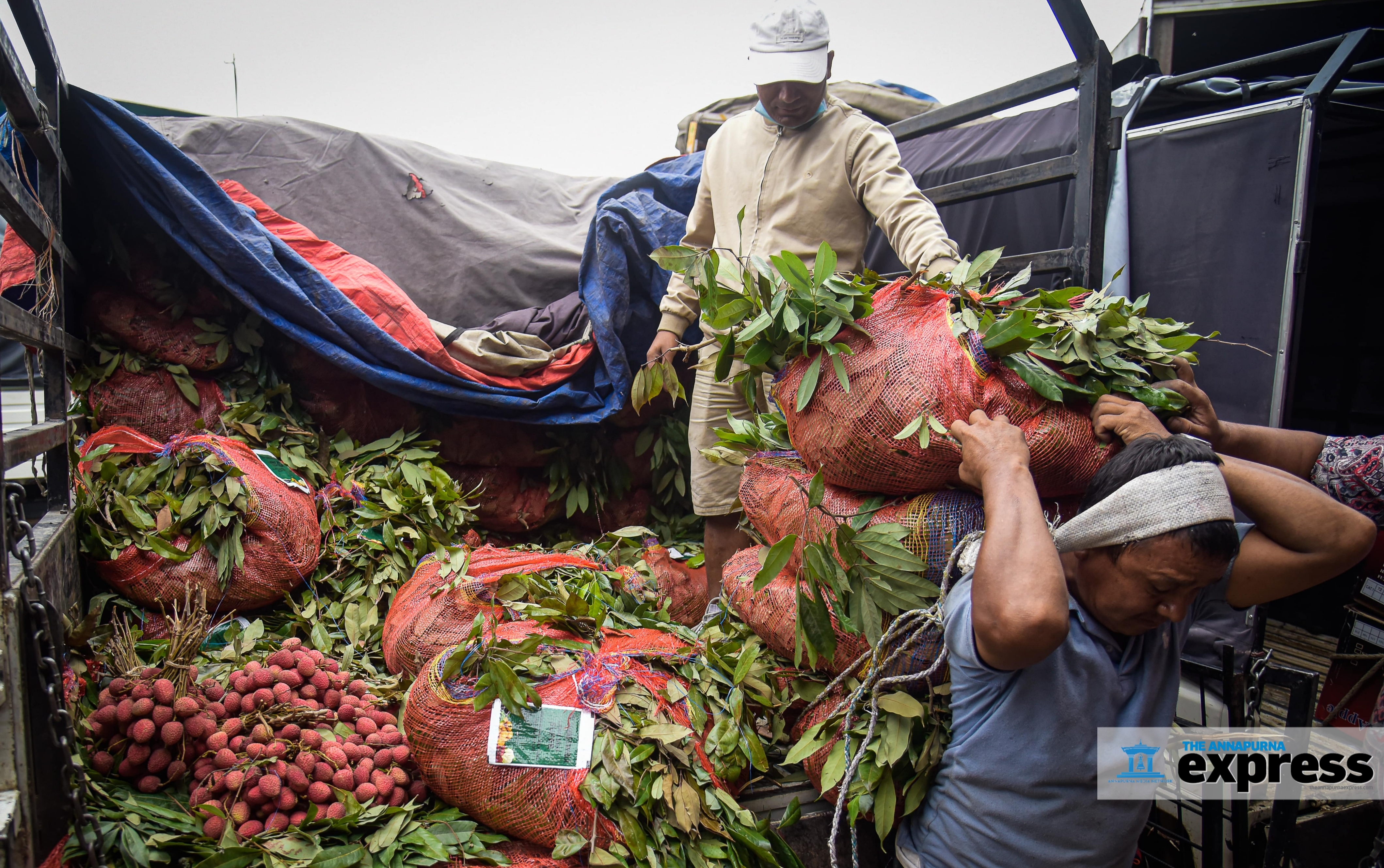
This week, I trained my lens on these fruit sellers and their business, as well as the journey of the fruits in question, from the farm to our homes.
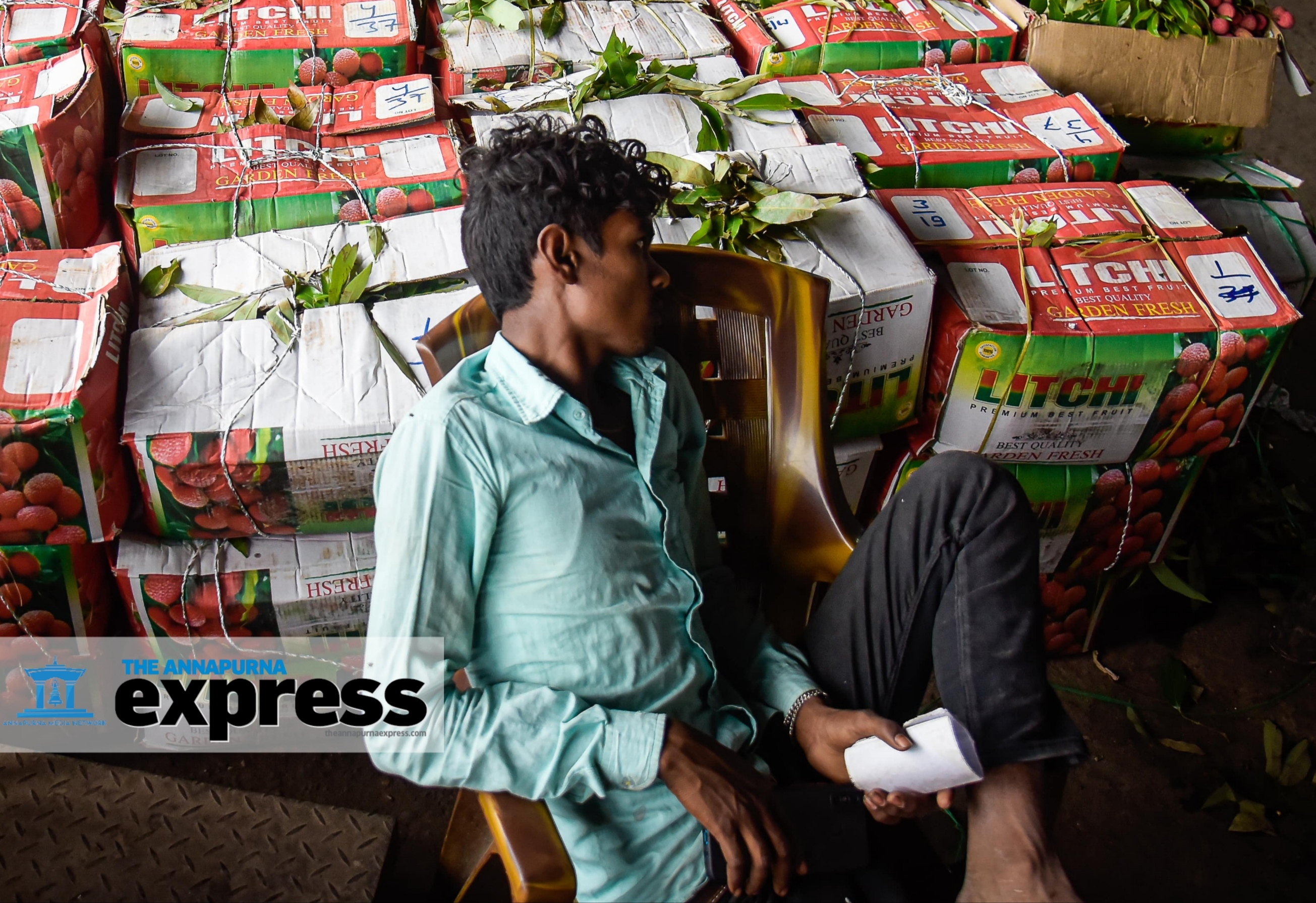
My ‘fruit pursuit’, which began by photographing and interviewing some fruit sellers in Kathmandu’s neighborhoods and streets, took me to Kuleshwor Fruit Market—the mother ship from where the majority of fruits sold in the city emerge.
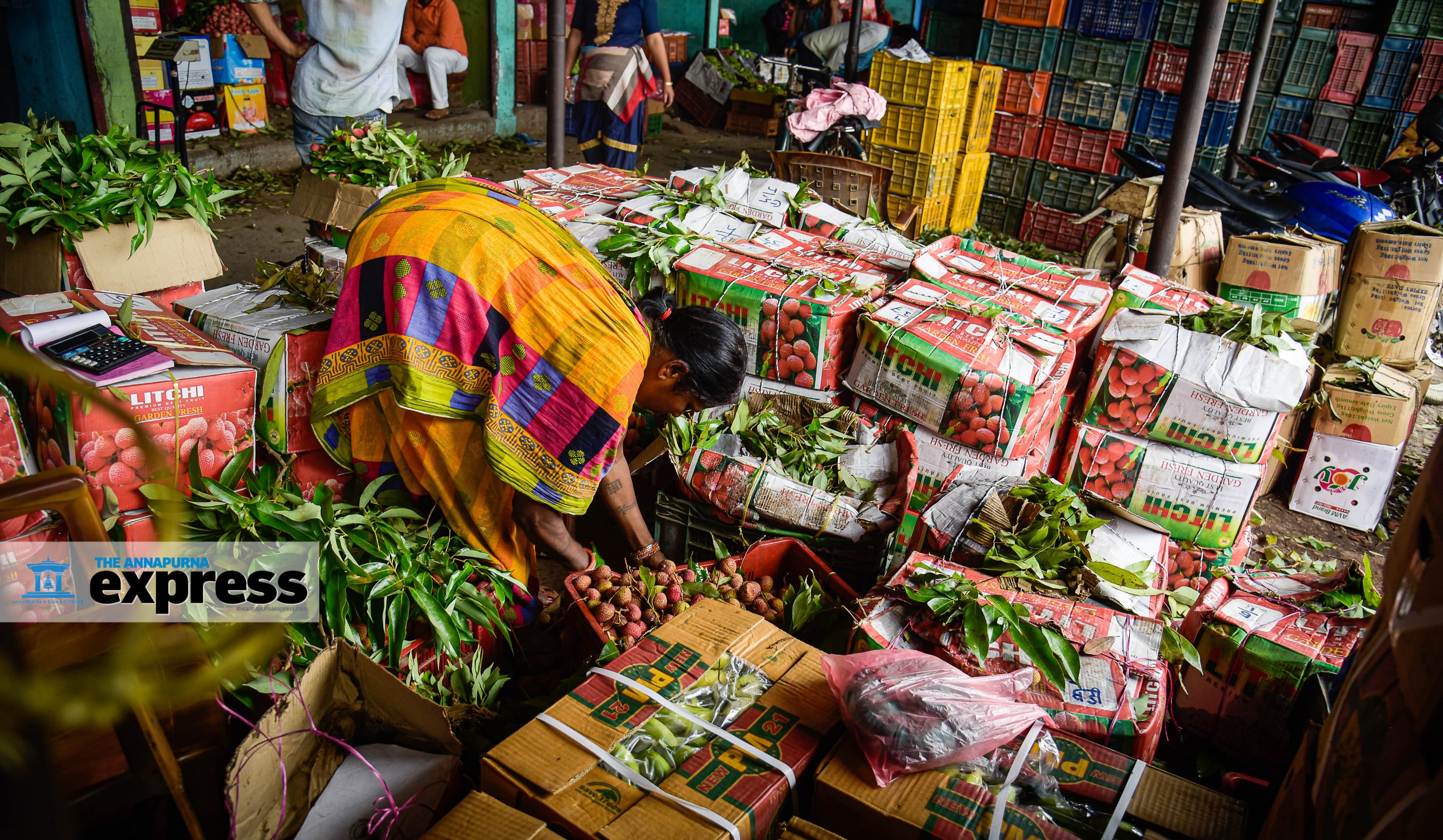
Inside this facility is row upon row of shops stacked and stuffed with carton boxes and sacks containing all kinds of seasonal fruits. A great many shops, I notice, have stocked up on mangoes and lychees.
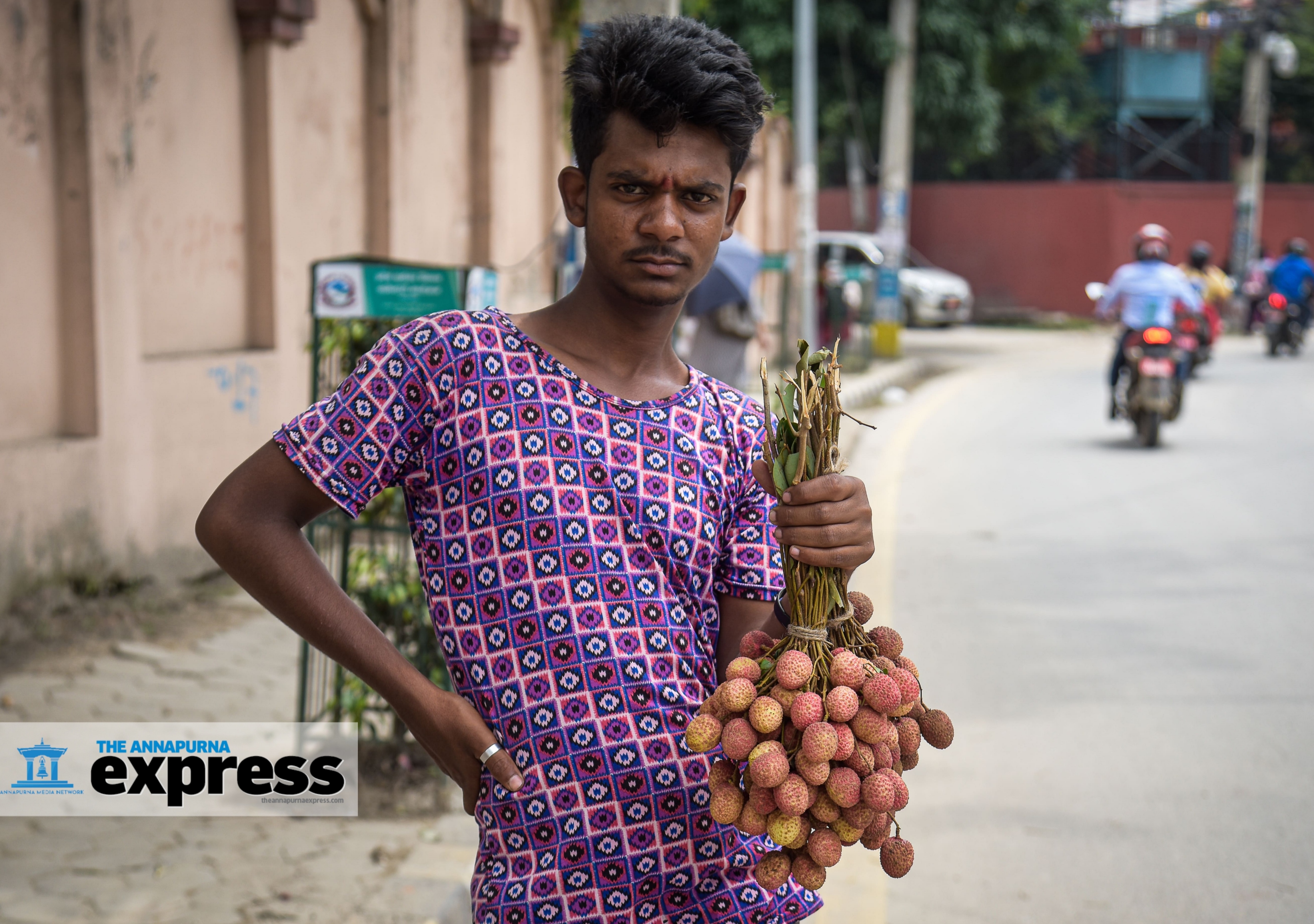
“Season’s top sellers,” a shopkeeper tells me. I ask him about the lychees, and he explains there are three kinds in the market—Nepali, Chinese, and Indian. And interestingly, most of the lychees sold in the market are either Indian or Chinese, although both kinds are brought from Muzaffarpur, a city in Bihar state of India. “Indian and Chinese lychees are sweeter than Nepali ones,” the shopkeeper says. “Indian lychees are the sweetest.”

Indian and Chinese lychees cost around Rs 170 a kg while the same quantity of the not-so-sweet Nepali variety can be bought for Rs 60-70.
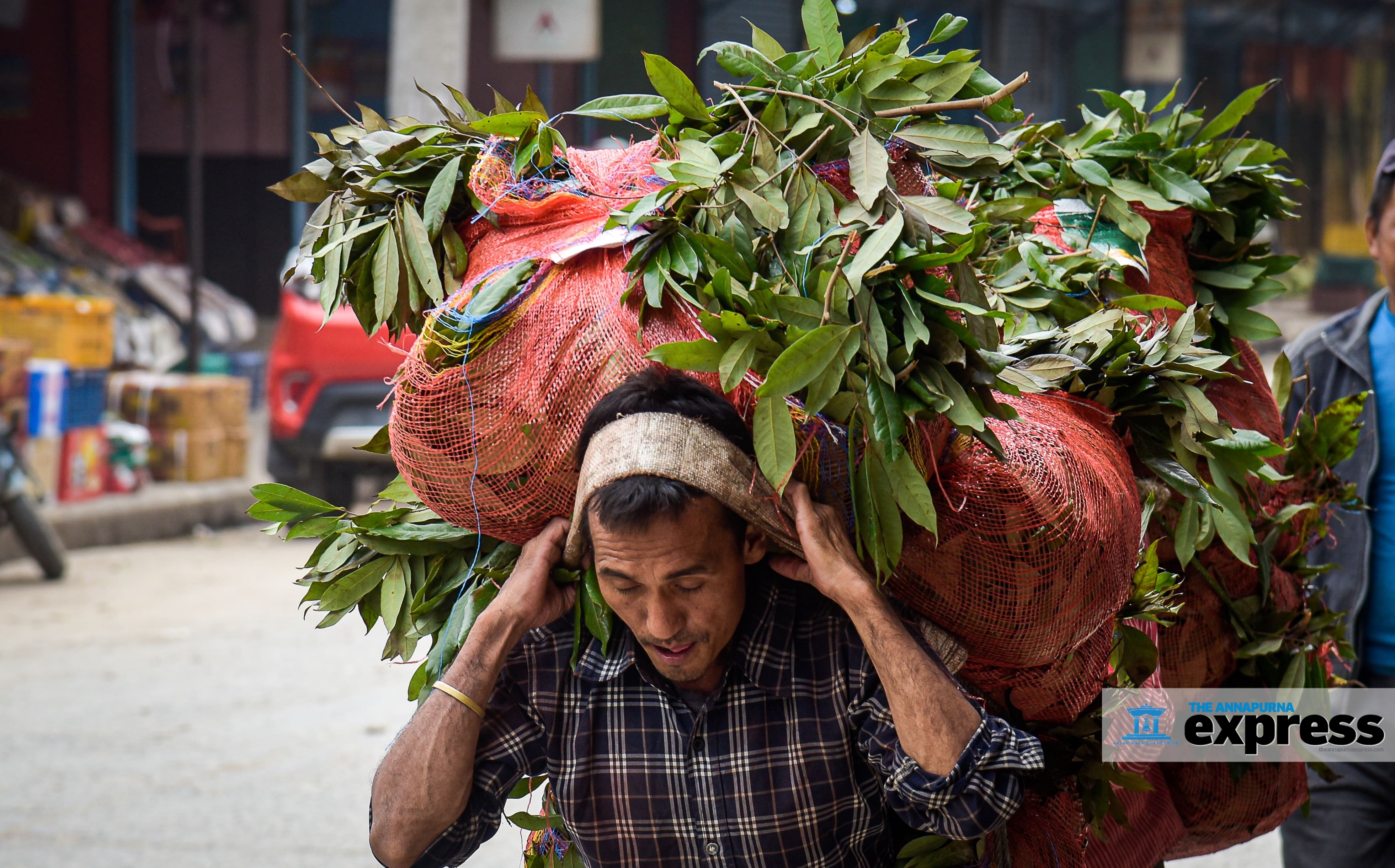
As for mangoes, there is the Nepali Malda from Lahan, Siraha, and the Banganapalle, which is imported from Maharashtra, India. Again, the ones imported from India cost more.
“They are sweeter and juicier, so pricier,” the shopkeeper tells me matter-of-factly. I take him at his word.

Vox Pop | Experts share thoughts on current situation of sexual assault in our society
In the fiscal year 2020-21, Nepal Police recorded 2,532 cases of rape, 735 of attempt to rape and 281 of child sexual abuse. But there are many incidents of sexual crime and violence that go unreported. This became amply evident when a former teenage beauty pageant participant shared her harrowing experience of being repeatedly raped by the contest organizer eight years ago. Her alleged rapist is currently in police custody. But his arrest came only after a widespread street protest that impelled the House of Representatives to direct the police authority to investigate the case. The incident has also raised a crucial question about reviewing the one-year statute of limitations in rape incidents. Anushka Nepal of ApEx interviews 10 experts on this issue.
Samikshya Baskota, Advocate

A lot of reformations are needed in our judicial system when it comes to handling the cases of sexual harassment and violence. We should be able to support the survivor whenever she chooses to come out, instead of having a statute of limitations to file the case.
For cases so sensitive like sexual assault, survivors are asked to talk or listen about the incidend they faced over and over. They are made to relive the moment every time in the court, which is very traumatizing for the survivors. I believe it is time to move towards silent hearing for cases of sexual assault for the wellbeing of the survivors.
Nirvana Bhandari, Feminist and digital activist

It is a good sign that people were out on the street demanding justice for the survivor. We need this unity in times like this. But there are many cases that have not come out. There are various reasons behind this; one of them is our society, which has not created an environment for survivors to speak up.
These incidents happen in many sectors, but they seem to be more prevalent in the entertainment industry. I believe that many survivors have chosen to remain silent out of fear that calling out their abusers could hamper their career.
I hope that the courage shown by the girl in this latest case will lead to a bigger #MeToo movement in Nepal. The media should not stop covering these issues. We need to keep the conversation going.
Mohna Ansari, Advocate

The first step needed from the government is to provide safety to the survivors who have reached out to the authorities for justice. It is also necessary to stop putting the burden of proof on the survivor. It should instead be placed on the alleged perpetrator. In many countries, the system of placing the burden of proof on the survivors has changed. It can also be seen in many verdicts of our own Supreme Court, which has concluded that the voice of the survivor is the ultimate evidence.
But some part of it still exists. For instance, the medical examination of the survivor is one of the proofs that the authority looks for in these cases. Also, our society is quick to blame the survivors. So, this shift in the burden of proof is important to change the perception of the society towards rape and sexual abuse survivors.
Bhawana Raut, Social activist

I believe that we as a society have failed to show that support. If our government and our society had stood alongside the survivors, assured them they had a place to go in search for justice, then many of them would have had the courage to hold the perpetrators accountable.
But we, as a society, failed to take that responsibility. In this latest case, the survivor tried to seek help, only to be turned down by someone she considered her guardian. So I see this as the failure of our society to create a proper environment for survivors to come forward.
Instead, it has made every place so unsafe that we have to think twice to even order a drink in a well-known hotel. That says a lot about how unsafe our society has become for women. I think we need to question our society as a whole, rather than just the enablers, as they themselves are the representatives of our society.
Dr Meena Uprety, Sociologist

One of the reasons why survivors aren’t able to come out is the failure of our society to hold perpetrators to account. While boys enjoy the privilege to be outspoken, girls are forced to remain silent. Men can get away without being questioned or being held accountable.
Another problem is the general attitude of disrespect our society has towards women. Nepali society has been leeching on the phrase “boys will be boys” for decades. Such an attitude has given men the free pass to act as they please towards women. This has to stop.
Durga Ghimire, Women’s right’s activist and the founder of ABC Nepal

There are many people who aren’t aware of their rights. Not just rights, many people, especially in rural areas, don’t even know that they are being harassed.
I believe it is necessary to make them aware about their rights as well as the injustice that they are facing or might have faced in the past. We cannot expect them to seek help if they are not clear on what might be considered harassment.
Survivors who are unaware about their rights will not go to the authorities for justice.
I believe it is important to spread this awareness in every corner of the country and help the ones that come forward.
Charimaya Tamang, Founder of Shakti Samuha

Our society has become unsafe for women and children. And when someone speaks up about their story or tries to hold someone accountable, the survivor gets questioned instead of the perpetrator. The incident does not even reach the court since the survivor is questioned even by her family. This only discourages them from bringing their perpetrator to justice. The perpetrator, meanwhile, is emboldened by this silence and goes on to commit more heinous acts. I see this as a lack of moral education that our society has failed to provide to the people.
Prakriti Bhattarai Basnet, Founder and chairperson of Political Literacy for Women

When we dig deeper on women's issues, it all comes down to patriarchy. There are many countries that still carry patriarchy as a belief system. But, in Nepal, patriarchy is not just a belief system; it has become the way of living for many of us. If it was just a belief system, it could be eradicated through speech, rally, and activism, or by changing the law–a top-down approach. But since it has become the way of living for many of us, it is essential to take both top-down and bottom-to-top simultaneously. This starts from minimizing the influence of patriarchy from each and every household.
If the changes do not come from the core of society, the laws will keep on changing while the situation remains the same.
Binod Deuba Thakuri, Youth leader (Central Committee Member at Youth Congress Nepal)

It is the responsibility of the government to ensure the safety of its citizens through the existing laws. The main focus of the government should be towards prosecuting the perpetrators, and not to have the statute of limitations for the survivors of rape and sexual violence.
But what scares me is how our society has generalized these heinous acts. Our society as a whole has not been able to accept the existence of women. These factors are the result of the environment that every child grows up in, within the patriarchal belief system that our society holds. That is why I believe that change is needed in every household and not just the government and laws.
Mamta Siwakoti, Digital lawyer

The first thing I think we need to address is the statute of limitations. Many survivors in our society do not have the legal literacy to understand their rights. And the statute of limitations gives them very little time to address the issue and reach to the authority. Secondly, because of psychological and societal reasons, it is impractical to expect a survivor to report the case within one year. So, I believe that the statute of limitations should be eradicated completely.
It is also necessary to educate people from their childhood on what is considered as sexual assault. It must be included in school curriculum so that children are aware of the good touch and bad touch. There is also a deeply rooted stigma attached to incidents like rape. It questions the honor of the survivor, which has stopped many from speaking up. It is necessary to bring changes from the grassroots level, only then can we expect our society to be better and safer for every individual.

Travelogue: Traversing the Kathmandu-Tarai fast-track

I and Pratik Rayamajhi, our photojournalist, were assigned to cover progress on the much-talked Kathmandu-Nijgadh expressway. After quick planning and some basic research, I drew a route map with important landmarks. We would be roughly traveling via the Tinkune-Khokana-Hetauda-Makwanpurgadhi-Hetauda-Nijgadh-Kathmandu route.
We had planned on taking on a motorcycle but had to switch to a Mazda 4×4, which turned out to be a wise move: we would otherwise have had to return from halfway. (A piece of advice: If you’re traveling off-road on assignments, better take a four-wheeler, which is more comfortable, less tiring and easily accommodates luggage, allowing you to concentrate on your work.)
“A part of the expressway lies near my village in Makawanpur district,” our driver Som Moktan replied when I asked him if he had traveled via the proposed route. This was a huge relief, as we had no proper direction in mind. We had to travel on main roads as well as multiple small tracks to reach the fast track sites. Without Moktan, our three-day trip could easily have dragged on to a week.
At 8 am on February 15, we started our journey from our office at Tinkune and headed to Khokana. Along with clicking on-site photos in Khokana and Bungmati, we spoke to locals too. They were cooperative and helped us locate the proposed track and shared some of their concerns.
Nagesh Dangol, an elderly in Khokana who ran a small shop in his own house, took us to the Sikali Temple, which the Nepal Army had previously planned on razing to make way for the fast track. The plan was withdrawn following protests. Bungmati and Khokana are home to Hindu and Buddhist socio-cultural values and local arts and crafts industry, Dangol said. This heritage is sustained by the locals who still practice and celebrate ancient rituals and festivals. The expressway’s construction through these areas would destroy several heritage sites and ancient settlements—and with them, Dangol added, a whole civilization.
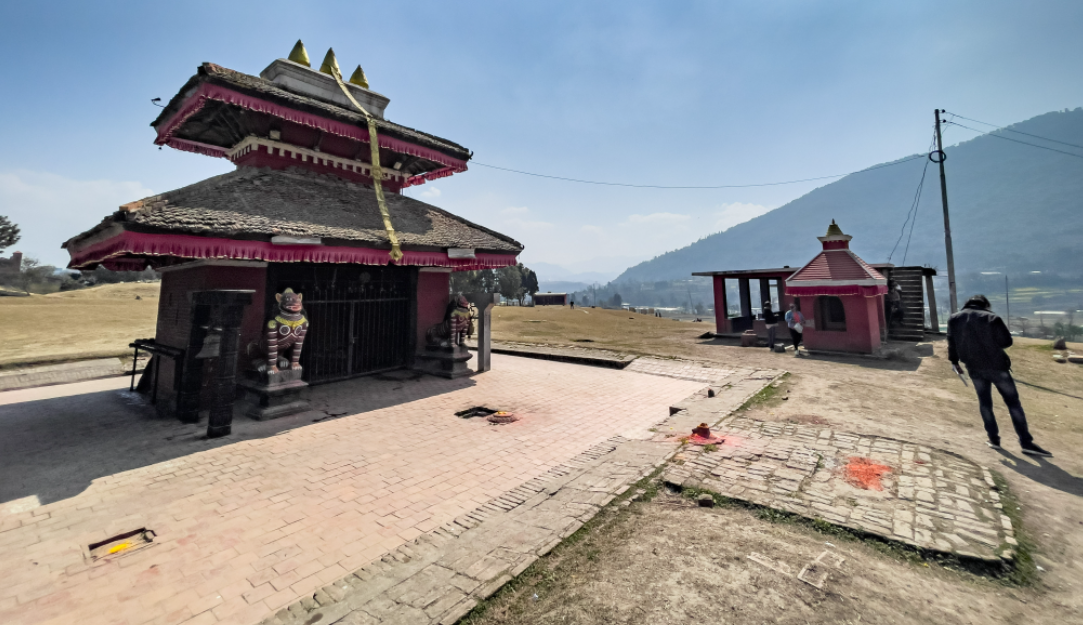 Shikali Temple at Khokana, Lalitpur, which the Nepal Army had previously planned to move to make way for the fast track. The plan was withdrawn following local protests.
In 1996, King Birendra had proposed Khokana as a UNESCO World Heritage Site. In the proposal, Khokana was described as a unique village, a model of a medieval settlement pattern with a system of drainage and chowks. The local mustard-oil seed industry was called the ‘living heritage’ of the village.
We knew that many high-profile people were buying land in Khokana and Bungmati and pushing up their value with the help of realtors. Some Khokana residents also accused the activists and leaders who were campaigning against the fast track, for allegedly succumbing to greed and selling their lands. “Nepal Man Dangol, one of the leaders of a struggle committee against the fast track, has double standards. He sold his plot to the army and bought off properties close to the project site,” said a local woman who declined to give us her name.
After spending almost three hours at Khokana, we had a refreshing lunch at a local hotel. Next stop: Hetauda.
We took the Dakshinkali-Kulekhani route, a graveled road that nonetheless made for a comfortable trip. Moktan shared his driving experience and incidents throughout the way, preventing us from falling asleep.
We stopped at Kulekhani for a quick snack at 3 pm. There, we were in for a shock.
Even though we had planned our journey in a rush, a day earlier I had informed the spokesperson of Nepal Army Narayan Silwal that we were on a reporting assignment to cover the fast track. He had asked me to postpone our plan. I declined.
When we stopped at Kulekhani dam, army officials asked us why we had come to Kulekhani when we had planned on traversing the fast track route. It felt like the army had been tracking us. I started feeling a bit insecure from that point.
Yet I could still savor the majestic view of Kulekhani, along with sumptuous local fish.
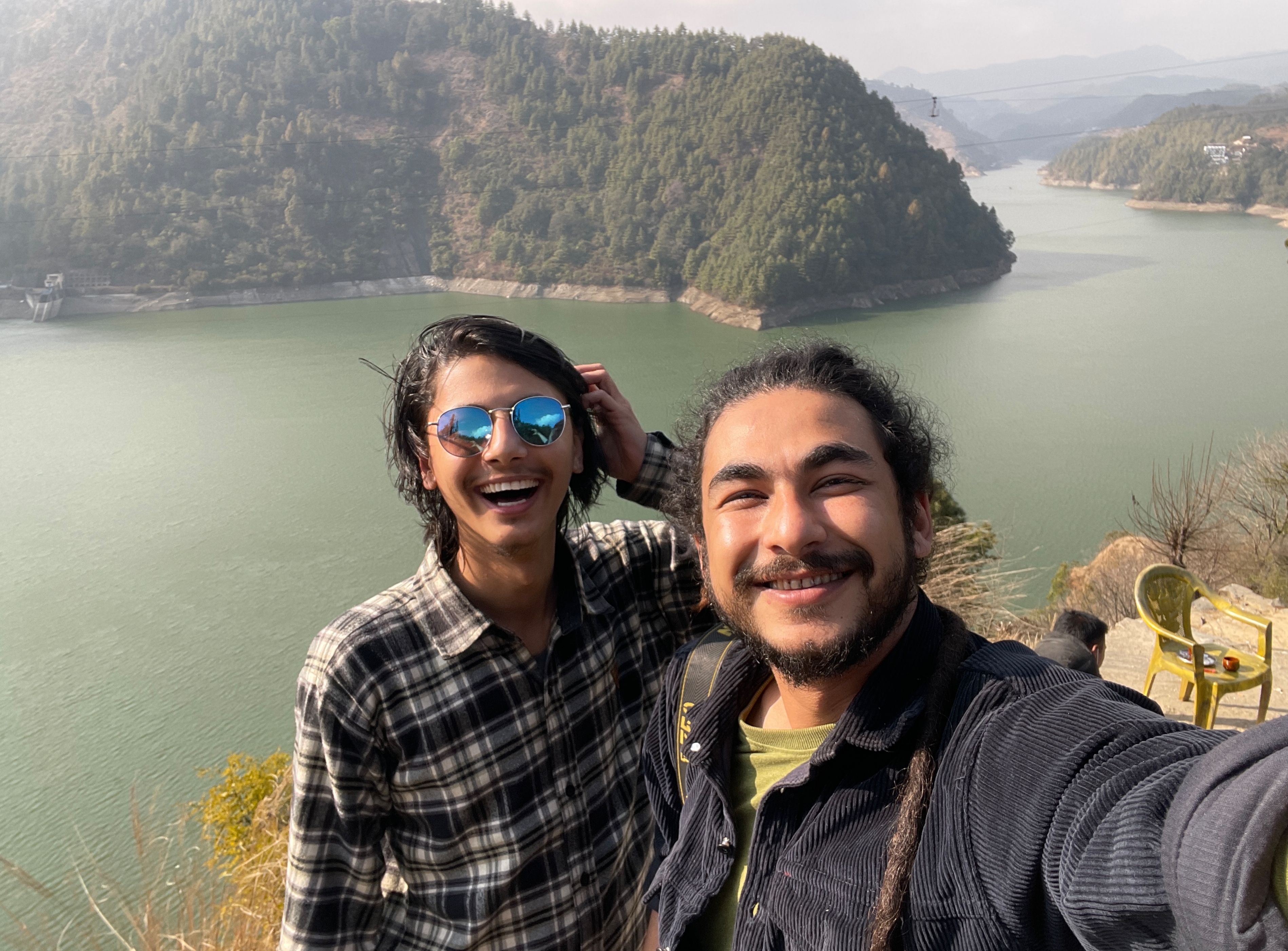 Kulekhani, Makwanpur.
As we resumed our journey, I and Rayamajhi, the photographer, googled hotels in Hetauda. We surfed for a while but could not decide where to stay.
The first thing we did upon reaching Hetauda was look for hotels. It was already 7pm and we were tired. We picked a random hotel at Hetauda Chowk. Rayamajhi edited the photos and sent them to the office while I enjoyed the night-view from our balcony. After our 9pm dinner, we slept peacefully as we had to wake up early the next day to visit Makawanpurgadhi to study tunnel-work on the fast task.
Early at 6 am, Moktan woke us up, and we headed to Makawanpurgadhi. After traveling for two hours off-road, we reached the site and observed the tunnel work at Lendada. There, we interacted with workers, locals, and representatives at the ward office.
“Not only will the fast track improve our access to hospitals and schools, we will also be able to build more of them right here in our own village,” said Biru Tamang, a Lendanda villager. When I told him that the fast track would in fact not touch the village, directly or indirectly through auxiliary routes, he started getting a touch angry. He then accused ward officials for giving false hope to villagers.
According to the Nepal Army, for every Chinese worker employed on the fast track, there are three Nepalis employed. Chinese workers, moreover, are said to be imparting useful skills to their local counterparts. But the ground reality was different. “Although this mega project has come to our village, we are not getting the promised jobs,” says Dinesh Moktan of Bakaiya Rural Municipality in Makawanpur. “We asked the army for more local participation, but our plea was ignored.”
Throughout the journey, we also witnessed many violations of the Environmental Impact Assessment (EIA) report. Ram Bahadur Waiba, a resident of Bandarekholchha, was angry about indiscriminate felling of trees. The stumps of freshly cut trees were before our eyes, and Waiba, despite the language barrier, was demanding an explanation from a Chinese worker.
“They [Chinese workers] have chopped down almost a dozen trees for which they have no permit,” Waiba told us. There was an army camp nearby to listen to the concerns of those living in and around the project site. But Waiba said the army had ignored their complaints.
It was a clear case of the project contractor violating the EIA report. The army had already cut down the required number of trees in the area to make way for the fast track. Felling more trees went against the EIA mandate. The residents of Bandarekholchha told us that neither they nor the forest department was informed before more trees were axed.
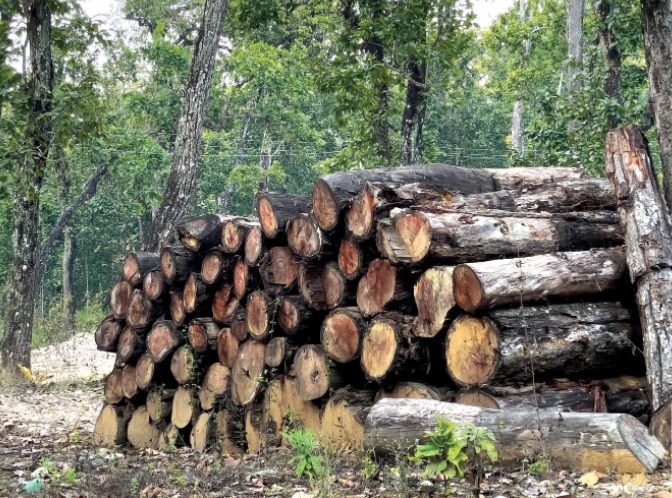
Felled logs stacked at Budune, Makwanpur.
Our next stop was Budune, our driver Moktan’s village. We reached Budune at noon and had lunch before clicking photos of the track.
Moktan introduced us to his friends, who further outlined the locations and shared their concerns over the project. Locals of the Tamang settlement often felt uncomfortable when I approached, but as soon as Moktan explained our intent in his language, they would cooperate. Common language is a big connector, I felt.
As we were taking the photos of the hills, some local Nepal Army again officials started questioning us. They said we had no permit to take photos, as ‘the fast track belonged to the army’. We argued that the army team was obstructing the work of journalists. I was afraid that if I hesitated even for a bit with my answers, our cameras would be snatched and the photos deleted.
Our team was repeatedly accosted and questioned by the army in the course of reporting at fast track sites. They demanded a permit from army headquarters to take photos at some sites—all public places.
We then sent the photos to our office and headed to Nijgadh, our last destination.
It was already 10 pm when we reached Nijgadh. Again, in a hurry, we looked for a lodge, had our dinner, and exhausted, quickly hit the sack. Due to the covid restrictions, there was no chance of visiting the nearby market that was allowed to open only till 9.30 pm.
With no deadline pressure on the third day, we woke up at 8 am and proceeded to the fast-track entry point. Unfortunately, the army didn’t allow us into the area. We tried our best to convince them, but to no avail and had to return empty-handed.
But we were in Nijgadh and there was no way we would return without visiting the proposed area for the Nijgadh International Airport.
After a five-km ride via a graveled road amid the dense Nijgadh forest, we reached the dirt-poor Tangia Basti, a village with around 2,000 households. There was no electricity, no drinking water, and no proper transport. The local school taught students out on the open.
A team under former Prime Minister Madhav Kumar Nepal had visited the village a couple of days earlier. An elderly local, Harihar Gole, said the politicians were in favor of shifting the village in lieu of the airport that was to be built there. As such, the village had been kept in a limbo. After decades of promises, neither the airport nor development arrived.
We had our breakfast in the village and talked more to locals. They suggested we visit another nearby village—Kakadi—where the Army had planted trees in compensation for the ones that had been felled during the fast track construction.
We were now happy and relaxed as we would soon be returning home. But our relief didn’t last long. Near Kakadi, our Mazda got stuck, and we were unable to take it even after a couple of hours of relentless effort. Some local farmers pushed the vehicle, too, but again fruitlessly. They suggested we walk to the nearby village, which was two kilometers away, and hire a tractor to pull it out.
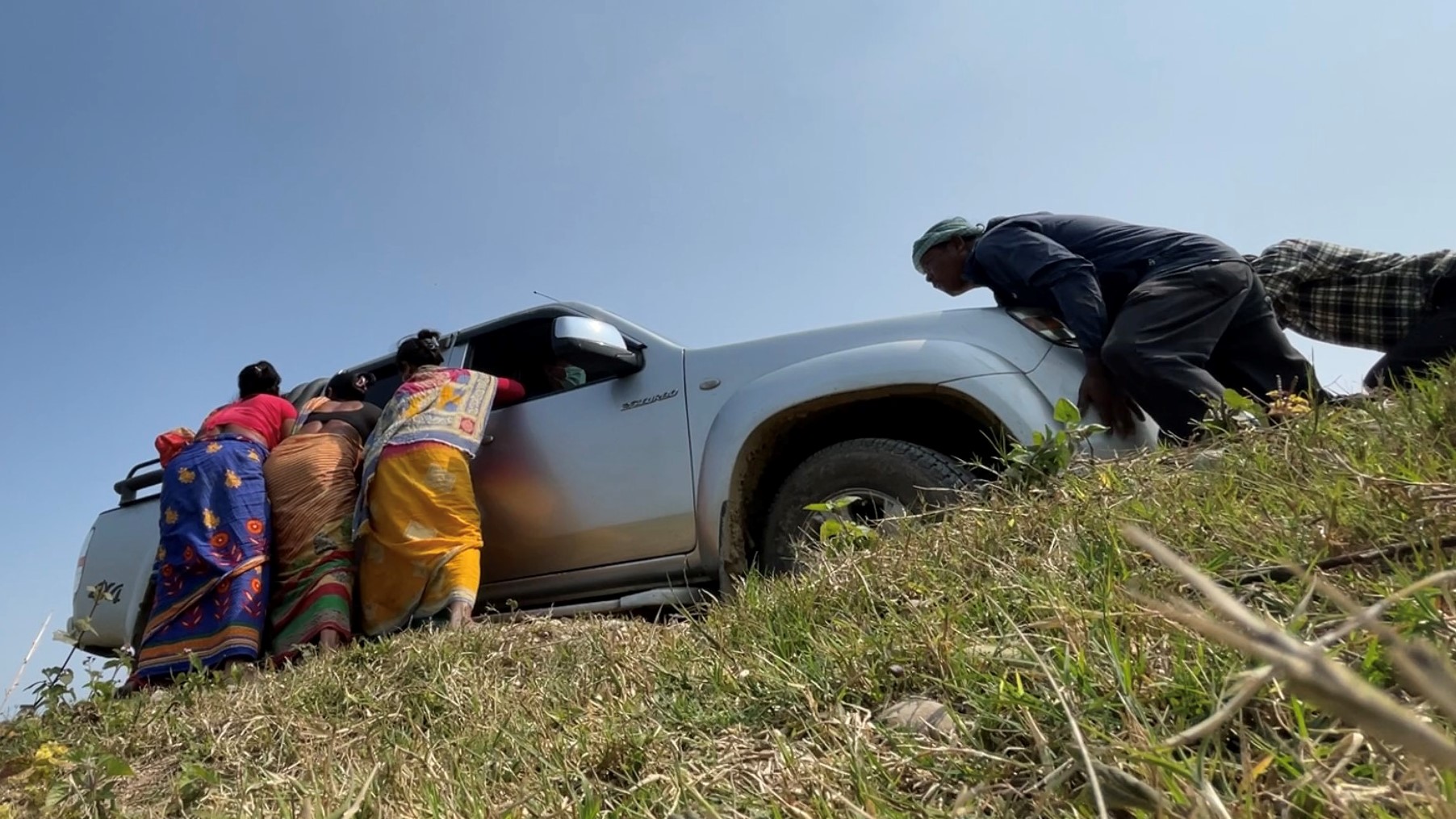 Villagers helping to push our stuck Mazda.
I and Rayamajhi, hungry and tired, did accordingly. The ride back to the spot atop a tractor was a horrendous experience: it literally shook every part of our body. But our dying energy was soon revived when our Mazda was finally pulled out of the ditch. After thanking the villagers, we returned to the Mahendra highway and headed to Pathlaiya.
There we had a refreshing late lunch before rushing to Kathmandu.
Moktan took a shortcut, connecting to Lalitpur’s Chapagaun. After a whistle-stop tour, we had now finally arrived at our final destination: our Tinkune office. I handed over the car keys and came home for some much-needed rest.
Departure route:
Tinkune-Bungmati-Khokana-Dakshinkali-Kulekhani-Hetauda-Bakaiya-Makwanpurgadhi-Hetauda-Nijgadh
Arrival route:
Nijgadh-Tangia Basti-Kakadi-Nijgadh-Pathlaiya-Hetauda-Baguwa-Tinpane-Chapagaun-Tinkune


