



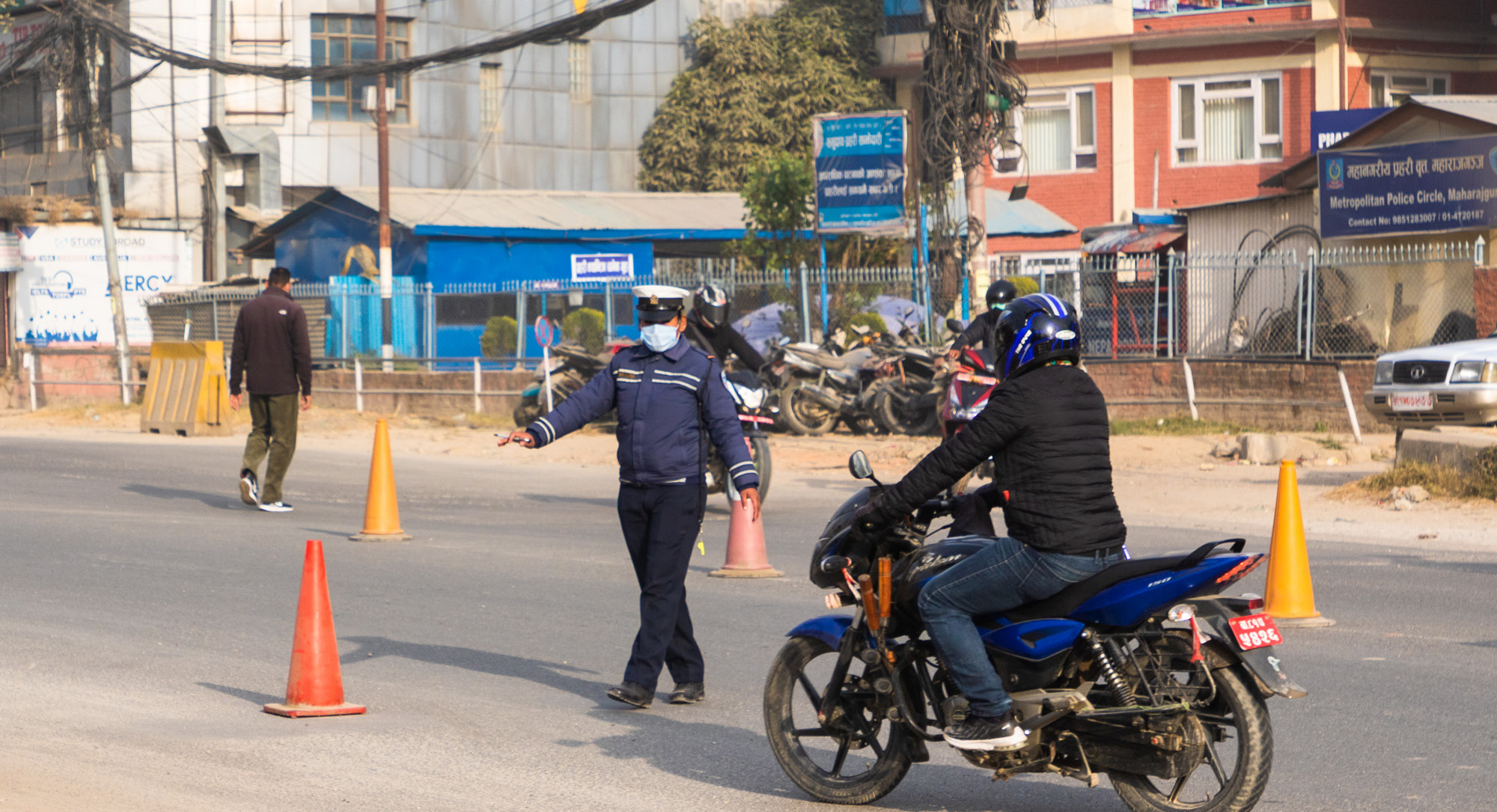

Asian Highway now connected with Nepal

Nepal is now connected to the Asian Highway, a 32-country road network that aims to expand intra-country trade and connectivity, after India completed the work of widening the West Bengal-Kakadvitta section. This section of the highway will start at Bangkok, Thailand and pass through Myanmar, Bangladesh and India, and reach Karachi, Pakistan from New Delhi, via Nepal’s East-West Highway.
With the expansion of the road network, Nepali rural businesses now hope reach international markets near and far. Tikaraj Dhakal, president of the Jhapa Chamber of Commerce and Industry and an entrepreneur, says, “When the Asian Highway comes into operation, our agricultural produce will easily find international markets.”
A four-lane 'Miteri Bridge' has also been built on the Mechi River at the eastern gate of Nepal with the assistance of the Asian Development Bank’s Asia Sub-Regional Economic Cooperation-Road Network Project. Keshav Kumar Sharma, director general of the Road Department, informs that Nepal is now connected to the 'A Class' Asian Highway. “When the road is wide, the border becomes more economically vibrant,” says Rishi Timsina, president of the Mechi Chamber of Commerce and Industry.
India has built a 790-meter-long bridge over the Mechi River on the Nepal-India border, funded with a loan of 1.5 billion Indian rupees. “The dilapidated and narrow Mechi Bridge was inconvenient for transport as it was difficult to move large containers,” says Dhurba Raj Bishwakarma, head of customs at the Mechi Customs Office, Kakadvitta. “Now that the new bridge has been built, transport has greatly eased. Vehicles ranging from bicycles to large container bearing trucks can easily pass without having to stay in a jam for hours on end.” Bishwakarma informs that India has set up a port at Jalpaiguri near Siliguri to facilitate trade with Nepal, Bangladesh, and Bhutan.
In 2016, there was an agreement between the then Prime Minister Sher Bahadur Deuba and his Indian counterpart Narendra Modi to build an expanded bridge over the Mechi River. Construction formally started in February 2017. A four-lane road has now been built up to Kakadvitta Bus Park along with the four-lane bridge on the Mechi River on the Nepal-India border, in what will be an approach road in the Asian Highway system.
India had built the Asian Highway bordering West Bengal only two years ago. After the bridge-building at Kakadvitta, Silguri, which 28 km away, has become more accessible.
“Connecting with the Asian Highway will also help our tourism,” says Netra Karki, a local tourism entrepreneur, noting that the narrow bridges on the Kakadvitta-Panityanki road had made traffic uncomfortable.
Former President of Jhapa Chamber of Commerce and Industry Vijay Dalimiya says the Asian Highway is an opportunity for Nepal to expand and promote trade. “The highway will facilitate trade with India, which in turn will also boost Nepal’s trade with Bangladesh and Bhutan,” says Dalmiya.

People are travelling, cashing in on ‘corona discount’
Sitaram Dahal, 25, a cloth-store owner in Kathmandu, traveled to Pokhara and Kushma for paragliding and swing this Dashain. The lure was apparent. The cost of paragliding had plummeted, from Rs 7,000 to Rs 3,000. And airfare was also cheaper by 10 percent. What more could he ask for?
 Sitaram Dahal
The purpose of his travel was “refreshment”. He thinks this is not the time to fear but to lead a normal life by adopting safety measures. “We stayed in, for almost six months. Now it is time for some refreshment.”
After the lifting of the lockdown, Hriday Regmi, 25, a Kanchanpur native who works at a bank in Kathmandu, visited Kakani, Sauraha, and Chandragiri for night stays. He rued not getting a chance to travel since he had joined university and a new job at the same time. “So, I did not want to waste the little leisure time I had, bolted inside my home,” he adds. Regmi also feels the festive season is the right time to contribute to internal tourism.
 Hriday Regmi
He agrees that the fear of covid is pervasive. “But I see no alternative to living with the pandemic by taking precautions.” Regmi says that the hotels and resorts he stayed in were low-fare. “The packages were available at almost 35 percent discount.”
Suruchi Thapa, 21, a student in Kathmandu, traveled to Baraha Pokhari, Lamjung on October 29 with her family, for “religious and refreshment purposes”. “In Baraha Pokhari, people take bath on the full moon day. We went there as pilgrims,” she adds. Thapa says the natural beauty there was worth watching as well, with vistas of beautiful snow-capped mountains all around.
Likewise, Sabin Adhikari, 30, a businessman from Dhading, went to Rara Lake along with his friends before Dashain. He wanted to explore nature there and learn about locals’ lifestyles. “I am ready to live with covid. My motto is: Live a normal life, travel and be as safe as you can. I don’t need to be stuck at home,” he says. He didn’t factor in travel costs but says the experience was worth all the money he spent.
 Sabin Adhikari
Gita Chimoriya, a 27-year-old Lalitpur-based journalist, traveled to Mardi with her friends this Dashain. She visited Pokhara on her way back home. “We traveled during the festival because that is the only time I get some time away from my study and job,” she says. Mardi was open for trekking and she needed a break.
 Gita Chimoriya
Safety first
All these travelers claim to have considered safety. They say that though they traveled, they did so carefully, by adopting proper safety measures.
Dahal had to return to Kathmandu on bus. He was relieved when he saw safety measures being adopted in the bus too. “Masks and sanitizers were compulsory and there was social distancing inside the bus,” he says. Apart from personally using masks and sanitizers and avoiding contact, for safety, Dahal also did not stay at a hotel but at a friend’s.
Regmi for one did not find safety measures in hotels and resorts he stayed at different places in adequate. “We have to take care of ourselves while we have fun,” he says.
Thapa, the Baraha Pokhari visitor, says the travel, done in their own vehicle, was completely safe too. “We did not stay in any hotel or resort but camped in jungle and avoided contact.”
 Suruchi Thapa
According to Adhikari, his group avoided direct contact with other people at Rara and always had masks and sanitizers handy. They had done proper research, too, including on hotels. “I won’t say they were completely safe but the hotels we visited were doing their bit to give the travelers some sense of security.”
Chimoriya, who went to Mardi, says she didn’t find folks in Pokhara careful with covid restrictions. “But the staff of the hotels on our trekking route were trained in safety protocols. That made us feel safer,” she adds.
Matter of survival
Hotel owners at tourist destinations say not enough tourists are coming for the sustainability of their business.
Arjun Chhetri, owner at Hotel Devis Fall View, Pokhara says the number of his guests was just 30 percent this festive season, compared to the same time previous years. “We used to house students on school tours and religious pilgrims. They are not coming now,” he adds.
 Arjun Chhteri
As his hotel was always cheap, Chhetri did not lower costs during the pandemic. He further adds that current guests are mostly regular visitors and well acquainted with room rates.
At Devis Fall View, guests have to wash their hands with soap and water during their entry. But the guests have to bring their own masks and sanitizers, and Chhetri does not sanitize his rooms. He says the fear of covid is greatly exaggerated, and in any case he would not be able to afford more safety measures. “Right now I don’t even make enough to pay my rent,” he says.
Surendra Poudel, owner of Hotel Mirage at Sauraha, Chitwan, says his hotel is 40-60 percent full, even in this peak season. His hotel has some covid protocols. “We try to keep a recently vacated room empty for a day,” he says. He claims to regularly clean and sanitize rooms and to take cleaning staffs’ safety into serious consideration.
 Surendra Poudel
Besides the compulsory temperature check and sanitization at entry, “guests also apply their own safety measures.”
Some previous package programs like group Tharu cultural dance is unavailable now. And the cost of the package has been reduced. “Though our earnings have nosedived, we are still offering packages at 20 percent discount,” Poudel says. “Right now, it’s a matter of survival.”

Lalitpur has cycle lanes. But do they work?
The Lalitpur Metropolitan City was all over social media last month, this time for its positive contribution to urban management. As photos of the new cycle lanes it had put in place surfaced on social media platforms around the third week of October, the metropolitan’s initiative to build a cycle-friendly city and its contribution to sustainable urban mobility was praised by bicycle enthusiasts and common folks alike.
The clearly marked green path for cyclists in the Jawlakhel-Kupondole stretch looked welcoming in photos and the promise of a separate cycle lane gave a sense of relief to daily cycle commuters who had otherwise been braving heavy traffic of motored vehicles that had little regard for the pedaled two-wheelers.
But within a week, pictures of the same cycling lanes started surfacing again. This time, for a wrong reason. People posted photos and videos of taxies and private vehicles parked on cycling lanes, and they criticized motorists as well as authorities for failing to ensure the cyclists’ exclusive access of the lane.

For Samir Shrestha, a social activist who uses his bicycle as the main mode of transport in the city, the cycle lanes are a great initiative but as things are, also impractical. “I have already complained to traffic police multiple times. There’s always some vehicle parked in the lane, or I see someone overtaking from there,” he says.
Shrestha, who rides from Kumaripati to Kupondole and back six days a week, feels the traffic police should be more involved in maintaining lane discipline and ensuring safety for riders in bicycle lanes. Also, he adds, the municipal police personnel who have recently been patrolling on bicycles could do more to maintain lane discipline.
Shrestha emphasizes the need to educated people on road etiquette. “We need traffic rules for cyclists as well, and every cyclist riding on the street needs to have undergone some kind of training. Plus, safety measures like helmets, reflectors and lights should be mandatory,” Shrestha says. “I hear some organizations are working with the government on this. Hope relevant laws come soon.”
Good start
Singer and mediaperson Samriddhi Rai, who is also a Lalitpurian, is more sanguine. As a cyclist, Rai feels safer on freshly painted cycling lanes even though motorists largely ignore them. “I am proud to be riding atop our green-painted bicycle lane and always try to stick to it,” she says. Rai, however, mostly cycles in early mornings when there’s less traffic so her experience perhaps cannot be generalized.
Shail Shrestha, co-founder and former president of Cycle City Network Nepal, says the new demarcations are just experimental. They are shared cycle lanes and not dedicated ones, a big difference. In shared cycle lanes, it is only natural for other motorists to drive over them—and stop momentarily—if they do not see cyclists nearby.

Also the program director of Digo Bikash Institute, a research and advocacy organization promoting ecological sustainability and social equity, Shrestha says the new cycle lanes help mitigate conflict between cyclists, pedestrians, and motorists. “They are not as safe as dedicated cycling lanes would be, but they do give a sense of law and order to the chaotic traffic situation and makes people more aware,” Shrestha says.
According to him, the Lalitpur metropolitan did try to have dedicated cycle lanes but the department of road would not allow that citing congestion on the roads that were built for motorists. Having ridden around Lalitpur area extensively, Shrestha says he has had a better experience, adding that demarcations have given lanes more visibility and he hopes the behavior of traffic will also change in due course.
Closely working with the Lalitpur metropolitan city is the Nepal Cycle Society, which is also providing technical support in demarcating cycle lanes. The metropolitan has in fact signed an agreement with the society to make the city bicycle-friendly, informs the society’s vice president, Som Raj Rana.
An architect and urban designer, Rana leads the technical team behind the cycle lanes in Lalitpur. In the proposed 65-km cycle lane in Lalitpur, the five-km Jawlakhel-Kupondole stretch is only a pilot project, Rana informs. He says the next phase will cover 22 km of inner city roads.
Attracting new riders
Rana says the effect of the cycle lanes on public is still under study but the overall response is already positive. “We have data that show around 10-20 percent annual increase in the number of cyclists on the Kupondole-Jawlakhel road. With cycle lanes, the numbers are sure to further increase,” Rana says. Lane designs have been scientifically drawn. The goal is to ensure cyclists enjoy the same rights as others in traffic and to make cycle lanes attractive for users.
“Just having cycling lanes will not turn us into Copenhagen or Amsterdam overnight,” Rana says. “Our vision of a cycle city will not be met unless common folks don’t ditch their motor-addition and instead use bicycles to commute.” The roads built in Nepal’s major cities so far have only focused on creating spaces for motored vehicles. The new cycle lanes are only the beginning and until many more people start using them on a regular basis, further infrastructure development could be difficult.
But will there be cycle lanes in the stretch of ring road within Lalitpur? Rana informs it is out of the jurisdiction of Lalitpur metropolitan and rather falls under the road department. The initial design of the expanded ring road from Kalanki to Koteshwor did have bicycle lanes, but by the time construction was completed, there was no sign of them. Rana believes that it is still possible for the NCS to build dedicated cycle lanes on the ring road, the department of road permitting.

While Lalitpur has already started developing cycle lanes, the Kathmandu metropolitan has refused to join the network intended to connect all three cities in the valley. “Despite the many possibilities in Kathmandu, which already has roads big enough for dedicated lanes, the local authorities there have not responded to us positively,” Rana says. “Even in Lalitpur, it wouldn’t have been possible without extensive support of mayor Chiri Babu Maharjan.”

Dealing with a loved one’s mental health problem
A 55-year-old medical doctor, who wishes to remain anonymous, asked her husband, also a medical doctor, to see a therapist. He, she says, was getting increasingly moody and angry. His behavioral changes made her suspect something was not right and she wanted him to seek help.
But her husband felt insulted by her “insinuation that he was crazy”.
“This is how many of us still perceive mental health in our society,” she says. “If doctors can’t accept mental disorders as health issues that need some form of intervention, then what hope is there for the rest?”
But psychiatrist Dr Arun Raj Kunwar says there is light at the end of the tunnel. He says that there is definitely more awareness regarding mental health, especially among the new generation. However, what is needed is greater awareness and acceptance in general.
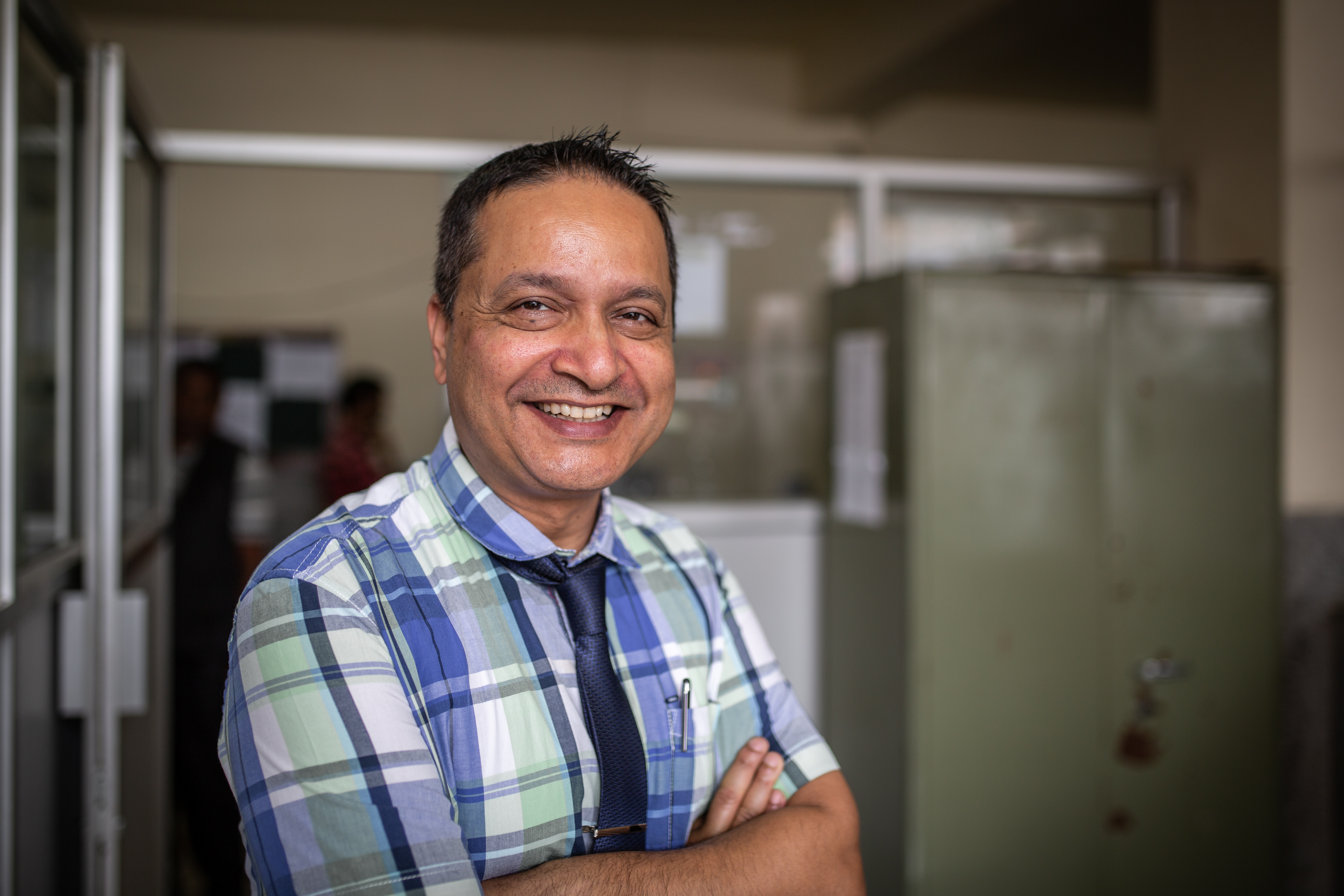 Dr Arun Raj Kunwar
“No one likes being sad, anxious or agitated. But it’s a disease, one you have no control over, just like any other biological issue you may have. That’s the bottom line that most people are yet to understand,” says Dr Kunwar.
Kirti Agarwal, counseling psychologist and lifestyle coach at The Blissful Mind, says not many people are aware of the symptoms of mental disorders. Most behavioral changes—in themselves and those around them—are attributed to habits or stress. This is perhaps what makes mental health problems so difficult to diagnose and treat.
 Kirti Agrawal
It’s also our collective failure to accept mental illness as any other health ailment that leads to stigma which, in turn, has many people suffering in silence. Tell your family and friends that you have a fever and they will check on you often, but tell them you are anxious and feeling a bit rundown, and they will probably flippantly tell you to relax or, worse, to snap out of it. And then it’s never brought up again.
Lend a listening ear
Meenashi Pokhrel, counseling psychologist, says though it’s very difficult to identify if someone has mental health issues, significant behavioral changes can be a sign that something is wrong.
 Meenashi Pokhrel
According to Pokhrel, as mental disorders can stem from a variety of reasons—from abrupt lifestyle changes and hormonal issues to biological and psychosocial causes—anyone, despite of their lifestyle and circumstances, can suffer from them.
The best way you can help someone struggling with a mental health condition is by being available to just listen to that person. It’s not giving advice, or trying to “talk sense” into them.
“Listening, without judgement, is one of the greatest things you can do for someone who’s not in a good frame of mind,” says Pokhrel. This often has a cathartic effect.
Junu Chaudhary, psycho-social counsellor, agrees and says creating a conducive environment where someone with a mental disorder feels acknowledged and heard often prevents a mild or moderate problem from escalating.
 Junu Chaudhary
Sometimes, she says, just being able to talk to someone about your problems can help put things in perspective. This is also why therapy is extremely important.
“Not everybody can talk to their family members and friends. It helps to have a third person who you can share things with and who, you know, you can trust to keep your secrets, should you want it to be that way,” she says.
Dr Kunwar adds that not all mental disorders can be dealt with in isolation through therapy but there are 50 to 60 common diseases where evidence suggests that therapy is as good as medicines.
More than mood swings
Chhitiz Kiran Shrestha, counseling psychologist and management consultant, says he is optimistic that the society will in time address mental health issues as any other health issue. The trend of appointing counselors in schools and colleges is a hopeful start. And surprisingly, he adds, during this Covid-19 pandemic, there have been many 50-plus men and women signing up for the counseling sessions that Shrestha has been conducting online.
 Chhitiz Kiran Shrestha
However, Chaudhary says that there’s still this steadfast denial to accept mental health problems as anything other than mood swings. Some people with mental health issues APEX spoke to confessed that everybody around them kind of expects them to shrug it off and move on.
A 35-year-old woman, who lives and works in Kathmandu, once told her parents she was thinking of seeing a psychiatrist as she mostly felt miserable. Her mother expressed concern but her father told her she needed to make productive use of her time. That was a year ago.
Today, she is undergoing therapy and is on some medications as well.
“My parents don’t know this because they never asked,” she says.
According to Shrestha, that can mainly be attributed to a culture that doesn’t encourage us to freely express ourselves. We are always told to keep our feelings to ourselves, lest they bother others around us. No matter how horrible we might be feeling, our response to the question, “How are you?” is almost always along the lines of “Okay”.
“I believe there will be fewer mental health problems when people are allowed to talk openly about their feelings,” he says.
This was quite evident after the 2015 earthquake in Nepal, he adds, when people could talk about being scared and anxious. They felt they were justified in doing so. That is also what is happening during the current Covid-19 pandemic—people are talking about how they are feeling without the fear of judgement and scorn.
Shrestha says that most people feel the need to have a “valid reason” for their emotions.
“But the thing is if you are scared or sad, you should acknowledge that feeling irrespective of your circumstances. You should be able to express it even when there isn’t a natural disaster or a pandemic to blame it on,” he says.
Agreeing with Shrestha, Pokhrel, the counseling psychologist, adds that the need to be in tune with our changing feelings has never been greater. And, at the same time, we should understand that sometimes our moods are beyond our control.
Time for action
Experts are of the unanimous opinion that we’ve been talking about mental health issues for a while now but with little effect. It’s time to take it up several notches and have these conversations within families, schools, and communities for greater impact.
“Mental health issues don’t just affect an individual. If someone in your family is suffering, everybody will have to deal with the consequences. It creates a ripple effect,” says Agarwal adding that’s why she, at The Blissful Mind, also focuses on counseling the family members so that they are better able to deal with their own mental wellbeing while lending adequate support to the ones in need.
Agarwal says that, most of the time, one doesn’t know how to help, further complicating matters. Apart from recognizing the signs and symptoms of mental disorders, it’s also imperative to understand how you can help someone heal. Not everyone, she says, is looking for the same thing.
So, what’s the right thing to do?
Pokhrel says it’s asking the person suffering from mental health issues what kind of help they need and lending that support instead of doing what you feel is right. Chaudhary, on the other hand, says you shouldn’t try to find a solution but rather listen to what s/he has to say with a non-judgmental attitude. And they both agree that seeking professional help, whenever possible, is perhaps the best approach.
Agarwal adds that government initiatives to address mental health problems and remove the stigma through awareness can also help build an empathetic society; one that is better equipped to deal with something as sensitive and serious as mental health.


