


Sri Lanka president declares new state of emergency as protests roil island

Sri Lanka's President Gotabaya Rajapaksa declared a state of emergency on Friday, after prolonged protests and a general strike shuttered schools, businesses, and transport services, CNN reported.
The state of emergency will allow for the arrest of protesters blocking roads. The measure must be approved by Sri Lanka's parliament within 14 days.
The country has been rocked by civil unrest since March, with protests at times turning violent as anger builds over the government's apparent mishandling of the country's economic crisis.
On Friday, police fired tear gas at protesters near the country's parliament in the national capital of Colombo, according to CNN.
The state of emergency drew criticism from some, with opposition leader Sajith Premadasa saying the measure "runs counter to seeking any solution to the crisis."
Rajapaksa previously declared a state of emergency on April 1, but rolled it back after five days.
Protesters have demanded Rajapaksa's resignation, frustrated by skyrocketing prices for food, fuel and other necessities as the government runs out of money. Many have been forced to spend hours in the searing heat to fill their tanks at gas stations, or to receive supplies of food and medicine.
This week Sri Lanka's Finance Minister Ali Sabry admitted the country's financial reserves are close to empty. The country has appealed to the International Monetary Fund for emergency financing, CNN reported.

Ukraine evacuates civilians from steel plant under siege
Russian forces fired cruise missiles at the southern Ukrainian city of Odesa on Saturday and bombarded a besieged steel mill in Mariupol, hoping to complete their conquest of the port in time for Victory Day celebrations, Associated Press reported.
Officials announced that the last women, children and older adults had been evacuated from the mill, but Ukrainian fighters remained trapped.
In a sign of the unexpectedly effective defense that has sustained the fighting into its 11th week, Ukraine’s military flattened Russian positions on a Black Sea island that was captured in the war’s first days and has become a symbol of resistance.
Western military analysts also said a Ukrainian counteroffensive was advancing around the country’s second-largest city, Kharkiv, even as it remained a key target of Russian shelling.
The largest European conflict since World War II has developed into a punishing war of attrition that has killed thousands of people, forced millions to flee their homes and destroyed large swaths of some cities. Ukrainian leaders warned that attacks would only worsen in the lead-up to Russia’s holiday on Monday celebrating Nazi Germany’s defeat 77 years ago, and President Volodymyr Zelenskyy urged people to heed air raid warnings, according to the Associated Press.
US Secretary of State Antony Blinken said Saturday that Zelenskyy and his people “embody the spirit of those who prevailed during the Second World War.” He accused Russian President Vladimir Putin of trying “to twist history to attempt to justify his unprovoked and brutal war against Ukraine.”
“As war again rages in Europe, we must increase our resolve to resist those who now seek to manipulate historical memory in order to advance their own ambitions,” Blinken said in a statement as the United States and United Kingdom commemorated the Allied victory in Europe.
The most intense fighting in recent days has been in eastern Ukraine, where the two sides are entrenched in a fierce battle to capture or reclaim territory. Moscow’s offensive there has focused on the Donbas, where Russia-backed separatists have been fighting since 2014.
The governor of the Luhansk region, one of two that make up the Donbas, said a Russian strike destroyed a school in the village of Bilogorivka where 90 people were seeking safety in the basement. Gov. Serhiy Haidai, who posted pictures of the burning rubble on Telegram, said 30 people were rescued. The emergency services later reported that two bodies had been found and more could still be buried under the rubble. Rescue work was suspended overnight but was to resume on Sunday.
Haidai also said two boys aged 11 and 14 were killed by Russian shelling in the town of Pryvillia, while two girls aged 8 and 12 and a 69-year-old woman were wounded.
Moscow also has sought to sweep across southern Ukraine both to cut off the country from the sea and create a corridor to the breakaway Moldovan region of Transnistria, long home to Russian troops. But it has struggled to achieve those objectives, Associated Press reported.
On Saturday, six Russian cruise missiles fired from aircraft hit Odesa, where a curfew is in place until Tuesday morning. Videos posted on social media showed thick black smoke rising over the Black Sea port city as sirens wailed.
The Odesa city council said four of the missiles hit a furniture company, with the shock waves and debris badly damaging high-rise apartment buildings. The other two missiles hit the Odesa airport, where the runway had already been taken out in a previous Russian attack.
Air raid sirens sounded several times early Sunday, the city council said.
Satellite photos analyzed by The Associated Press showed Ukraine targeting Russian-held Snake Island in a bid to impede Russia’s efforts to control the Black Sea. An image taken early Saturday by Planet Labs PBC showed that most of the island’s buildings had been destroyed by Ukrainian drone attacks, as well as what appeared to be a Serna-class landing craft against the island’s northern beach.
The image corresponds with a Ukrainian military video showing a drone striking the Russian vessel, engulfing it in flames. Snake Island, located some 35 kilometers (20 miles) off the coast, figured in a memorable incident early in the war when Ukrainian border guards stationed there defied Russian orders to surrender, purportedly using colorful language.
In Mariupol, Ukrainian fighters made a final stand against a complete Russian takeover of the strategically important city, which would give Moscow a land bridge to the Crimean Peninsula, annexed from Ukraine during a 2014 invasion, according to the Associated Press.

Kathmandu a two-party race, a few dark horses in tow

Are the people of Kathmandu in a mood for change or will they continue to plump for candidates from established parties in the upcoming local elections? The capital city, the country’s most educated place, supposedly has the most discerning voters in the country, who will choose their mayors and deputy-mayors based on their personal qualities rather than their political affiliations.
Political experts are not so sure. For them, the contest in Kathmandu will continue to be determined by those voting along partisan lines. So even though Keshav Staphit, the CPN-UML candidate for mayor, is now implicated in multiple sexual harassment cases, he is still the frontrunner.
“I would have guaranteed Sthapit for mayor had he not been charged with #MeToo,” says political analyst Bishnu Dahal. Neck and neck with Staphit will be Srijana Singh of Nepali Congress. The wife of Prakash Man Singh, a powerful Congress leader, is predicted to brush off charges of nepotism.
But then independent candidates like Balen Shah (structural engineer, rapper) and Bibeksheel Sajha’s Samikchya Baskota (lawyer) could have something to say about that. Any way you look at it, Kathmandu’s mayoral race promises to be a riveting affair.
Full story here: Evaluating the main mayoral candidates of Kathmandu

Evaluating the main mayoral candidates of Kathmandu
With just days to go for the May 13 local elections, candidates have ramped up their campaigns in all 753 local units across the country. The race for the mayor of Kathmandu Metropolitan City is particularly charged. Kathmandu’s voters want a competent leader, someone who can tackle everything from waste management to traffic congestion to poor service delivery. So who is the right person to lead the metro? Here is your guide to the strengths and weaknesses of top contenders for the post.
Balen Shah
· Independent candidate
· Born on 27 April 1990 in Kathmandu
· Graduate in civil engineering, post-grad in structural engineering

Strength |
Weakness |
Is strongly backed by the youth |
Lacks experience in politics |
Has clear agendas and is an appealing speaker |
Accused of using insensitive words against LGBTIQA+ community as a rapper |
Technically savvy and has worked with various local units in post-earthquake reconstruction |
Has little appeal among middle-aged and elderly voters |
Can work long hours |
As an independent candidate, his election campaign pales in comparison to those of candidates from political parties, reducing his reach |
Comes from non-political background and can work without any political influence |
May not be able to collaborate and cooperate with political parties’ representatives |
Keshav Sthapit
· CPN-UML
· Born on 14 September 1959 in Kathmandu
· Under-Grad in Humanities
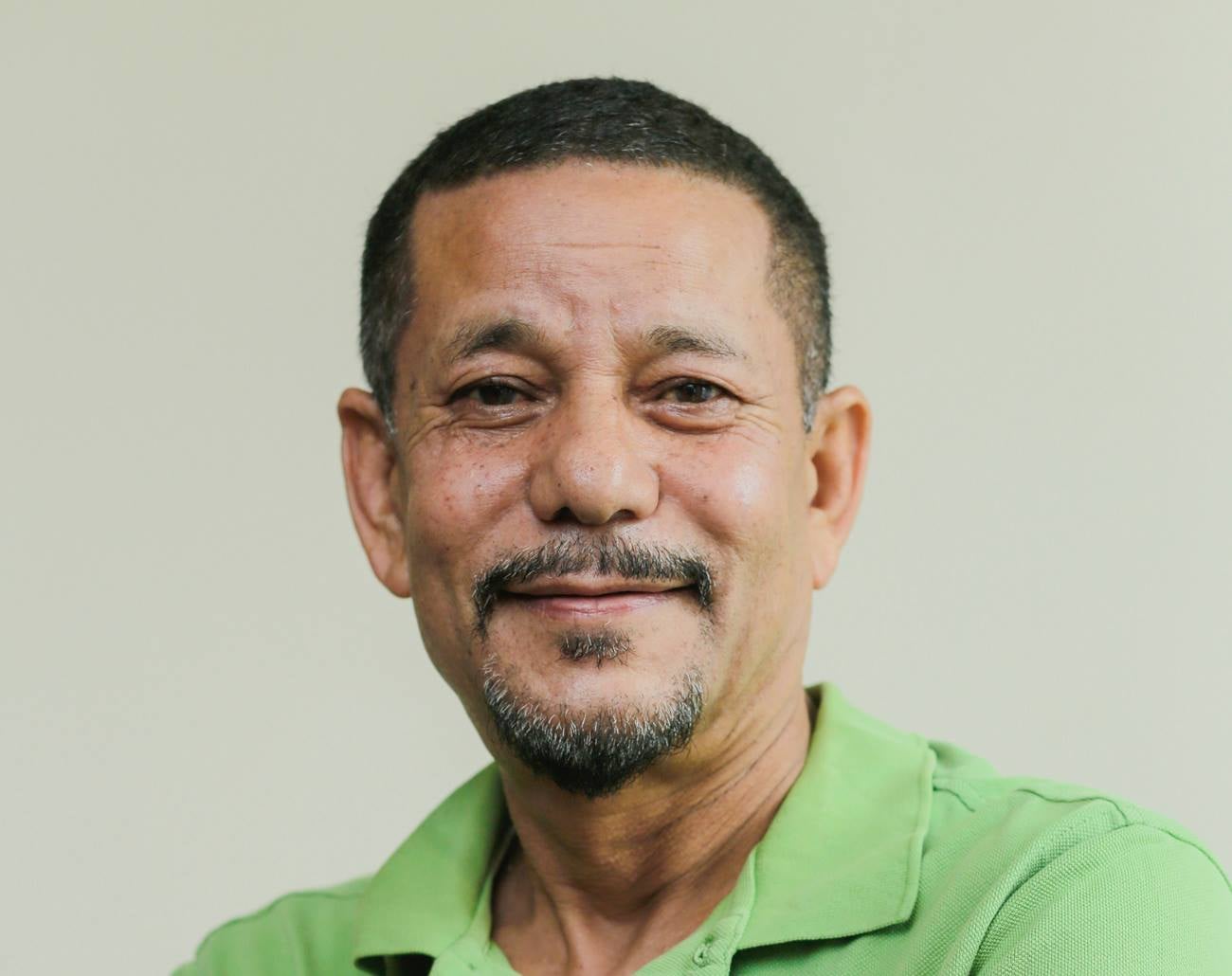
Strength |
Weakness |
Has experience of leading Kathmandu as its two-time mayor |
Implicated in two sexual harassment cases |
Established himself as a man of action in his previous mayoral stint in 1997 |
Is aggressive and uses disrespectful language at others |
A finalist in World Mayor 2004, a global mayoral evaluation |
Not a universally trusted figure in trusted UML as he has repeatedly been in and out of the party |
Is a master planner of post-1997 Kathmandu city |
Tried and tested, but not a trusted person. He was accused of lack of transparency during his first mayoral stint |
Has strong support of CPN-UML and its supporters, and Kathmandu has been a traditional UML bastion |
Bidhya Sundar Shakya, the outgoing mayor of Kathmandu, isn’t happy with Sthapit’s candidacy, which could cut Shakya panel’s votes |
Madan Das Shrestha
· Rastriya Prajatantra Party
· Born on 27 April 1948 in Kathmandu
· (Didn’t want to disclose his academic qualification)
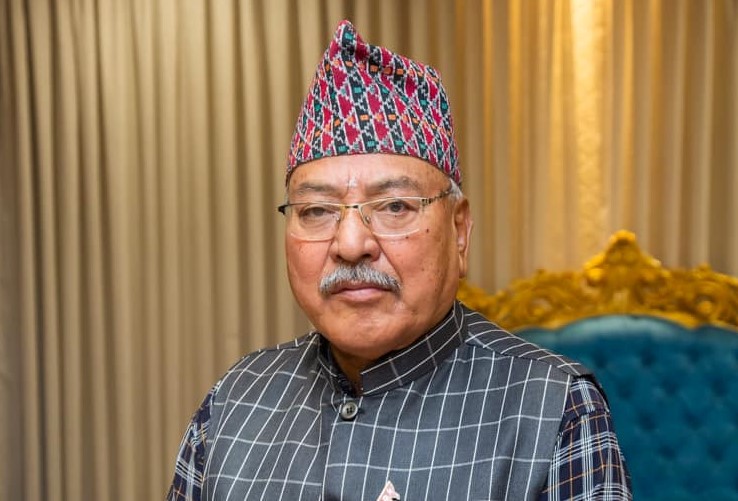
Strength |
Weakness |
Involved in social works |
Has no clear electoral agendas |
Spotless character |
Is not a fluent and appealing speaker |
Is a chairperson of an umbrella organization for 60+ aged people, National Senior Citizen Union |
Has no political experience |
Initiated road expansion and sewage management works in the Dillibazar area at his own expense |
A rather old candidate |
Is a veteran actor and well-known figure |
Has little appeal among young and middle-aged voters |
Srijana Singh
· Nepali Congress
· Born on 25 August 1962 in Gorkha
· Graduate in economics, post-grad in sociology

Strength |
Weakness |
In politics since a young age |
Many voters believe she was made a candidate because she is the wife of Nepali Congress leader Prakash Man Singh and the daughter-in-law of Ganesh Man Singh |
Comes from a family with a strong political background |
Is a less-known political figure, even among Nepali Congress voters |
Was a youth leader during the 1990 civil movement |
Was inactive in mainstream politics for decades |
Has support of young Congress cadres |
Has seldom appeared in mayoral debates and public interactions |
Is a former chairperson of Nepal Women Union, the women wing of congress and a women rights activist. Could appeal to women |
Not an appealing speaker |
Samikchya Baskota
· Bibeksheel Sajha Party
· Born on 8 Feb 1984 in Panchthar
· Graduate in constitutional law (LLB), post-grad in US legal studies (LLM)
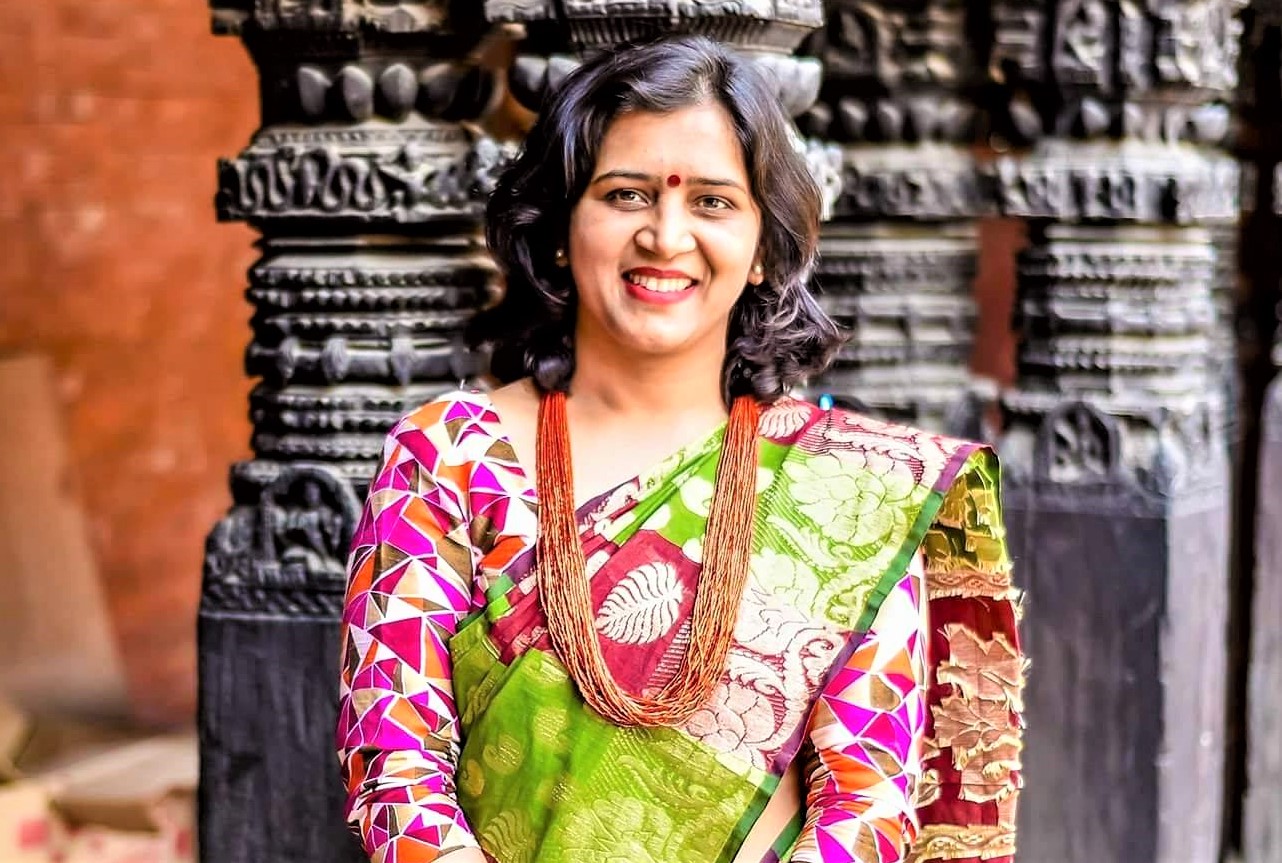
Strength |
Weakness |
Legally sound and filled with ideas on how local units can better perform |
Lost provincial assembly election from Kathmandu-1 (A) |
Stood against family politics (her father was a home state minister from Nepali Congress) |
Barely seen in public after losing the provincial assembly elections |
Is an entrepreneur and has management experience |
Accused of getting the mayoral ticket as the party president’s favorite |
Is a women rights activist |
Removed as Bagmati province coordinator of the party for alleged incompetence |
Has clear agendas and is an appealing speaker |
Poor at campaigning |
‘The race is between Sthapit and Singh’
Bishnu Dahl, Political analyst

Kathmandu Metropolitan City, being the most educated metropolis, bucks the national electoral trend. Residents of Kathmandu study each mayoral candidate closely before casting their ballots. The positive and negative sides of individual candidates hence make a difference, irrespective of their party affiliations.
If you closely follow voter demography, there are now as many indigenous voters as immigrant ones. This is not a good position to be for Keshav Sthapit or Srijana Singh. Yet the other candidates like Balen Shah, Samikshya Baskota, and Madan Das Shrestha won’t be a threat to them. They have not been able to convincingly present themselves. Social media has backed Shah, but what matters is the 300,000-strong vote-bank of Kathmandu.
I would have guaranteed Sthapit for mayor had he not been charged with #MeToo. Also, the recent incident at the National College which brought him under the radar of the Election Commission could hamper his chances. But along with Singh, he is still a major contender. This race is essentially between Singh and Sthapit.


