


Diplomatic License | Nepal, get done with the MCC

Four years after Nepal and the US signed the MCC compact, we are back to square one. Those who believed in 2017 that the compact was a devil’s bargain continue to be dead-set against it. The camp pushing it is as adamant about the great good the compact, once ratified, can do for Nepal.
With the Nepal Communist Party government’s near two-thirds majority—while only a simple majority would be needed for the compact’s parliamentary approval—it should have had no trouble getting it passed. But a party faction intent on pulling the rug from under PM Oli would have none of it. Those in this faction saw in the compact American imperial designs writ large. Not coincidentally, the compact’s strongest opponents have also traditionally been seen as China’s biggest enablers in Nepal.
The MCC compact, as its opponents allege, is indeed a part of the American Indo-Pacific Strategy that is aimed at curtailing China’s rise. For the same reason, in principle, I am opposed to the idea of its parliamentary approval. How can our national legislature approve a pact aimed at one of our only two neighbors? In practice, I don’t see the compact’s ratification as a big issue. In fact, having signed the compact, Nepal would do well to ratify it too.
But I am being two-faced, right? Perhaps. Yet the reality is that Nepal will have to keep engaging with the Americans in the foreseeable future. The reason we established diplomatic ties with the US in 1947 was to use the country as a counterweight to India and China, both of whose influence in Nepal was growing alarmingly. Only through the involvement of a powerful third party like the US, the thinking went, could Nepal preserve its independence. That logic still holds. Can’t Nepal engage with the Americans under some other agreement? We could. But again, there will be no substantive difference.
If not the MCC, we will have to sign on to something similar, for the chief goal of the American foreign policy in Asia will continue to be to check communist China’s rise by supporting democracies in the region, India chiefly. So either Nepal has to stop engaging with the Americans, or we have to agree to do business along mutually beneficial lines. Again, American involvement in Nepal is vital not only to balance China’s presence but also to keep India honest. There is a reason India has always loathed the presence of a third power in its traditional backyard.
There are no free lunches in international diplomacy and it would be naïve of Nepal to expect one. Moreover, the fundamentals of Nepali foreign policy have not changed and it is in Nepali national interest to widen our options beyond India and China. You don’t have to like the Americans. All that matters is the protection of our national interests in what is a tough geopolitical landscape. Regrettably, the MCC compact has been turned into a political football that has little to do with American foreign policy and a lot with Nepal’s internal power dynamics.
Also strange is our political leaders’ lack of faith in the sovereign parliament. Let the democratic process prevail. And for god’s sake, stop seeing the MCC as a life or death issue for Nepal. It’s not. Again, not a big fan of it but we can’t have our cake and eat it too.

Opinion | Oli’s geopolitical masterstroke
KP Oli could be many things to many people, but one thing is certain. When it comes to managing our foreign relations, he is a master strategist. He has changed the course and direction of Nepal's decade-long foreign policy—and for the better.
Our leaders spent the past 30 years in achieving something impossible—“balancing” our relations with the two neighbors. (This was something even the Panchayat and its founder King Mahendra didn't think was possible. While the Panchayat paid lip service to “balance” and non-alignment, it understood Nepal’s limits and China's too, and brilliantly aligned itself with India or accommodated India’s interests when times called for it.) In the post-Panchayat regime, the balance meant have China back their government in case India decides to withdraw its support. But China, realizing that Nepal could not be freed from Indian influence, and that it really had no real interest in Nepal, decided to pursue its long-held hands-off approach to Nepal while India used the influence it had here to create political instability.
But things changed in the past decade or so. China considered itself a regional power and as a reaction to India’s US tilt, it tried to become an influential player in South Asia. Chinese strategists calculated that if China were to wrestle South Asia away from India, India would realize its weakness vis-à-vis China and it would be discouraged from siding with the US and South East Asian nations that have territorial disputes with China. The message was clear: If you can't influence your small neighbors, forget becoming a major regional power and be ready to compete with China for regional influence.
China won, but not for long because it thought India would not react or that the religious, cultural and linguistic similarities, along with years of Indian penetration of the south Asian societies, would not matter in the world obsessed with Chinese money. China's mistake was it considered itself a major power in South Asia and believed it had the power to upset Indian influence in the region.
While India was dumbfounded with China’s “successes” in Nepal, Sri Lanka and the Maldives, it didn't sit by idly and the leaders in these countries too realized the limit of their pro-Chinese positions. It soon became obvious that making China influential in their domestic politics at the cost of India was replacing one hegemon with another. The Chinese foreign policy these days vis-à-vis neighbors is becoming impractical as it wants them to pledge their allegiance to China at the cost of their relations with others. For example, the Chinese extended “support” to the CPN (Maoist Center) so that the latter could oppose the US MCC grant in Nepal, making the Maoists think of it as their only ticket to power. Only God knows what security threat a yearly $100 million grant over five years to build transmission lines poses to an almost $15 trillion Chinese economy.
In contrast to the Chinese, the Indian policy now is to accommodate its neighbors’ valid concerns and accept that their dealings with China are normal—as long as those dealings don’t threaten its real interests. Perhaps this is borne out of Indian confidence that its neighbors (minus Pakistan) won’t and can’t act against its vital interests because of their shared cultural heritage and history, and that Chinese influence in the region is just a passing phenomenon. This has made India offer leeway to its neighbors in their dealings with China. And it has resulted in the South Asian leaders in power becoming more receptive of India. The new and confident Indian dealings with its neighbors are clearly working, unlike what many alarmists and the “liberal” anti-Modi scholars would have us believe.
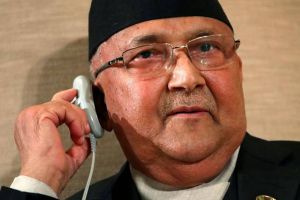
In Nepal, China had and still has some leaders and intellectuals on its side, but that was not enough (as recent events also prove) to cement its control on Nepal. True, it enjoys tremendous goodwill among the common people for what they see as China's non-interference policy in Nepal, or as a balancer to India's bullying. The reality is, the common people who believe this aren't the ones deciding foreign policy.
China's new position or policy on Nepal had its own flaws. The most important being the belief that Nepali leaders would remain true to the promises made behind closed doors and be grateful and loyal toward China for its recent political and other help. It failed to see how our leaders were using it to advance their political aspirations, instead of China using them to advance its “interests”. Second, it thought the Indian blockade of 2015 had resulted in an anti-Indian nationalistic leadership that was ready to embrace it as savior. Our leaders made it appear so and China started to invest heavily in our politics, with the belief that it had now secured Nepal and could use it to bargain with India at an opportune time. It totally misread our leaders and their virulent anti-India rhetoric and the limit to our collective "shallow" anti-Indianism.
Yet another Chinese mistake was to view Pushpa Kamal Dahal aka Prachanda as more powerful and more important to China's “interests” than PM Oli. It interpreted the power struggle between the two leaders as a struggle between pro-Indian and pro-Chinese factions, or was made to do so by its trusted “analysts”. Up until the Chinese envoy’s interference, the conflict between the two leaders was purely personal in nature. It had nothing to do with India or China, as my good friend and editor of this paper Biswas Baral wrote: PM Oli was flabbergasted when the Chinese envoy asked him to step down to protect party unity. PM Oli then did what anybody in his position would do—dissolve the parliament. The Indians were quick to understand the implications of Oli's actions. They only “took note” and more than that he was interviewed by two Indian television channels to bolster his nationalist credentials. It was in India's interest to make Oli appear nationalist and not make his move appear as one directed by India—and in all fairness PM Oli acted independently to prevent Prachanda from becoming PM with China's help.
India was happily surprised because it got what it wanted—not because of its excellent diplomacy or covert operations, but because of the Chinese side’s mistake of asking PM Oli to resign. Had Prachanda maintained distance with China and not have himself portrayed as Beijing’s trusted man in Kathmandu, then, probably, India would have worked out a new coalition and made him our next PM already.
For the first time in many years, Nepal has decided its own political course under PM Oli. And this course is quite advantageous to India. He may not be someone the Indians can control, but he is not someone the Chinese can control either. This means less Chinese and Indian interference in Nepal's domestic politics. Therefore, the wise thing for India to do is what it is doing now—not supporting any coalition against PM Oli, because that would only lead to political horse-trading and instability, letting the door wide open for others.
China shouldn’t see Oli as an enemy either. If he refused to follow its diktats, he is not someone who is likely to follow India’s either. And that means no threat to its real interests in Nepal. Its recent spectacular failure should also make China understand the flaws in its Nepal policy and not look for favorites in Nepal. It should follow its earlier hands-off approach and hope Nepal keeps getting a somewhat "nationalist" like Oli who can counter not only it but also India. Just as an old Chinese saying goes: Sai weng shi ma, yan zhi fei fu (“what appears bad could be a blessing in disguise”).

Opinion | Small things that matter
Most opinion columns that you read, I am sure, are about politics. The way we Nepalis have been politicized makes me always wonder and gets me befuddled. It’s not just op-ed writers. As a society, we are always hooked to politics and our politicians have not disappointed us in their capacity to deliver one height of brinkmanship after another.
As a writer, I can say that it’s easy to churn out under a thousand words about political events, and get done with your task for the week. It’s easy to make people relate, it’s also easy to get quotes because almost everyone is an expert on politics. But that's probably not the only reason why we are hooked to politics.
For some time now, I have been wondering about all the issues other than politics that could have been given space in newspapers or social media discussions. But we have this tendency to consider 'other' issues mundane, routine and small. As a result, the lead articles in papers are without fail about ideology or about the turn of events in the political sphere.
But in real life, we are struggling with so many day-to-day issues that need to be discussed, brainstormed upon, brought to the notice of the authorities or policymakers or simply documented as a testament of the time we are living in. We have come a long way, living through many transitions as a society. And we are trying to survive by quickly adapting to the insurmountable shifts.
As millennials, we are always caught between the urge to go abroad and settle in a developed country or to toil here knowing that it’s a running chaos. That dilemma of the privileged is not discussed enough. We live in a hypocritical society where those staying back pretend to be staying back because of their hardcore 'patriotism' until one day, all of a sudden, it gets traded for the comfort of a better life. But the hypocrisy is so deep that we don't discuss these dilemmas openly and we have a new generation whose only aim in life seems to be to settle abroad too.
A friend of mine, a professor in a Nepali university, writes regularly on student-teacher relationships on her social media posts. She observes that it sometimes seems so awkward that right outside the campus, the students refuse to acknowledge the teachers. They simply don't care.
At first look, it may seem like a useless ranting of an old-fashioned teacher. But these are examples of real issues that need to be addressed in our lives through collective effort. I believe the way the students behave is connected to how they view success in life. If their basic orientation in life is going abroad to a developed nation, and settling there, they are bound to consider the 'professors' who have not been able to settle abroad as mediocre or even failures.
I know that without proper research and scientific studies, such conclusions are stretching it too far. But I am using this just as an example of how small things are connected to the bigger scheme of things and need to be studied in that light. In the absence of such grassroots oriented 'sourcing' of issues, we have had the public opinion space dominated by 20th century reductionist discussions on socialism, communism and even specific incidents in the lives of foreign leaders and thinkers who lived over a century ago.
We need less of these digging the graves and hunting for skeletons adventures and more of serious discussions on real issues of today. We need to talk more about our children and our friends and our houses and our parks rather than about Mao's wife or Gandhi's children. Let's write about these more so that the researchers pick up the clues and provide us with evidence or expose our biases. If we need to uncover the truth, if any, we need to do so about the small things that really matter in our lives today and tomorrow.

Spirituality | Effortless knowing: Key to meditation
Soon after the Buddha's Mahaparinirvana (passing away), his disciples wanted to synthesize his teachings to keep their purity and prevent arbitrary interpretations. So they called a meeting of senior monks. It was decided that 500 of the most accomplished ones—Arhats (those who had fully overcome the mind's habitual patterns and disturbing emotions)—would gather and recite the teachings.
Ananda, the Buddha’s shadow-like attendant, was supposed to be in the meeting as he was the one to remember the Buddha's teachings. People had extraordinary memory at that time because all knowledge had to be recorded in human brain; paper wasn't invented to note things down. But there was a problem with Ananda—he wasn't an Arhat yet. Becoming an Arhat required the mind to have clear, unhindered knowledge of its own reality. Ananda still lacked that clarity.
The night before the great convention, the First Buddhist Council, Ananda was in crisis and his participation wasn’t sure. As the story goes, Ananda tried to speed up his Arhathood but failed. The more intensely he tried, the more he felt being pushed away from it. Tired and exasperated, he was convinced that he wouldn’t make it to the council. So he gave up and went to sleep toward the end of the night. That did it—just before the dawn, as soon as he fell asleep, realization dawned on him. He was able to fully free the mind by seeing and separating the subtlest of habitual tendencies and disturbing emotions.
Often when we practice meditation, we are way more confused and deluded than Ananda (he was already very close to realization). We think meditation is a state of being free from thoughts, and that it is a peaceful, feel-good state of mind. We think it is about stilling the mind. Not quite.
Stilling the mind or making it thoughtless is never the goal of meditation, at least in the Buddhist tradition. It is helpful to have a still mind, but we don’t strive to make the mind still. And we don’t make effort for that either, because we cannot make the mind still through effort. It’s like going to sleep—it’s helpful and very beneficial for the body and mind to fall asleep. But we cannot sleep by trying. We cannot force ourselves into sleep. We create the necessary conditions for sleep, like lying down on a bed, putting a cover over us, turning off the light and so on. But the more we try to sleep, the more sleep evades us. We can just have an intention, not effort, to fall asleep. We let go of all our trying, all our doing, and sleep befalls us.
Having a still mind in meditation is like that. We create the necessary conditions, and we let go of all our efforts, all our doing energy. Then mind calms down. What is the necessary condition here? There are a few: a curious, non-judgmental attitude that accepts things and situations as they are. Not labeling experiences as good or bad, right or wrong. Willingness to let go of things. If that doesn't work, allowing them to let be as they are. It's as if you let go of your stress and try to relax; but if you cannot relax, let the tightness be there. Accept it as the truth of the moment. As soon as you accept it, the resistance drops and your tightness goes, often without your knowing. External environment like a comfortable meditation cushion or a peaceful candle-lit shrine could help a bit in the beginning, but they are neither necessary nor sufficient.
Say you are successful in stilling the mind. But the point is not quite that. Animals never think, they naturally have the thought-free mind that we all wish for. Is that due to meditation? Are they meditating? Not at all. Like animals, we can have a thought-free and still mind. But at the same time, we can be totally ignorant, bonded, and miserable. At the most, a stilled mind can temporarily send mental defilements to the background, not eradicate them. Eradication is possible only when we see them up-front and properly understand their nature. A still mind can just give us a supportive environment to see and cleanse that stock of mental defilements. It is only a means, not an end in itself. The goal is to have wisdom—that full seeing and understanding of the mind’s intricacies—that liberates us.
We deal with our jumpy and bumpy mind by attentively seeing it, being curious about it, and accepting it for what it is. Knowing, more than trying, calms it. And this knowing takes us further—toward wisdom, toward a liberating clarity. That’s the real thing we look for.


