


_20210714115201.jpg)


Profile | The lively literary life of Saraswati Pratikshya

For Saraswati Pratikshya, writing is an act of bravery.
In her debut novel Nathiya, shortlisted for the prestigious Madan Puraskar, Pratikshya narrates the story of members of the Badi community in western Nepal who traditionally worked as entertainers for the Rana rulers.
The book, which won her the Pahichan Puraskar (Identity Award) in 2019, follows the lives of Badi women who, after the fall of the Ranas, had to resort to prostitution to make their ends meet.
“One day, I was working on my poems when I saw some Badi women protesting before Singha Durbar on TV,” says Pratikshya. “Many of those women were there in their petticoats, demanding that the society restore their dignity.”
It was at that moment that Pratikshya said to herself, “If I ever write a novel, it will be about Badi women.”
Pratikshya based much of the novel’s plot on stories of real Badi women, focusing on women of the Dalit community and shedding light on the systematic abuse they’ve faced both at the hands of men and society.
Nathiya got a lot of love from readers, she says, and the attention was better than expected. But the success also came with some pain.
“There were many risks involved in writing the book,” Pratikshya shares. “Several times, I had to put my life in danger by going to places I had never been to before and talking to people in uncomfortable situations”. She reckons that even her journey to collect these stories could one day be turned into a novel.
While the publication processes went relatively smoothly, much of the struggle came after the novel’s release.
First, she struggled to carve a space for herself in Nepal’s literary arena. “The struggle women writers face is unimaginable. If your writing is weak, you’ll be subjected to laughter. ‘Women and their futile gossips’, they will say. If you come off too strong, you’ll be labeled as ‘characterless’. Every step you take raises questions about who you are as a person.”
Aside from this, it took a long time for Pratikshya’s family to fully support her endeavors. Hailing from a Thakali community that was traditionally into business, it was considered uncharacteristic for Pratikshya to step into literature, which isn’t seen as financially rewarding.
Then there was a controversy surrounding her book as members of the Badi community filed a petition at the Supreme Court against the book’s contents, objecting that some terms the author had used were ‘offensive’ to the community.
“There were talks about the Supreme Court ordering me to make changes in the book, but they were only rumors. You can find the full text of the order online,” she says. “The court made its decision by respecting a creator’s freedom,” she says.
Despite the controversy around Nathiya, Pratikshya considers herself a lucky writer. “Each book I’ve written has given me a different identity,” she shares.
While Pratikshya is known as a novelist, she also enjoys writing poetry. She remembers carrying a diary-full of poems when she met her foster father, the famed writer Saru Bhakta, for the first time in 1999. By then, she had already developed a keen interest in writing—and she believes she would have become a writer even had she not met Sarubhakta.
“But he has shaped my writing,” she confesses. “His guidance has played a big role in my life. My writings matured at a young age and my thirst for knowledge grew 10-fold due to his influence.”
That very maturity and curiosity led Pratikshya to write her first poetry collection, Yadhyapi Prashnaharu (2005) when she was preparing her Bachelor’s thesis. “I was always writing poems,” she says. “And I finally had enough of them for a book.” Following this, she published her second and third collections of poetry, Bimbaharuko Kathaghara (2009) and Bagi Sarangi (2012).
Even though she’s now busy with her family business following the death of her elder brother, she hopes to publish a new collection of poems in the next couple of years.

Profile | The man behind Nepal’s most popular protest song
Raamesh Shrestha’s musical journey has been closely tied with politics. The song ‘Gau Gau Bata Utha, Basti Basti Bata Utha’ (a call for everyone to rise up for national development) has become synonymous with him and continues to reverberate on radio in small village neighborhoods, and at political rallies and protests.
The song became a protest anthem during the anti-Panchayat protests in 1990, as well as a rallying call for demonstrators during the Second People’s Movement in 2006. It continues to be the song of choice for any form of protest across the country.
“The song carries emotions that transcend time,” says 77-year-old Shrestha. “It resonates with most people—regardless of their age, ethnicity, or nationality.” Perhaps that is why it has been translated into 17 languages, including Chinese, Hindi and English.
And Shrestha sang from experiences. The singer grew up during politically tumultuous times. Born in 1944, he witnessed the fall of the Rana regime, the rise and fall of Panchayat, the decade-long Maoist insurgency, and the overthrow of the Shah monarchy. In these defining moments in Nepal’s history, Shrestha found solace in making music while his audience felt energized listening to them.
His music-making career began long before he released his first song. As a child, he was constantly surrounded by music-lovers. Shrestha’s father was an avid fan of Nepali songs and his sisters used to play sitar. At nine years of age, he had already learned how to play tabla. At 11, one of his school friends recommended that he be allowed to play at school programs and thus his semi-professional musical journey began.
Following his passion, in 1962, he took part in Radio Nepal’s folk song competition.
After the contest, he returned to Okhaldhunga where he taught in schools. But as more people fell victim to the Panchayat regime’s injustices in the mid-60s, Shrestha along with his friends Raayan, Manjul, and Aarim created a leftists group called Ralfa that traveled across the country singing progressive songs about social justice, equality, and patriotism.
“Fighting for our country was our duty,” he tells ApEx. “We hid and ran from the government so we wouldn’t be killed. During the anti-Panchayat movement, we lost countless friends and comrades who were murdered by the government.” It’s essential that these sacrifices be talked about, he adds.
This is why Shrestha has authored Baalapan Jeevanko, an in-depth account of Shrestha’s life and journey from an aspiring musician to being called ‘Janata ka Gayak’ (people’s singer.)
He’s also writing a second and a third book—a continuation of his life’s story which will encompass everything from the friends he lost while fighting for his country, to the cultural diversity he came across during his travel years, to the lost patrons of Nepali music.
Musicians today are considered celebrities while up until a few hundred years ago, traditional wandering singers were so looked down upon that they would have trouble getting shelter during their travels. But the celebrity status that is entrusted upon musicians doesn’t interest Shrestha.
“What we do is important,” he says. In his opinion, musicians deserve celebrity status only if they have a role in lifting up the lives of the common people by filling them with joy and awareness. Even though that’s becoming rare, he’s fascinated with the evolution of the industry over the past two decades. There are countless genres and subgenres to listen to, he says, and each brings a new story to the table.
“Music will always find a way to resonate with people—whether they’re from old vinyl records, cassette tapes and CDs as in our times, or snippets on social media apps now,” he says. If there had been a video-sharing app during his youth, he’s sure he too would have put it to full use. Even today, Shrestha is uploading his old songs to the YouTube channel (Sarthak Academy Nepal) so that the golden oldies are always listened to and never forgotten.
What bothers Shrestha is the trend of producing songs with the sole purpose of going viral and making money. “Nepali music will lose its charm and quality if this continues,” he warns.
He is determined not to let that happen. Shrestha, who has written 25 songs, composed music for around 150 songs, and lent his voice to more than 300, has five albums to his credit. He is still busy making music. The pandemic has put a stop to his work, as he can’t record in a studio now. But he is in the process of composing music for iconic old poems from celebrated poets and turning them into songs.
Even though the music industry’s future is unpredictable, Shrestha is at peace with the progress so far. “There will always be hurdles on the way. Songs will incite deep rage in people and then quell it like a balm. Some music will disgust the audience and then disappear into crevices of the internet and some will be revisited and sung decades after its making,” he says. But Shrestha has complete faith in today’s youths: “I believe they will do justice to our political as well as musical legacy.”

Vox Pop | Football fandom really has no age bar
With the kick-off of Euro 2020 and Copa America 2021, there is now a veritable football fiesta. Amid the Covid-19 pandemic, the football governing body of Europe has allowed a certain percent of the seats in the stadium to be filled with spectators while the South American football federation is holding all games behind closed doors. These covid-related measures seem to have done nothing to dampen the spirit of Nepali football fans though. ApEx talked to 10 individuals about their most memorable football memories and incidents.
Bharat Kumar Bhattarai, 71
I started following football after 1990. We used to listen to commentary on FM radio. But lucky me, I got to watch the 1994 World Cup on television. Although Bulgaria knocked out my team Germany in the quarterfinals, I enjoyed the final between Brazil and Italy.
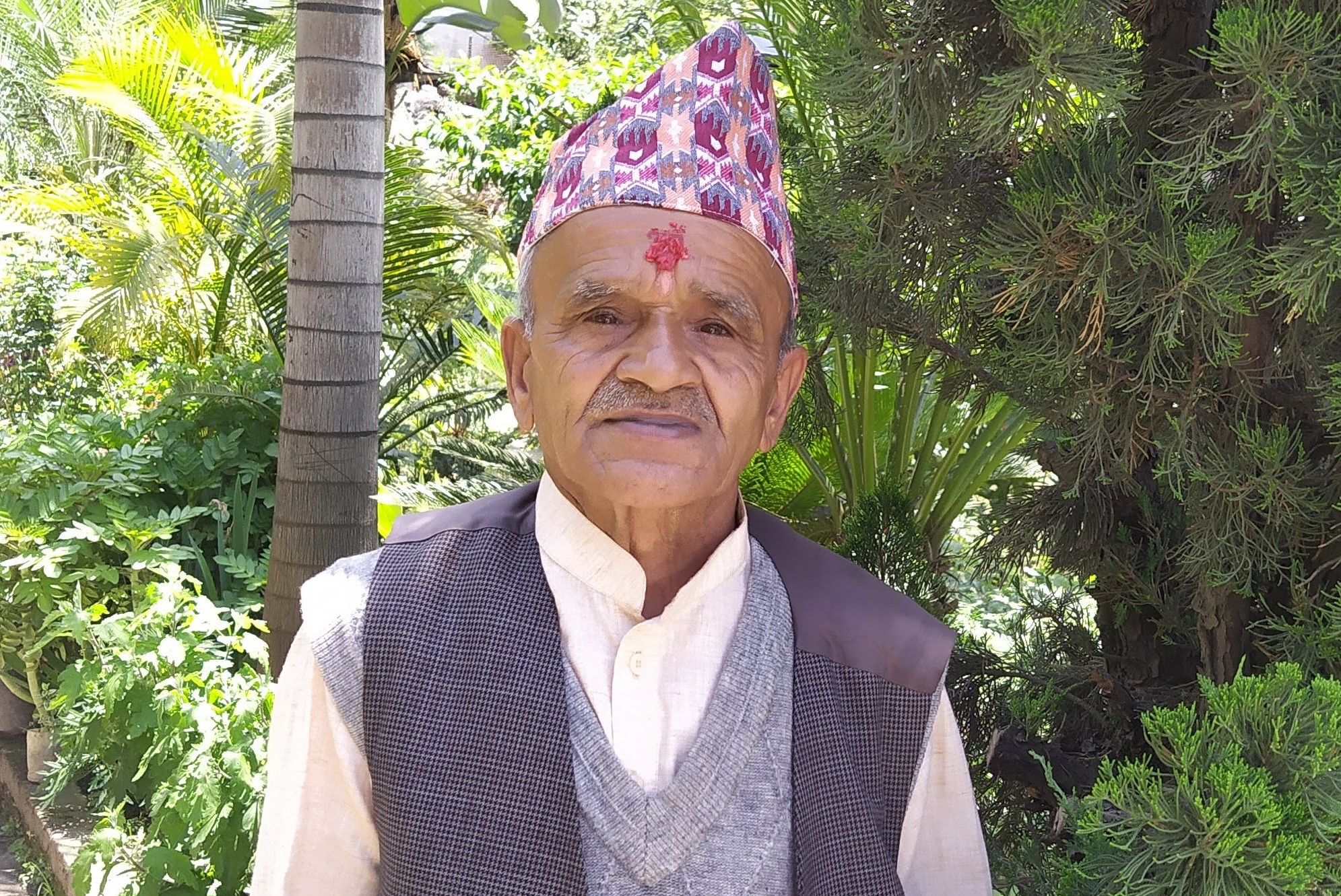
I love the attacking football Germans play and hope they will win the Euro this time. The team had an embarrassing run at the 2018 World Cup despite being the defending champions. Because of my age, late-night match timings don’t feel comfortable, yet I follow the tournament whenever I can. Also, I wish for speedy recovery of Danish midfielder Christian Eriksen who collapsed from cardiac arrest during a game a few days ago.
Krishna Bahadur Karki, 65
An unpopular opinion—I support no team and I enjoy every clash. Enjoying every bit of football is only possible when you don’t expect ‘extra’ from the teams. Only a few people enjoy the game this way.
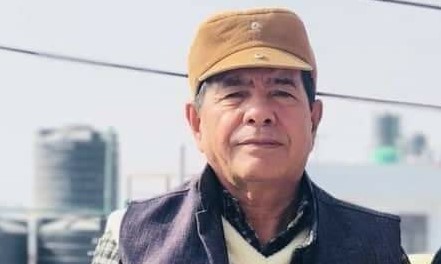
How can I forget the infamous headbutt from Zinedine Zidane on Marco Materazzi during the final of World Cup 2006! Zidane shouldn’t have returned to the team after announcing his retirement. He single-handedly carried the team to the final, but then the headbutt marked a bitter end to his extraordinary career.
Dinesh Dhungel, 63
I have watched only a few highlights of the Euro Cup this time but I have many fond memories of watching World Cups with my friends. Back when we were young, we used to stay up all night, drinking beer and cheering for our favorite teams. I’ve always enjoyed games with teams from England, Italy, Germany, and Argentina. I was the biggest fan of Diego Maradona and followed most of his games. Now I feel the same way about Messi.
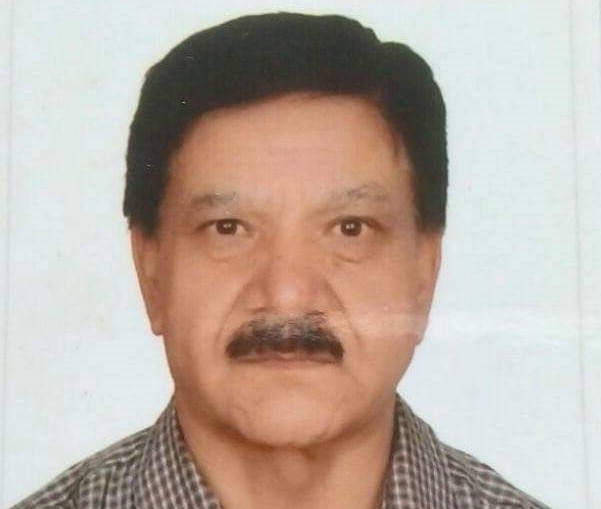
Our friends never bet on football games. No, that was reserved for when we played with each other.
We didn’t have football equipment when we were kids so we’d improvise. The place where Hotel Narayani stands today used to be a large ground where anyone could get in. And that’s where we played most of our games. The St. Mary’s School grounds used to allow us to play there too sometimes. It was never really serious, just fun with friends, and now when I think about it, it gave me a reason to exercise.
Ramji P Koirala, 59
The Falkland Wars in 1982 was a hot topic in Kathmandu and it was the first time I heard of Argentina—the name fascinated me. Then there came the 1986 World Cup, which we Nepalis got the chance to watch on NTV. I was excited to watch the Argentine national team for the first time. I still remember Maradona’s madness and infamous hand-goal during the breathtaking final against West Germany. I was in instant love with the Argentine football team.
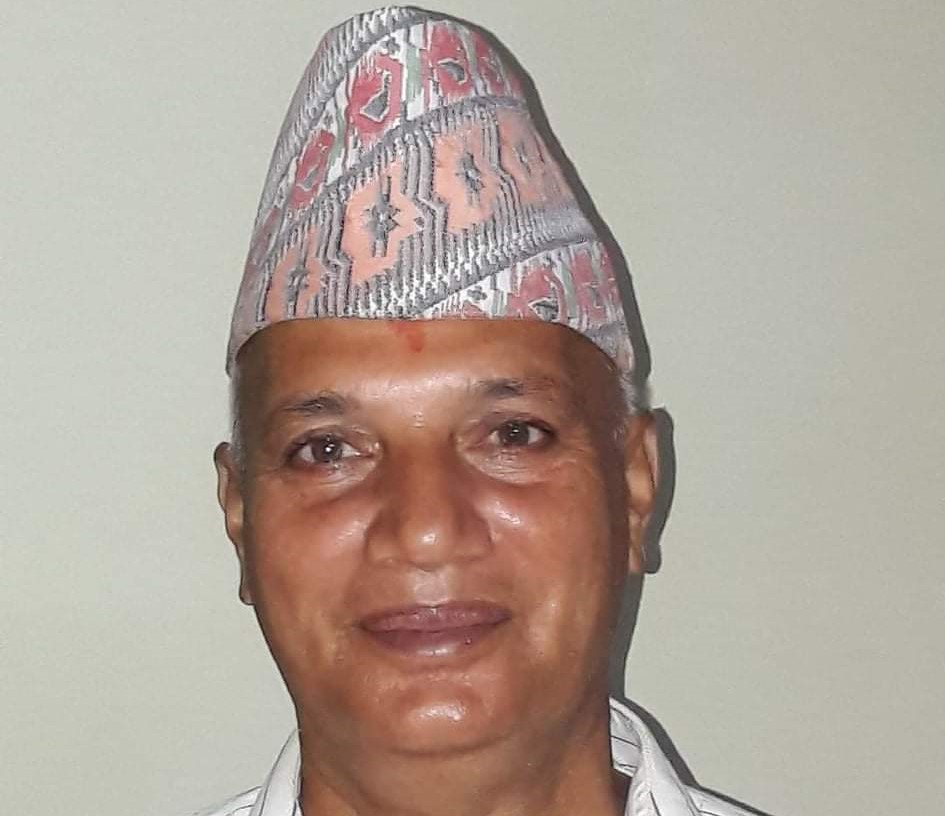
I am always updated about football but I can’t watch games late at night. Old age sucks, you know, haha! Football teaches us a lot about teamwork, passion, and love. I love this beautiful game and hope to see Nepal on the world stage soon.
Atmaji Pant, 56
I’ve been watching football since 1990. I made some of my favorite memories while watching the World Cup. I remember the one time I used to go to my friend’s house almost every day for a month so we could watch the games together. We positioned his TV diagonally to the chairs, so we had to tilt our heads and look to the side to get an unobstructed view. Sitting in that position for such a long time gave me the worst neck cramp, but I still kept watching.
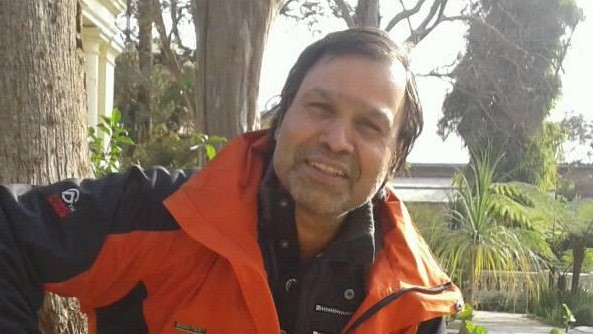
We won’t be going to each other’s houses this year to watch the Euro Cup or Copa America but I’ll still be watching both the tournaments. I love Belgium and hope they win the Euro. Holland are pretty strong contenders too.
Kamala Neupane, 55
I didn’t have deep knowledge of football, even now I don’t, but it has given me memories of a lifetime. My brothers were Brazil supporters, so I also used to cheer for Brazil. Our neighbor had a television set and all of us used to watch together. Sometimes, we recall those moments with friends and they still give me goosebumps. Nostalgia!
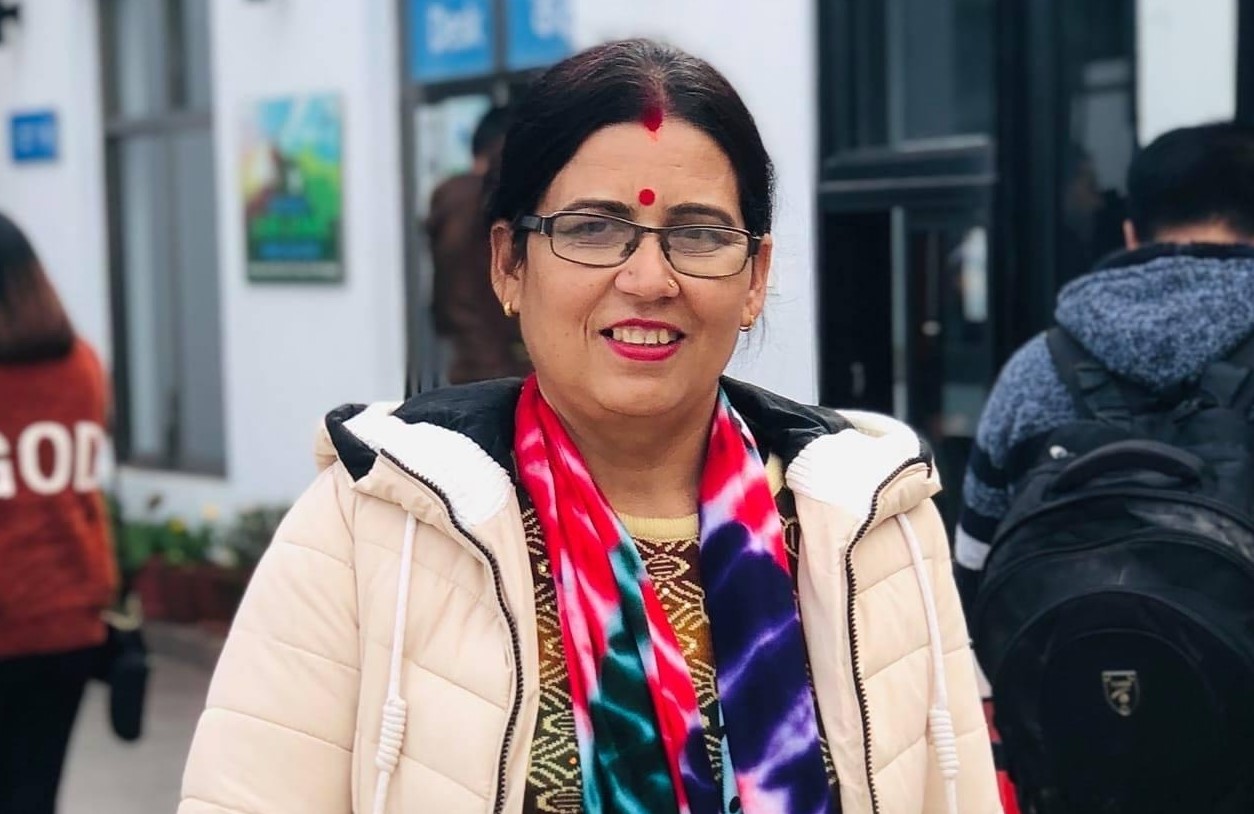
My son passionately follows football and I give him company once in a blue moon, otherwise, I am not much into it these days.
Phanindra Ghimire, 53
The 1998 World Cup final, Brazil vs France, was my first ever football-watching experience. Despite France’s victory, I became a fan of the fiery Brazilian team. Ronaldo, Rivaldo, Cafu, Roberto Carlos are gems of football! The next World Cup in 2002 and my team lifted the trophy. I will never forget the beautiful moment when I chanted ‘Brazil! Brazil!’—lifting my two-year-old son in the air.
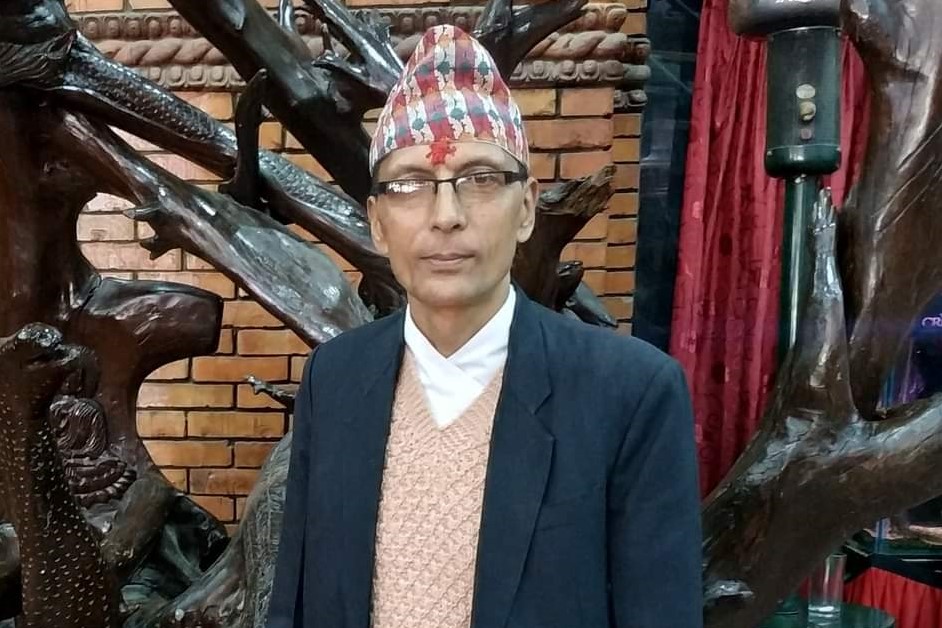
I still follow each match Brazil plays. My son also supports Brazil (he had to) and we make a great company. We both cried when the home team lost 7-1 to Germany in World Cup 2014. But now, I am so happy that our champ Neymar Jr. is only 9 goals away from surpassing the national record of the legend Pele. He already has 116 goal involvements in his 107 caps—such a beauty. This boy is going to win us the World Cup for sure. I want to lift my 21-year-old son again, chanting for my team.
Prabhuji Pant, 53
Portugal has perhaps the best team in the Euro Cup besides Belgium. I’m a big supporter of Christiano Ronaldo, so I’ll be supporting his team. Of course, no one will ever live up to Pelé for me. Growing up, he was the one I looked up to most. Me and my brothers used to play football in Dhobichaur ground and Pele was who I wanted to be like. I remember being 11 years old and going to watch league matches at Rangasala with my family. There was a place called Guccha Tol that had a small ground—that couldn’t hold over three players from a team at a time—and we used to play there, making our footballs, goal posts, and even rules.
I’m not one to gamble or take part in bets, but I’ve been in a lot of lottery ticket games and won a quite few too. You could say I’m lucky when it comes to football.
Birendra Paudel, 51
I’ve always been a huge fan of Brazil’s football team and that’s exactly the team I’ll be supporting this Copa America. I don’t have any specific alliance for the Euro Cup, but I believe Belgium is a contender. This team is one of the best ever and they’ll probably reach the finals this year. Football is something that’s been a part of my life for a long time now. We never had the equipment to play football growing up. So we usually made do with rubber balls and a heap of clothes tied together to look like a sphere. The grounds were small and the goalposts even smaller.
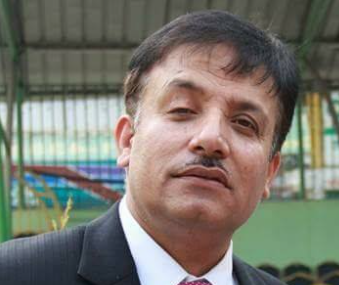
I remember being around nine-year-old and listening to the 1978 FIFA World Cup commentary on the radio. It was only during my high school days that I got to watch the finals on television. In 1986, when the World Cup was televised in Nepal, I sat down and watched the entire tournament even though the TV display was unclear with strange noises coming every few minutes.
After watching the games became a norm, me and my friends used to make lottery tickets after collecting money from everyone, where each person picks a country from a bowl of papers, and whoever gets the winning team gets all the money. Right now, I’m getting little sleep, trying to catch every game in the middle of the night while the rest of the family sleeps.
Subasana Thapaliya, 50
When I was 13, I was a national-level runner. I was always into athletics and that included running, so it’s not a surprise I used to play football with my brothers. There was this one time during my school years when Bagmati zone’s women football team didn’t have enough players, so they included me just to fill the quota. I knew little about the game since I only played for fun with family—and we lost the game—but it’s still one of my most cherished memories.
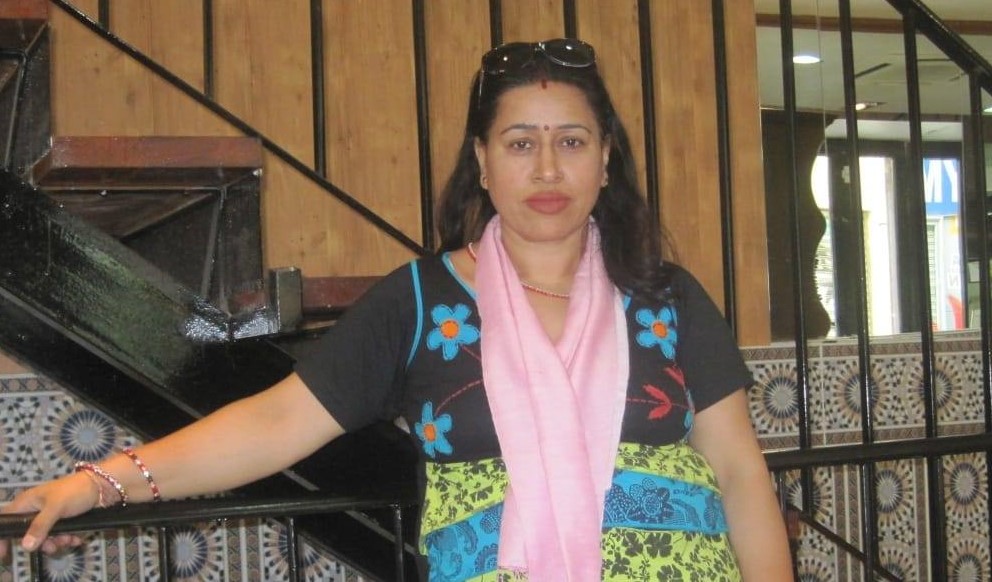
Even today, I still watch all the football games I can. Even if my husband and sons fall asleep, I’m the one watching the Euro and World Cup through the night.
This year, I’m rooting for Spain because I’ve been there many times and feel a personal connection to the country’s team. I also enjoy their gameplay. Football is a game of passion and stamina—and I love watching teamwork between the players. Most memories I have regarding football are fun, but there is one that saddens me to this day. The Escobar murder after the 1994 FIFA World Cup still breaks my heart.

Superheroes | The forgotten soldiers: Kathmandu’s trash collectors
A shrill whistle goes off as you are sitting down with your morning cup of steaming milk tea. You sigh in relief. You had started becoming slightly concerned about the overflowing trash can near the main gate. Someone is finally here to empty it out. You take a sip of your tea and pick up the newspaper.
Perhaps a similar scene plays out in most households of Kathmandu that, according to Solid Waste Management Association of Nepal, collectively generate 1,200 tons of waste a day, of which 65 percent is organic waste and 15-20 percent is recyclable. And handling our waste are around 4,000 laborers from 75 private companies and municipalities.
Kathmandu’s inability and unwillingness to segregate its waste—resulting in trash collectors having to lug heavy loads and worse, suffering cuts and injuries because of broken glasses and such—has always been glaring. But waste-pickers say that is nothing compared to how undignified their job feels. Chalk it up to the public’s attitude towards them, or the companies they work for always telling them to cater to each household’s demands and rarely ever addressing their woes, theirs is a thankless job.
“I have become accustomed to people calling me ‘fohor bhai’ and even scolding and screaming at me,” says 38-year-old Surendra Bhusal. He has been working as a trash collector in Kathmandu for a decade and, in those 10 years, not once has anyone said a kind word to him. Waste-pickers, he laments, are often treated like trash because they work with trash.
The mindset reflects in our actions. Most of us aren’t conscious or a little sensitive about what we are throwing and the fact that someone, an actual person, will have to manually sort through it. Bhusal says there are often soiled pads, broken shards of glass, kitchen waste and plastic cold drink bottles all in the same bin or plastic bag. It makes their jobs more difficult and fraught with risks. There have been times when dirty water and slime have splashed onto Bhusal’s face and clothes. It makes him feel like the lowest of the low in society, he says.
What’s worse, says 39-year-old Khadga Bahadur, is that there is no solidarity among workers which makes it difficult for them to campaign for their cause—dignified labor, sensible work hours, better pay, and health insurance.
Bahadur, who has been on the job for 16 years, works for 12 to 13 hours a day (out of which four to five hours are spent walking from one place to another), with a one-hour lunch break in-between. On average, he visits 400 to 500 houses and in half of those places he has to go inside to collect the garbage. This makes his work tedious, confusing, and time-consuming.
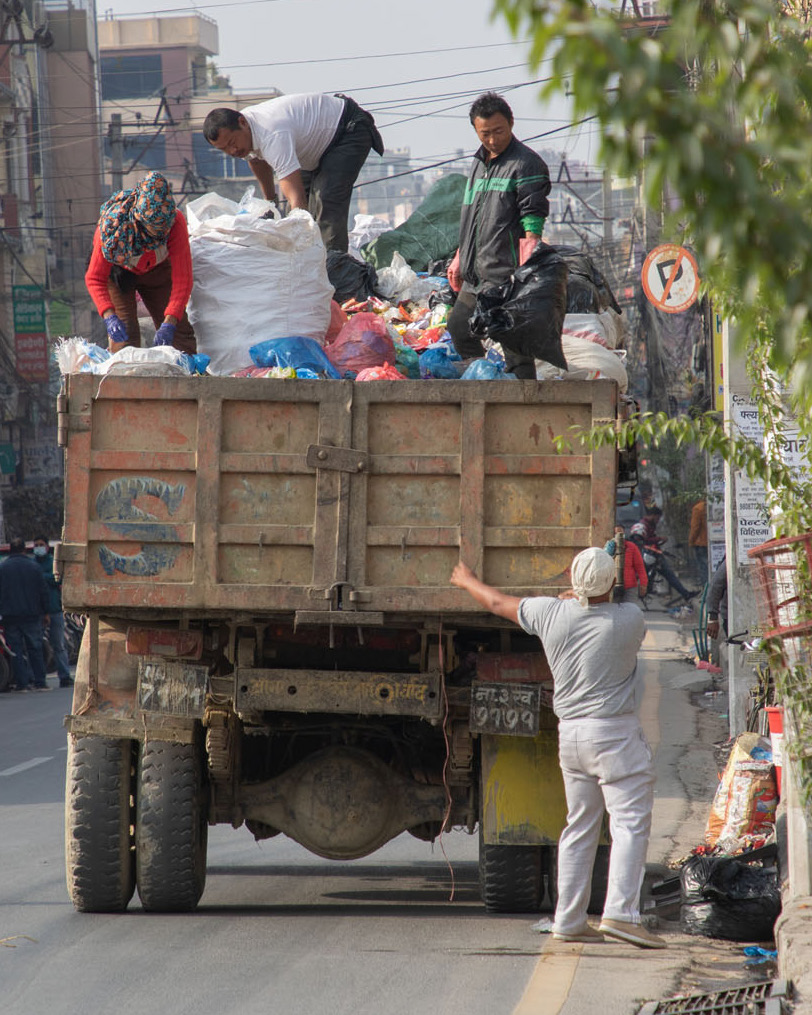
“Our job comes with many hidden costs. We regularly suffer from small injuries and diseases. After many years in the job, most of us develop long-term health issues,” he says. However, neither the public nor the government seem concerned and trash-collectors, without whom our households simply wouldn’t function, find themselves in a quandary. Their livelihoods depend on their ability to work but the work they do puts their health at stake.
The Covid-19 pandemic worsened their already dire situation. As essential service workers, waste-pickers have had to put aside their fears of contracting the infection and taking it back home to their families. While some have been given masks, gloves, and boots by their companies, most have had to buy their own protective gears.
Prakash Pariyar, 49, says a few of his colleagues have contracted Covid-19 but they didn’t get any financial assistance whatsoever. The hospital bills have created a dent in their savings, one they will never be able to recoup. As frontline workers, they were to receive the vaccine at the same time as police officials. However, none of the 10 trash collectors ApEx spoke to had been vaccinated. They also don’t know of anyone in their circle who has received even a single dose of the vaccine. This is when many other frontline workers—doctors, nurses, drivers, deliverymen, etc.—have taken both the prescribed doses.
“We are the nation’s forgotten people. No one cares about our wellbeing. We are as disposable as the garbage we get rid of,” says 42-year-old Bhim Bahadur Gurung. He doesn’t want to make a fuss because he knows nothing will come out of it. But he wishes to get vaccinated: Forget putting his loved ones at risk, if he contracts the infection and isn’t able to work, how will his family of five survive?
Pariyar has given up hope that their situation will improve. It’s not going to happen, at least not in his lifetime. Of that, he is sure. For 22 years, he has worked relentlessly from 5:30 am till 7:00 pm or later but the long hours he has clocked in haven’t amounted to much. There is no financial security; everything he earns is spent running the household. He isn’t a valued member of the society; most people hurl abuses at the slightest mistake and not one person knows his name. Everyone simply calls out to him as ‘fohor’, ‘oye’ and very rarely, ‘dai’.
“Some households gave us food supplies and cash during the previous lockdowns. But this time everyone is scared to have any kind of contact with us because the virus is said to be highly infectious,” says Pariyar.
What saddens trash collectors, however, isn’t that no one has come to their aid at such troubled times but the fact that they are still expected to carry on as if everything is okay all the while being acutely aware that they are feared as virus carriers. Some literally run away when they arrive while others shout instructions from the rooftops of their homes. Bhusal says they are made to feel both wanted and unwanted at the same time. Though if trash were to magically disappear, the society would pretty much wish their existence away.
Sanjay Khatri, 25, says the situation wouldn’t be so bleak if every household at least put their trash-cans outside their gates. It’s okay if they don’t want to throw their garbage in the collection vehicle themselves, he says. But the mere suggestion of that more often than not leads to a stream of accusations and insults. They are told they aren’t doing their jobs properly and threatened with disciplinary action from their offices.
“There are so many problems in our line of work that I don’t even know where to begin. It’s best I turn a blind eye and just carry on. Otherwise, it’s too hurtful,” he says.


