


'We are going to die': Sri Lanka warns of food shortages

Sri Lanka' s prime minister has warned of a food shortage as the island nation battles a devastating economic crisis and vowed the government will buy enough fertiliser for the next planting season to boost harvests, The Times of India reported.
A decision in April last year by President Gotabaya Rajapaksa to ban all chemical fertilisers drastically cut crop yields and although the government has reversed the ban, no substantial imports have yet taken place.
"While there may not be time to obtain fertiliser for this Yala (May-August) season, steps are being taken to ensure adequate stocks for the Maha (September-March) season," Prime Minister Ranil Wickremesinghe said in a message on Twitter late on Thursday.
"I sincerely urge everyone to accept the gravity of the ... situation."
Rajapaksa appointed nine new members to the cabinet on Friday, including to the critical health, trade and tourism ministries. But he did not name a finance minister and the portfolio is likely to be retained by Wickremesinghe.
Tourism-dependent Sri Lanka is facing a dire shortage of foreign exchange, fuel and medicines, and economic activity has slowed to a crawl, according to The Times of India.
"There is no point in talking about how hard life is," said APD Sumanavathi, a 60-year-old woman selling fruit and vegetables in the Pettah market in Colombo, the commercial capital. "I can't predict how things will be in two months, at this rate we might not even be here."
Nearby, a long queue had formed in front of a shop selling cooking gas cylinders, the prices of which have soared to nearly 5,000 rupees ($14) from 2,675 rupees in April.
"Only about 200 cylinders were delivered, even though there were about 500 people," said Mohammad Shazly, a part-time chauffeur in the queue for the third day in the hope of cooking for his family of five.
"Without gas, without kerosene oil, we can't do anything," he said. "Last option what? Without food we are going to die. That will happen hundred percent."
The central bank governor said on Thursday foreign exchange had been secured from a World Bank loan and remittances to pay for fuel and cooking gas shipments, but supplies are still to flow through, The Times of India reported.
Inflation could rise to a staggering 40% in the next couple of months but it was being driven largely by supply-side pressures and measures by the bank and government were already reining in demand-side inflation, the governor said.
Inflation hit 29.8% in April with food prices up 46.6% year-on-year.

Speaker Sapkota directs government to probe rape case and bring culprits to justice
Speaker Agni Prasad Sapkota has directed the government to investigate the incident of sexual violence against a girl who took part in beauty pageant.
Speaking at a meeting of the Federal Parliament on Friday, Speaker Sapkota directed the government to expedite the investigation into the incident and bring the culprits to justice.
The Speaker issued the ruling to bring the culprits to justice after lawmaker Gagan Thapa demanded an investigation into the sexual violence against the girl who participated in the beauty pageant.
Earlier this morning, youths staged a demonstration outside the residence of Prime Minister Sher Bahadur Deuba demanding justice to the rape victim.
They have demanded investigation into the incident and action against the culprits.
Earlier on Wednesday, the girl came out with a series of videos on TikTok claiming that she was drugged and raped in 2014 when she was16-year-old.

Youths stage demonstration outside PM’s residence demanding justice to rape victim (With photos)
Youths have staged a demonstration outside Prime Minister Sher Bahadur Deuba’s residence in Baluwatar on Friday demanding justice to a girl who was raped eight years ago in the name of beauty pageant.
They have staged the demonstration to express solidarity with the survivor and to demand action against the culprits.

Earlier on Wednesday, the girl came out with a series of videos on TikTok claiming that she was drugged and raped in 2014 when she was16-year-old.
The participants have also demanded that a time limit on filing complaints on rape and other incidents of sexual violence be removed at the earliest.


Queer celebrations essential for anti-homophobic society
This week on May 17 the LGBTIQA+ community marked the ‘International Day Against Homophobia, Transphobia and Biphobia’ (IDAHOTB) with the theme ‘Our Bodies, Our Lives, Our Rights’. On this day in 1990, the World Health Organization had declassified homosexuality as a disease. The day was proposed in 2004 and launched the following year. It’s celebrated in 130 countries despite same sex activities being a criminal offence in over a quarter of these places. The LGBTIQA+ community feels celebrations like these are essential to create awareness about queerness so that there’s greater acceptance of all kinds of identities and choices. It’s also an opportunity to start a conversation with policymakers, media, and the public.
Laxmi Ghalan, founder and president of Mitini Nepal, an NGO working for the rights and dignity of Lesbian, Bisexual and Transgender people since 2006, says IDAHOTB is a much-needed movement for a liberal society. “It’s natural to fear what you don’t understand. Events such as the international day is a chance for us to engage with and educate the public about different kinds of sexual identities,” she says. Ghalan, who faced a lot of difficulties when she came out more than two decades ago, says things are much better now but there are still limits to society’s acceptance. Forcing people to change their mindsets will only lead to resistance and retaliation. The solution can only be gradual information dissemination aimed at educating people about the LGBTIQA+ community.
Our society is still largely homophobic, albeit less obviously so. Parents who accept their queer children often tell them to keep it a secret from their extended families and friends. The disdain for homosexuality is evident by the way police treat the transgenders: They are beaten and declared the culprit in any squabble where the other parties are straight individuals. Not just in Nepal, the hate is palpable all over the world. Gender non-confirming people have been fatally shot or killed by various means.
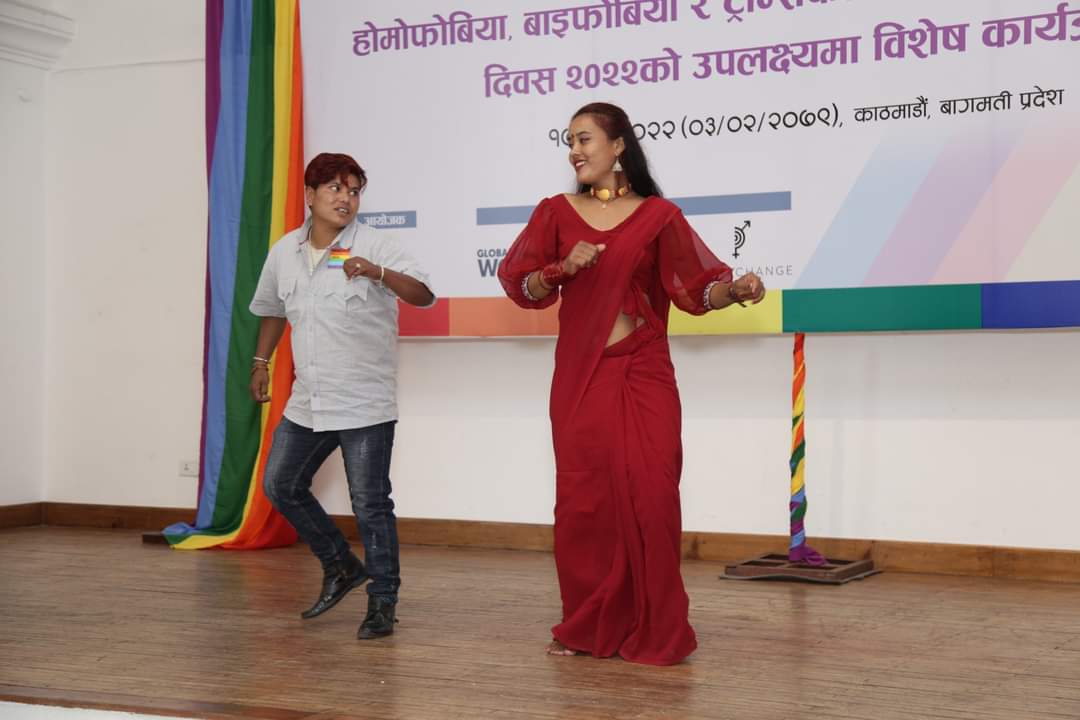
In the US, a young Nepali gay aerospace engineer was killed in a hate crime, just months before flying to Nepal to meet his parents. In London, a 50-year-old was attacked during the Pride Parade. The incident left him on a wheelchair. Two men and a 17-year-old girl murdered a 54-year-old doctor working with the NHS in a homophobic attack at a park in Cardiff, Wales. The victims were like the rest of us—loving partners, children, parents, and friends. They had people who loved them, those they went back home to. They were robbed of their lives because someone thought they were an aberration, decided they didn’t ‘deserve’ to live.
Sarita KC, program officer at Mitini Nepal, says legal provisions to ensure their rights can, to a large extent, improve their situation. Nepal addressed the rights of the LGBTIQA+ community in its constitution, in Articles 12, 18, 42. That was a hopeful start. Disappointingly, there has been no reflection of that in our nation’s plans and policies—a clear proof of the government’s apathy to the community. However, speaking at an IDAHOTB event organized by Mitini Nepal in Kathmandu, Nanda Bahadur Pun, vice president of Nepal, said the LGBTIQA+ community should be able to live without discrimination and fear (of violence included) and that the country will support them in their efforts to create a more equal society. “We must all try to understand the feelings and sexualities of the LGBTIQA+ people. We must treat them with love and respect,” he said.
But rigid social, cultural and religious practices pose various constraints. LGBTIQA+ people aren’t considered ‘normal’ because their nature goes against ‘how things should be’ as mandated by our beliefs. If it translates into actual action and law—a big if—the vice president’s commitments could pave the path for an inclusive society where the LGBTIQA+ community is able to live with dignity. The LGBTIQA+ people, across ages and from all walks of life that ApEx spoke to at the event, were filled with hope. Pun’s presence at the function signifies a new beginning, they said. They agreed it feels like Nepal is finally recognizing them as its citizens.
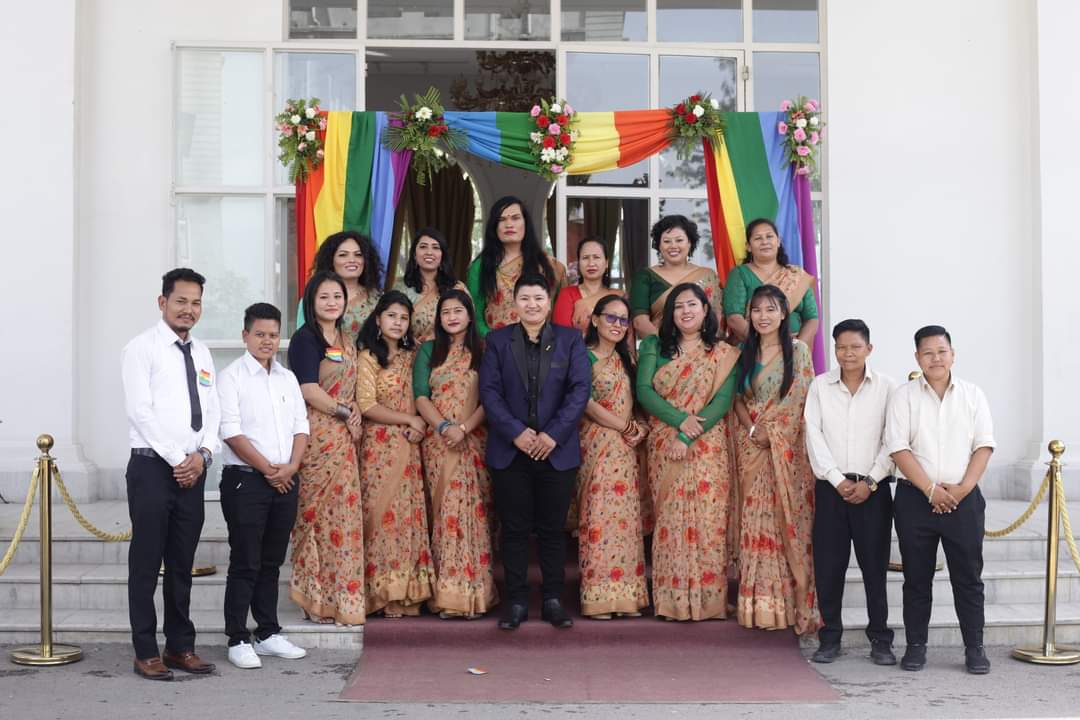
Sunita Lama, transgender activist, says most of the problems of the community stems from the fact that people look at them with disgust. Homophobia has its roots in society's treatment of them as outliers or, worse, unwanted beings. This could change if the government makes provisions for their safety and rights. Lama agrees with Ghalan that you can’t force acceptance but rules to dictate how people should behave could reconfigure their thinking in the long run, effectively doing away with the disdain for the community.
Neelam Poudel, make-up artist and transgender activist, says the community also needs to try harder to make people understand and accept them. It’s easier said than done but events like the international day that increases their visibility and shows a collected front could jog the society’s conscience. “Many times, we hide and shy away from expressing ourselves, fearing what people will say. That prevents us from leading good lives. Our celebrations and ceremonies are times when we can be uninhibited and show people that we are just like everybody else,” she says.
For far too long, the LGBTIQA+ people have been deprived of what is essentially a basic human right—the freedom to live as you choose. As Ghalan says, everyone should get to live their lives according to their wishes. What’s the point of it otherwise? As it is, each individual of the community is already battling a horde of problems, from stress and mental health issues to lack of jobs forcing many of them into sex-work. A hostile environment makes an already difficult situation worse. “Homophobia tears our society apart by pitting us against each other. The community and the government must work hand in hand to foster a better environment, one that allows us to coexist in peace,” says Ghalan.


