


A different kind of Ramadan

Followers of Islam celebrate Ramadan during the ninth month of the Hijri Calendar. It is considered the holiest Islamic month when Muslims fast. They don’t eat or drink from dawn to dusk. The month (starting April 23 and ending May 23 this year) concludes with the grand celebrations of Eid ul-Fitr.
The daylight fast is followed by a feast after sunset, which is called Iftar. Then there is Suhoor, the feast before sunrise. Reading Namaz and offering Zakat (charity) to the poor and needy ones are other main activities associated with Ramadan. People go to mosques for prayers, exchange greetings, and organize large feasts. Ramadan brings Muslim families and communities together in celebration.
But this year, the scenario is different. Like everybody else, the Muslim people are trying to avoid gatherings. They have confined their prayers, feasts, and other celebrations to their houses. The festival this time has become a family affair. Common rituals like taking Suhoor, reading Namaz, breaking fast after sunset, taking Iftar, and doing nightly prayers continue. But in the absence of community and family gatherings, the Ramadan is unusually quiet.
For Armaan Khan, a businessman from Sunsari, this year’s Ramadan is unique. He shares his experience of turning a small room of his house into a tiny mosque for Namaz and other prayers. “Complying with government directives, we are having Iftar party within the family”, he says. “And we now pay Zakat digitally.”
The pandemic and lockdown have resulted in considerable financial hardship for many families. As income shrinks, buying nutritious food during the fasting period has become difficult. Ismam Ansari, an IT expert in Kathmandu, says, “Due to the lockdown and resulting financial problem, there is a scarcity of quality food in families. Fruits are expensive. Many can’t afford them.” His only comfort is being relived of his office duties during Ramadan. “There is no work stress and no rush, which makes it easy to fast.”
Mosques across the country are almost empty, which is the most strange during Ramadan. It’s the same abroad. Most countries have closed down mosques and asked people to pray at home. The government of Nepal too has restricted human movement in mosques. The Kathmandu-based Jame Masjid issued a notice requesting people to not come visit for prayers this year.
For Abjal Khan, a pharmacy student in Kathmandu, the toned-down celebration is fine because the risk of the virus is high.
After praying and fasting, charity is another major component of Ramadan. The lockdown has affected this tradition too. Shamshad Aadil, a social activist from Kapilvastu currently living in Kathmandu, espies a couple of alternatives. He suggests that instead of handing out Zakat, people donate to local governments and help them control the pandemic. The other alternative, he adds, is to offer food to poor families at some safe place.
Hani Ansari, a pharmacist in Nepalgunj, does not like this traditional way of giving being interrupted.
Another Sunsari native Armaan Khan is relying on the digital payment platform e-Sewa this time. “As the world is being digitalized, we can use online platforms to help the poor and needy. Where there is will, there is a way,” he adds.
_20200508134103.jpg )
A Nepali historian’s quest to popularize Himalayan Buddhism
Born near the mountains of eastern Sankhuwasabha district, Ramesh Dhungel did not like the idea of going to the US to study Nepal’s Himalayas. But that was almost three decades ago, and he did not have a better option at home.
)
Prof. Ramesh Dhungel
He used to work at the Tribhuvan University's Center for Nepal and Asian Studies (CNAS) back in the 1980’s. His contemporaries often talked about going to the West for further studies, but he did not like it. A gold medalist in cultural studies from the Tribhuvan University, he drew inspiration from Nepal’s noted historian and epigraphist Pandit Dhanavajra Vajracharya. But as destiny would have it, he embarked for the US in 1992 for higher studies, first and briefly to George Mason University and then to Columbia University, where he spent five years. Then director of CNAS, Kumar Khadga Bikram Shah, who appreciated Dhungel's scholarship, granted him an academic leave.
An MPhil and PhD from Columbia University and author of a number of acclaimed publications, Professor Ramesh Dhungel needs no introduction. He is one of the few Nepali scholars that academics and journalists from home and abroad seek out on Himalayan cultures, heritage, history, and Buddhist studies. His PhD thesis, which was later published as a book, The Kingdom of Lo (Mustang): A Historical Study, serves as a primer for the study of the hidden kingdom of Mustang.
“At first, I didn't feel good about it. I kept thinking, ‘Why should I go to Britain or the US to study my own heritage?’” recalls Dhungel. “But then, everybody talked about the high academic standards of American and British universities. So I went for an educational experience.”
Studying in Columbia was transformative in many ways. “The academic rigor there was extraordinary. There were unlimited resources for a student with limited time. Libraries opened whole night with access to millions of books and journals. Even rare books about Nepal that are not available in Nepal were there,” he recalls.
“I could have done PhD at Tribhuvan University also. But I would not get the best education. In Columbia, you could learn from the best professors from around the world,” Dhungel says. “They made every effort to ensure that research conformed to utmost objectivity and precision. A postgraduate research from a university like Columbia adds to the stock of existing knowledge, as we often say in academia.”
When in New York, the thought of how Nepal lacked a good academic program in Himalayan cultures and heritages constantly gnawed at him. Even back then he harbored a wish to start a world-class academic center in Nepal for Himalayan studies. Years later, he and a few colleagues were able to establish the Department of Buddhist Studies at Tribhuvan University, Nepal’s biggest and oldest center of higher learning.
But Dhungel wished to run programs with exclusive focus on Himalayan Buddhism, for which the department wasn’t enough. So he started Lumbini College of Buddhist and Himalayan Studies in 2012 with an affiliation from Lumbini Buddhist University. Situated inside the premises of Hyatt Regency in Kathmandu, the program has ties with the Technical University of Berlin.
“As is evident from the name, we focus on Himalayan Buddhism. Our programs are unique in the sense that nowhere in the world will you find such courses on Buddhism focusing on the study of Buddhist heritage and history of the Himalayas. We emphasize Buddhist art and architecture, philosophy, and language studies,” says Dhungel.
Building on the unique blend of Buddhism with cultures and history of the Himalayan region, Professor Dhungel has high hopes from the master's degree program in Buddhism and Himalayan Studies (MBHS), which is his brainchild. Major subjects offered include: Buddhist art and architecture, traditional heritage conservation, discourse analysis and hermeneutics, Buddhism in Nepal Himalaya, Buddhist philosophy, and history. Two major source languages of Buddhism—Tibetan and Sanskrit—are also taught. The program is run fully in English medium.
“Our aim is to draw students from across the world,” Dhungel adds. “We may not beat Columbia or Oxford in terms of size and resources, but for the study of our Himalayan heritage and Buddhist tradition, nobody can beat us.”
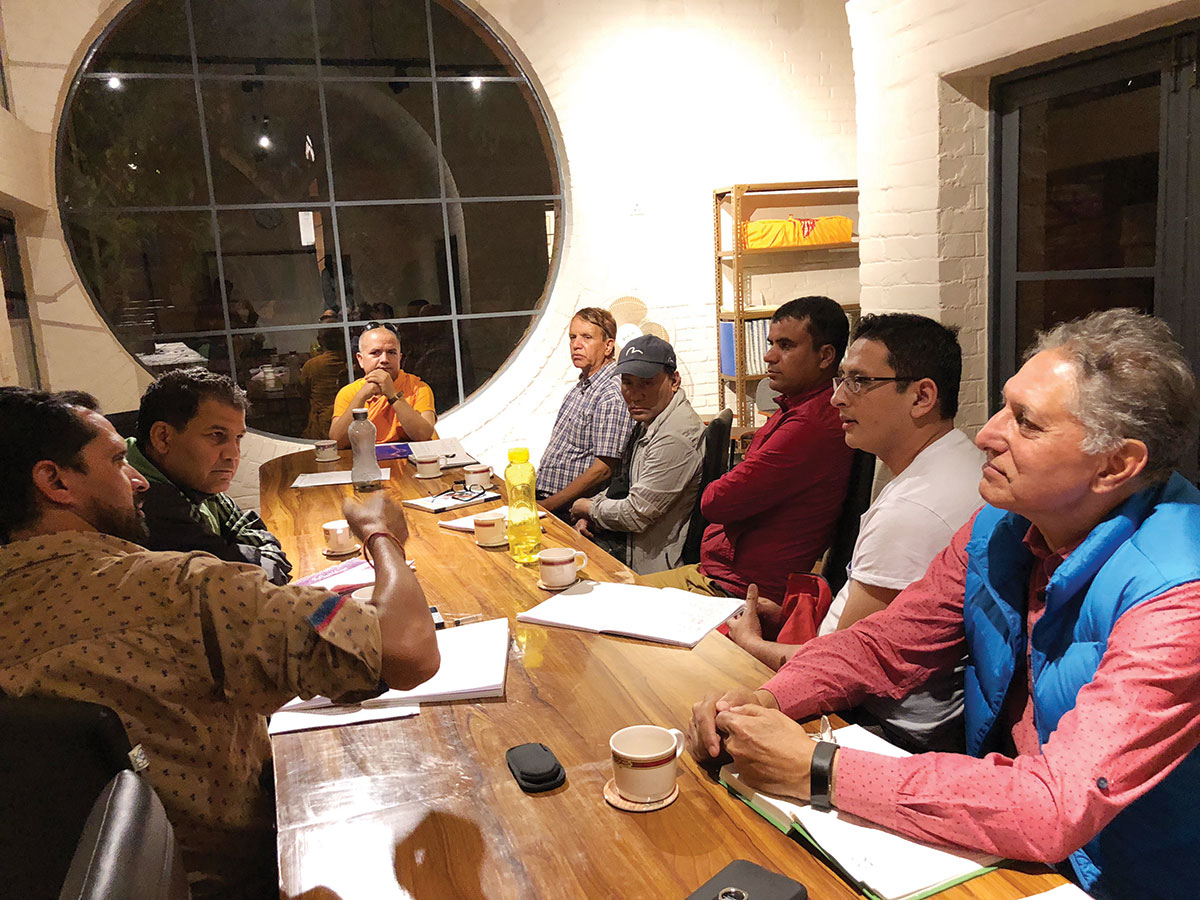
Going by Dhungel’s qualifications and commitment, the goal is not difficult. Says Umesh Regmi, a MBHS alumnus and now department head in Buddhist studies at Padma Kanya Campus: “You don't need to talk about the qualifications of Professor Dhungel, a renowned scholar. The program offered there is highly beneficial for anyone in the world who wants to study Himalayan Buddhism.”
Regmi, who has been closely observing the college since its inception, asserts that a combination of Himalayan heritage with core Buddhist studies and source languages makes MBHS a potent program. “The program follows standard international semester and grading system. It was a great learning experience for me too.”
Dhungel aims to make the MBHS the most sought after program in Himalayan Buddhist studies. “We have the mountains, we have rich culture, and we are the land of the Buddha. Wouldn’t it be wonderful if people from the world over come to Nepal to study our Buddhist heritage?”
Why Himalayan Buddhism?
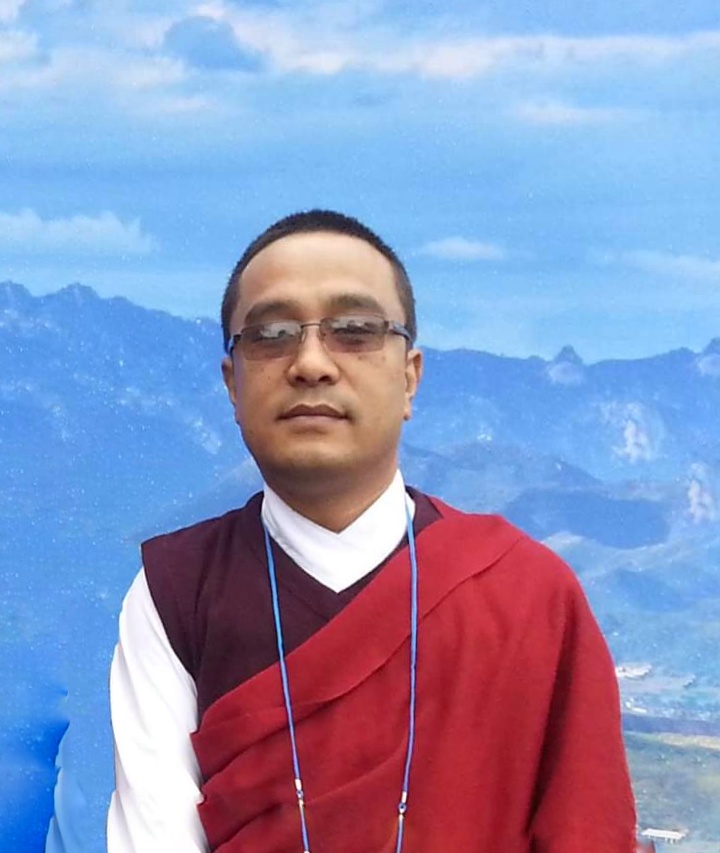
Manik Ratna Shakya
Dean, Lumbini Buddhist University
There are three major Buddhist traditions in Nepal. First, the Buddhism practiced in the Himalayan regions; second, the traditional Buddhism of Kathmandu Valley; and third, the Theravada Buddhism practiced by bhikshus and bhikshunis. These three forms of Buddhism are Nepal’s heritage.
Himalayan Buddhism has its unique features, and deserves careful protection and promotion. The program offered by Lumbini College of Buddhism and Himalayan Studies is important in this regard.
There are about 400 monasteries, big and small, in Nepal’s sparsely populated Himalayan region. They are Nepal’s great heritage. It is important to preserve them in their antiquity and all historical as well as religious attributes.
Currently, only few people know about the Buddhism and Himalayan Studies program. It needs to be publicized so that all those interested know about it and get its benefits, wherever they are in the world.
I request Nepal government to appreciate the Himalayan heritage and support us expand this education as widely as possible.

The sorry state of quarantine facilities
The ill-equipped quarantine facilities of Bardiya district are a health hazard. As more people enter the district from Kathmandu and elsewhere, these facilities have been crowded and the risk of infection has increased.
The group isolation center established at Amshuvarma Secondary School at Jayanagar in Barbardiya Municipality is one such facility. Sushil Shrestha, who has been housed there by the municipality, says: “We are seven people in a room. There is one common bathroom, and one common bucket to carry water. It is a quarantine facility only in name. We are at high risk here.”
Shrestha complains of not getting anything to eat. The room has been prepared by removing the classroom’s desks and benches and with the placement of one thin mat on the floor. “How can we stay here for 14 days?” asks Shrestha. Contacting APEX over phone, he asked to be rescued from the quarantine and be allowed to go home.
The government quarantine guidelines state that each person should be given a separate room with attached bath, and if that is not possible, at most three persons can be accommodated in a room. A bathroom cannot be shared by more than six persons. Beds should be at least 3.5 feet apart. The facilities should provide morning and evening meals and two snacks a day. But most quarantine centers lack these facilities.
Ninety-nine quarantine centers with 3,516 beds have been set up in Gulariya, Madhuban, Rajapur, Thakurbaba, Barbardiya, and Bansgadhi municipalities and Gerua and Badhaiyatal rural municipalities of the district. Currently, 2,198 people are housed in these facilities.
“The facilities in seven municipalities are in good condition. Only one or two quarantine centers in Barbardiya are in a poor state,” claims Chief District Officer Prem Lal Lamichhane. He adds that Barbardiya has more people coming from elsewhere, so the quarantine centers there may be more crowded.
Stigmatizing, unhygienic, and dusty
People complain about lack of drinking water, sanitizers, and unhygienic conditions in quarantine centers
Pradeep Chandra Rai, Bhojpur
Namuna Ghimire from Charambi of Arun Rural Municipality returned to Bhojpur district from Kathmandu in a bus arranged by the municipality. She, along with her fellow travelers, have been kept at a quarantine facility established at a local school. She is unhappy.
Whoever sees her starts saying, “Oh, she has brought corona.” Even those who are quarantined with her show a similar attitude. “Although my house is not far, I am not allowed to go there. And nobody comes to see me due to the lockdown,” she says.
One Pratikshya Tamang, who is quarantined along with her baby, says villagers think she has imported corona into the village. “It hurts to hear such callous remarks,” she shares.
People complain about lack of drinking water, sanitizers, and unhygienic conditions in quarantine centers. They are scared of developing other health problems. Sangita Shrestha, who is in the same facility, says: “My daughter has a skin allergy. She may also have flu. But there is no way to get her to a doctor. And there is no nutritious food here. I am worried about our health.”
A total of 132 people coming from Kathmandu and Sunsari have been placed in the quarantine centers of Arun Rural Municipality, while 15 are kept in Temke Maiyung and seven in Bhojpur Municipality.
Dipendra Alemagar of Bhojpur Municipality complains of being put up in a dusty room. “We have been given a thin mattress and a bed-sheet. It is difficult to sleep.”

What will it take for Nepal to ease the lockdown?
Nepal government on May 6 extended the nationwide lockdown against Covid-19 by another 12 days. It did so in spite of heavy pressure from economists and businessmen who were in favor of progressive loosening of the lockdown.
The hard reality is that Nepal is unprepared for a post-lockdown situation. “Back in the middle of January, Nepal became the first South Asian country to detect the novel coronavirus,” says Dr Kiran Raj Pandey, who has been closely tracking the virus in Nepal. “Even the World Health Organization was warning us that we were a high-risk country. And yet there were next to no preparations.”
As Nepal fumbled for a response, developed countries did two major things: carry out massive testing and gauge the capacity of their healthcare system. Through massive testing, they identified the actual status of the spread. That, in turn, prepared them to start easing the lockdown in low-risk areas. There has been no such effort in Nepal. For instance, Nepal has failed to effectively manage the flow of people along the porous Nepal-India border during the lockdown. Nor has it been able to control the free movement of its nationals within the country.
It has been almost five months since the first outbreak; corona detection kits and medical equipment are still in short supply. The Nepal Army was entrusted to procure medical supplies from abroad a month ago, yet procedural hurdles continue to hamstring its efforts. In the absence of test kits, testing has been halted in parts of the country. In other parts, testing machines have stopped functioning.
Indefinitely prolonging the lockdown without also carrying out the requisite number of tests is prolonging the inevitable, and will contribute to further impoverishment of the daily wage earners who are already struggling. Yet there is also no hard data on the social and economic impacts of the lockdown in Nepal. In this situation, Dr Pandey advises gradual easing of the lockdown coupled with massive testing.
The government was apparently preparing to ease the lockdown in low-risk areas after May 6. But the fear of the already significant movement of people inside the country turning into a flood stopped it.
A team of security forces has given color codes to 77 districts on the basis of risk: red (high risk area), yellow (partial risk area) and green (low risk area). According to the Home Ministry, 29 districts are categorized as red, 28 as yellow, and 20 as green areas.
But it is not easy for security forces to control people’s movement. Many vehicles have gotten travel passes from local authorities, which the security personnel must honor. Already, people who had gone out of Kathmandu at the start of the lockdown are returning, and most of them are not following quarantine guidelines. Thus even though Home Minister Ram Bahadur Thapa was in favor of a gradual easing of the lockdown, he had to back down after the Health Ministry intervened.
Similarly, post-lockdown measures have not been thought through. Doctors suggest continuing with social distancing measures for months even if the lockdown is eased.
On May 1, a doctor’s team of Kiran Raj Pandey, Anup Subedee, Bishesh Khanal and Bhagawan Koirala published their joint study: “Covid-19 Control Strategies and Intervention Effects in Resource Limited Settings: A Modeling Study.” It suggests measures that can be adopted after easing the lockdown. The study says, “A month-long lockdown and physical distancing interventions combined with an active case finding intervention instituted early is likely to effectively control a potential epidemic, however physical distancing and testing interventions have to continue for a year.”
The findings suggest that the best control strategy against the epidemic is a combination of interventions that identify and isolate infected individuals and reduce contact between individuals. “A lockdown can prevent the escalation of the epidemic, but is likely to be of limited value if no additional control measures are put in place,” the report says.
One problem is that the country’s average age is 24.6 years. Most of the youth may not show any symptoms and simply pass on the virus to the infirm and the elderly, who could be affected much worse. This is also why widespread testing, including that of the youth, is vital.
“Again, the easiest and most effective way of stopping the virus from spreading is massive testing. If the pandemic goes out of control, it would be very difficult for us to stop it,” Dr Pandey warns.


