Election Commission, parties step up poll preparations

With just two and a half months remaining before the March 5 parliamentary elections, political activities across the country have intensified. Prime Minister Sushila Karki has held meetings with leaders of major political parties, including KP Sharma Oli, Sher Bahadur Deuba, and Pushpa Kamal Dahal. Meanwhile, Minister for Communication and Information Technology, Jagadish Kharel, has been visiting party offices and holding discussions with party officials.
In a major political development, Kathmandu Metropolitan City Mayor Balen Shah and Kulman Ghising have joined the Rastriya Swatantra Party (RSP) and signed a triparty agreement with party Chair Rabi Lamichhane and Ghising as Vice-chair. The agreement names Shah as the party’s prime ministerial candidate.
Other political parties, including the CPN-UML, Nepali Congress, Nepal Communist Party, and newly formed parties such as Janadesh Party, Gatisheel Loktantrik Party, and Bibeksheel Loktantrik Party, are also engaged in internal preparations. They have begun allocating candidates for the election and have already submitted closed lists of proportional representation candidates to the Election Commission.
As political parties mobilize their resources and gear up for the March 5 polls, attention has also turned to the Election Commission, the constitutional body responsible for conducting elections in Nepal.
Over the past week, the Election Commission has taken several key steps, including initiating the printing of ballot papers, collecting the closed lists of proportional representation candidates from political parties, determining candidate expenditure limits, establishing the Election Information Dissemination and Coordination Center (EIDC), publishing the voter list, approving a temporary voter list collection program, and issuing the Election Code of Conduct 2025.
The commission has also begun correcting errors in the proportional representation lists submitted by political parties. According to the Election Commission, a closed list of proportional representation candidates has been submitted from 64 political parties to contest the election under 58 election symbols. The closed lists submitted by the political parties between Dec 28 and 29 will be examined until Jan 4.
Following the examination, political parties will be asked to reconcile their lists between Jan 5 and 11. The commission will then verify the revised lists from Jan 12 to 17. The closed lists are scheduled to be published on Jan 18, while the final list will be published on Feb 3.
Meanwhile, the commission has begun printing ballot papers. Proportional representation ballot papers will be printed first, followed by direct ballot papers. Printing is being carried out at the Janak Education Materials Center Limited in Sanothimi, Bhaktapur, with the process having started on Dec 31. The commission plans to print 10 percent additional ballot papers for proportional representation elections, and the process is expected to take 20 to 30 days.
Printing of direct ballot papers will begin after the proportional ballot papers are completed and the final list of candidates is published. As direct ballot papers vary by constituency, they will be printed accordingly.
The final voter list includes citizens who will have reached the age of 18 by March 4. According to the Commission, the list comprises 18,903,689 voters—9,663,358 males, 9,240,131 females, and 200 others. In comparison, the 2022 parliamentary elections had 17,988,570 registered voters. This marks an increase of 915,119 voters, including 522,552 males, 392,552 females, and 15 others.
For the March 5 elections, the Commission has designated 23,112 polling stations across 10,967 polling centers nationwide. This represents an increase of 885 polling stations and 75 polling centers compared to the 2022 elections.
The Election Information Dissemination and Coordination Center has been established at the Commission’s office to strengthen communication with voters, candidates, political parties, and other stakeholders, and to enhance coordination with the media. The aim is to ensure that the House of Representatives elections are conducted in a free, fair, transparent, and credible manner.
The EIDC consists of three coordinated units: the Election Information and Communication Centre (Press Office), the Information Integrity Promotion Unit, and the Digital Voter Education Unit.
Acting Chief Election Commissioner Ram Prasad Bhandari said that effective dissemination of factual and official information is essential to ensuring credible elections. He expressed confidence that the EIDC would help counter misinformation, disinformation, propaganda, and hate speech on social media during the election period. He also urged the media to uphold principles of self-regulation and responsible reporting.
Bhandari said the Commission has made necessary preparations to promptly remove misleading, rumor-based, and false information, including AI-generated deepfake content, circulating on social and digital media. He added that coordination has been established with social media platforms such as Meta, TikTok, and X to address such content and take action against individuals or organizations violating the law.
The Commission will also conduct a content analysis through an expert group to assess media coverage of election-related information, representation of political parties and candidates, portrayal of gender and geographic issues, and dissemination of voter education materials. The findings will be used to inform the Commission’s decision-making process.
Meanwhile, the Election Commission has approved a temporary voter list collection program covering government employees, security personnel stationed in barracks, detainees and prisoners, residents of government-run old-age homes, and office-bearers of constitutional bodies whose names are included in the final voter list.
The Election Code of Conduct 2025 has also been approved, expanding provisions related to social media use, introducing measures for green elections, and incorporating new topics such as party manifestos. The code prohibits the dissemination of false or misleading information, operation of fake accounts or websites, and publication of defamatory or personally insulting content. While political parties and candidates may promote their agendas through official or personal social media accounts, the Commission has urged them to do so in a dignified and systematic manner.
The code further prohibits the wearing or carrying of election-related symbols, logos, or clothing during campaign activities. Political parties, candidates, and their affiliated organizations have been urged to conduct rallies, meetings, and campaign events in a disciplined and civilized manner, using only approved party flags and symbols in permitted sizes and numbers.
In cases of code violations, the Commission has stated it will take action based on the nature and severity of the offense, ranging from public warnings and fines to legal penalties, including the cancellation of candidacies. Monitoring mechanisms will be active from the central to district levels to ensure compliance.
Furthermore, the Election Commission has published the maximum spending limits for candidates contesting under the first-past-the-post system and for political parties contesting under the proportional representation system. The commission has directed candidates to open a separate account at a bank or financial institution for election-related expenses and to conduct all spending through that account. Candidates are also required to designate a responsible person to incur expenses on their behalf and to inform the Election Officer’s Office and the relevant Provincial or District Election Office of the designated person’s details.
The commission has further directed that candidates must remain within the prescribed spending limits and submit detailed statements of election-related income and expenditure—either personally or through an authorised representative—to the concerned Provincial or District Election Office within 35 days of the declaration of election results. Political parties and candidates are also required to make public the details of income and expenditure incurred during election campaigning for the information of all concerned.
The maximum spending limit has been set at Rs 2.5m for five constituencies, Rs 2.7m for 17 constituencies, Rs 2.9m for 65 constituencies, Rs 3.1m for 52 constituencies, and Rs 3.3m for 26 constituencies.
Emphasizing that credible elections require strict adherence to the code of conduct, the Commission has called for collective commitment from political parties, candidates, media, and stakeholders to ensure a clean, free, impartial, fear-free, and economical election, contributing to democratic strengthening and good governance in the country.

Nepal’s ‘nepo list’

Sixty-four political parties are contesting the House of Representatives election under the proportional representation (PR) system. However, the closed PR candidate lists submitted to the Election Commission (EC) have come under sharp criticism, with many describing them as an assault on the very spirit of proportional representation.
In the past, traditional political parties were widely criticized for nominating family members, relatives, and privileged elites through the PR system. This time, both established and newly formed parties have once again allocated PR seats to individuals who, in one way or another, have enjoyed access to state power over the past four decades.
New and emerging political forces have followed the same pattern. Just three months ago, a youth-led movement against “nepo kids” brought down a powerful government, raising hopes that established parties would reform and that new political actors would break away from this chronic practice. Contrary to those expectations, the PR candidate lists submitted by both old and new parties are now being widely dismissed as “Nepo Lists.”
Nepal adopted a mixed electoral system—first-past-the-post (FPTP) and proportional representation (PR)—to ensure meaningful representation of marginalized and underprivileged groups in Parliament. However, political parties are openly undermining this principle by nominating relatives and wealthy business figures who financially support party activities.
Even new political forces that had promised change have failed to escape criticism. The Rastriya Swatantra Party (RSP), which has brought together many new and alternative voices, has faced widespread backlash over its PR list. Similarly, Balendra Shah and Ujyaalo Party Nepal, led by Kul Man Ghising, have been accused of favoring relatives in their PR nominations.
Dr Toshima Karki, a senior leader of the RSP, remarked: “The very concept of proportional representation was introduced so that geographically marginalized regions could find space. The list should also include the disadvantaged. The existing PR list has raised serious questions about its legitimacy.”
Several leaders have also accused Kul Man Ghising of effectively selling PR positions in exchange for money. Many Generation Z leaders have echoed these concerns, criticizing new political parties for reproducing the same nepotistic practices they once opposed.
Similar questions surround the major traditional parties—the Nepali Congress (NC), CPN-UML, and CPN (Maoist Centre). While these parties have introduced some new faces through the PR system compared to the past, the selection of certain candidates has continued to raise concerns. For example, Nepali Congress leader Arjun Nara Singh KC has faced scrutiny for being placed high on the PR list under the Khas-Arya cluster.

SAARC spirit still alive, says Yunus
Chief Adviser of Bangladesh, Professor Mohammad Yunus, has said that the spirit of the South Asian Association for Regional Cooperation (SAARC) remains alive, despite the regional bloc’s prolonged inactivity, according to Bangladesh Sangbad Sanstha (BSS).
Yunus made the remarks during separate meetings with high-level delegations from South Asian countries who visited Dhaka to attend the funeral of former Bangladesh Prime Minister Khaleda Zia. He said he was deeply moved by the respect shown by SAARC member states toward the three-time prime minister, who was also the world’s second female Muslim head of government.
“We witnessed a true SAARC spirit at the funeral yesterday. SAARC is still alive. The SAARC spirit is still alive,” Yunus said during his meeting with Maldives Minister of Higher Education and Labour Ali Haider Ahmed, according to BSS.
He echoed similar sentiments in his meeting with Sri Lanka’s Minister of Foreign Affairs, Employment and Tourism, Vijitha Herath. “SAARC was in action yesterday. We shared our grief and sorrow together,” Yunus said.
Delegations attending the funeral from SAARC countries included Nepal’s Foreign Minister Bala Nanda Sharma, India’s External Affairs Minister S. Jaishankar, Sri Lanka’s Foreign Minister Vijitha Herath, Maldives Minister Ali Haider Ahmed, and Speaker of Pakistan’s National Assembly Sardar Ayaz.
During the meetings, Yunus repeatedly underscored the need to revive SAARC as a platform for regional cooperation. He also recalled his earlier attempt to convene an informal meeting of SAARC leaders on the sidelines of the United Nations General Assembly in New York.
“I wanted to hold a get-together among SAARC leaders, even if only for five minutes,” he said, expressing hope that SAARC could be revitalized as a meaningful forum for nearly two billion people in South Asia.
Established in 1985, SAARC was created to promote regional cooperation among South Asian countries. However, the organization has remained largely dysfunctional in recent years, with no summit-level meeting held since 2014. Tensions between key member states, particularly India and Pakistan, have stalled progress and prevented the convening of leaders’ summits.
Despite occasional diplomatic engagements and symbolic gestures, the prospects for the revival of SAARC in the near future remain slim, analysts say. Still, Yunus’s remarks reflect a renewed call for regional unity at a time of shared challenges across South Asia.

Nepal welcomes Qatar’s amnesty for 13 Nepali prisoners
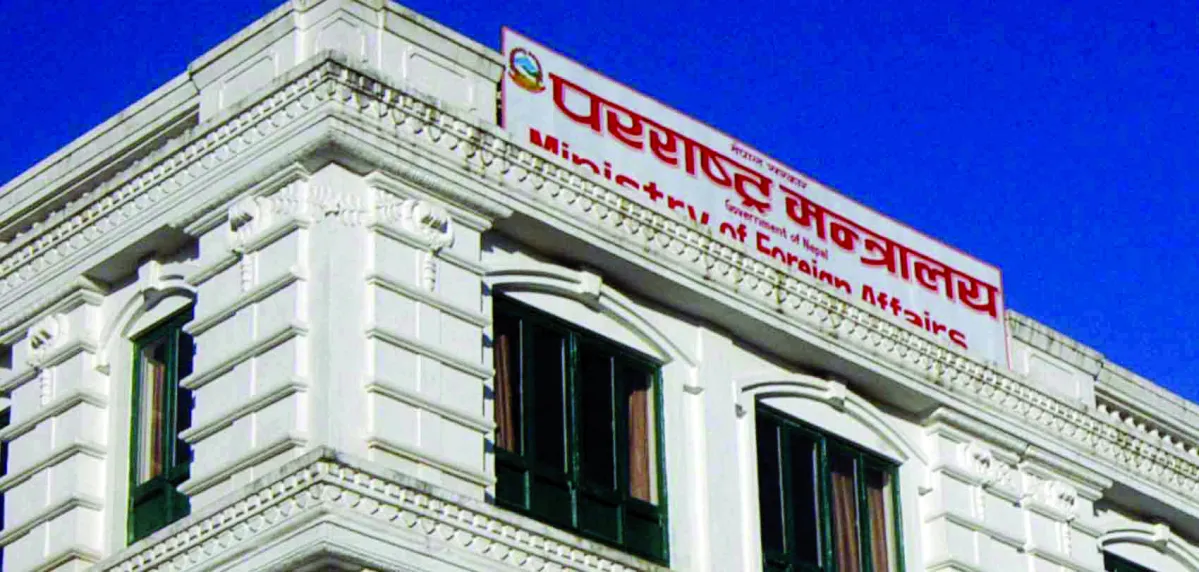
The Government of Nepal has extended its sincere gratitude to the Government of the State of Qatar for the Amiri Amnesty granted to the 13 Nepali inmates on the occasion of the National Day of the State of Qatar and the International Human Rights Day.
"The Ministry highly values the kind gesture of pardon granted on humanitarian ground as the manifestation of deepening friendship and cordiality in the existing bilateral relations between Nepal and the State of Qatar," the Ministry of Foreign Affairs stated in a press release on Thursday.