Kalyani Bista: Last hope of the dying

In the otherwise somber settings of Pashupati Aryaghat lies a healing center to look after the terminally ill. The patients who get there are often in the last stage of their life, seeking the comfort they could not find elsewhere.
The belief that taking one’s last breath in Bramhanal—a holy spot with holy water located right below the healing center—ensures a place in heaven prompts many people to live out the final days of their life at this healing center. And this is where Kalyani Bista, a medical nurse, has been volunteering for the past eight years.
Born and raised in Gokarna, Bista always dreamed of being a nurse. But she never pictured herself devoting her life to the patients who come looking for Ghate Baidhya (‘a crematorium doctor’). The 33-year-old first visited the healing center at the age of 16 and she was instantly engulfed by a deep sense of sadness. “I was barely able to process what was happening around me, leave alone think of working there,” she says.
After completing her education in 2013, she visited the place again. Something in her had changed by then, says Bista. She now felt completely at home there and was this time determined to serve the dying. Eight years later, she could not be more satisfied with what she does every single day.
“Most of the patients who come here are very old,” says Bista. For some, she is the sole source of comfort when their family leaves them in her hands.
Most patients she gets are ventilated or in a coma, but the ones who are conscious seek her presence all the time. She remembers quite a few who held her hand and asked her to stay by their side when the pain from their illness became unbearable.
“There is no break in this line of work, which is why I live at the healing center,” adds Bista. Many patients request her to take them to Bramhanal for their last breath. Because of which she always has to be on an alert for such requests. Besides that, she stays with her patients to ease their pain by providing them painkillers and keeping their surroundings clean. Although she finds her work fulfilling, it is mighty challenging too.

Bista has to deal with a lot of emotional trauma every day. “I have seen and heard things that could mortify anybody,” she says. Some families just abandon their elders, some elders have no families, while some pass away desperately wanting to see their children one last time. “I get attached to them emotionally, and seeing them in pain leaves me in tears,” adds Bista.
There is one particular incident that still keeps her up at night. This was when a newborn passed away in her arms. The child had multiple organ failure and there was no possibility of saving him. It was a lot of sleepless nights for her, and the pain of losing him still haunts Bista. “I took care of him like he was my own. When he passed away in my arms, I was devastated,” she says.
But such trauma has not stopped her from working. Bista believes that helping the ill is the responsibility that she took upon herself a long time ago. Although there are many emotionally draining moments, she believes she is meant for this work. “I have always had a deep attachment for the children and the eldery. Being able to take care of them when they need me is deeply satisfying,” she adds.
Some patients Bista treated have returned home and most of them passed away within a week or month of returning. But she remembers one particular patient from three years back who returned home and is still alive and kicking. “Among all the sad cases, that one case brings me great joy,” she says. “It is satisfying to see a patient of mine regain health and return to me with a smile on their face.”
But Bista wants to do more. “My wish is to someday open a care home for the elderly who have no one to look after them,” says Bista.
She wants to serve the elderly not just in the last stage of their life but right through their dotage. But for the past three months she has been volunteering as a nurse at Sadgamaya Briddha Kuti, an old age home in Boudha. “Serving the elderly and the sick is my life’s purpose,” says Bista, “and something I intend to continue doing so long as my health holds up.”

‘Act Your Age, Eve Brown’ book review: Feels like a bad remix
‘Act Your Age, Eve Brown’ is the third book in the Brown sister series by Talia Hibbert and tells the story of the youngest of the three Brown sisters. You don’t really need to read the books in order though. The first and the second books in the series—‘Get a Life, Chloe Brown’ and ‘Take a Hint, Dani Brown’—were fun and whimsical. I wish I could say the same about the final one but having read two romance novels by the same author already, the third one had lost its appeal. Chloe and Danika from the other two books were interesting protagonists but Eve feels like a little bit of both. It’s almost as if Hibbert ran out of ideas to develop the character and made do with a hodgepodge of her previous ones.
Even Jacob Wayne, the man Eve falls in love with, is nowhere as interestingly crafted as Redford Morgan and Zafir Ansari, Chloe’s and Danika’s love interests respectively. I lusted over Red and Zaf. I connected with their stories and struggles—abuse and mental illness—because it was written with so much empathy and understanding. Jacob is autistic but Hibbert clearly hasn’t done much research on it and he comes across as a prickly snob.
Don’t get me wrong. Hibbert is a good writer. She writes fun, engaging stories. She’s also immensely witty. I giggled my way through her previous books. Even Act Your Age, Eve Brown has some really hilarious lines and scenes. I also appreciate that her heroines aren’t tall and skinny who think they aren’t pretty but are in fact drop-dead gorgeous. Chloe, Dani and Eve are of all shapes and sizes and they are comfortable in their bodies.
My problem with the book was that it felt very repetitive. I’m not even going to bother talking about the plot in detail. It’s basically Eve meeting Jacob and the two not getting along at first only to realize they are crazy about each other. But they both fear the other doesn’t feel the same way and drama ensues as they tiptoe around each other’s feelings (eyeroll). It was novel and refreshing in Get a Life, Chloe Brown. But Hibbert has gone on too long with the ‘a boy and a girl who don’t like each other in the beginning fall madly in love’ trope and by the third book it’s all a bit too much.
Also, the romantic (read: sex) scenes are so descriptive and go on for a dozen pages at a time. Not to sound like a prude but I skimmed through those pages, tapping furiously on my Kindle because I wanted it to be over. Don’t read Act Your Age, Eve Brown if you have read the previous two books. And if you haven’t, this definitely isn’t where you want to start.
2 stars
Fiction
Act Your Age, Eve Brown
Talia Hibbert
Published: 2021
Publisher: Avon
Pages: 400, Paperback
https://www.goodreads.com/en/book/show/51824384-act-your-age-eve-brown

FIR movie review: Starts like a hare, ends like a tortoise
There are films you like and there are films you hate. But then, there are also movies which you love for the first half and then begin questioning your choice in the second, or vice-versa.
The Tamil-language film “FIR” on Amazon Prime had the same effect on me. You know it’s IPL season and between work and TV, I don’t really get to watch a lot of movies this time of the year. I chose the action thriller FIR because it had a compelling description on the OTT platform and I have always enjoyed the lead actor Vishnu Vishal’s works.
Vishal plays Irfan Ahmed, an engineering gold medalist struggling to find a fitting job in Chennai. He has attended a lot of interviews but has been unsuccessful each time, partly due to his religious background as implied in the story. For the time being, he is working part-time at a local perfume factory.
But when the factory owners decide to scale up and ask Irfan to join full-time, he agrees. Irfan then heads to Hyderabad to buy chemicals for the perfume. Around the same time, the National Intelligence Agency is frantically searching for a most-wanted terrorist called Abu Bakkar Abdullah who is suspected of planning an attack on Chennai.
Curious coincidences lead Irfan—a Muslim chemical engineer—to fall victim to stereotyping and racial profiling as he becomes an accused of a bombing in Hyderabad. A frenzy of allegations from the NIA and also the media lead everyone to believe that Irfan is actually Abu Bakkar Abdullah—the terrorist. With the shrewd Ajay Dewan (Gautham Menon), the National Security Advisor, leading the case, Irfan has nowhere to run or hide. Now is Irfan really a terrorist or just an innocent engineer, is the question the rest of the plot tries to answer.
Written and directed by Manu Anand, FIR opens like a romping thriller. You know the ones that keep you hooked to the story till the very end? The road that leads to Irfan’s incarceration is carefully laid, with the introduction of a lot of characters with potential. Like Irfan’s lawyer friend Prathana Raman (Manjima Mohan), who is initially projected as a strong-headed lawyer fighting for justice. But as the film progresses, she loses significance and hides somewhere in the shadows, just like a few other characters who could have contributed more to the story.
FIR promises a lot of entertainment at the start but fails to keep up the momentum in the second half. The film—carefully disguised as a mind-boggling action thriller—turns out to be just another wheel to the Hindu-Muslim propaganda machine we have seen so much in Indian cinema. While promising a unique storyline, FIR ends up repeating the age-old formula of stereotyping the Muslim community and how they fight against it. The ‘good Muslim, bad Muslim’ storytelling of Indian cinema has been so overused it now bears no cinematic significance.
Apparently a ‘sleeper hit’ in the box office, Arul Vincent’s sharp cinematography and Prasanna GK’s precise editing could be the film’s saviors. They maintain the film’s pace even when the plot tries to drag it down. The lethargic storytelling is made bearable by these behind-the-scenes heroes.
On the screen, it’s all Vishnu Vishal. In the lead role that gets most of the screen time, Vishal is fluent and convincing. As a happy-go-lucky young engineer who suddenly becomes India’s most wanted man, Vishal takes on the transition without losing focus on his character’s origin and growth. Sloppy writing in the end waters down Vishal’s potential but what we see still impresses.
Who should watch it?
FIR starts like one of those intelligent South Indian movies but ends like a no-brainer. So you can enjoy the best of both worlds, or not. Anyway, the film is not utterly boring and if you have nothing else to do, cinephiles with low expectations might enjoy this.
Rating: 2 stars
Genre: Action thriller
Actors: Vishnu Vishal, Gautham Menon, Manjima Mohan
Director: Manu Ananda
Run time: 2hr 36mins

Photo Feature | The Darjeeling boy sinks roots in Kathmandu
Deo Prakash Rai, a Darjeeling lad, came to live with his sister in Kathmandu when he was just 15. He says he never got much education in Darjeeling because of the frequent strikes in the course of the Gorkhaland movement. After arriving in Kathmandu, he started working as an assistant in film sets.
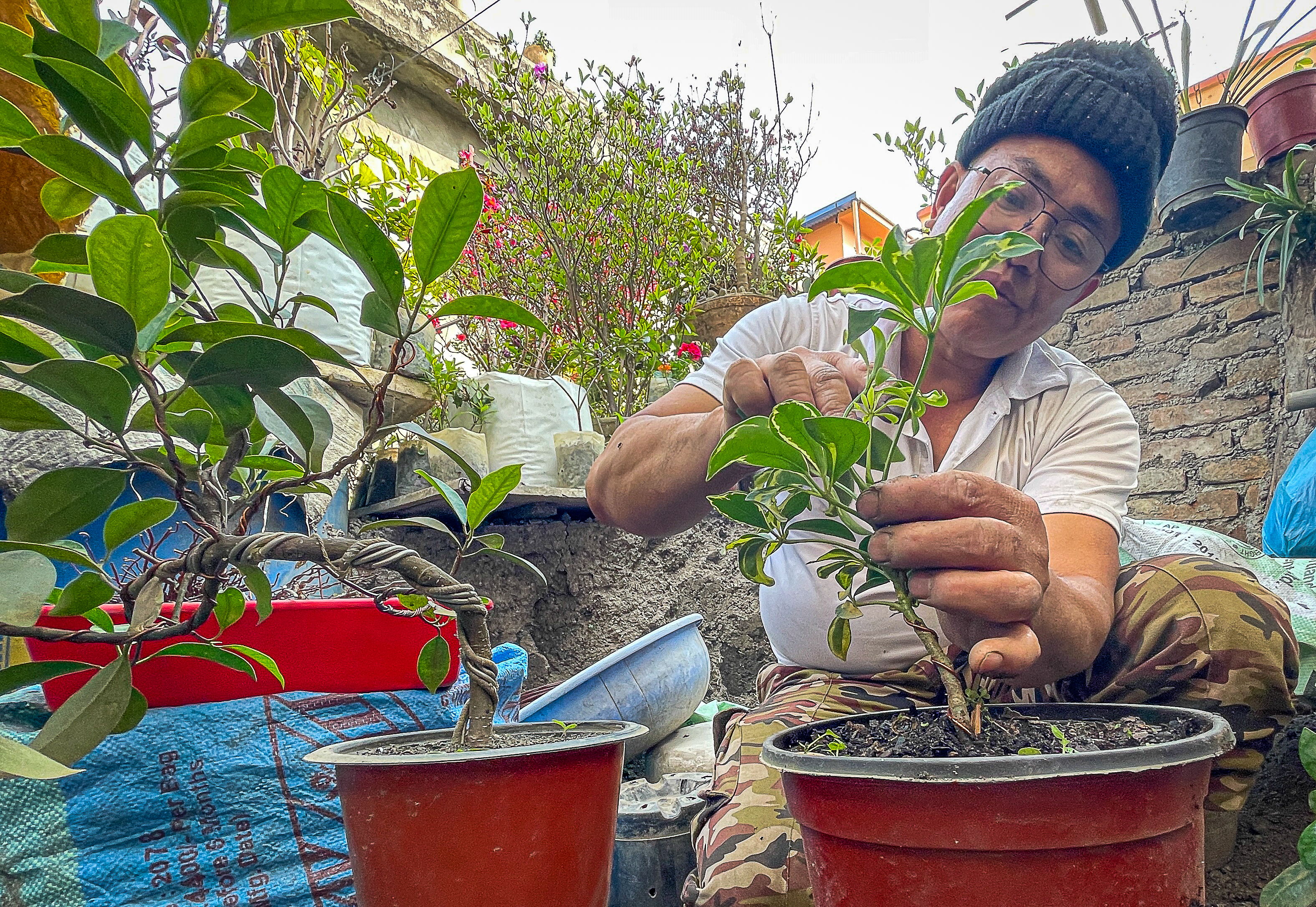
Rai worked in the Nepali film industry for many years before starting a plant and flower business. “I was fond of plants and gardening from an early age,” says the now 50-yearold. “Since I was working in the film industry, I fulfilled my passion for gardening by planting flowers and other plants on the terrace of the house I rented.”
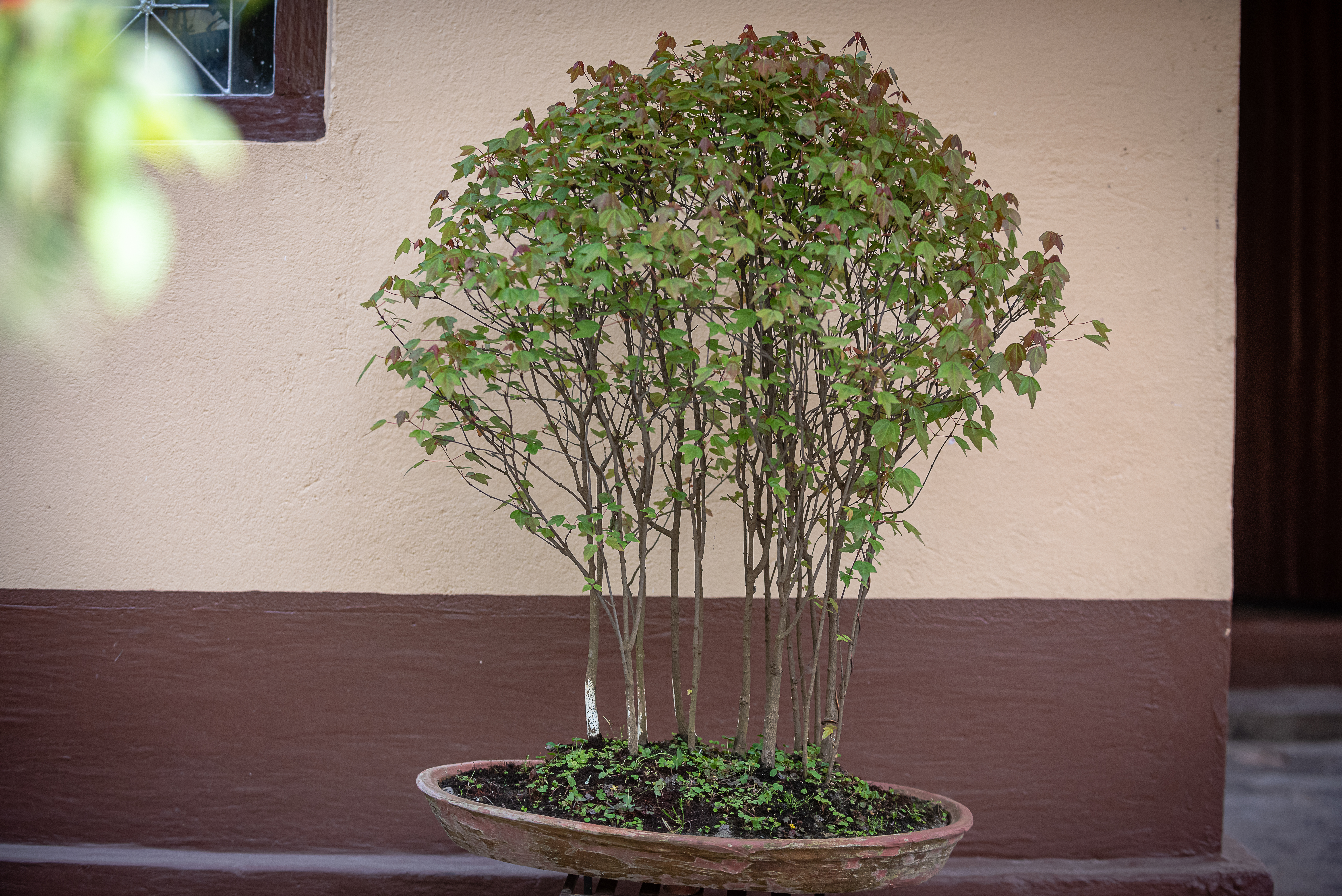
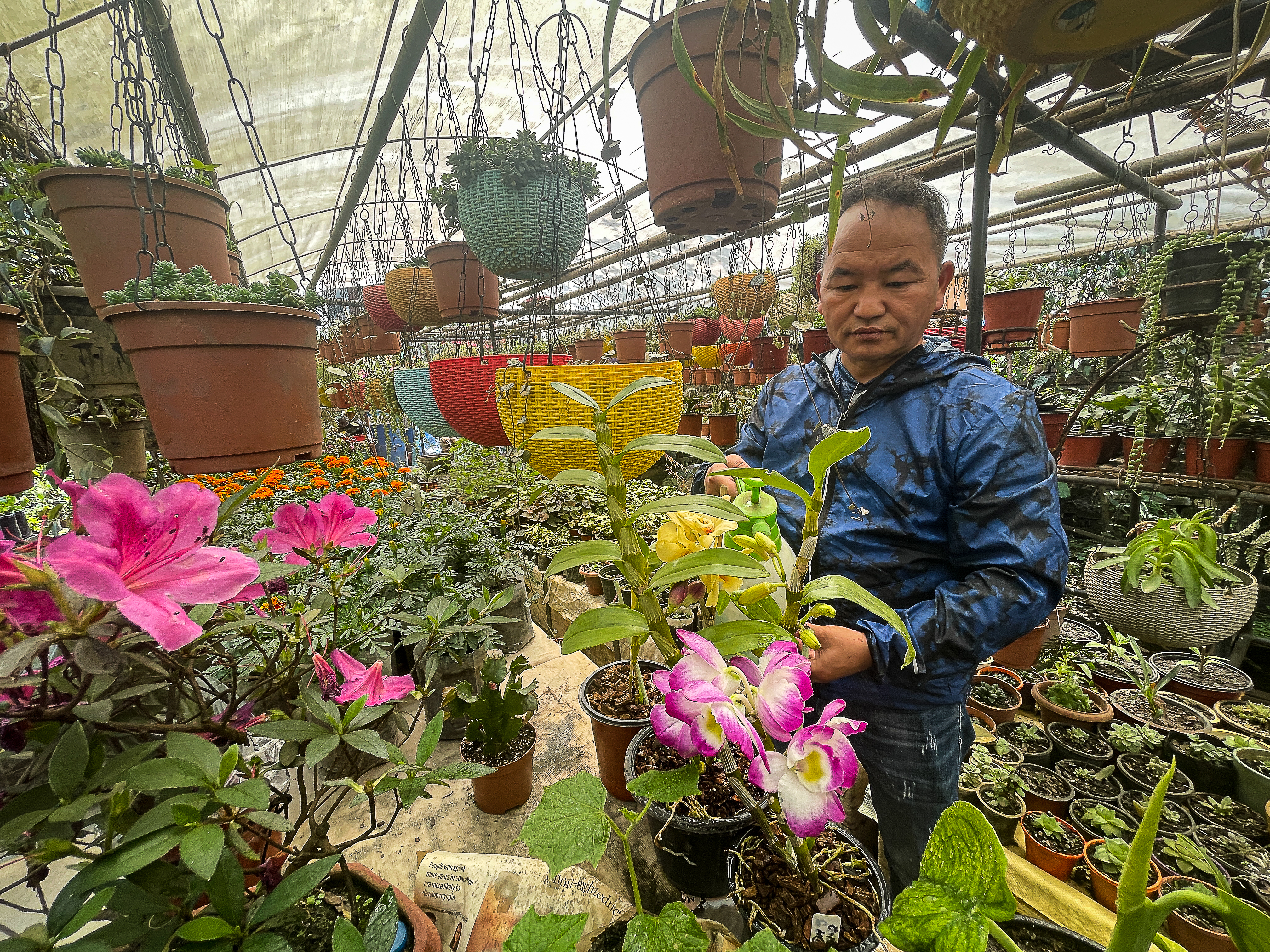
He was also an ace badminton player during his youth and won several national and international trophies. His love, however, has always been gardening. This romance blossomed when he opened Rosedale Nursery at Minbhawan 13 years ago. At his nursery, Rai specializes in exotic flowers and bonsai plants. Some of the bonsai plants in his garden are over 45 years old. They were planted by Rai’s late elder brother in their home garden back in Darjeeling.
Many people have come to him offering high prices for his prized bonsai plants. “But those specific ones are not for sale, no matter how high the offer,” he says.
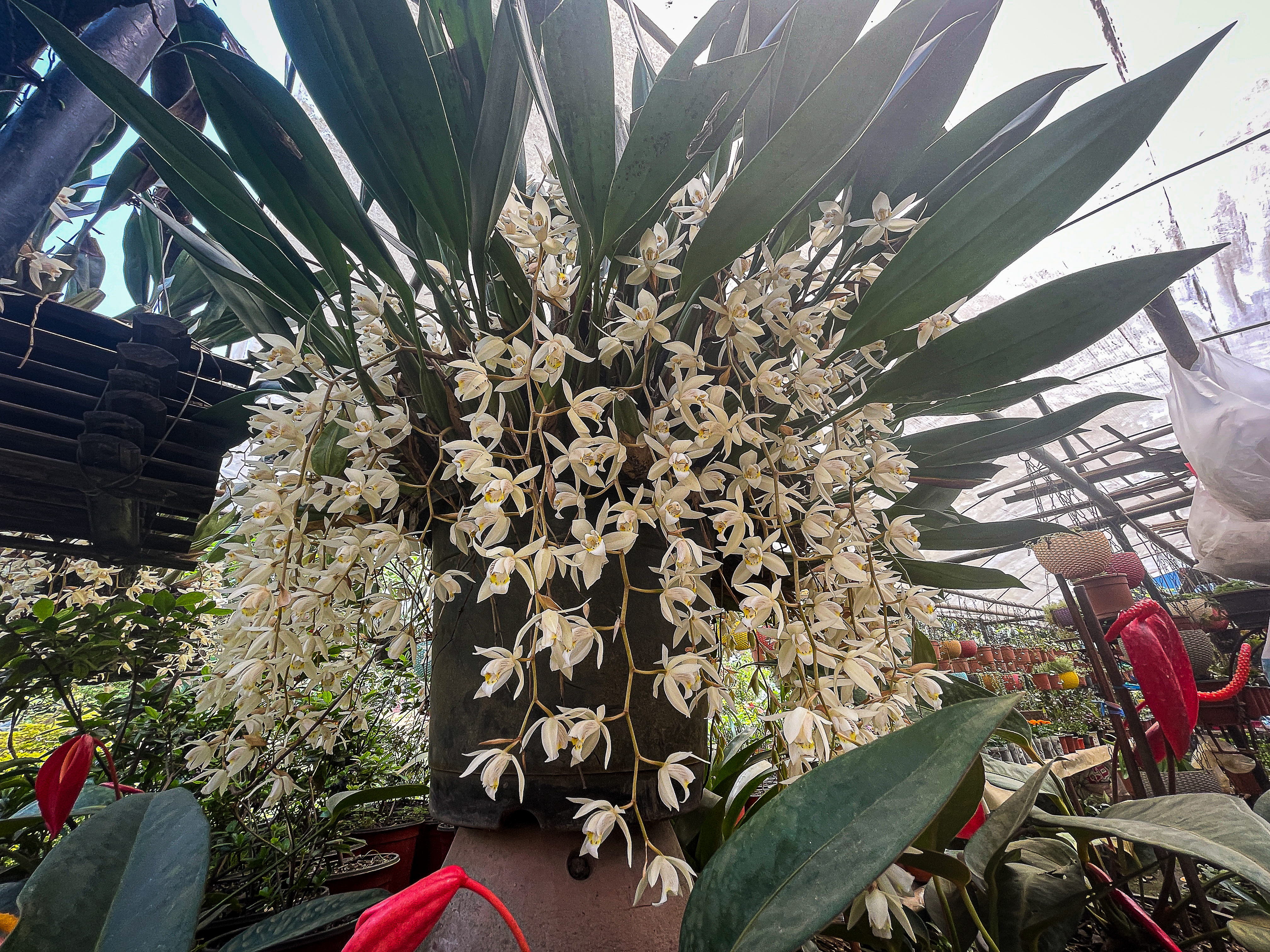
Besides bonsai, Rai is also interested in growing orchids. He is proud of an award he won for his orchid during a recent flower exhibit. He says he uses Nepal-made compost fertilizers and Dutch technology to take care of the plants and flowers. His cousin Roshan Thulung Rai helps him around in the nursery.