




Three-way competition and Nepal

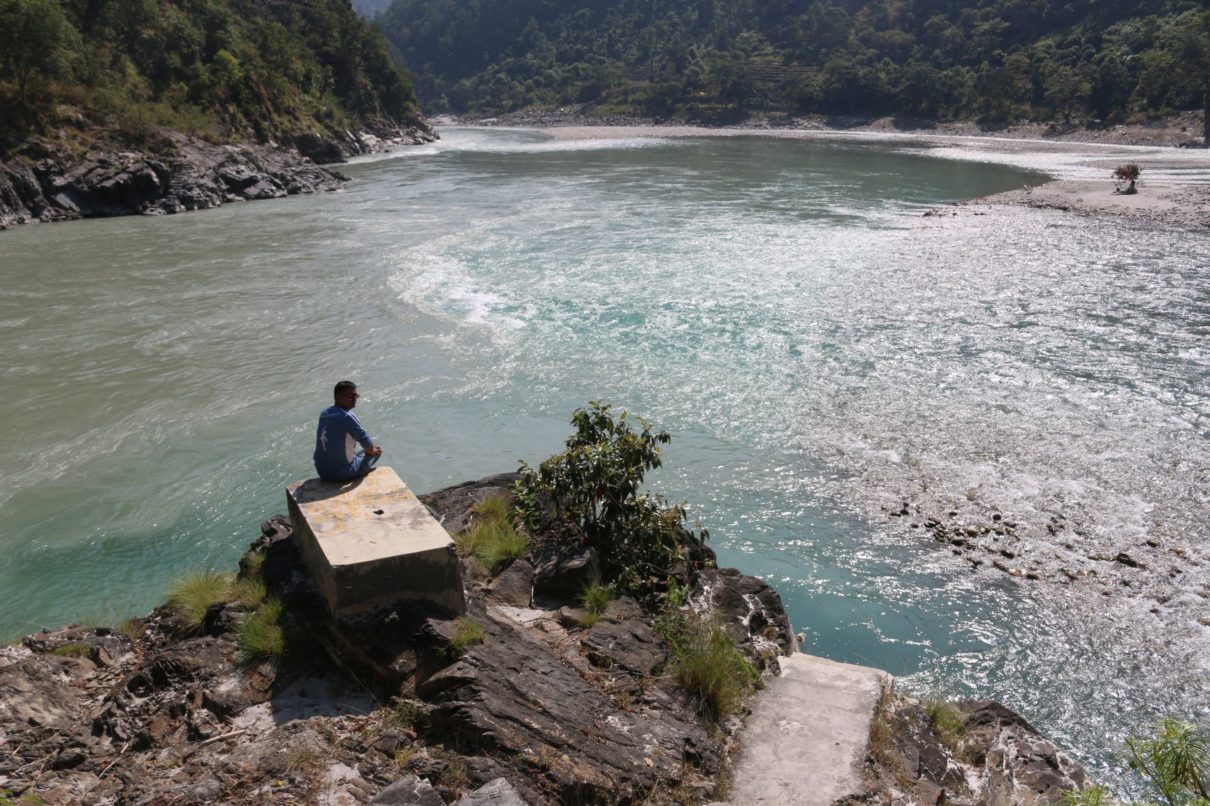
The foremost challenge in Nepal’s foreign policy comes from the adjustments we should make in the changing geopolitical and international circumstances, including managing the conflicting interests, geopolitical rivalries, and strategic competition of our neighbors and great powers. The strategic competition between India and China is not new. Another great power, the United States of America, has entered the scene, sometimes with competing strategic interests. We have to operate without being a playground for competition among our neighbors and great powers. Nepal does not wish to be drawn into the “geopolitical contest”, “strategic competition”, and “big power rivalry”. The three-way geopolitical competition in Nepal involving India, China, and the United States is not necessarily against Nepal’s interests, as it can generate benefits and opportunities in aid, trade, and investment. We should develop relations with all powers, focusing on our interests and without taking sides in their geopolitical contests. During the Cold War era, we managed to maintain the best relations with the superpowers—the United States and the Soviet Union—and obtain aid and support from both. There is no reason why we cannot maintain the best relations with India, China and the United States and benefit from their support and cooperation simultaneously. We should deal with them based on our national interests while finding a niche in their competition so we can benefit from them. Because of our relations with major powers and immediate neighbors, we often face difficulty in reaching decisions regarding the initiatives or proposals they bring from time to time, also because they sometimes contain competing interests. The United States of America has been pursuing its Indo-Pacific Strategy (IPS) and seeking to apply it in the countries of the “Indo-Pacific Region,” including through its Millennium Challenge Corporation (MCC). China has launched multiple initiatives, including the Belt and Road Initiative (BRI), Global Development Initiative (GDI), Global Security Initiative (GSI), Global Civilization Initiative (GCI), etc. We should develop principles for dealing with diplomatic proposals from great powers or our immediate neighbors. We should accept them if they are in our interests and not entertain any if that undermines our foreign policy principles. According to our policy on non-alignment, we cannot become a party to any security or military alliance. We should avoid any overture that has a political or strategic objective that seeks to use us against one or another power or neighbor. We should respond to such proposals by assessing their economic viability and benefits rather than political preferences. We should retain our decision-making autonomy without being compelled to choose for or against such proposals. If we maintain such clarity and keep reiterating them, decisions concerning them will be easier. We should take into account the emerging alliances and partnerships in the region, without being dragged into their competition. They include the IPS, Quadrilateral Security Dialogue (Quad), the trilateral partnership between Australia, the United Kingdom, and the United States (AUKUS), the Regional Comprehensive Economic Partnership (RCEP), etc. We need not fear them but rather be vigilant without taking sides while not missing opportunities arising from them for our economic development. We must assess changes in geopolitics and adjust our policies accordingly. Though the world has become a“global village,” geopolitics is back. Geopolitical tensions have increased with the rise of new powers in every region, including ours. There was a time when the power that commanded the seas ruled the world. Then, whichever power controlled the Eurasian mainland extending from the Volga to the Yangtze and from the Himalayas to the Arctic, exercised supremacy. Today, the power that commands the Asia-Pacific region can have geopolitical sway. Now called the Indo-Pacific Region, it is rapidly evolving as the center of gravity for geopolitical contests. The balance of power is shifting to developing countries, particularly in Asia. The continent is retaking its lost dominance in the world economically. Asia has also become a new theater of great power contestation, including in the South China Sea. Our region, South Asia, remains a geopolitical hotspot, thanks to the strategic competition involving great powers, Indo-Pakistan relations, extremism and terrorism, unresolved boundary issues, and the crisis in Afghanistan. The 2017 Doklam standoff and the 2020 Galwan Valley border scuffle between India and China highlight the potential risks of unresolved bilateral boundaries in regional stability and security. India and China cooperate on several issues and platforms while engaging in competition in others. They cooperate on climate change, development, and global governance. Both are members of the BRICS, SCO, Asian Infrastructure Investment Bank (AIIB), etc. Their bilateral trade has reached $135bn. They have a stake in working together for their interdependence and regional stability. We have seen what can happen when they bypass us. Their 2015 agreement for opening the Lipulekh Pass for trade and pilgrimage came without consulting us. An African adage says, “Whether the elephants are dancing or mating, the grass will get crushed in either case”. In the past, we handled geopolitical challenges without compromising our independence and sovereignty. We should keep a constructive engagement with our neighbors and great powers by diversifying our relations, resolving outstanding issues, strengthening regional cooperation and economic integration, pursuing political stability and economic development, and fostering national unity. We need not fear geopolitics but handle it according to our interests. It is our priority to maintain the best relations with India and China and benefit from their economic progress. We need to find a niche to benefit from their competition, especially in the economic realm, without being dragged into their sides. Both are our sources of trade, tourism, investment, and aid. So far, little automatic spillovers from their economic growth have come to Nepal. We must take proactive action to benefit from their economic growth. Nepal’s unifier king, Prithvi Narayan Shah, likened Nepal to a ‘yam between two rocks’. The ‘yam’ needs to extend its roots into the crevices of the ‘boulders’. Nepal should seek economic integration with India and China, enter their supply and value chains to benefit from their economic rise. In economic growth, Nepal is a slow-moving tortoise between a marching elephant (India) and a flying dragon (China). It would be in our interest to invoke the Rhino (Gaida) in us to match them with an equally-robust growth trajectory. At the least, we can move like a rabbit—fast and vigilant—to benefit and catch pace with both. We can benefit from India and China by promoting trade opportunities, offering ourselves as a transit economy, focusing on infrastructure development, including connectivity projects, attracting tourists and FDI, and transferring technology, knowledge, and skills from them. We need to move beyond the slogans of ‘transit economy’, ‘dynamic bridge’, ‘land-linked economy’, and ‘trilateral cooperation’ that our leaders keep reiterating. We need evidence-based studies, proactive diplomacy and specific proposals and agreements. The opportunity to serve as a transit economy may not be there forever. We need to catch such opportunities until they are around with us. We must strive to maintain the best relations with our immediate neighbors with a respectable framework of relations based on sovereign equality and mutual benefit. We need to resolve outstanding issues with India, concerning the review of the 1950 treaty and the Kalapani-Lipulkeh-Limpiyadhura boundary issue, including through the logical conclusion of the report of the Eminent Persons Group (EPG) instituted bilaterally. We should focus on building trust and confidence at the political levels and continue to work at diplomatic and technical levels to safeguard Nepal’s national interests and resolve the outstanding issues with neighboring countries, mainly India. With China, we should find a way to implement projects under the BRI and bring into operation the bilateral transit and connectivity agreements. This is an excerpt from the speech of the author delivered at second YKN lecture series

Is ‘left unity’ on the card?
There are no immediate threats to undo the current coalition government led by the CPN (Maoist Center). At least, that’s what Prime Minister Pushpa Kamal Dahal and his primary coalition partner, Sher Bahadur Deuba, of the Nepali Congress have been trying to convince the people. But if one considers the recent formation of the so-called socialist front of the Maoist party and fringe communist forces, talk about the government change made by some NC leaders, and the second-rung leaders of the NC and the UML exploring the possibility of collaboration, it is hard to buy into Prime Minister Dahal and NC President Deuba’s assurance of a stable government. Some leaders in the NC and the UML say that the two parties must come together for the guarantee of political stability for at least another general election. UML leader Gokul Banskota, who is close to the party chairman, KP Oli, has publicly stated that while there cannot be an electoral alliance between the two parties, the UML and NC can form a government to ensure political and economic stability in the country. The UML has historically been the main political rival of the NC, and there are many leaders in both the parties who believe that they should always remain apart. But there are plenty of reasons that could bring these two parties together. The main one being the arrests of and allegations against several UML and NC leaders in corruption cases, like the fake Bhutanese refugee scandal and the Lalita Niwas land grab case. The leaderships of both the NC and the UML are not pleased with the Home Ministry, led by the Maoist party, opening investigations into corruption cases involving high-profile individuals. NC President Deuba, a key partner in the ruling coalition, has so far remained silent regarding government change, but people close to him say that he is not pleased with the Dahal administration, particularly regarding the way the refugee scandal is being pursued by the Home Ministry. The UML is keen to enter serious negotiations with the NC for the formation of a new government without the Maoist Center. But NC leader Min Bahadur Bishwakarma says that the party is committed to keeping the coalition intact. On Sunday, UML Chairman Oli said that there has not been any substantial discussions regarding the formation of a new coalition because the NC was fearful. But, Deuba’s non-committal and his apparent willingness to play second fiddle to the Maoist party do not mean that he is playing the safe card. Talks about a broad alliance of left parties are also gaining momentum of late, and it could see both Dahal and Oli together again. It is worth noting here that though Dahal may be leading the current ruling coalition, his party came in third in the last year’s general elections, far behind the NC and UML—and that too despite forming an electoral alliance with the NC and other fringe parties. So, it is very much in the interest of Dahal and his party to form some sort of lasting alliance at the earliest in order to stay relevant. The evolving dynamics inside the NC has also prompted Dahal to find an alternative. The factions led by Gagan Kumar Thapa and Gururaj Ghimire in the NC are already saying that the NC should not forge an alliance with the Maoist party in the next general elections. Besides, Thapa has also been saying that the current ruling alliance could change if the government fails to deliver. These developments have made Prime Minister Dahal suspicious. He may be in favor of giving continuity to the current coalition, as he has been saying publicly, but he is also aware that his party cannot survive if it were to contest the next general elections on its own. In the previous two general elections, the Maoist Center had forged poll alliances with the UML and the NC respectively. For Prime Minister Dahal’s party, the only lifeline is making an alliance with other parties. So, it sees everything through the prism of election. Several leaders in the Maoist party are convinced that the NC is not committed to a long-term collaboration and that the party should start looking for an alternative. This means the party will align with the UML, if it has to. Already, four political parties have formed a socialist alliance, led by the Maoists, with a purpose of expanding it to the grassroots level. Dahal is also in talks with the leader of Maoist splinter groups to bring them back into the party. He is said to be in talks with former Maoists ideologue Baburam Bhattarai, now of the Nepal Samajbadi Party, to explore ways to unite. It is said that before talking with Oli, Dahal first wants to solidify his position by bringing all fringe communist parties under one umbrella. The meteoric rise of the Rastriya Swatantra Party has also alarmed the Maoists. If the RSP continues to ride the wave of popularity until the next general elections, it is not just the Maoists that could get an electoral thrashing, the NC and the UML could also lose their political base. This was evident in the by-elections held earlier this year. The formation of a left alliance will no doubt be welcomed by China. Over the past few years, China has been consistently advising Nepal’s left parties to come together. Beijing’s leadership will ask Prime Minister Dahal for the same when he visits China in September. Until now, Prime Minister Dahal has been shrugging off the talks about the breakup in the Maoist-NC coalition, but he has also not ruled out the possibility of leftist alliance. He said on Monday that the NC should not overreact to the talks about the formation of left unity, as it does not mean disunity in the current ruling coalition. But if Oli’s recent statement is to be believed, the Maoists and the UML could once again unite to form a large communist party, like they did in 2018 with the short-lived Nepal Communist Party (NCP). A few days back, Oli said that there must be a serious review as to why the NCP split. UML leader Amrit Kumar Bohara says there is a sizable communist voter numbers in the country, and their combined strength will not be known for as long as leftist parties in Nepal are scattered. Chairman of CPN (Unified Socialist) Madhav Kumar Nepal, also former leader of the UML, also believes that only a powerful communist party could bring social and economic changes in the country. Maoist lawmaker Madhav Sapkota says while there is no immediate chance of left parties uniting, efforts are definitely underway. He adds the parties are continuing the efforts after learning lessons from the past. Bishwakarma, the NC leader, says unification among communist parties is an agenda that has been discussed for a long time, and that his party will have no issue if the parties of similar ideologies come together. It will not upset the NC as long as it does not affect the current coalition, he adds.

Pasture posture in times of climate change
By the end of the Pleistocene Epoch—starting some 2.6m years ago and lasting till 11,700 years ago—pastoralism, or expansive grazing system for livestock production, had already taken shape as settled agriculture started. This system thus evolved as a source of sustenance in the interface period of a new climate and a new phase in the life of Homo sapiens. This least understood or documented ancient way of life still continues. Across the world, over 100-200m people still practice it as an economic activity. One-fourth of the planet’s territorial surface still is being devoted to the pastoral production system. When the system started, the planet was on the cusp of a change from an ice age to a gradual warming (not the human-induced one that tentatively started around the industrial revolution) and modern humans were found all over the planet. The pastoral systems are usually found in the harsh climatic zones and invariably, these are the most resource-scarce geographies. This system thus is a super climate-resilient and adaptive one. The system revolves around unrestricted mobility of people and livestock in cyclical mode to access grazing grounds. Pastoralists cross national boundaries, intra-country boundaries and also operate on both private and public lands. Pastoralism also thrives around the cropping system as they benefit each other: Crop residue on farms become the fodder for grazing livestock, while the latter give the manure to the farmers. But, here comes the challenge. Modern systems have outrightly rejected this system as a redundant one. Rather, environment departments across the world have termed grazing as a threat to the environment. Agricultural policies have, over time, prioritized settled agriculture and livestock farming as the way to boost productivity. As a result, pastoralism has been pushed into oblivion without any recognition. Thus, when the UN’s Food and Agriculture Organization (FAO) released the “Making way: developing national legal and policy frameworks for pastoral mobility”—a definitive set of arguments and recommendations on how to protect the pastoral community and their mobility—hope for a dosage of support to this system arose. Pastoralists are considered backwards looking and unproductive, and have historically been undermined by adverse legislation and a lack of supportive legislation. Pastoralists are vulnerable to resource appropriation, sedentarization and restrictions on mobility. As they are squeezed out of productive areas, they are led to concentrate in and compete over limited available grazing resources. In the absence of legislation that protects and regulates mobility, pastoralists enter into conflict with other resource users and the state. Pastoralism is always blamed for harming the environment; and the allegation is used to argue that it should be disbanded. But, as recent support for its revival and recognition picks up in many countries, including in Europe, Africa and Asia, the system has many environmental and economic services. Pastoralists are generators and distributors of natural manures. According to estimates, such manures are estimated to be worth $45bn a year. Various studies show that pastoral systems have more protein output per unit of feed in comparison to intensive systems being practiced currently. In India, pastoralism accounts for more than 70 percent of the total meat output and 50 percent of the total milk output. But in the case of Nepal, it has not been documented. “The livestock sector comprises 3.5 percent of Nepal’s GDP, with two-thirds coming from such pastoralist production,” estimated the Meat Atlas 2021. More to it, as a practice, it is the economy of the poorest communities in the harshest of the geographies. In times of a new climate, this system has evolved to fight changing climatic conditions more effectively. So, it remains as a viable source of sustenance for the poorest. Policy support to this system will be a step toward making the economy of the poorest climate-resilient. The author is senior veterinary health management consultant at Devine Veterinary Clinic
Double trouble: Exploring the suspense of Gumraah
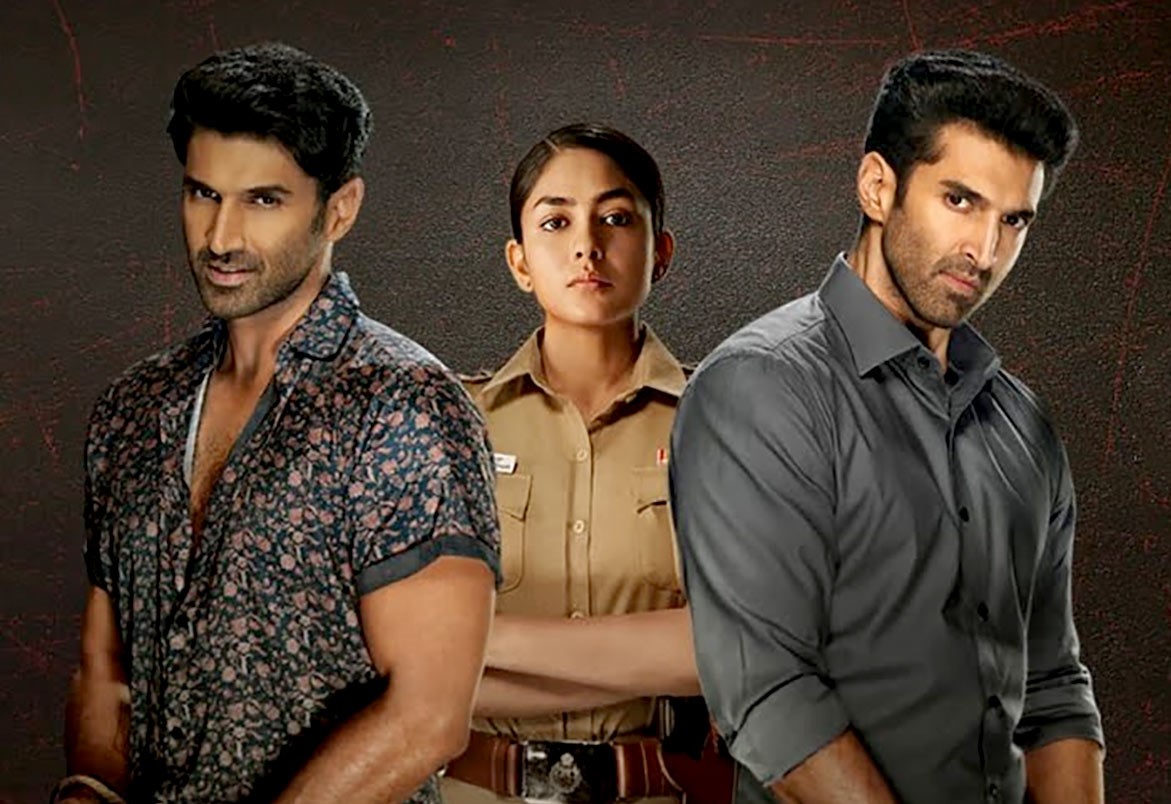
‘Gumraah’, available on Netflix, is a captivating whodunit in which the identity of the killer is unveiled right at the start. However, as the story unfolds, it becomes evident that there is more to it than meets the eye. Two individuals, both identical, vehemently deny their involvement in the murder, leaving the audience perplexed. The Hindi-language thriller ‘Gumraah’ is an official remake of the Tamil sleeper hit movie ‘Thadam,’ starring Arun Vijay, which was also remade into Telugu as ‘Red,’ featuring Ram Pothineni. Drawing inspiration from true stories of similar crimes, the movie retains its mind-boggling suspense until the end. As I had watched both the South Indian versions, I approached Gumraah with a sense of skepticism. Bollywood has, on one too many occasions, failed to do justice to remakes, diluting the essence of the original movies. But I’m delighted to share that the makers of ‘Gumraah’ have not only succeeded in adapting the movie effectively but have also managed to preserve its intrigue, thrill, and suspense. The outstanding performance of Aditya Roy Kapoor, who is seen in the lead role, deserves a special mention. Kapoor, an underrated talent of Bollywood, has yet to find his rightful place in Hindi cinema. In ‘Gumraah’, he seizes the opportunity to showcase his acting prowess, convincingly playing the tricky doppelganger suspects, Arjun Saigal and Ronnie. He effortlessly navigates the complexities of these two contrasting characters, infusing them with distinct emotions that leave a lasting impact on the audience. Director Vardhan Ketkar’s sharp vision and meticulous execution, combined with the screenplay by Aseem Arora and Magizh Thirumeni, successfully recreate the drama and suspense of the original Tamil movie. ‘Gumraah’ effectively uses flashbacks to build its narrative, keeping the viewers on the edge of their seats. While there may be a few instances where certain scenes feel a little sluggish, the overall impact is overshadowed by the commendable performances and skillful filmmaking. Furthermore, Vineet Malhotra’s cinematography adds another layer of depth to the storytelling. His adept use of lighting, shadows, and framing enhances the mood of the movie, creating an atmosphere of tension and uncertainty. The juxtaposition of vibrant colors with somber tones further intensifies the visual experience, perfectly complementing the narrative’s dark and mysterious nature. Malhotra'’ contribution significantly elevates the overall quality of ‘Gumraah’, making it a visually captivating thriller. The movie’s focus on two suspects who bear an uncanny resemblance poses a unique challenge for the writers and director in maintaining the delicate balance of guilt and innocence. However, they skillfully navigate this challenge, masterfully crafting a narrative that keeps the audience guessing until the climactic revelation. For viewers who have not watched the earlier versions, ‘Gumraah’ offers a special treat as the unexpected outcome makes an unnerving impact. In addition to Kapoor’s standout performance, the supporting cast delivers commendable portrayals. Mrunal Thakur shines as Sub Inspector Shivani Mathur, a headstrong and determined cop assigned to investigate the case. Thakur embodies the role with conviction, portraying a character who refuses to back down in the face of adversity. Ronit Roy impresses as ACP Dhiren Yadava, a conniving officer with a personal vendetta against Arjun, willing to compromise his morals and ethics to ensure his incarceration. Who should watch it? ‘Gumraah’ is a gripping thriller that appeals to both those unfamiliar with the earlier versions and those who have seen the Tamil or Telugu adaptations. With Aditya Roy Kapoor’s stellar portrayal of the doppelgangers, coupled with the movie’s engaging storyline and skillful direction, it offers a riveting cinematic experience. The added dimension brought by Vineet Malhotra’s cinematography further enhances the movie’s visual appeal. If you’re in search of an enthralling whodunit with a captivating climax, ‘Gumraah’ should be at the top of your watchlist. Gumraah Rating: 3.5 stars Genre: Crime thriller Director: Vardhan Ketkar Actors: Aditya Roy Kapoor, Mrunal Thakur, Ronit Roy Rune time: 2hrs 7mins


