


Trump says China violated trade agreement with US
US President Donald Trump has accused China of violating a recent agreement to ease tariffs and trade restrictions on critical minerals. The deal, made during May talks in Geneva, included a 90-day pause on tariffs.
Trump said on Truth Social that China had "totally violated" the agreement, but provided no details. He said his tariffs of up to 145 percent had severely impacted China’s economy, according to Reuters.
Trump later told reporters that he planned to contact with Chinese President Xi Jinping to address the matter. Deputy Chief of Staff Stephen Miller warned that China's noncompliance could trigger US action.
China's embassy said it is still in contact with the US, but expressed concern over new US export limits and urged Washington to follow the Geneva agreement, Reuters reported.

Gaza faces severe hunger as ceasefire nears
The UN has declared Gaza the “hungriest place on Earth,” with all 2.3m residents facing catastrophic hunger, Al Jazeera reported.
Israeli forces killed two more people at an aid site in Rafah, southern Gaza.
US President Donald Trump said a ceasefire between Israel and Hamas is “very close” and may be announced today.
Gaza’s death toll has surpassed 61,700, including thousands missing under rubble. Over 1,100 people were killed in Israel during the October 7 Hamas attacks, according to Al Jazeera.

Quarry collapse kills ten in Indonesia
At least ten people were killed after a quarry collapsed on Friday at the Indonesia’s West Java province. Authorities say several others remain missing, and rescue teams are working around the clock to locate them, Al Jazeera reported.
Indonesia’s disaster agency reported that heavy machinery, including three excavators, was buried in the collapse. So far, at least a dozen injured individuals have been pulled from the rubble.
The cause of the collapse is still under investigation as search operations continue.

UN Security Council renews sanctions against South Sudan
The UN Security Council passed Resolution 2781 on Friday, extending the arms embargo on South Sudan and targeted sanctions such as travel bans and asset freezes, until May 31, 2026. Algeria, Sierra Leone, Somalia, China, Pakistan, and Russia voted nine times in support of the resolution, with six abstentions.
The Council also extended the mandate of the Panel of Experts assisting the South Sudan Sanctions Committee until July 1, 2026. The resolution emphasizes the Council's readiness to revisit sanctions based on progress made toward benchmarks outlined in Resolution 2577 (2021), according to Xinhua.
It urges South Sudanese authorities to make additional progress and asks both the UN Secretary-General and South Sudan to provide progress reports by April 15, 2026.

Supreme Court allows end of migrant parole protections
The US Supreme Court on Friday lifted a lower court order that had blocked the Trump administration from ending humanitarian parole protections for over 500,000 migrants from Cuba, Haiti, Nicaragua, and Venezuela, according to Associated Press.
The Biden administration introduced the program in late 2022, allowing qualifying migrants to stay and work in the United States for two years. It aimed to relieve strain on the southern border.
President Donald Trump ordered the termination of all parole programs shortly after commencing his second term. Homeland Security Secretary Kristi Noem carried out the directive in March.
The Court's judgment also allows the end of Temporary Protected Status for approximately 350,000 Venezuelans, putting roughly one million migrants at risk of deportation, Associated Press reported.
Mexico demands explanation on US deal with Mexican drug trafficker
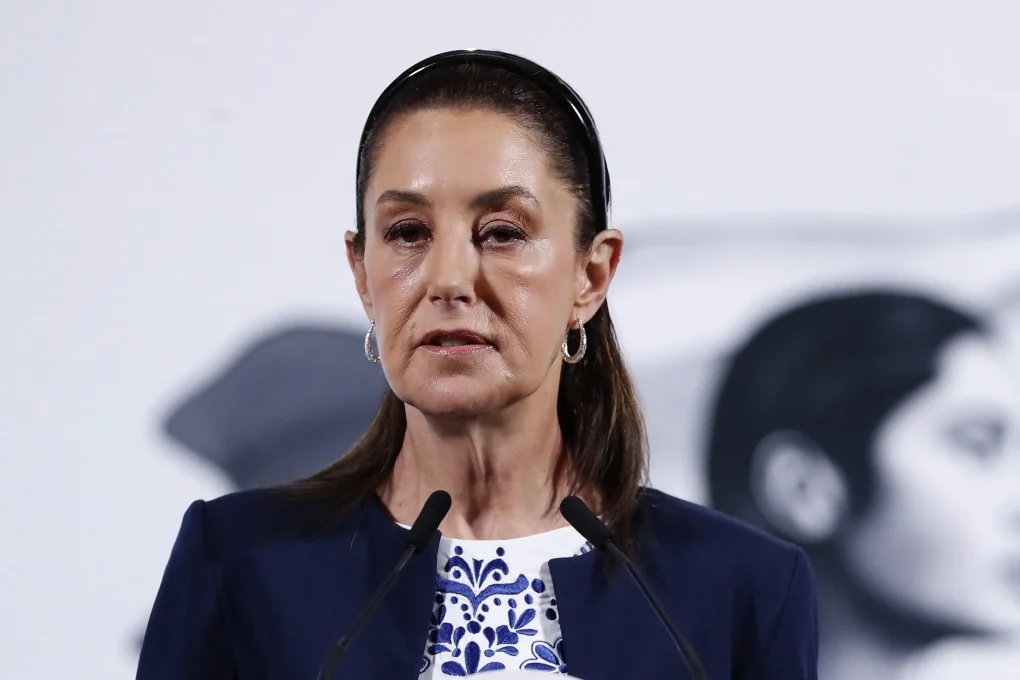
Mexican President Claudia Sheinbaum on Thursday questioned the US government for reaching a plea deal with Damaso Lopez Serrano, a former Sinaloa Cartel leader, despite labeling the cartel a “Foreign Terrorist Organization.”
“The US says it doesn’t negotiate with terrorists, yet it makes deals with them,” Sheinbaum said, demanding an explanation, according to Xinhua.
Lopez Serrano, known as “El Mini Lic,” pleaded guilty to drug trafficking in the US. He was first arrested in 2017 and again last year on similar charges. The US designated the Sinaloa Cartel a terrorist group in February.

Houthis target Ben Gurion Airport; Israel intercepts missile
Yemen's Houthi force claimed responsibility for shooting a hypersonic ballistic missile at Israel's Ben Gurion Airport on Thursday night. The group claimed the attack was in retaliation to Israel's ongoing offensive in Gaza and pledged to continue targeting Israeli aviation traffic until the crisis is resolved and the blockade is lifted, Xinhua reported.
The Israeli military acknowledged that it intercepted a missile fired from Yemen before it reached its target. There were no casualties or damage reported.
A day earlier, Israeli airstrikes hit the Sanaa airport in Yemen, destroying the runway, key facilities, and the last remaining passenger aircraft.
The Houthis, who control much of northern Yemen, have carried out several missile and drone attacks against Israel since November 2023 in support of the Palestinians amid the ongoing Israel-Hamas war, as stated by Xinhua.
Gandharvas fight for forgotten identity
Narbhupal Shah, who had been living at his maternal uncle’s house in Tanahun for a long time, was brought to Gorkha and hidden in Dhanubanese. According to historical records, it was Maniram Gayane who located him there and played a key role in bringing him to the Gorkha court.
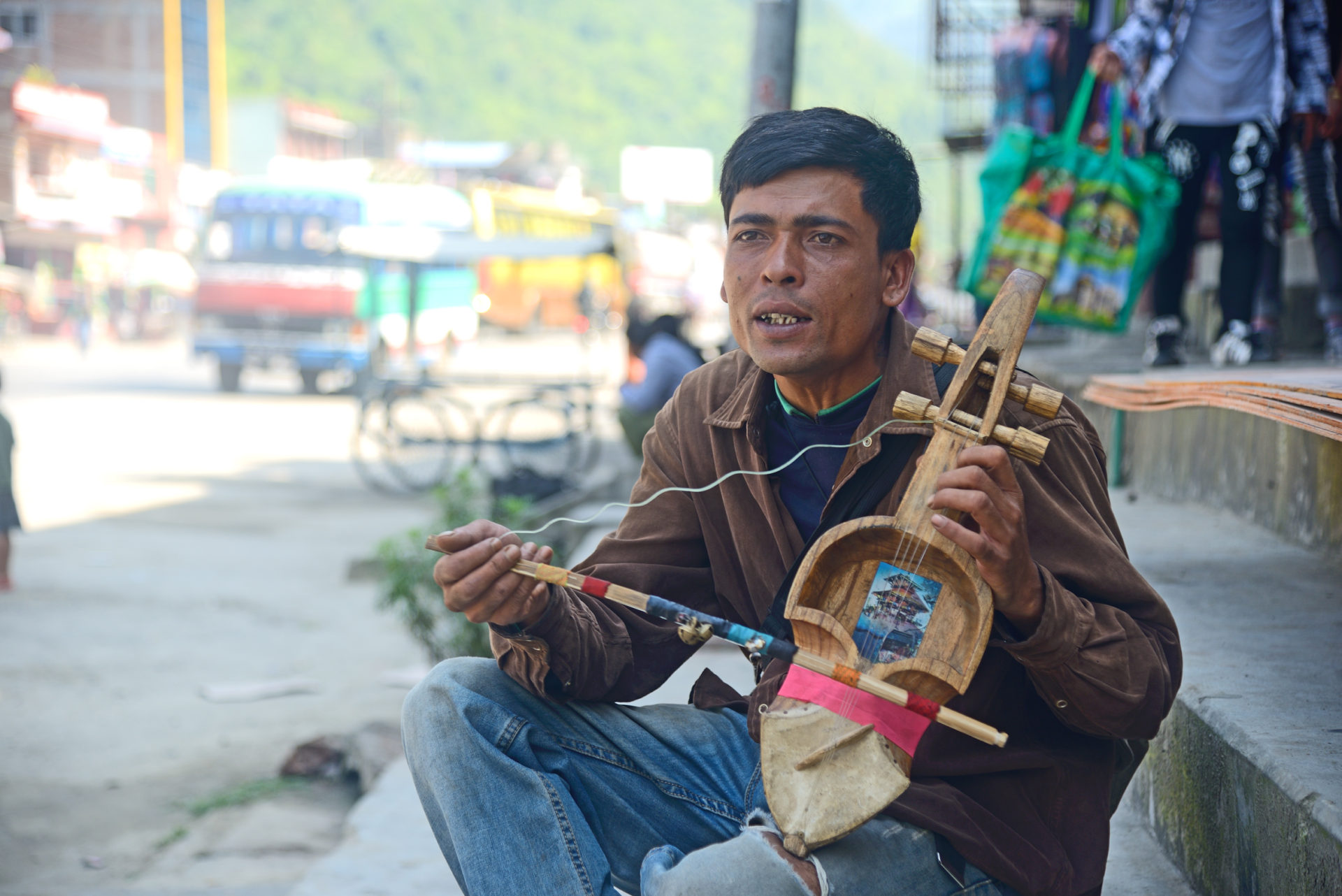
When Prithvi Narayan Shah attacked Nuwakot and was defeated, left penniless and demoralized, it was Gayane who went door to door playing the sarangi, collecting money to support the king. After repeated defeats in Kirtipur, it was again Gayane who helped uncover vital intelligence that contributed to the eventual victory.
Today, the descendants of Maniram Gayane are struggling to reclaim their identity. While the clans and lineages of those who supported the unification campaign have risen to prominence, the Gandharva community—once instrumental but now marginalized—remains stuck in poverty and neglect. They say they have been exploited and left behind.
The Gandharva community, whose legacy dates back to the era of “Gandharvas singing, Apsaras dancing,” has been stripped of both wealth and recognition. The songs and music that once defined them are fading away.
“We spent centuries in despair after the Gandharva family, who served from Narbhupal Shah to Prithvi Narayan Shah, fell into disrepair. Now we are awakening and fighting back. We have established the Maniram Gayane Smriti Pratishthan,” says local resident Pampha Gandhari. “Through this foundation, we are seeking official recognition from the government.”
The foundation has started offering training to teach the younger generation how to play the sarangi. It has also initiated a women’s empowerment program. “Last year, we conducted a three-month basic training in sarangi playing, and we are continuing that this year as well,” Pampha explains. “Learning the sarangi is difficult, so we begin by teaching the basics.”
The Gandharva community resides primarily in Ghyampeshal and Palungtar, the headquarters of Gorkha. In Bhangbari and Dharapani of Gorkha Municipality–7, there are 22 Gandharva households. Determined to preserve their fading culture, they have appealed to the Gorkha Museum to display their traditional musical instruments and include a mannequin representing their cultural identity.
“The museum showcases the costumes of other castes, but none representing the Gandharvas,” says Mangal Prasad Gandharva, 84, chairman of the foundation. “We’ve requested them to exhibit our instruments—sarangi, arbaaz, kartal, jhantar, mujura, madal—but our pleas have gone unheard. No initiative has been taken to acknowledge our identity.”
Despite the lack of government support, community members continue working for upliftment. “We’ve traveled to Tanahun, Lamjung, Kaski, Palpa, Gulmi, and Dang to assess the condition of the Gandharva communities,” he adds.
A major challenge is the absence of youth participation. “After 20 years of age, most youths go abroad. Those who remain feel ashamed to carry the sarangi,” says local resident Durgadevi Gandhari. “That’s why we’re training young people and helping them understand the cultural importance of the sarangi.”
She also expressed frustration that while the government acknowledges the descendants of Bise Nagarchi, it has no similar recognition or policies for the Gandharva community, despite their historic contributions to the unification campaign.
Pampha Gandhari, who returned to her hometown after studying in Kathmandu, is now raising her voice for her community’s identity, rights, and recognition. She currently serves as a member of the executive committee of Gorkha Municipality and says the municipality has been running programs for the preservation of Gandharva musical instruments for the past two years.


