


Thailand warns of military action over border tensions with Cambodia
Thailand’s military has declared readiness for a “high-level operation” in response to rising tensions with Cambodia over a disputed border area. The statement follows intelligence reports suggesting Cambodia has increased its military presence along the shared frontier.
The Thai army stated that it intends to prevent escalation but is fully prepared to preserve national sovereignty if required. Troops have been instructed to maintain vigilance and ensure that all equipment is operating, according to Al Jazeera.
A closed-door conference of Thailand's top military officers is slated for Friday, and all armed forces have increased battle preparedness.
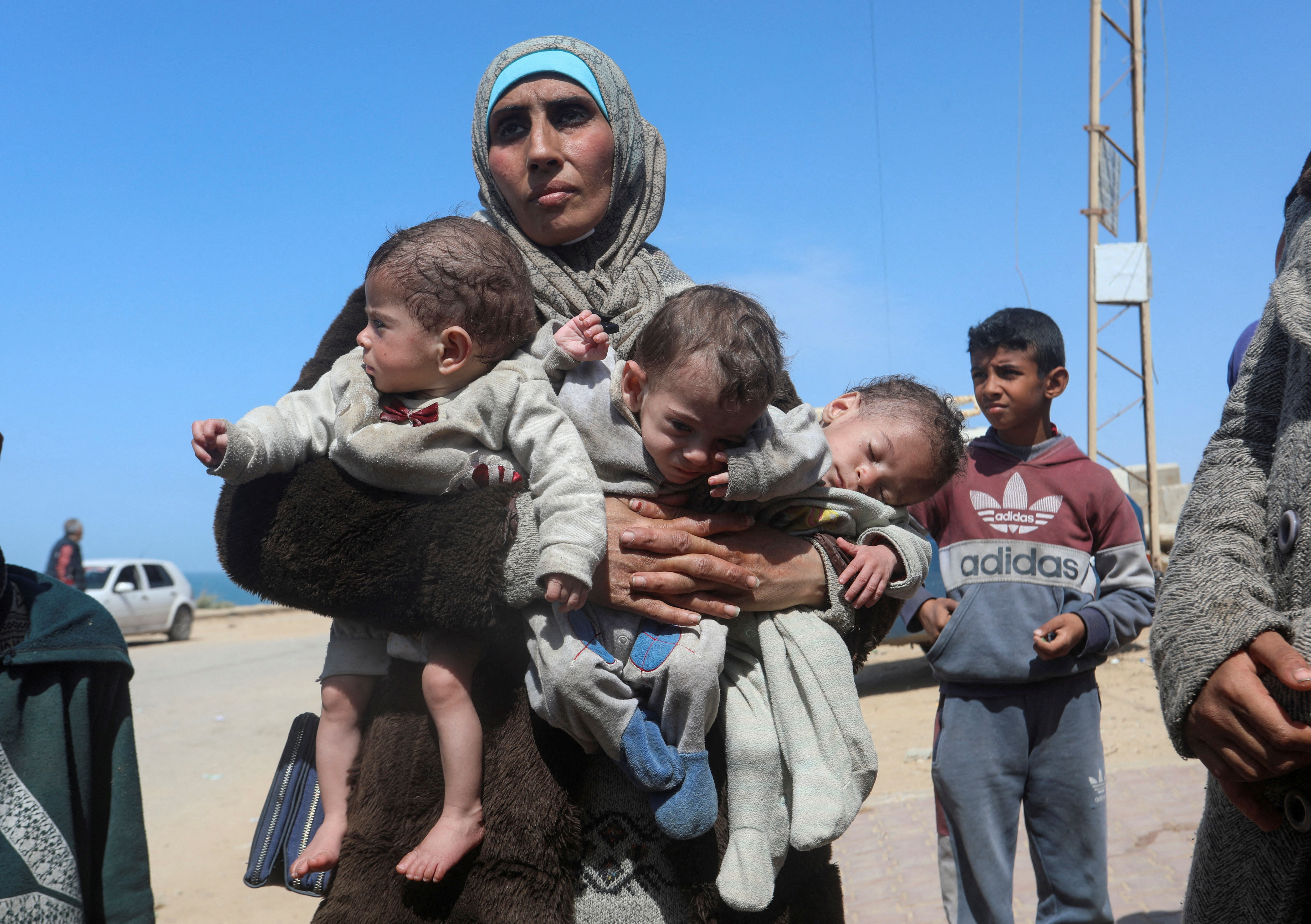
UN warns of surge in acute malnutrition among Gaza’s young children
The UN says that child malnutrition in Gaza has almost tripled since February, with more than 2,700 cases found in May alone. Over 16,500 kids under five have needed medical care this year, and many of them were in serious condition.
Only four centres remain to treat severe cases, and some have shut down due to fighting. The WHO says Gaza's health system is falling apart and asks that its last big hospitals be protected. Health workers and UN experts say that Israeli attacks on hospitals are making life harder and harder for Palestinians, according to UN News.

Judge halts Trump’s ban on Harvard international students
A federal judge in Massachusetts has temporarily blocked President Donald Trump’s order barring international students from entering the US to attend Harvard University.
Judge Allison Burroughs ruled that the directive could create "immediate and irreparable injury" to Harvard, and halted its enforcement pending further review, Al Jazeera reported.
Harvard said the order was part of a campaign against the university and was politically motivated retaliation rather than a national security measure.

USAID dumpsite (Photo feature)
Hundreds of vehicles and motorcycles used by the USAID in Nepal have been stranded at the dry port in Chobar.

With the decision of US President Donald Trump to close USAID programs, hundreds of vehicles and motorcycles used by the agency have been kept at the dry port.

Although the USAID has worked in various sectors in Nepal, including health and education, it has recently been revealed that the agency has also spent money on religious conversions and political manipulation.

President Trump shut down USAID, the Agency for International Development, America’s main humanitarian aid agency to the world, concluding that it was misusing American citizens' money.


Source: Photo Library

Portugal's new government sworn in
Luis Montenegro, leader of the Social Democratic Party (PSD) and Democratic Alliance (AD), was sworn in as Portugal’s new prime minister on Thursday, along with a 16-member cabinet.
He pledged to reduce bureaucracy, restructure the government, and increase productivity, all while encouraging communication with the opposition. President Marcelo Rebelo de Sousa welcomed the outcome but cautioned that the government lacks "absolute trust," illustrating the growth of new political parties, Xinhua reported.
The cabinet, constituted in under 18 days, decreases the number of ministries from 17 to 16 and establishes a new Ministry of State Reform, directed by Gonçalo Matias. Parliament will vote on the government's proposal on June 17 and 18.

‘Raising senior citizen allowance age to 70 will save Rs 10bn annually’
The decision to raise senior citizen allowances from 68 to 70 years will save the government approximately Rs 10bn annually, finance ministry officials say. The government, through the budget for fiscal year 2022/23 presented by Janardan Sharma of CPN (Maoist Center) had lowered the age limit for senior citizen allowances to 68 from 70. As the growing elderly population was putting additional financial burden, the government raised the age limit to 70 from the coming fiscal year.
It was one of the recommendations made by the High-level Economic Reforms Advisory Committee led by former Finance Secretary Rameshore Khanal.
Currently, all senior citizens aged 68 and above receive a monthly allowance of Rs 4,000. The age threshold, however, will remain unchanged for targeted groups such as elderly Dalits, residents of remote areas and others qualifying under special categories. According to finance ministry spokesperson Shyam Prasad Bhandari, raising the age limit is expected to save the state Rs 10bn annually. “This measure is aimed at easing fiscal pressure and making the system more sustainable and efficient,” he told ApEx.
The government has also barred provincial and local bodies from duplicating social security programs, to avoid overlapping benefits and excessive spending. A total of Rs 109bn, roughly 5.55 percent of the national budget of Rs 1,964bn, has been allocated for all social security programs in the upcoming fiscal year. This represents a decline from previous years when social security expenses comprised over eight percent of the budget.
Khanal said limiting allowances to citizens above 70 years will help redirect funds toward capital formation. “It is not a permanent saving, but it provides temporary relief,” he said. The government also plans to integrate all social security payments with the national ID system to prevent duplication.
Economist Ramesh Paudel said the decision aligns with Nepal’s rising life expectancy, currently at 71.3 years. However, he criticized the move as symbolic rather than transformative. “Increasing the age limit might free up some funds, but it won’t significantly boost economic growth,” he said. Paudel called for a shift toward a single-window social security system focused on free education and healthcare, rather than multiple allowance categories. “Such investments have more long-term economic impact than scattered cash distributions,” he added.
According to the National Statistics Office, Nepal is on track to become an aging society by (2054/55), as the birth rate declines and the elderly population, which has already tripled since 1991/92, continues to rise.
Finance Ministry Joint-secretary Krishna Prasad Sharma called for a review of the pension system and a redesigned model for social support. “Expanding social security without systemic reforms could make it unsustainable,” he added. The number of beneficiaries is expected to increase from 3.75m this year to 3.78m next year, even with the higher age requirement, according to finance ministry officials.

Madhes government to unveil policies and programs today
The Madhes province government is set to present its annual policies and programs for the upcoming fiscal year at the Province Assembly today.
As per the schedule, Province Chief Sumitra Bhandari will present the policies and programs at the province assembly.
Vice Chairperson of the Madhes Policy Commission, Sohan Prasad Sah informed that their annual policies and programs will be presented placing high emphasis on agriculture.
He further shared that other priority sectors incorporated in the policies and programs are education, health, agriculture and employment.

North Korea relaunches warship after embarrassing failure
North Korea has relaunched a 5,000-tonne destroyer two weeks after it tipped over during an earlier launch attempt. The warship has been stabilized and is now moored, with full restoration expected before a key ruling party meeting this month, according to BBC.
Leader Kim Jong Un, who witnessed the incident, condemned the failure as a "criminal act" that "severely damaged the country's dignity and pride." He blamed the mishap on "absolute carelessness, irresponsibility, and unscientific empiricism."
At least four officials were arrested, including Ri Hyong-son from the ruling party's Munitions Industry Department. Analysts believe Kim's severe response demonstrates North Korea's determination to upgrade its navy, BBC reported.


