


Unlike in India, religion is not a fault-line in Nepal
How do we understand India’s recent Citizenship Amendment Act (CAA) and the National Register of Citizens (NRC)?
Apart from Nepal, all South Asian states emerged from the colonial rule. In 1947, when the British left the subcontinent, all of them got new independent identities. Bangladesh came into being in 1971. In between, Sikkim was merged with India. In that sense, Nepal is the oldest, never-colonized nation-state in the sub-continent. Looking at the current debates in India on who are Indians and who constitute India, there are two historical inflection points.
One was in 1947 when India and Pakistan were born. The other landmark is the 1971 creation of Bangladesh. Who is an Indian? All those living in India during the time of British departure are Indians. The nation-states emerged after 1947, and there is constant churn in the Indian subcontinent about this idea of citizenry and who belongs where. Populations are still in a flux. Plus, even the Indian union’s international boundaries are being challenged in places like Kashmir and Arunachal Pradesh. At the same time, externally, after 70 years, the sub-continent is still in the making.
In 1947, about 10 million people migrated to India, in what was the biggest population movement in history. Then millions of refugees were forced out in 1971 from today’s Bangladesh when it was East Pakistan. India was the natural home for all these populations. In a sense, the current move is to settle the population. But is it possible to ignore that some people have been living in the same place for the past 70 years?
What do you make of the implantation of the NRC in Assam?
The NRC came out in 1980s when Rajiv Gandhi and Prafulla Kumar Mahant negotiated in the wake of the Assam movement (1979-1985) against immigrants. Assam had received many people from Bangladesh and those threatened by other population movements in the rest of India. Who is son of soil (Bhumiputra)? That was the core issue of the Assam movement in the 1980s. Rajiv Gandhi negotiated with them, and the idea for National Registration of Citizens was born.
Since then the Assamese have been asking for the implementation of the Rajiv-Prafulla accord that decides who is Assamese and who is not. The Supreme Court then asked the Indian government to start the registry. According to the NRC, you have to prove your birth and prolonged stay in a place.
That created problems because besides the indigenous people and minorities, many outsiders have come and settled in Assam. But as these outsiders could not produce the requisite documents, two million people are not registered. It was hard in terms of time and money, and created anxiety among minorities. This is precisely the moment the two-third BJP majority government decided to act. Why this particular moment? They wanted to isolate the minority community.
The Indian government says it wants to kick out illegal immigrants. Who are these illegal immigrants?
The countries adjoining Assam are all Muslim countries. Recently, the influx of Rohingya refuges to Bangladesh and from Bangladesh to India has highlighted the salience of the NRC. This is strange. India has always been open for refugees and those from Tibet and even Pakistan have been welcomed. The people who came to India in 1947 were not refugees but forcefully displaced because of partition. They became refugees after a government Act. The NRC in Assam is complicated by the fact that outgoing chief justice of India Ranjan Gogai is also Assamese. Instead of taking a judicial stance, he looked at the issue from national security perspective while deciding about Rohigya and the NRC.
Therefore the NRC was implemented with a legal background, perhaps as the fulfillment of the Rajiv-Prafulla agreement as the native populations saw it.
What about the fate of around 500,000 Nepali-speaking people in Assam?
When the NRC process was going on in Assam, so was the election campaign. The election gave overwhelming majority to Modi-Shah party. I remember Amit Shah speaking in Darjeeling wearing a Nepal cap and addressing the Nepali-speaking population, called Gorkha population. Nepali identity in India is always riddled with problems because there is Nepali homeland for Nepali-speaking people, which is Nepal.
The idea of homeland always creates a problem for people residing in another country that speaks a foreign language. If you have a homeland where your language and family and ancestors originate, you belong to them, you belong there. Therefore, it is interesting the way Gorkha identity was invented in Darjeeling and many parts of India and even in Burma. People would play on the idea of homeland. So, as Amit Shah said during the elections, Gorkhas need not fear, as they are Hindus. He could have said you have been here for over 70 years, and hence you are our citizens. But he did not say that.
What are the difficulties in registration for the Nepali-speaking community in Assam?
From our side, we need to be politically correct while describing the Nepali-speaking people across the border. We assume they are Nepali and we create problems for them. The Nepali-speaking population faces the crisis of citizenship in the Northeast, even with the NRC. The Citizenship Amendment Act will not capture them because they are not refugees. Nepalis went there a century ago as economic migrants. They settled there and contributed to the Indian economy. The new CAA talks about forced refugees coming from a couple of neighboring countries and it is not applicable to Nepali-speaking community. But the NRC does matter to them.
The NRC is a cumbersome process, a kind of proof that you are working here, you own land, you belong to this land. But people are always on the move for jobs. The Nepali-speaking community is a pioneering community establishing Assam as an agriculture land. But the Nepali-speaking population also lack documents required to claim citizenry. Three to five lakhs is a big number. Where do they go? If your name is not there, you will be immediately sent to a camp. I do not know how many people went to camp but the possibility is imminent. You become aliens in your own place where you have been for over half a century. Under normal citizenship law, if you live in a country for 1-15 years, you are entitled to something. The current registration is very problematic. For example, an elder brother is included but the younger brother is not, a wife is but her husband is not, a father is but his daughter is not.
In Burma, Nepali speaking Burmese have started giving themselves two names: One Burmese name and another Nepali name. Why? In census, if you say you are a Nepali, the Burmese authorities can say that since you are from Nepal you have to go back. In both Assam and Myanmar, they have a homeland, i.e. Nepal, and the government can say you have to go back. Then they become stateless because even we do not recognize them. So the NRC is basically creating statelessness. It is a fascist mentality, manifest of a tension between identity politics and citizenry politics.
But, theoretically, what is the harm in keeping a registry of your people?
Theoretically, it looks fine. But there are different ways of doing it. Some argue that it is like a demonetization process because everybody has to be in a line to prove their citizenship. Is it possible?
Is the CAA singularly targeted at Muslims? Otherwise, why are the Christians, who are seen by hardcore Hindus in Nepal as a threat to their identity, exempted under India’s CAA?
At the heart of the current dispensation in India is the BJP and many of its leaders especially Modi and Shah who have been socialized as RSS Pracharaks. There is a big debate on whether the BJP is RSS. But the intellectual and cultural sources or understanding of Indian history and civilization comes from the RSS. They believe that India is a Hindu-majority country. Their orientation is that Gandhi and Nehru cheated on India by giving Pakistan to Muslims but not ‘Bharat’ to Hindus.
But it has a colonial legacy. There is no Christian India. Christians are not a threat to them but Muslim Pakistan is. Again, they think Pakistan is for Muslims but there is no parallel state for Hindus.
So there is a psychology of loss or loss of self. They want to create a Hindu- self. This is precisely what has happened in Kashmir. When Kashmir was negotiated, it was given special status and was always seen as Muslim-majority. Their reading was that giving special status to the Muslim majority would undervalue the Hindu-majority in Jammu. Even in local areas, there are Muslim pockets. Muslims are a threat for them.
But if there is no minority, there is no democracy. If there is no dissent, there is no democracy. If all things are the same color, there is no democracy. Democracy in Pakistan has a problem because everybody is the same. Diversity and pluralism are the fundamentals of democracy.
Is there a possibility of the Modi government’s religious experiments being repeated in Nepal?
What happens in India always affects us. Both good and bad things flow from the south. But there are differences between Nepal’s idea of Hinduism and India’s idea of Hindutva. In our society we practice Sanatani Hinduism. It means our local customs and practices inform the idea of Hinduism. For example, eggs and meet are offered at our Ganesh temples. In India, religious rituals and practices are different. So what we are practicing is Hindu Santan tradition. Ours is not sanitized Hinduism or pure Hinduism, but mixed with different cultures. Hindutva is politics. We do not do politics in the name of religion here.
We did try politics based on religion by introducing the threat of Christians but that did not play out well. But in India, Hindutva is propagated against Islam. In India religion is divisive or a fault-line, just like in the US race is a fault-line. In our country, religion is not a fault line so far. But if we learn bad things from India, it could become a fault-line.
There are fears that if the Muslims who are being persecuted in Northern India enter Nepal as refugees it could create security problems.
When you push someone against the wall, what will they do? They will find ways to get out. We have an open border. Nepal has always welcomed people. In Nepal, foreigners are never suspected. Its character is welcoming that is why tourism is booming. I talk from experience. When foreigners traveled in rural areas we were never suspicious. In 1965, we welcomed Tibetan refugees. In 1971, we welcomed refugees from Bangladesh. We also welcomed Bhutanese refugees. I expect people will come. But to change the refugee question into national security question is an easy way out. It is a linear argument to say Muslim refugees are a national security issue. Big powers could ask us why we welcomed the people they chased out. On humanitarian ground, we should be ready to welcome them. I see it from a liberal framework. The government might decide otherwise but people should be welcoming

Laxmi’s 19th AGM | NMB pre-approved education loan
Laxmi’s 19th AGM
Laxmi Bank held its 19th Annual General Meeting (AGM) in Kathmandu this week. The AGM approved the proposal of distribution of 10 percent Bonus Shares and 5 percent Cash Dividend on the bank’s current paid up capital. With this, the paid up capital shall grow up to Rs 9.81 billion (after the distribution of bonus shares). The AGM discussed and approved the Directors’ Report and the Financial Statements for 2018/019 (2075/76), and ratified the appointment of directors representing Promoter shareholders in the bank’s Board of Directors.
The bank closed the financial year 2018/19 with a balance sheet size of Rs 106 billion and net profit of Rs 1.59 billion. All key financial indicators are well within prudential and regulatory norms. The bank’s liquidity ratios remained well above the statutory requirement throughout FY 2018/19, reflecting the strength of its asset-liability management.
NMB pre-approved education loan
NMB Bank has rejuvenated its Education Loan offering by introducing a series of attractive features among which prominent offerings include pre-approval facility, 100 percent financing with up to 15 years tenure, and up to 4 years moratorium period. The bank has made key additions with the objective of ensuring customers/students do not face financial hurdles in their aspiration to study abroad.
The bank will now finance up to 100 percent education cost, living and travel expenses. Further, to provide flexibility to students on sponsorship for abroad study, the bank has widened the scope of sponsors covering both paternal and maternal grandparents, immediate in-laws, and uncles/aunts. Accordingly, the loan tenure has been increased to up to 15 years, whereas the criterion for moratorium period has been set at a low of four years or the entire course duration.

2020 New Year’s Eve | The Ultimate Countdown 2020 | Serendipity 2020 | New Year’s Eve Gala Dinner
2020 New Year’s Eve
2 pm, December 31-Jan 1
Park Village Resort
Budhanilkantha, Kathmandu
Fun, food, music and more. This New Year’s Eve is going to be a memorable one with the Park Village Resort. Make some wonderful memories with your loved ones.
Overnight Stay: Rs 10,999 net (single), Rs 15,999 (double)
Dinner only: Rs 5,999 net (single), Rs 10,999 (double)
The Ultimate Countdown 2020
7:30 pm, Tuesday, December 31
Gokarna Forest Resort
Thali, Kathmandu

Hosted across Gokarna Forest Resort’s astonishing venue at The Courtyard, the event promises to be the ultimate New Year’s Eve celebrations all over again! Live music by Symphony Band and DJ Aman to burn the dance floor, accompanied by Bollywood dance performances and other entertainment along with delicious food.
Single: Rs 7,500 net
Double: Rs 13,000 net
Child: Rs 5,000 net
Serendipity 2020
6 pm, Tuesday, December 31
Radisson Hotel Kathmandu
Lazimpat, Kathmandu

Celebrate the New Year at Radisson Hotel Kathmandu with live performance by Sabin Rai & the Pharaoh band, dance acts from Daughters Ma Fear, Thailand and a live DJ session along with lavish buffet, free flow of imported drinks, and exciting food counters.
Singles: Rs 9,999 net
Privilege club members: Rs 8,999 net
New Year’s Eve Gala Dinner
7:30 pm, Tuesday, December 31
Fairfield by Marriott, Kathmandu
Thamel, Kathmandu

Fairfield by Marriott invites you to join the New Year’s Eve Gala Dinner with good music, food, and great company.
Rs 3,000 net for New Year Special buffet with non-alcoholic beverages
Rs 4,000 net for New Year Special buffet with alcoholic beverages

HIKE TO BEGNASKOT IN POKHARA | SKY-DIVE IN KHUMJUNG | DO BEAT CYCLING IN KATHMANDU
HIKE TO BEGNASKOT
IN POKHARA
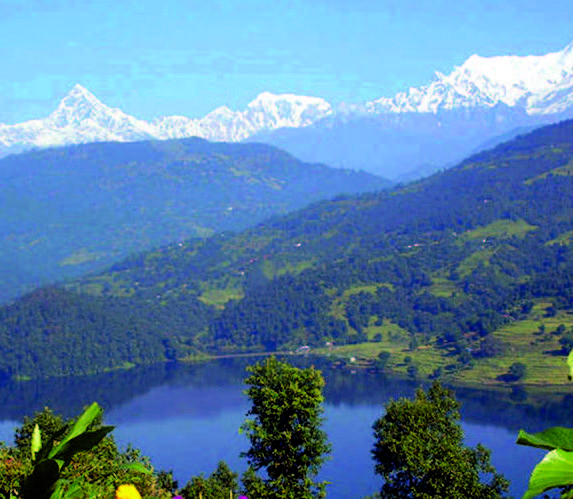
Drive from Pokhara to Begnas Lake, the start point of the Begnaskot hiking trail. Then hike towards Sundari Danda to Begnaskot. En route, witness day to day life of Nepali villagers. On the top of Begnaskot hill, there is a Begnaskot temple. From the Begnaskot view point, see the magnificent lakes Begnas and Rupa, as well as the beautiful Annapurna and Dhaulagiri Himalayan ranges. Forests cover the entire hill. The two-hour hike to Begnaskot, at an elevation of about 1,100 meters, could be just about your perfect getaway.
SKY-DIVE
IN KHUMJUNG
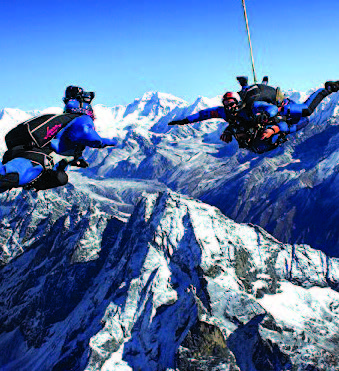
Skydiving is a thrilling adventure you can experience in Nepal with Everest Skydive. The dive is over the spectacular Khumbu region, next to Mount Everest. Divers can see mountains alongside Everest, along with beautiful Sherpa villages as they free-fall. Skydivers can choose to land in Syangboche Airport or at the base camp of one of the most iconic mountains in the Khumbu, Ama Dablam. No prior experience needed. Call 9801222163.
DO BEAT CYCLING
IN KATHMANDU
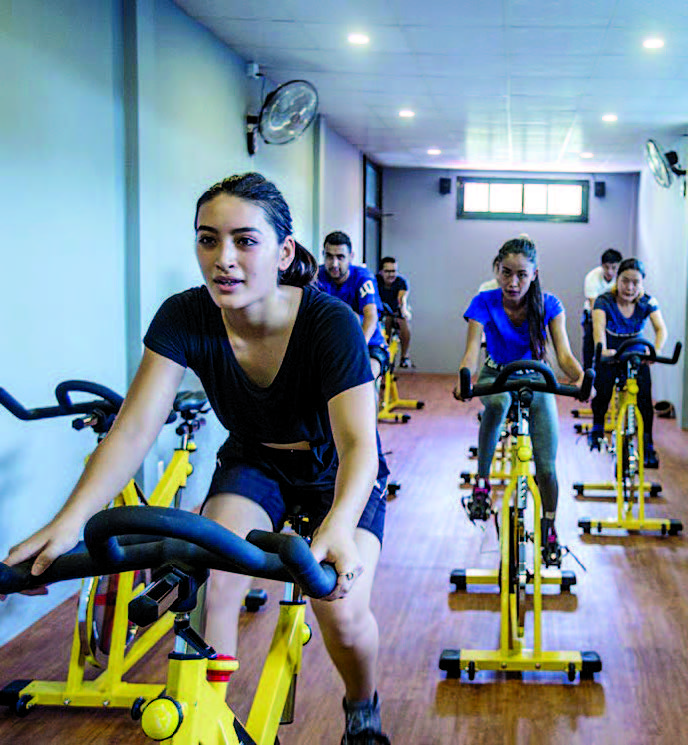
This is an indoor cycling class that focuses on building strength and endurance. The exercise involves using a special stationary bicycle with a weighted flywheel in a group class setting. It is fun working out this way as you cycle to the beat of the music, in what is Nepal’s first and only beat cycling class run by certified instructors. If you join for a year, you pay Rs 7,000 a month. The sum’s inclusive of steam, Jacuzzi, sauna and fresh towels. Call 01-4371438.

Quick questions with ROHIT JOHN CHETTRI Singer
Q. What’s an opinion you hold that most people would disagree with?
A. Money can actually buy happiness.
Q. What are you proud of but never have an excuse to talk about?
A. My ideology.
Q. A Nepali singer you would like to collaborate with?
A. Jagdish Samal.
Q. Which country would you like to go for a concert tour?
A. Japan.
Q. If you could pick a day to relive, which day would it be?
A. The day I stepped on stage for the first time. I was 8-year-old then.
Q. You were star-struck when you met?
A. Hari Bamsha Acharya. He is my idol.
Q. What’s one superpower you would not want?
A. Superpower that King Midas possessed of turning everything he touched into gold.
Q. How would you like to be remembered?
A. As a person with a golden heart and a golden voice.
Q. Your favorite venue to perform in?
A. Anywhere with an audience who listen to me keenly.
Q. Your favorite genre of music?
A. Eastern classical and Jazz.

New Delhi does not take anti-India protests in Nepal seriously
How has the issue of Kalapani affected Nepal-India relations?
It has had a huge impact. Available bilateral mechanisms are the only way to settle border disputes. There really is no other way. Bilateral talks are the only means. There cannot be third-party mediation, nor have other countries that kind of leverage. Despite some ups and downs, Nepal-India relations have always been cordial. Now, Kalapani is undoubtedly a major agenda. Nepal’s domestic forces raked up the issue to serve their interests instead of opting for an appropriate diplomatic solution. Nor is this a new issue. In my understanding, both our government and India are making little effort to resolve it. If it is an issue, India should also seek a solution at the earliest. Similarly, our Ministry of Foreign Affairs is not trying enough. There are several issues between the two countries and we have various instruments as well. Issues could be resolved if only there were regular meetings of existing mechanisms.
Aren’t border issues by their very nature hard to resolve?
There are some mechanisms exclusively dedicated to border issues. For example, there is a foreign-secretary level meeting but seldom has this been held. If this meeting cannot take place, we can give such rights to our ambassador in New Delhi. He can hold regular meetings with Indian officials unless it is settled. But Nepal seems to be seeking a solution that is not diplomatic. India prefers diplomatic channels. It is a responsibility of both the countries to create the right atmosphere for talks. The environment here gives the impression that we are preparing for war. Effigies have been burnt, and there are protests in front of the Indian Embassy. All political parties and even the government is involved. But what will we get from the street? Our only option is activating bilateral mechanisms. If some issues cannot be settled at the diplomatic level, we can take them to the top political level. Even for this, we first need to build confidence. Now there is no confidence.
You say this is not a new issue. But protests erupted only after India came up with a new political map.
We are saying that it is a new map but it is not. India comes up with a new map every time it restructures its internal boundaries. Now they have imposed central rule in Jammu and Kashmir and come out with a new political map. In 1995-97, this issue was prominently raised in Nepal. In subsequent years, it was not a priority of our political parties. Now it has resurfaced again. Why was this issue not resolved in the past? It suggests a mishandling of our foreign policy.
In your view, how does India view recent developments in Nepal?
India has officially said that it is ready for talks on Kalpani. Two former Indian ambassadors to Nepal, Shyam Sharan and Ranjit Rae, say Nepal was never serious on this issue. Other intellectuals are saying the same. India has proposed diplomatic channels to resolve Kalapani. Nepal has not said that it cannot be resolved through such channels. If Nepal says so, it could be moved to political level. Two of our former foreign secretaries have said that Kalapani cannot be resolved at the diplomatic level. Yet former Indian ambassadors are saying that as India has resolved border disputes with Bangladesh, issues with Nepal can also be resolved. India believes the situation in Nepal should be normal for meaningful talks. Street protests and negotiation cannot go hand in hand.
There also seems to be a belief in some quarters of India that other external elements are involved in the anti-India protests in Nepal.
Since 1950 Nepali political parties have always used Nepal-India bilateral relations to serve their vested interests. They negotiated with India with the same intent. There is competition among political parties to become nationalists. Earlier, PM Oli used this border issue for political marketing, now Nepali Congress President Sher Bahadur Deuba is resorting to the same tactic. Your nationalism is tested based on the negotiations you conduct when you are in power. How best did you serve national interest? The prime ministers of the two countries used to talk over the phone on day to day issues but now they have not spoken. At the least, Nepal government should have appealed to people not to protest in the street, assuring them that Kalapani would be resolved through diplomatic channels.
Are you suggesting that Oli government is using the nationalist card to cover up its domestic failures?
The federal government’s performance has been dismal in the nearly two years since its formation. The PM’s image is sinking and he knows it. He is not capable of defending himself in parliament. Corruption is rife. When the government feels a sense of crisis, nationalism resurfaces. This is not a first time. In 2015, after the promulgation of new constitution, our leaders talked with India about constitution amendment but they did not talk with Madhes-based parties.
Do you think there will come a time when India says enough is enough about the anti-India protests in Nepal?
I don’t think Indians take the ongoing protests seriously. I have not heard of serious discussions in India about them. The Indian establishment clearly understands our capacity. They are of the view that such protests frequently happen in Nepal. I see a diplomatic failure on our side. We decided to send Madhav Kumar Nepal as a special envoy to India. Actually, he cannot resolve the problems, and which level was he to engage? Such anti-Indian protests would impact other negotiations on trade and transit. We may face difficulties in those areas. For example, take the onion crisis. This is not the first time India has faced an onion crisis. In the past, India used to send certain amount of onions even while it faced a shortage but this time they completed stopped delivery.
You fault our foreign ministry. But it has already dispatched a letter to New Delhi asking for high-level talks. It is India that has not responded.
Nepal is yet to clearly mention that it wants a foreign secretary-level meeting. In the meeting of Joint Commission held in September, the two countries had agreed on a foreign secretary-level meeting on border issues in January 2020 in Dehradun. There are many informal channels between Nepal and India which need to be utilized before proposing a formal meeting. First, Nepal will have to say that it wants dialogue at the political level. On our part, preparation is lacking. We have not updated our maps for over 40 years. We are in a state of confusion.
What is your take on India’s refusal to accept the final report of the joint Nepal-India Eminent Persons Group (EPG)?
Let me say few things on the EPG. First, it was formed in 2016 when bilateral relations were at a low. Second, see the background of the EPG members. They all were giving statements against India before the EPG was formed. How could they have been expected to normalize relations? Third, Madhes-based parties spoke against the EPG in the parliament, rejecting the final report. It means the report is contested within Nepal. We cannot say that reservation of Madhes-based parties is a domestic issue. India is closely watching the dissatisfaction inside the country.
More seriously, the Nepali side leaked important portions of the report. We also decided to submit the final report to the two prime ministers. This is a report prepared by experts and there is no need to submit it to the prime ministers. Similarly, there was wrong understanding about the report. Nepal government spokesperson publicly said that India should receive and implement the report. He missed the point that the report is not mandatory.
But is it not dishonest on India’s part to reject the EPG report formed through consensus between two countries?
You are correct. I am not satisfied with Indian position of not receiving this report. India should do so. Unfortunately, we also created a hostile environment here. Except Bhek Bahadur Thapa, other EPG members spoke about the report before it was submitted and they projected it as a cure-all for bilateral ills. The EPG report should not be projected as bible.
In a separate context, how does India view growing Chinese influence in Nepal?
It is natural for foreign powers to seek their space. Chinese influence in Nepal has increased in all areas including politics and government. In the past, such space was exclusively reserved for India and the US. There is no doubt that there is a huge Chinese influence in ruling parties. India is obviously concerned. But they have not taken any policy measures. China’s aggressive diplomacy in Kathmandu, particularly in domestic politics, is a major concern for India. If India becomes active in East Asian countries like Vietnam, Philippines, it is a matter of concerns for China as well. China’s influence in domestic politics particularly in unification of two communist parties and government formation are matters of grave concerns for India as well as for us in Nepal.
How do you see the growing competition between US, India and China play out in Nepal?
Our political and diplomatic leadership do not have the capacity to manage the growing competition among three powers. We agree to everything with everyone. We may face a difficult situation if this continues. We have to develop a capacity of managing growing interests. There is already a worrying conflict between the Indo-Pacific Strategy and the BRI.

Quick questions with SAGARIKA SHRESTHA (VJ/ Event host)
Q. What do you like to do in your spare time?
A. Netflix and sleep.
Q. If you had only one day left to live, what would you do on that day?
A. Spend it with my loved ones and eat a lot of food.
Q. Which Nepali celebrity do you most admire and why?
A. Malvika Subba and Swastima Khadka. Malvika as she is always very vocal about things that need attention. As a VJ, she is my inspiration. Swastima because she is honest and down to earth. I think as an actress, she is breaking stereotypes.
Q. Your pet peeve?
A. Someone who lies or makes a lot of small talk. I want people to get to the point.
Q. Your favorite travel destination?
A. I love going to Pokhara. Places with beaches and lakes are my favorites.
Q. Your alternate career choice?
A. I think even if I take an alternate career path, I would still be in the media industry.
Q. The best advice you’ve been given?
A. “Never be the brightest person in the room; then you can’t learn anything.”
Q. What would you change your name to, if you had the choice?
A. I love my name so I would not change it. It is very unique.
APEX CELEB QUIZ #18
Q. Who is Sagarika Shrestha's favorite show host??
a) Suraj Singh Thakuri b) Rabi Lamichhane
Send us your answer on our Facebook page. One winner selected by lucky draw will get a Rs 2,000 coupon from Dallé.

Trek In Sikles | Take a hot-air balloon In Pokhara | Learn contemporary dance In Lalitpur
Trek
In Sikles
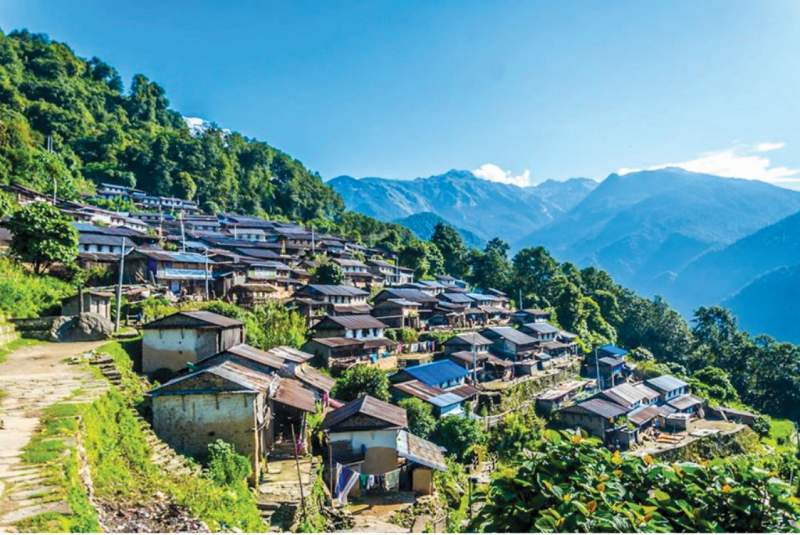
This trek takes you to the pristine hillside settlement of Sikles, an indigenous Gurung village in Kaski district in the lap of giant peaks. In this five-day trek, you walk through the lush rhododendron forests and serene landscapes. Then join Rodhi Ghar (late night singing and dancing) during your stay at Sikles. Or try local handicrafts, and explore the region’s rich biodiversity. Not only do you get to witness the majestic Annapurna range from here. You also experience the rich culture and lifestyle of the largest Gurung village in Nepal. The best time to visit is between September and May.
Take a hot-air balloon
In Pokhara
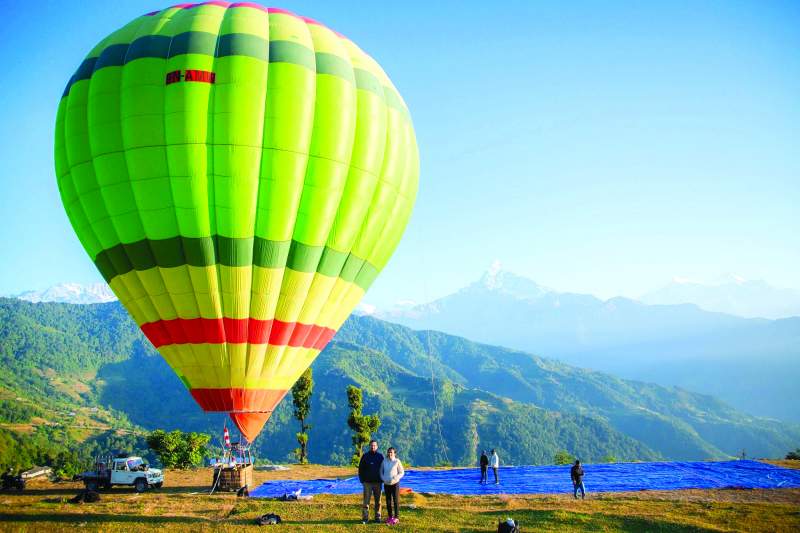
Hot air ballooning is an adventure activity which makes you feel like a flying bird. Currently the balloon is permitted to fly five times a day, so you can pick a time. The balloon will fly 500 meters above the Pokhara city providing a spectacular view of the Annapurna range, the Fishtail (Machhapuchhre), Dhaulagiri, Hiunchuli, Lamjung Himal, lakes, forests, and the entire Pokhara valley. On a clear day, the scenery is even more breathtaking. The balloon lands in the bank of Mardi River. The best time for this adventure from September to May. Contact Frolic Adventures at 9851043624.
Learn contemporary dance
In Lalitpur
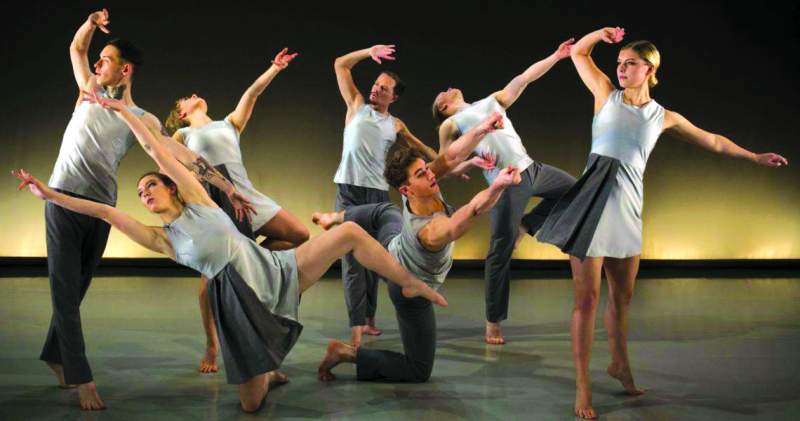
Under the guidance of DJ Tamu, Y-Stand Dance School in Pulchowk is starting contemporary dance classes with a new choreography. There are two class options. You can choose those on Mondays and Wednesdays between 5 pm and 6 pm. Or those from 7:30 am to 8:30 am on Mondays, Wednesdays, and Fridays. This is open to even beginners. Call 9801024048.


