


Government is morally bound to take ownership of MCC compact
First, an old query. Is the Millennium Challenge Corporation (MCC) part of the Indo-Pacific Strategy (IPS)?
The IPS report was unveiled last June when the Shangri-La Dialogue was underway in Singapore. Unveiled by the US Department of Defense, it included many military components. The document speaks for itself. The same November, the US unveiled its foreign policy which stipulated that the IPS would be a part of the US foreign policy.
Now, there are debates on whether the MCC is a part of the IPS. When we initiated the process for the MCC, Baburam Bhattarai was the prime minister and Barsha Man Pun the finance minister. They formally requested the US government to make Nepal part of the MCC. On the basis of the request, the American government began to assess if the MCC could be implemented in Nepal. They accessed things like Nepal’s human rights situation, and freedom of speech and expression. In the end, Nepal qualified for the grant.
At the same time, Nepal is in a sensitive place. In terms of both economic and military power, the US and China are competing with each other. We have seen the disputes of South China Sea and Middle East where two countries are competing, and the IPS orientation also demonstrates that competition. China has invested massively in infrastructures of neighboring countries through the BRI. Therefore, whether we want it or not, whether the Americans accept it or not, the MCC has tried to address the larger geopolitics of this region. That said, the BRI’s objective is to support infrastructure development, and the objective of the MCC is also to help Nepal’s infrastructure development. Therefore, whether it is a part of the IPS should not make huge difference.
Would you say it was an intellectual dishonesty on the part of the US to retrospectively lump the MCC under the IPS?
By denying it is a part of the IPS, the US is becoming too defensive on the MCC. There was no need for that. They are saying that the IPS is their approach in this region. Similarly, the American state minister during his Nepal visit has clearly said that the MCC is a part of the IPS. They have mentioned the IPS as a foreign policy goal of the US government. So there is lack of consistency. They are becoming defensive just to placate public opinion on the MCC in Nepal. They should have clearly said that it is our foreign policy component and the MCC is focused on infrastructure development. From the start, the BRI narrative has been that it is a support for infrastructure development, which has been established as well. The MCC narrative could have been developed in a similar way.
How do you evaluate the divisions in the ruling party over the MCC grant? Are these divisions based on ideology or have they more to do with intra-party dynamics?
There are two sides to it. Let’s look at our recent political history. Nepali Congress formed majority government in 1990 under Girija Prasad Koirala. For some months, the government ran smoothly but after that a dissatisfied group within the party, under the leadership of Ganesh Man Singh, started protesting against it. The size of the power pie is small and there are limited opportunities for leaders and cadres. More than that, right now, there is a constitutional cap on the number of ministers. In the past, there was a trend of appointing government critics as ministers. PM Oli’s dispensation does not allow for that. Our politics is filled with opportunism over money, power and prestige. Some people outside are always clamoring for their day in the sun.
Next, there could be ideological reasons. NCP leader Bhim Rawal has come up with some points, for instance he has objected to the provision of parliamentary endorsement of the MCC. Like former speaker Krishna Bahadur Mahara, a large group of former Maoists are against it. Among former UML leaders, Rawal has been very vocal. So the current divisions over the MCC are partly a clamor for opportunity, and are partly based on ideology.
Is it the case that PM Oli and Foreign Minister Pradeep Gyawali, as government representatives, feel a kind of pressure from the Americans to endorse the MCC compact?
Successive governments after 2012 have signed to pass the MCC proposal and they all have accepted its conditions. So if you think responsibly, you cannot backtrack from it. It is also directly related to a superpower. Therefore, we should have had a long and intense discussion before signing it. Yet this discussion is taking place after it has already been signed. I am saying that this should be seen as one-time exception and be endorsed by the parliament. In the future, if we renew the MCC, there should be renegotiations on some points.
Do you see Chinese pressure behind the opposition to the MCC in Nepal?
I do not think the Chinese have lobbied with the Nepal Communist Party. There is a lot of space to do politics on the MCC. Some are trying to project themselves as nationalists. There is competition inside the party to be seen as nationalists and create space for themselves in politics. But I do not believe that the Chinese have come in a systematic way on this issue.
Coming back to the parliamentary endorsement of the MCC, do you support it?
The most unjustifiable condition of MCC is the parliamentary endorsement. Our constitution clearly lays out two legislative functions of parliament: endorsing bills to make them laws and endorsing treaties and conventions. Either you have to present the MCC accord as bilateral treaty, like the Mahakali Treaty, but it is not a treaty. Now, it is in the form of a bill. There is vast difference between treaties/conventions and bills. In conventions, state party or the government is responsible, but in case of bills, they are applicable to all citizens of Nepal once endorsed.
A safe way for the government is to present it as a treaty and endorse it with two-third votes. There are technical problems and there are big political implications as well. That is why parliamentary endorsement is not right. If we had not signed up for the MCC accord, I would have objected to its parliamentary endorsement. As we have already signed it, we can perhaps renegotiate. But I am not sure the US would be ready to drop parliamentary endorsement.
Would it be right to say that accepting the MCC is tantamount to accepting the IPS? There is also a kind of conspiracy thinking in some quarters that if we endorse the MCC accord, it will allow the Americans to station its army in Nepal.
I am saying that the IPS is a military strategy but the MCC is not. The IPS is part of the US foreign policy, so is the MCC. However, we have already entered the broader US foreign policy umbrella. As far as US military presence is concerned, we need a separate agreement for that. There is no military or security component in the MCC.
What do you make of the rumor that part of the reason Krishna Bahadur Mahara was removed from the speaker’s post was his resistance to the MCC accord?
I am not convinced Mahara stopped the MCC proposal. As finance minister, Mahara was involved in the MCC process. What I say is that there was bargaining inside the ruling party on the MCC issue. There was bargaining on who gets what with the passage of the MCC. Some are using it as a tool to boost their nationalistic credentials and strengthen their political position. On the other hand, they could also jeopardize the country’s relations with the US. Agni Sapkota has publicly said he is against the MCC. If he becomes the new speaker, it will be interesting to see how he behaves. If he passes the MCC bill, we should understand that his opposition was part of his bargaining tactic.
Let’s move to transitional justice. How do you see the appointment of new office-bearers in the two transitional justice bodies?
In April last year, the tenure of previous office bearers ended. The government then formed a committee led by former chief justice Om Prakash Mishra to recommend new names. In this period, conflict victims and national and international stakeholders continued to argue that previous laws were insufficient, and they should be amended. They said appointments should be made only after the amendment in order to make the process more trustworthy. They were also saying conflict victims should be consulted and have a say in the overall process. Taking conflict victims into confidence was the right idea. But the committee took 11 months to make its recommendations. By the time it made the recommendations, even the tenure of the committee had expired.
What would you say has been the major failing of our transitional justice process?
A major problem of our transitional justice process is absence of trust. The government takes human rights defenders and civil society members as spoilers of the process. In the eyes of conflict victims, both the civil society and the government work for their own interests. Therefore, until these three forces come together and an environment of trust is built, this process cannot move ahead in a consensual way, which is mandatory to reach to a logical conclusion. So the government should have worked on confidence building measures with all stakeholders. After that the role of commissions should have been defined and the role of conflict victims in the overall process identified. Similarly, there should have been work to segregate judicial and non-judicial components of transitional justice.
Government and opposition parties agreed to form the two commissions amid a climate of mistrust. They just concluded consultations in all provinces. For the same purpose, they had prepared a questionnaire. When victims entered the hall, they were given those questionnaires, which were to be filled within three hours, as if it was a university exam. There were loaded legal and constitutional terms in there. People from rural areas did not understand those terms. The language of healing that the state was supposed to speak was missing. It is also a national healing process. We have a huge trust deficit and the current working style cannot bridge that gap.
But haven’t the major parties vowed to amend the laws in line with the recommendation of the Supreme Court and international practices?
To amend the law, you need to build certain confidence. The problem is that the government is yet to recognize conflict victims as stakeholders in this process. For example, a family breadwinner is still declared as disappeared. All properties are under his name. He had taken out a loan on the basis of those properties. The bank has been publishing notices with the photo of the disappeared person, asking him to pay the money back. His wife wants to pay the loan by selling the property but the cabinet has not taken any decision to transfer the property in her name. So she is helpless.
As per existing laws, if a person goes missing for 12 years, family members can declare him or her dead and you can transfer property to the rightful heir. But allowing this will be tantamount to allowing the issue of disappearance to be diverted. The government wants to reach that point. The government wants the duration of disappearance to cross 12 years so that the family would register the death certificate and claim the property. It will dilute the issue of disappearance. That is why there is still no law to criminalize enforced disappearance. There is still no law to criminalize torture because torture of conflict era cannot be proven as all evidences have gone. This is not a healing language. These are delaying tactics.
Don’t you think the two transitional justice commissions, now that they have office-bearers, will be able to resolve the remaining tasks of transitional justice?
The transitional justice process has three main components: judicial, political, and administrative. The judicial component can be addressed through commissions. The political and administrative components should be addressed by the government of the day. Truth seeking is a judicial component. For example, there are around 40,000 conflict-era cases in my calculation. Each and every one of them should be classified. You have to establish truth in every case. Some cases could be settled through reconciliation, which is a major part of the peace process. Serious human rights violations should be categorized as such and cases filed through the special court. There would be reparation in remaining cases.
Political component entails reconciliation. You can bring local government and provincial government on board in this process. Additionally, we have a Supreme Court verdict that you can go for reconciliation only after the consent and informed participation of conflict victims. Next, the government has to take decision to transfer the property of disappeared people to their rightful owners, which helps keep the issue of disappearance alive. The government declared the security personnel killed in insurgency martyrs but not others who died back then. Reparation is another political and administrative part of the peace process. There are several issues which need to be addressed by the political leadership as the commissions on their own cannot resolve them.
So you don’t see much hope of timely justice for conflict victims.
Yes, I can say that. I wish for the success of those who got appointed to the two commissions. But do the people appointed to the commissions have any knowledge about transitional justice? Have they worked with conflict victims? Not even one of them, I am afraid.
Agni Sapkota has been implicated in a war-time murder. Can he become the next speaker?
His murder case is pending at the Supreme Court. Kavre district court has issued an arrest warrant against him. If it is an ethical issue, he cannot be elected the speaker. The main qualification for speakership is having high moral ground.

The Ultimate Venue for thrill seekers
What to boost your fitness while also having a load of fun? Why don’t you head out to the Ultimate Venue at Narayan Danda, Budhanilkantha? As the name suggests, the new adventure sports center is sure to offer you the ‘ultimate’ experience. The sprawling 90-ropani complex located 3.2 km north of the famous Budhanilkantha temple, is so close and yet feels a world apart from the pollution-filled and chaotic city it abuts.

Through Ultimate Venue, its two founders, Suresh Lama and Abhushan Karki, wanted to let people explore a new place, engage in challenging activities, and get over at least some of their fears. But where did they get the novel idea? “From nowhere in particular. We just decided that something like it could work here and plunged right into it,” says Lama.
The activities at Ultimate Venue are broken down into six components—camping, training, adventure training, agro farming, boot camp, and restaurant. The adventure sports include combat obstacle course, high ropes obstacle course, rock climbing and abseiling, hiking and trekking to amusing places like Baghdwar, Shivapuri Peak, Nagi Gumba, Sundarijal, Shivapuri Circuit, plus cycling.
The boot camp, likewise, is of three varieties, according to participants’ age, the number of days of engagement, and the fees. The 5-10 day fitness boot camp, usually for those above 14, ranges from Rs 15,000 to Rs 25,000; the 1-3 day Career Boot Camp for corporate clients ranges from Rs 2,500 to Rs 10,000; while the 1-7 day Teen Boot Camp for school and college students costs Rs 1,500 to Rs16,000. All these activities are supervised by experienced professional mountain-climbing trainer Sonam Tsering Sherpa, with a medical team as backup safety.

The main attraction of the place is an unobstructed 270-degree view of the Kathmandu valley and the beautiful views of sunrise and sunset it offers. People can visit any day and any time. The restaurant serves a mix of Indian, Chinese and authentic Nepali cuisines. Ultimate Venue also offers catering services, picnic spots, training in basic and advance rock climbing, lessons in route marking and rescue, as well as a crash course in farming practices.
“The present generation seldom gets a chance to be close to nature. All day they are playing with gadgets and modern technologies,” says Lama. “So, we thought, why not give them a chance to be close to nature while they also get to exercise a bit?” For instance, children are given rice and maze seedlings to plant in different named plots. They can later come and purchase the harvest.

As the venue has proven to be a hit among locals and tourists alike, it is also expanding. The Ultimate Venue plans to build rooms for night stays, have live music, and run motivational classes on fitness and nature for all age groups.
One of the goals, say the founders, is to help with the promotion of Visit Nepal Year 2020, “by letting them know that there is such a unique place in Nepal as well.”

Many speakers
The prolonged impasse over the election of a new speaker of the federal lower house, and deputy speaker Shiva Maya Tumbahamphe’s refusal to step down, give one overarching message: the ruling Nepal Communist Party (NCP) is still very much a divided house, nearly 20 months after the formal unity of the country’s two largest communist forces. Popular media has backed Tumbahamphe’s resolute stand against the ‘party patriarchy’ that wants her to go. But she might have resigned by now without the covert backing of both President Bidya Bhandari and PM KP Oli.
Party co-chairman Pushpa Kamal Dahal has been vehement about the need to remove Tumbahamphe and start a new process for the election of new speaker and deputy speaker. His co-chair, Oli, wants to ensure the speaker’s post does not go to the former Maoist faction. The expelled ex-speaker Krishna Bahadur Mahara was from the faction, and Dahal insists Agni Sapkota, another old Maoist stalwart, should replace Mahara. As the speaker and deputy speaker cannot come from the same party, by asking Tumbahamphe to hang on, Oli is putting pressure on Dahal and ex-Maoists to give up speakership in favor of Subhas Nembang, Oli’s own pick as the speaker.
There is also a geopolitical twist to the speakership saga. By preventing another Maoist from becoming the speaker, PM Oli wants to guarantee a smooth passage of the American MCC compact in the parliament. Former speaker Mahara had famously declined the tabling and voting on the MCC bill. The ex-Maoists suspect the MCC is a part of the American ‘military’ Indo-Pacific Strategy brought with the sole intent of countering China’s rise in Nepal. But as much as he is beholden to China, PM Oli, as government head, also wants to safeguard old relations with the US.
This disturbed dynamics of a single party have left Nepal without a speaker for three months. The House has been repeatedly obstructed. In the past 30 years of democratic exercise, the country has had to pay dearly for past feuds among ruling parties, contributing to the collapse of successive governments and creating perpetual instability. The political parties seem to have learnt little. The ruling party should be mindful. The short-sightedness of its leaders could open up new fissures in the NCP and push the country into another vortex of instability and corrosive big-power rivalry.
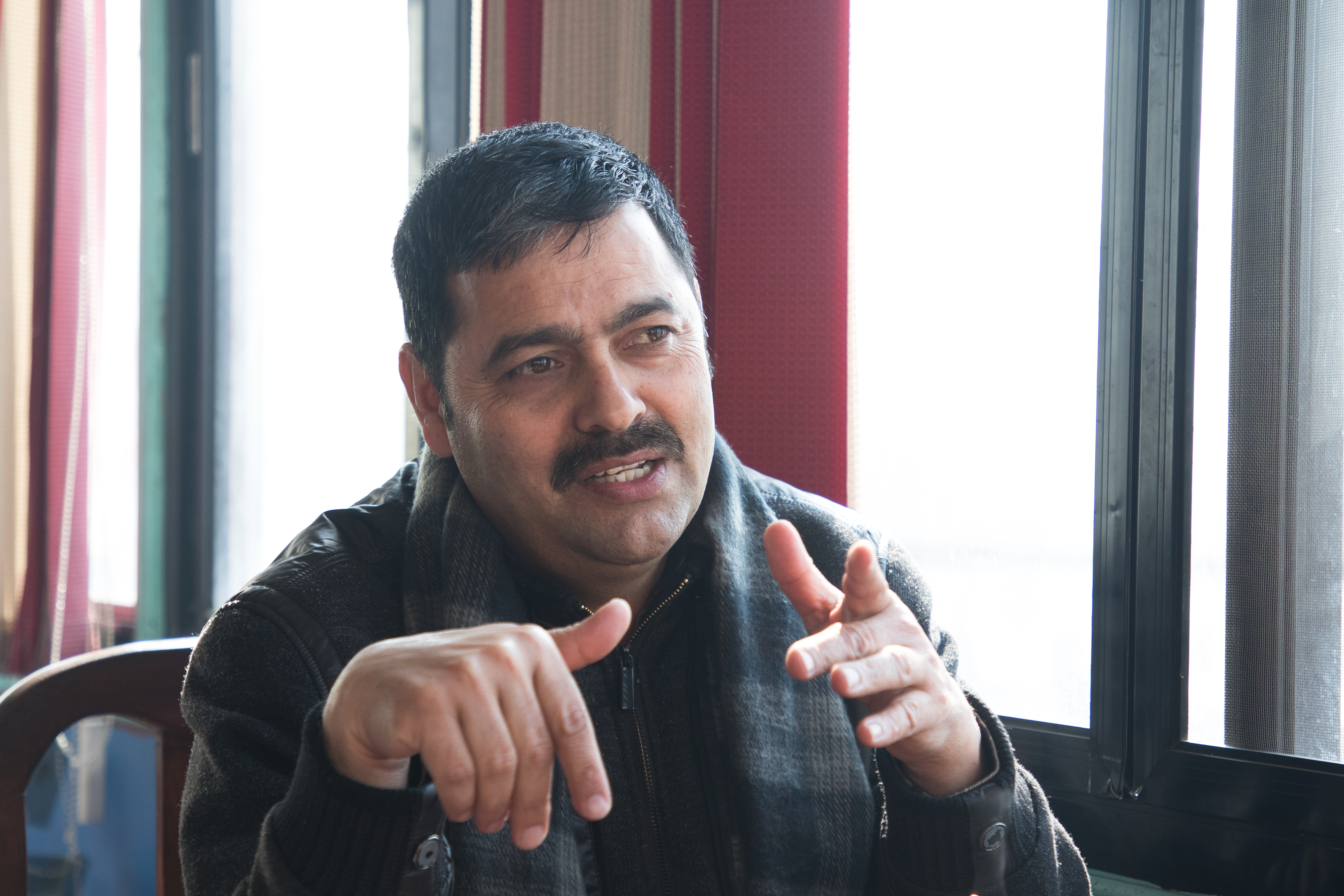
Federalism’s minor failings more discussed than its major gains
Biswas Baral and Kamal Dev Bhattarai speak to Khim Lal Devkota, a veteran analyst of federalism, about the problems in the implementation of federalism in Nepal
How did you interpret the diktat of Nepal Communist Party secretariat on the naming and capital city-selection of Province 3?
There are two sides to it. You have to understand that this is a complicated issue. The first Constituent Assembly (CA) was dissolved due to differences among parties over names and number of federal provinces. At that time, the issue of provincial capitals was not much discussed. Even the second CA could not resolve this dispute. The new constitution gave provincial assemblies the right to decide names and capital cities of their provinces. But we committed a mistake by not mentioning in the constitution that those issues would be resolved within a year of formation of the provincial governments. There is also a tendency among provincial level leaders to seek the center’s guidance. This is our first experience with federalism. Provincial leaders may be hesitant to take independent decisions for the fear that top leaders may be unhappy.
So you see no problem with the NCP secretariat decision?
As far as the decision of the secretariat is concerned, it should not have been done so publicly. This did not give the right message. The party can instruct its cadres, but the constitution also enables federal, provincial and local governments to make executive, legislative and judiciary decisions. There will be question on the efficacy of federalism if a provincial assembly is unable to exercise its rights.
In the past, there were big protests when the government decided to extend service centers to rural areas, in what was a minor issue. So there is fear among the politicians that protests could erupt over the naming of provincial capitals. They opt for status quo and defer big changes fearing backlash.
Are you happy with the process of selection of provincial capitals thus far?
Our development efforts till date are urban-centric, still concentrated in pockets like Pokhara, Nepalgunj, Dhangadi, Biratnagar, and Butwal. It would have been better if cities other than these would have been selected provincial capitals. With some established standards, choosing provincial capitals would not be difficult. Yes, it takes time and resources to build new infrastructure for provincial capitals. But choosing new cities as provincial capitals would have boosted decentralization.
How do you rate the performance of the current federal government in its implementation of federalism?
There are various issues about the implementation of federalism. We have made good progress on fiscal management. The bureaucracy has done well even in the absence of political leadership. We allocated common and separate rights to all three types of governments, but it was the bureaucracy which conducted detailed homework. The issue of fiscal transfers and grants is clearly mentioned in the new constitution, paving the way for their immediate implementation. Some works like the finalization of the number of provincial ministers were completed even before the formation of this government. The government has also done a praiseworthy job on civil servant management and transfers.
There is an inter-province coordination committee led by the prime minister, with chief ministers as its members. In the initial days, the chief ministers panicked. The situation in the provinces was critical due to lack of staff, insufficient laws, and scarce resources. There was confusion about service delivery. The central government was also unable to help. But things have improved.
How do you evaluate the relation between the federal and provincial governments?
I have been evaluating the practices in other countries. In the Indian constitution, there is a provision of inter-state council. The president forms the committee on the recommendation of the central government. But in India the council was formed only in 1990, 40 years after the adoption of the Indian constitution. And even today the body does not meet often.
In our case, a similar body was formulated with the promulgation of the new constitution. It has already met thrice and has prepared a 29-point blueprint for the implementation of federalism. The blueprint has recommended forming a fiscal commission, completing staff adjustment process soon, and making the bureaucracy functional at provincial levels.
Similarly, Australia adopted federal structure in 1901. But a council to look after federalism-related issues was formed only in 1972. Compared to other countries, inter-province coordination and relationship is much better in Nepal. There is another committee in Nepal led by the federal finance minister to look after fiscal issues, which is represented by finance ministers from all seven provinces. It also has representation from local units. Regular meetings of this mechanism has helped avert possible disputes. There used to be heated debate in the initial meetings, but now there are amicable discussions.
Despite your optimism, many reckon the federal experiment in Nepal is failing.
This is baseless. Look at the progress at the local levels. For example, citizens of Karnali Province had to travel to Kathmandu even for minor services. Now, they can get it done through the local units. The number of service seekers is gradually increasing at local levels. We are at an initial stage. It takes time to see more visible results. Still, it is true that our politicians have a centralized mindset and sometimes they are reluctant to delegate rights.
But, then, visit the Ministry of Federal Affairs today, and you will hardly find anyone working there. There aren’t many service seekers as well. This is because its work has been delegated. Resources, manpower, and powers have already reached the local level. This means people now get services in their own villages. But we are yet to communicate this progress effectively.
If so, why are the provincial-level leaders so unhappy with the central-level leaders?
In the initial phase, the provinces were unhappy with the federal government. Now, the situation has changed. But, then, local units are also not happy with the provincial governments. Instead of complaining, each of them has to perform their duties. The provincial government should first exercise the rights granted by the constitution. Now, it’s time for the provincial governments to deliver as they have the manpower, resources, and necessary laws. There is no room for blame-game; you have to show the result. Certainly, there are complaints on formation of police force and laws related to security agencies. For instance, the laws for provincial Public Service Commission have already been passed, but the provinces have not made any progress. And why are the provinces failing to take decisions on their names and capitals?
Nepal’s national economy has seen an uptick of late. Would you attribute this to federalism?
No economy in the world is doing very well right now. But our economy is making process. However, we cannot say this is because of federalism. It could rather be attributed to having a stable government. In the past we suffered from frequent government changes. Foreign investors are also willing to invest because of stability.
How is the relationship among the three tiers of government?
Article 232 of the constitution says that the relationship among the three tiers of government will be based on cooperation, coordination, and co-existence. Each has its own exclusive as well as shared rights. As per the constitution, all three tiers can exercise state power. Relations in Nepal are still hierarchical, especially when it comes to fiscal issues, grants, auditing, and accounting system. The federal government can instruct provincial and local governments on two issues: matters related to inter-province relations, and on national sovereignty and territorial integrity. If they do not abide by these instructions, the federal government can dissolve provincial government and parliament. Similarly, the federal government can instruct local units on any issue.
The relationship among the three tiers is always guided by federal laws. To handle disputes over federalism and constitution, there is a constitutional bench in the Supreme Court. The bench has already taken action on Sagarnath community forests and other issues. We have formed some laws and are in the process of forming others. There are two types of relations: formal and informal. It takes time to build the kind of informal relations that results in widespread cooperation. In our case, I would say that the three-way relations are on the right trajectory.
What could be the major challenges for the implementation of federalism in the next five years?
We have given many functions and responsibilities to local governments, and they don’t have much experience. More than that, disputes could arise between provinces. There could also be disputes between provinces and local governments or between local governments. Vertical disputes, that is, between the federal and provincial governments, could be less common. So I recommend increased engagement among provinces and local units.
There are regional council structures in India where states settle inter-state issues. We can do something similar in Nepal. For example, we can form a council for Karnali and Sudur Paschim provinces. In the council, they can share best practices. In the next five years, we will face many regional issues, and so we have to form regional level councils. They will handle disputes like the ones over utilization and allocation of natural resources.
Some foresee the disputes between the three tiers of government increasing, imperiling the whole federal project.
The conflict will not reach that level. But for that the institutional mechanisms mandated to maintain inter-state relations should be enhanced; they should meet and interact regularly. Now we have started linking even minor disputes between two or more villages, which have always been seen in Nepal, with federalism. Likewise, a minor tax dispute or the behavior of an individual local representative is seen as an example of federalism’s failure. There are certainly some anti-federal elements around. In this condition, it is vital that we also talk up the many achievements of federalism.

Quick questions with ROBIN TAMANG Musician, Actor
A. Professional football player.
Q. One dead musician you’d like to bring back if you had the power?
A. Jimi Hendrix.
Q. Something people misjudge you about?
A. Playing the bad guy in the movies
Q. If you were stranded on an island with only one record to take with you, which one would that be?
A. “Tea for the Tillerman” by Cat Stevens
Q. Favorite Nepali artist?
A. My friend, Mukti (Shakya) dai
Q. Dal Bhat or Continental?
A. Dal Bhat
Q. What sport/s do you follow the most?
A. Football, of course
Q. A female singer you’d love to sing a duet with?
A. Janis Joplin
Q. What would youdance to? EDM or hip-hop?
A. Hip-hop
Q. Favorite guitar brand? You can’t say Fender!
A. Godin
Q. Something that's been in your wish-list for long?
A. Film School

Roads and railway to China will go ahead together
In the first two years of its tenure, what have been the guiding foreign policy priorities of KP Oli government?
There is continuation on some issues, while we have made adjustments on some other issues. Some fundamentals of foreign policy remain unchanged. For example, given our geopolitical situation, we have to maintain strict neutrality, as advised by our founding father. Non-alignment, UN charter and Panchsheel are issues on which there is continuation. Another important continuation is in not allowing our soil to be used against any country.
But foreign policy priorities also keep changing as per our domestic needs. In the past, there was political conflict, so achieving peace and making it sustainable was our priority. We told the international community that our key priority was achieving peace and so they should support us.
After the completion of the major parts of the peace process, constitution drafting was our priority. After the promulgation of the new constitution, we formed a strong and stable government. Now, after having institutionalized and consolidated political gains, we are on the path of economic prosperity. Prosperity is a key government as well as foreign policy agenda. The changes in domestic policy should be clearly reflected in the country’s foreign policy. In this context, we have to know what is happening at the regional and global levels. We have to catch up with the changes in our immediate neighborhood too. Foreign policy is a dynamic field and we have to continuously make adjustments. But at the heart of it, foreign policy is always an extended form of domestic policy.
Diversification seems to be the central theme of the government foreign policy. What does this entail? For one, closer ties with China appear to be the priority.
We are always guided by our national requirements and needs. In this period, two issues drove us towards diversification. First, we were too dependent on outside power, and suffered for it. So we sought to diversify our options. We signed the Transit and Transport Agreement with China in 2016. It was a major breakthrough because before that, third-country trade was possible only via India. But only policy-level decision was not sufficient; there was a need to make it workable. We signed subsequent agreements, including protocol, to make the agreements feasible.
Another important aspect is building necessary infrastructure to ensure our access to transit facilities. This could have been difficult 50 years ago but today’s Tibet is largely developed and much changed. Now, there are better road, rail and other infrastructures in Tibet and if we can benefit from them, why not? Inter-independency is a reality in today’s globalizing world. We have to look through the lens of comparative advantages. But first you have to be better connected.
What kind of connectivity are you talking about?
We want to be connected through railways, waterways, roads, and other means. In the past, due to the strict electricity guidelines imposed by India, there was confusion about our possible electricity markets. We successfully eased the restrictions and now there is a favorable environment for electricity trading. When it comes to energy cooperation, we have made good progress with Bangladesh. Nepal, Bangladesh and India are close to trilateral electricity cooperation. We should always look at the broader context. If there are more options, we can bring more investment and be in a better place in marketing our products.
Nepal government seems intent on building the inter-country railway while China seems to be emphasizing the roads. Is this the right reading?
I humbly request you to follow the official documents. When it comes to railway, the agreement we forged stands. Now we are in the phase of preparing the Detailed Project Report (DPR) for the railway. Apparently China was not too keen on it but then during Chinese President Xi Jinping’s Nepal visit, the two countries actually signed an agreement on the DPR, and the two sides are now working on preparing the DPR. The proposed Raxaul-Kathmandu railway line has also gotten momentum. We need both roads and railway. It is not a question of choosing one over the other. We all know that it takes comparatively less time to build roads than to build railway. We also know that bringing a railway is a difficult task given our difficult geographical terrains. The roads will be completed soon but it does not mean that the railway will not progress for the same reason. Both the projects will move ahead simultaneously.
Another burning issue right now is the Millennium Challenge Corporation (MCC) Nepal compact. Why so much confusion over it?
The process of MCC began in 2011 and we signed it in 2017 September. The incumbent government is fully committed to all points of the MCC agreement. This is about continuity of the agreement signed with a country. One month ago, I was in Washington DC and conversed with high-level government officials there, including President Trump’s advisor who follows this region. They categorically told me that Indo-Pacific is not a formal organization. According to them, the basic concept is to name this region Indo-Pacific, and all the activities they carry out in this region fall under this broader concept. But it does not mean that the MCC is under Indo-Pacific because there are MCC projects beyond the Indo-Pacific region as well, including in Africa.
We have to be accountable to the document we have signed. We are not responsible for anything beyond that. The US has not come up with any proposal to change the agreement we signed in 2017. In a democratic and open society like ours, issues are raised from different perspectives and we have to take that in a normal way. Some issues are raised with little knowledge, some with an intent of knowing more, and some on the basis of curiosity. The Nepal Communist Party is a responsible party running the government, and Prime Minister Oli has time and again said that whatever agreement we have signed will be honored.
Are you suggesting that it really does not matter if the MCC falls under the Indo-Pacific Strategy?
There is no clarity on the meaning of the Indo-Pacific Strategy. What is Indo-Pacific? What do they want from it? They tell us it is a concept according to which the Indo-Pacific region should be open, free, and where democracies are promoted. It has not taken any organizational shape. If they broadly explain that whatever they do in this region bilaterally is under Indo-Pacific, what can we do until and unless they come up with an organizational shape? Again, we are responsible for the agreement and nothing else. When we signed the MCC compact in 2017, there was no mention of Indo-Pacific. It is a five-year project and Nepal chose construction of transmission lines and upgrade of roads under the MCC grants.
Lastly, you were a member of Nepali half of the Eminent Persons’ Group (EPG). What do you make of India’s delay in receiving the report?
I do not want to comment much on it because right now I am not in the EPG. What I will say is that the EPG process was initiated at the highest political level. A consensual report has been prepared covering all areas of bilateral relations. We agreed to submit the final report to Indian Prime Minister Narendra Modi first. What we didn’t expect was the kind of indifference we now see from India. Still, I am hopeful that the EPG report will be received as soon as possible.

President’s criticism largely coming from Nepal Communist Party
How would you respond to the criticism that President Bhandari often oversteps her constitutional limits?
It is the president’s duty to abide by and protect the constitution and to promote national unity. As far as the issue of the president meeting ministers or leaders is concerned, they take place at the request of these ministers and leaders. If an individual or group seeks an appointment, the president has to give them time and listen to them. If the president cannot even meet political leaders and people from various walks to discuss contemporary national issues, why do we need the president’s office at all? What she is doing is entirely constitutional. You cannot give a single example of President Bhandari acting like an executive president, as she has been criticized in some quarters of doing. In the past, too, President Ram Baran Yadav used to meet political leaders, also on constitutional matters. Such meetings and consultations come under normal practice. So let us not protest for the heck of it and drag this hallowed institution into controversy.
What about the allegation that she has tried to influence the functioning of the ruling Nepal Communist Party, for instance by inviting its top leaders for a meeting when a separate NCP standing committee meeting was going on?
We have to be clear on these issues. First, the NCP standing committee meeting got extended beyond the scheduled time. Some of the committee leaders had already sought an appointment with the president and they kept their appointment. Other government officials were also present at the meeting and they together discussed issues of national interest.
Did the president call the meeting or did the leaders seek it themselves?
The leaders sought an appointment with the president, and not the other way round. Those leaders who met the president had also informed the party’s standing committee that they would do so.
The president has also been accused of trying to run the government by proxy, for instance by picking her own favorite as the next House speaker.
The president has no such right. It is the responsibility of the parliament and political parties to elect the new speaker. In democratic countries, political parties drive the parliamentary process. The president has no role in this whatsoever.
Did President Bhandari act as a guarantor of honest implementation of the gentleman’s agreement between PM KP Oli and Pushpa Kamal Dahal?
No, the president played no such role. PM Oli and party Chair Dahal frequently go to meet the president. In fact, Nepali Congress President Sher Bahadur Deuba and senior leader Ram Chandra Poudel can also meet the president. I don’t think either PM Oli or party Chairman Dahal consider themselves so politically weak that they have to seek the president’s mediation. They are capable of settling these issues on their own.
You deny every allegation leveled against the president. If she is blameless, why the constant barrage of criticism against her?
See, Nepali Congress has not spoken about it. Even other fringe opposition parties including Madhes-based parties have not said anything about the president. Most of the criticism against her comes from within the ruling Nepal Communist Party. Some leaders who are not satisfied with PM Oli are venting their ire on the president. They forget that the president is an institution, the protector of the constitution. It is not about a particular individual.
What about one after another media report about the president’s alleged extra-constitutional steps?
The media should play the role of watchdog. They should not indulge in yellow journalism. If there are bad things happening, they can write about them, but only on an objective basis. Journalism is a sensitive area and even a small mistake can create huge problems. Look at what happened with the Hrithik Roshan incident. All reporting should be fact-based. Without fact-based journalism, the society will face many troubles. The problem right now is that negative mindset prevails everywhere.
We also get to hear rumors about the ailing PM Oli handing over executive powers to President Bhandari.
How can the president exercise executive rights? Is there any constitutional provision to do so? Absolutely not. It is possible only if you destroy the current constitution. The constitution provides all executive rights to the prime minister. To be prime minister, first you have to be a member of parliament, and the president is not. Without becoming an MP, how can she become an executive? Until and unless this constitution is functional, the president cannot take up executive rights.
But can’t the constitution be amended?
Is it possible to amend the constitution for the same? Will all parties agree to it? I do not see any such possibility. Even if the parliament does so, the people and the society won’t accept it. Our president has not even thought about this issue. It is a ploy to defame the prime minister as well as the president’s office. The prime minister is somewhat sick but he is still very capable of steering the country in the right direction.
Who then is benefiting by dragging the president into controversy?
There are many people and conservative forces that are displeased with the current political dispensation and the constitution. Some external forces too are against this constitution. Soon after the constitution was promulgated, there was a blockade. People who opposed the constitution in 2015 now accept it. In history, there have been several instances where internal and external forces worked to sabotage the constitution and democracy. There is another factor as well. In the history of Nepal, almost all governments that were toppled were brought down not due to opposition parties but due to intra-party rifts. Now, KP Oli is facing difficulties from his own party leaders.
So the ruling party leaders are themselves trying to drag the president into controversy?
Yes, there have been such attempts. As I said, opposition parties have no problem with the functioning of the president.
One common criticism of the president is that her cavalcade often obstructs traffic and makes people’s life difficult. Why doesn’t the president’s office listen to public criticism?
Nepal Army has taken the full responsibility for the president’s security as she is their ceremonial chief. We even consulted the army chief about the traffic issue. “If there is a security lapse tomorrow, who will take responsibility?” the army chief asked us in return. He added that the army will have to give full-fledged security to the president. We proposed some concessions to provide relief to the people but the army was adamant. This is not only the case of Nepal, it happens in other countries as well. It is the security bodies that assess security risks, and it is not for the president to say what level of security they need. Even in normal times, people face traffic jams. But if there is 10-20 minute delay during the president’s visit, we get agitated. We have to respect the organization. Again, this is not about an individual.
Does the president heed the suggestions of advisors like you?
The president spends hours seeking advice from us on respective areas. She is very receptive to our ideas.
There are also complaints about the president’s opulent lifestyle, for instance about her penchant for new vehicles, her helicopter travels, and her office seeking greater space.
The only vehicle added in the president’s office in the past two years is one electric car, which costs no more than 5-6 million rupees. All other vehicles are old. There are talks of the president getting a new helicopter. But the office has not bought any. She uses the army’s helicopter, which is old and without any air-conditioning. So far as the issue of land for Sheetal Niwas expansion is concerned, the process was initiated during Ram Baran Yadav’s tenure when there was a Nepali Congress-led government. Now, if the president stops this process, people will say the president has become active.
How difficult is it for the president to stay completely neutral in a thoroughly politicized society like Nepal?
There is saying that democracy is one of the worst systems but there is also no better system. The political system remains within the democratic framework. It is also true that a president cannot be elected without the support of political parties. As the president comes from a particular party, the party always seeks some benefit from the office. This is so everywhere. There is always party pressure.
Why have the president’s advisors like you been largely silent when she is being so widely criticized?
If we speak, people say that the president is becoming active. They say that the advisors are supposed to give suggestions to the president, not defend her. Yet, they criticize us when we speak. It is not easy for us

Quick questions with NISCHAL BASNET (Actor/Director)
Q. Your personality in three words.
A. Calm, introvert, happy
Q. A common misconception about you.
A. I studied filmmaking in Australia (false). I studied filmmaking in Nepal.
Q. What would you have chosen as your profession if you were not a filmmaker?
A. I don’t know. I landed in this profession after trying out many other things. I really don’t know what else I would choose.
Q. A message to your younger self?
A. You dealt well with your failures and always found something new to do. That was great.
Q. Who are your favorite actors in the Nepali film industry?
A. Saugat Malla, Dayahang Rai, Bipin Karki
Q. Favorite Nepali movie so far?
A. Seto Surya, Kalo Pothi
Q. If you could change something in the world, what would you change?
A. I would start by changing myself to be better. The world would change if everyone did so.
Q. What is the most precious thing that you own?
A. My imagination is very precious to me.
Q. Can we expect “Loot 3” in near future?
A. Yes, there will be “Loot 3”, but not in the near future.


