


Oily trade
A perennial problem for Nepal is its trade deficit, which has steadily inched up year after year. Now comes a welcome break. In the first four months of this fiscal, the deficit shrunk by nearly 9 percent (to Rs 414 billion) compared with the corresponding period last year (from Rs 452 billion). Nepal exported more (up 24 percent) and imported less (down 7 percent) in the same period. After years of struggle with hefty deficits, this seems unadulterated good news. But it is not. The new trade numbers are as slippery as the palm oil that has helped Nepal increase its export volume.
Oil from palm tree, which is not found in Nepal, accounted for nearly a quarter of the exports in the review period. Nepali traders import crude palm oil from Indonesia and Malaysia, two of its biggest producers, and sell the refined version in India. After India levied an additional 40 percent duty on the import of palm oil from the big producers, palm oil refined in Nepal costs less in India than the refined oil imported from these producers. Nepal’s refined palm oil export, and the export growth it sustains, will collapse the moment India revises its trade policy.
The lower deficit also owes to less import, which again is not all good news. Nepal may be importing less building materials like cement and steel as economic activities in the country have slowed down. Also, lower imports will hit the government hard as it relies on import duties for up to 40 percent of its revenues. That said, Nepal has also made some improvements in its business climate, for instance, in electricity generation, which has reduced diesel import; political stability has helped push GDP growth to a decent 7 percent.
The problem is that the country is once again relying on a single product (refined palm oil), and a product it does not produce itself, to maintain a healthy trade balance. The drivers of sustainable economic growth are still out of whack. Big infrastructure projects are stuck, and the national pride projects have been delayed. And it will take more than steady power supply and political stability to revive Nepal’s struggling industries. For one, successfully negotiating the removal of the non-tariff barriers to Nepali products in India and China would translate into billions more in export earnings for Nepal.

WHEN THE CLOCK HITS 2:00
Photos Anil Ranjit and Mahendra Khadka
 The iconic Ghantaghar near Ratnapark. (2:00 am)
 An elderly man takes a nap on his rickshaw at Ason Chowk. (2:43 am)
 A rickshaw driver peddles towards his destination at Ason Chowk. (2:41 am)
 A Friday night celebration at a local bar in Thamel. Both locals and tourists seem to enjoy the music and fun that Thamel offers. (2:00 am)
 A local restaurant serves mo:mo on the streets in Thamel. (2:11 am)
 Revelers line up in New Road on early Saturday morning to enter the Sankata Temple. (2:53 am)
 A group of young people enjoy a night out in the streets of Thamel. (2:30 am)
 A Thamel street sees a massive traffic jam at wee hours because of haphazard parking and a huge number of visitors. (2:24 am)
 Empty Sundhara. (2:21am)
 An overhead bridge view of the Ratnapark-Bhadrakali road which is usually full of pedestrians and vehicles in the day. (2:03 am)
 A flock of birds rest near the Foreign Affairs Ministry building, Kantipath. (2:41 am)
 The waiting section of the emergency ward at the Teaching Hospital, Maharajgunj. (We were not allowed to photograph the patients.) (2:10 am)
 The waiting section of the emergency ward at the Teaching Hospital, Maharajgunj. (We were not allowed to photograph the patients.) (2:10 am)
 A deserted look of the otherwise jam-packed New Road gate. (2:28 am)

Quick questions with Rahul Shah Dancer/Choreographer
Q. Who motivates you the most?
A. Myself.
Q. Who would you like to dance opposite to someday?
A. The dancer Matt Steffanina.
Q. What is the hardest part of being a professional dancer?
A. Training yourself every day and not giving up.
Q. What do you enjoy doing in your leisure time?
A. Watching movies and listening to music.
Q. What place would you like to visit?
A. I’d love to go to Los Angeles one day.
Q. A quote to live by?
A. ‘Find yourself’.
Q. What is the most precious thing that you own?
A. Knowledge.
Q. A question you wish more people would ask you?
A. ‘What’s your next step?’
Q. Which is Rahul Shah's favorite genre of music?
a) Rock b) R&B/Hip-hop
Send us your answer on our Facebook page. One winner selected by lucky draw will get a Rs 2,000 coupon from Dallé.

Economic ties under BRI incomparable to military goals of IPS
What is your vision for the IFA?
I decided to take this responsibility with a couple of objectives in mind. First, the IFA is the sole government think tank working on diplomacy, foreign policy and security issues. The tragedy is that in the 26 years since its establishment, it has gotten progressively weaker. I have some ideas about reforming it.
Second, we have some conventional issues that lack proper research. We need to provide support to the government through in-depth analysis and policy recommendations on international relations, strategic affairs and security issues. Even on Kalapani, there has not been much in-depth and evidence-based research on the Nepali side. Such research would have helped government agencies to come up with compelling arguments at the negotiating table. So we plan to develop this organization as a platform for researchers.
Third, we cannot compete with big countries on hard power and economy. We can protect our sovereignty and territorial integrity only through astute diplomacy. Now we are facing a host of new issues and challenges related to the Indo-Pacific Strategy (IPS), the Belt and Road Initiative (BRI) and India’s ‘Neighborhood first’ policy. We have to groom the new generation for research on all these issues. This organization can play a vital role on this front as well.
You mentioned Kalapani. Does the IFA have specific plans related to it?
Kalapani is an old issue. Regarding disputed border areas, we have sufficient evidence. But we have not been able to organize all the pieces of evidence in a systematic way. First, we have to identity the encroached areas. We have heard the British Library has some relevant documents. We have to collect evidence from 1816 (at the time of the Sugauli Treaty) by coordinating with our diplomatic missions abroad. We are planning to organize a workshop with experts from various sectors. We will form an expert panel which can assemble various pieces of evidence. We can submit the workshop document as policy recommendation to the government and also use it for academic purposes.
PM Oli says the government is still busy collecting evidence on Kalapani. But the public sentiment is that it should be resolved immediately.
It is a crucial issue as the scale of encroachment in Kalapani is very high. Nepal is a small country and the relations between two of our big neighbors are not so cordial. In case of some geopolitical confrontation between them, there could be further encroachments, and we plan to identify such risk areas. Our first job is to identity encroached areas and the second is to flag high-risk areas.
There is perpetual speculation about a resource crunch, both human and financial, at the IFA. What has been your assessment?
It has just been a week since I joined the office. What I feel is that this organization’s usefulness is increasing. So the government should be generous in providing human and financial resources.
On a separate note, how do you evaluate the Oli government’s foreign policy?
Over the past 70 years, our focus was more on addressing the genuine security interests of our two big neighbors, and maintaining a delicate balance between them.
With China’s rise in recent decades, new dynamics have been added to Nepal’s geopolitics. The US invited Nepal’s foreign minister after 17 years and said that Nepal can play a vital role in the Indo-Pacific region.
The world order is shifting to the East and Nepal occupies a highly strategic space. The traditional two-way rivalry has been converted into a three-way rivalry. We can feel the magnitude of American involvement with its offer of the $500 million MCC grant. Handling this three-way rivalry won’t be easy.
As someone who closely studies Nepal-China ties, help us understand the new ‘strategic partnership’ between them.
The term ‘alliance’ was frequently used during the Cold War. After that, American President Bill Clinton started using the term ‘strategic’ during his tenure. Barack Obama used the term ‘engagement’ and his ‘Pivot to Asia’ was all about greater engagement with the continent. Now the Trump administration is reverting to an old terminology.
In essence, ‘strategic partnership’ is a new form of an ‘alliance’, a word that countries today prefer not to use. Strategic partnership entails giving due importance to a country. It suggests deep engagement between two countries. In that sense, strategic partnership is a vague terminology as it could entail military, economic and cultural cooperation. ‘Strategic’ does not mean only military partnership.
But there is suspicion that China wants to deepen military engagement with Nepal under the guise of a strategic partnership.
That is not true. Our engagement with China cannot be at both political and military levels. Now the key area of cooperation is economic. China is now facing many challenges, and its focus now is economic or development partnership. China could have identified Nepal as an important economic partner.
The BRI, new agreements on trade and transit, and other Chinese aid are closely linked to economic partnership. Now there could be a question about the difference in the nature of the American IPS and Nepal’s strategic partnership with China. Given our location and economic limitations, we cannot afford military partnership with any country. Not only Nepal, other American allies in Asia have also clarified that they cannot join the IPS in a way that affects their economic collaboration with China.
You mean Nepal-China strategic partnership is strictly economic?
Yes. China has pledged to help us become a land-linked country, an example of economic collaboration. Bilateral military exercises with India, China and the US are important for us. But our military engagement should not be targeted against any particular country. We have a cautious approach to the IPS as it aims to contain China. Geopolitically, we are in a sensitive area, we share a border with China, and we shelter Tibetan refugees. That is why we have to have a ‘wait and see’ approach with regard to the IPS. We should not rush in matters that have strong military components.
But won’t shunning the IPS and embracing the BRI pose problems for Nepal?
All the initiatives of world powers have strategic implications. Economic diplomacy also has a strategic purpose. There is no free lunch. Nepal has already joined the BRI, which China says is an economic project, and that its key components are connectivity, economic collaboration and investment. But the IPS mentions strengthening all 26 countries in this region in terms of security, economic assistance and bilateral exchanges. As the IPS states military engagement and the US itself has defined it as a military project, we cannot compare it with the BRI. Yes, tomorrow we could discover that the BRI too has security components. But for now, we have to give China the ssbenefit of the doubt.

Biz Briefs: Civil Bank turns nine | Laxmi Bank’s new branches
Civil Bank turns nine
Civil Bank, as part of its ninth anniversary celebrations, is organizing various programs spread over a month in its 41 branches across the country. The bank has also announced scholarships for deserving students between grades XI and X in various government schools through its 36 branches.
On the occasion, the bank inaugurated three new branches, in Nijgadh, Chandranigahapur and Damauli. Opening its branch in Damauli, the bank provided 50 dustbins to Byas municipality. Similarly, it provided a printer to Satyaswar Shivashakti Primary School during the inauguration of Nijgadh branch. And, during the inauguration of the Chandranigahapur branch, Sunaulo Abhiyaan Nepal was given a check of Rs 25,000 for a religious center.
Laxmi Bank’s new branches
Laxmi Bank Ltd (LBL) inaugurated its 118th and 119th branches in Gorusinge and Pakadi, Kapilvastu respectively this week. These branches will offer full range of retail banking services, including small businesses, a press release issued by the bank read.
With the addition of the latest branches, Laxmi Bank’s network now includes 119 branches across 48 districts, two extension counters, four hospital service counters, 144 ATMs, 2,500 remittance agents and 64 branchless banking agents across the country.

Go canyon-riding In Sindhupalchok | Make a flute In Kathmandu | Hike In Nagarjun
Go canyon-riding
In Sindhupalchok
Canyoning is the sport of jumping into a fast-flowing mountain stream and allowing oneself to be carried downstream at high speed. If that is your thing, contact Paddle Nepal. Start the journey through an intimate passages of contorted rock and powerful blasts of water as specialized guides lead you into abseiling, sliding, jumping and swimming down steep canyon walls to pristine pools below. The canyoning zone also has a breathtaking scenery with multiple cascading waterfalls dropping into refreshing pools. Call 61465730.
Make a flute
In Kathmandu
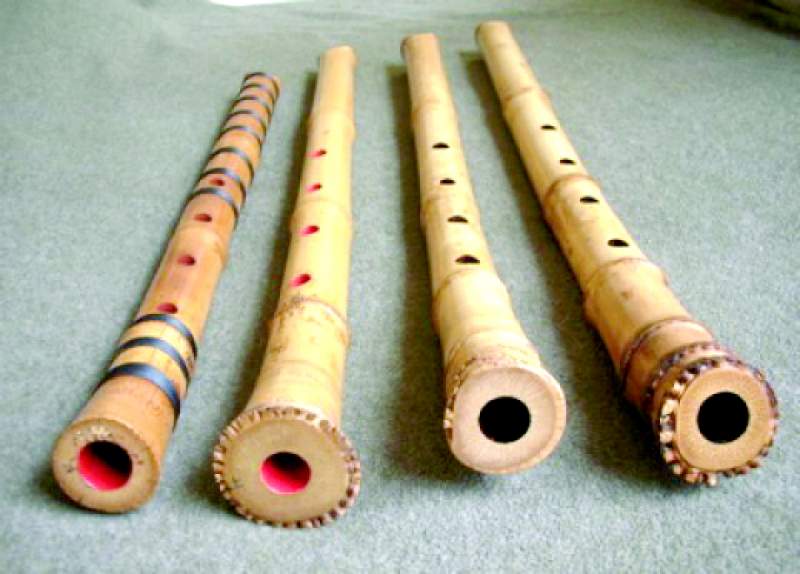
If you are into folk music, you may be interested in knowing about the flute making process. Learn the traditional and original flute making process from master artist Buddha Lama who has over 20 years of experience in making and playing flutes. Flutes have always occupied a big place in Nepali folklore, religious tradition in particular, where the Hindu God, Krishna, is often depicted playing the flute. The entire experience of making the flute costs Rs 3,300 ($29) which is inclusive of all tool and materials. After this two-hour workshop, the host will also give you a short lesson on how to play the flute. Call 9818421646.
Hike
In Nagarjun
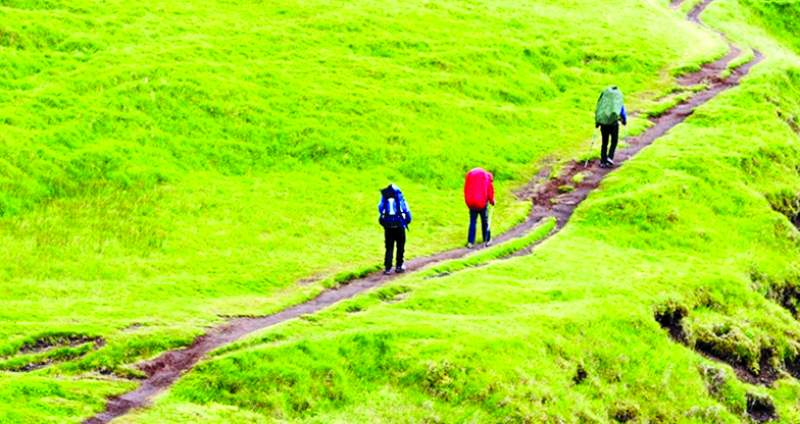
This one-day hiking tour encompasses one of the finest hiking destinations near Kathmandu valley. Nagarjuna hill (2,128m) is located at about 7 kilometers west of Kathmandu, and is famous for the Buddhist stupa atop it. You will also get a view of Manaslu, Ganesh and Langtang range in the two hours it will take you to get to the top. The Nargajun hill is a part of Shivapuri National Park, home for numerous species of floras and faunas.

Go canyon-riding In Sindhupalchok | Make a flute In Kathmandu | Hike In Nagarjun
Go canyon-riding
In Sindhupalchok
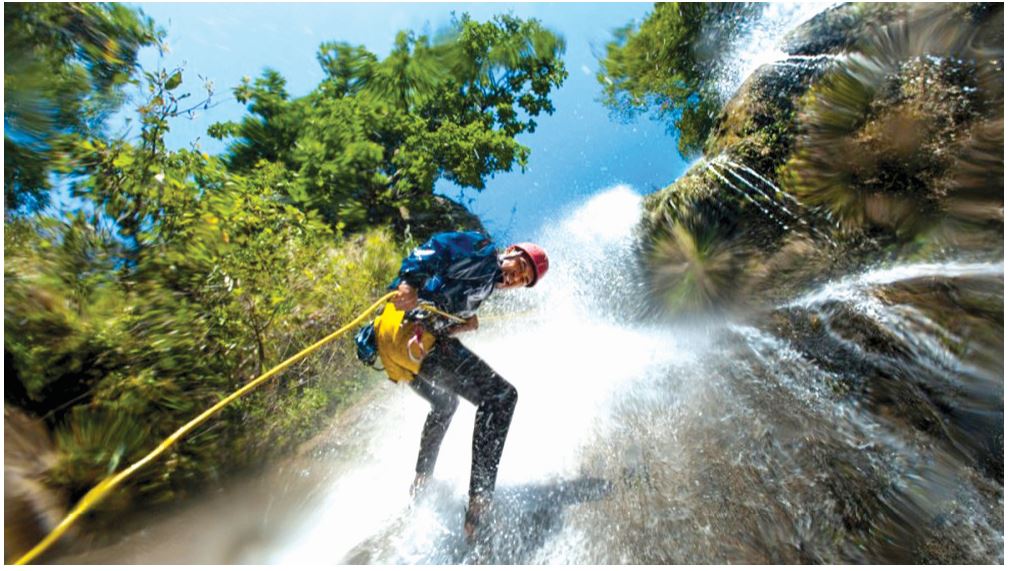
Canyoning is the sport of jumping into a fast-flowing mountain stream and allowing oneself to be carried downstream at high speed. If that is your thing, contact Paddle Nepal. Start the journey through an intimate passages of contorted rock and powerful blasts of water as specialized guides lead you into abseiling, sliding, jumping and swimming down steep canyon walls to pristine pools below. The canyoning zone also has a breathtaking scenery with multiple cascading waterfalls dropping into refreshing pools. Call 61465730.
Make a flute
In Kathmandu
If you are into folk music, you may be interested in knowing about the flute making process. Learn the traditional and original flute making process from master artist Buddha Lama who has over 20 years of experience in making and playing flutes. Flutes have always occupied a big place in Nepali folklore, religious tradition in particular, where the Hindu God, Krishna, is often depicted playing the flute. The entire experience of making the flute costs Rs 3,300 ($29) which is inclusive of all tool and materials. After this two-hour workshop, the host will also give you a short lesson on how to play the flute. Call 9818421646.
Hike
In Nagarjun
This one-day hiking tour encompasses one of the finest hiking destinations near Kathmandu valley. Nagarjuna hill (2,128m) is located at about 7 kilometers west of Kathmandu, and is famous for the Buddhist stupa atop it. You will also get a view of Manaslu, Ganesh and Langtang range in the two hours it will take you to get to the top. The Nargajun hill is a part of Shivapuri National Park, home for numerous species of floras and faunas.

Quick questions with singer Prabisha Adhikari
Q. What is your favorite venue to perform in?
A. Hyatt.
Q. If you had only one day left to live, what would you do?
A. Spend time with my family, leaving everything else behind.
Q. Which celebrity do you most admire and why?
A. Rajesh Hamal as he is an intellectual person as well as a senior artist.
Q. Your pet peeve?
A. Attitude of pretentious people.
Q. Your favorite travel destination?
A. Rara.
Q. Your alternate career choice?
A. Entrepreneur.
Q. If you could go back in time, where would you go?
A. Back to my school days.
Q. Your favorite genre of music?
A. Classical.
Q. The best advice you’ve been given?
A. ‘Be yourself’.
Q. Which is the best of your released songs?
A. “Phool hoina”.


