


Society | Gadhimai takes a leap in development
Mayor Shyam Prasad Yadav has been working in a planned manner to accelerate the development of Gadhimai municipality, which is lagging far behind among the 18 local levels of Rautahat. For this, he has prioritised reform in the education sector.
Earlier, there was only one school up to the secondary level in Samanpur. Now, schools in Sangrampur, Dharampur, and Bingra offer education up to the secondary level. There are a total of four secondary schools in operation in the city. Mayor Yadav informs that the municipality plans to develop school infrastructure and improve the quality of education.
With the increase in the number of schools, the students are also getting facilities like free school bags and stationery. Female students are also being encouraged with bicycles for conveyance. The city itself has appointed subject teachers and also well-equipped the schools’ infrastructures. Following these activities, the quality of education has improved in the area.
Mayor Yadav, however, complains of an added financial burden to the municipality as the central government has not provided the resources as required.
Development has gained momentum in recent years in Gadhimai municipality, known notoriously for its infamous Gadhimai festival in the past. Development works have also been sped up in the municipality which is divided into nine wards.
Until three years ago, it was impossible to walk on some roads of the city during the rainy season. But now, even the inner roads have been upgraded. More than 30 kilometers of roads have been blacktopped in the municipality within three years. The main roads connecting the highways and the neighboring municipalities are also being upgraded.
Overhead drinking water tanks are also being constructed in the wards. Work is underway to provide clean drinking water in all nine wards of the city within this fiscal year. Two drinking water tanks have come into operation and two are currently under construction.
The municipality has also started developing the Rajaiya Road as well as a fun park, stadium, and a historic military park. A master plan has been developed to upgrade the historic Samanpur Bazaar of the district as one of the pride projects of the city. The construction of Rajdevi temple has been completed in Samanpur at the cost of Rs 10 million while the Gadhimai temple at Sunderpur has also been upgraded.
All the procedures to turn the health post in Dharampur into a 15-bed hospital have been completed. Chief Administrative Officer of Gadhimai Municipality Nagendra Yadav informs that the hospital will start operations from this fiscal year itself.
Solar lights have been installed in the main market areas and squares of the city. Malahi, Sigarban, Dhanadi, and Dharampur have been developing as new markets recently. Wheelchairs have been distributed to the disabled in the city under the social security program.
The city also plans to complete a well-equipped sports ground as well as a covered hall within this fiscal year. Preparations are also going to find a suitable dumping site for waste management.
There are many challenges in carrying out such development works. Mayor Yadav informs that 11 issues have been settled by the municipality so far.

Society | Mental illnesses explode as the pandemic tightens its grip
Nepal is sitting on a mental health time bomb. According to Niti Foundation’s new ‘Youth Anxieties, Perceptions, and Activism’ survey, of the 2,000 youths (1,100 men, 990 women) aged 18-40 surveyed across all seven provinces, 84 percent reported being anxious due to the Covid-19 pandemic.
The level of anxiety was more or less the same across caste and ethnic groups, and between men (83 percent) and women (85 percent). The level of education had little impact as well. Nearly half of those working, both in formal and informal sectors, reported moderate levels of anxiety, while nearly a third of them reported high anxiety levels.
“During the 2015 earthquakes, around 70 percent people directly affected by them reported mental health issues,” says Jagannath Lamichhane, a mental health campaigner who is also the coordinator of the Niti Foundation survey. “The impact from the Covid-19 is much bigger. This time they are not just worried about their health but also about their future economic status.”
Dr Saroj Prasad Ojha, head of the Department of Psychiatry and Mental Health at Tribhuvan University Teaching Hospital at Maharajgunj, says the survey’s findings are in line his observations. “I too have seen a significant increase in cases of anxiety in the 18-40 age group.”
Why so? “This age group closely follows local and global media and is greatly concerned not just about their health, but also about the security of their jobs and education,” says Dr Ojha. Hence the increased anxiety levels. Since the start of the Covid-19 pandemic in Nepal Dr Ojha has also seen an alarming rise in cases of depression, substance abuse and sleeplessness.

Lamichhane points to another important part of the survey report. It shows that the youths who report the highest levels of anxiety are also the most dissatisfied with their government. “They are angry that the politicians are doing nothing to improve their situation,” says Lamichhane.
Lamichhane says the government needs to do more and many youth need immediate economic support. “Even in our neighborhood, India, Sri Lanka and Pakistan have done a lot more to support their Covid-affected people financially than has Nepal,” he says. Lamichhane says the government should also make greater use of social media to spread positivity in place of the toxic news that pervades it right now.
Dr Ojha says the government can help by disseminating content emphasizing healthy lifestyle choices. For instance, the anxious folks should be encouraged not to spend too much time online, to keep their social connections intact and maintain a healthy lifestyle. If they do these, most of them will need no medication to be cured.
The psychiatrist says it is not difficult to find professional help if you keep looking. Even during the times of restricted public movement, people can arrange online counseling and consultations.

Biz Brief | Coca-Cola’s new bottle at just Rs. 25
This week, Coca-Cola in Nepal announced the launch of a new 175 ml glass bottle offering great drinking experience to consumers at the affordable price of just Rs 25. Additionally, the new glass bottle is designed especially for Nepali consumers as it comes with a new Coca-Cola logo in Nepali script printed on the bottle reflecting the brand’s strong commitment towards building deeper connections with its consumers locally, a press release issued by the company read.
The introduction of the new RGB (Returnable Glass Bottle) is the smallest in Coca-Cola’s beverage category available in Nepal which demonstrates Coca-Cola’s ongoing commitment in giving Nepali consumers more beverage choices in various packages for the occasions they want.
The RGB bottles are reusable thus, making them environment friendly. The glass packaging preserves the freshness of the cold drink. The new 175ml RGB is available for Coca-Cola, Sprite and Fanta as well and can be found in grocery stores across Kathmandu, Lalitpur and Bhaktapur.
The launch of the new product is a part of Coca-Cola’s ongoing Uplift campaign which comes with the tagline “Diusai Jhap Jhap, Coke le Up” which aims to inspire young consumers to grab a Coca-Cola during their afternoon breaks to feel energized and uplifted.

Editorial: Nepal’s oxygen supply
Soon after the announcement of anti-pandemic prohibitory orders, people started hoarding petroleum products. There were long lines outside gas stations as vehicle owners jockeyed to fill their petrol and diesel tanks. Not just that. Many of them had brought along big jerry-cans, each soon filled brimful with fuel. Hoarding is natural human behavior in times of crisis, but also a dangerous one. For people are not just hoarding fuel. They are stocking up on vital medications. More dangerous, fearing the worst, hospitals and even some private businesses are now holding oxygen-filled cylinders.
The private suppliers of oxygen and the hospitals with their own oxygen-making plants assure that with their collective daily capacity of supplying 8,000 cylinders, they are well-placed to meet Kathmandu valley’s current demand of just under 6,000 cylinders. But they admit they could be stretched thin if the rate of infections continues to increase. And again, we are only talking about Kathmandu. Of the 185 hospitals in the country, only 26 have oxygen plants of their own, and unlike inside the valley many hospitals outside it have no dedicated source of supply.
The federal government is exploring importing at least 20,000 additional oxygen cylinders. (Apparently, oxygen production will not be a problem as much as supplying it in cylinders.) With India struggling to meet its own cylinder demand, Nepal is looking at China for fresh supplies. The pandemic is expected to peak in Nepal after around three months. The country cannot be prepared enough to forestall perhaps thousands of preventable deaths. No, this is not being alarmist. Time really has come to prepare for the worst. This includes preventing the hoarding of life-and-death substances like oxygen. The ability to pay should not decide who gets to live and who not. Right now, nothing is more important than a mechanism that ensures oxygen cylinders go to those who most need them the most.

Biz Brief | TechSathi completes two years
Technology portal TechSathi has recently completed two years of operation. With this, the portal that has been able to gain wide popularity within a short period of time has advanced to another year.
To mark this milestone, the company has made plans to organize creative programs to facilitate students, entreprenuers and young businesses. TechSathi has been reporting on IT related activities for its general readers. The company has also been disseminating information and news on technology market conditions, reviews of various technological tools and news and information on the success of innovative businesses.
The company has also co-hosted the ADAPT Convention, Asia's largest information technology conference. The company has repeatedly presented itself as a partner in various hackathons and IT related activities.

In Focus | Upscaling Newa cuisine at Patan
Patan Durbar Square has always been a hotspot for tourists and locals alike. But previously, eating out in the area was polarized. You either went to small local bhattis to get a taste of traditional Newa cuisine or opted for the more expensive, tourist-centered restaurants. There was no in-between.
The recently opened “Newa Ghasa” at Kuti Saugal, Patan (just two-minute walk from the Durbar Square) plans to change that. The moderately-priced restaurant specializes in authentic Newa cuisine and is a blend of modern and traditional.
With multiple seating possibilities that could accommodate almost 80-100 guests at the same time, Newa Ghasa also features live music in the weekends at its outdoor courtyard. The Newari restaurant has recently opened another branch at Sohrakhutte, Kathmandu.
Location: Kuti Saugal, Patan
Opening time: 12 pm to 8:30 pm.
Chef’s Special:
Ghasa Set
Chicken Choila
Mix Chatamari
Cards: Accepted
Reservations: 9843800768
Meal for two: Rs 500

Panorama | Where’s your mask, hubby-to-be?
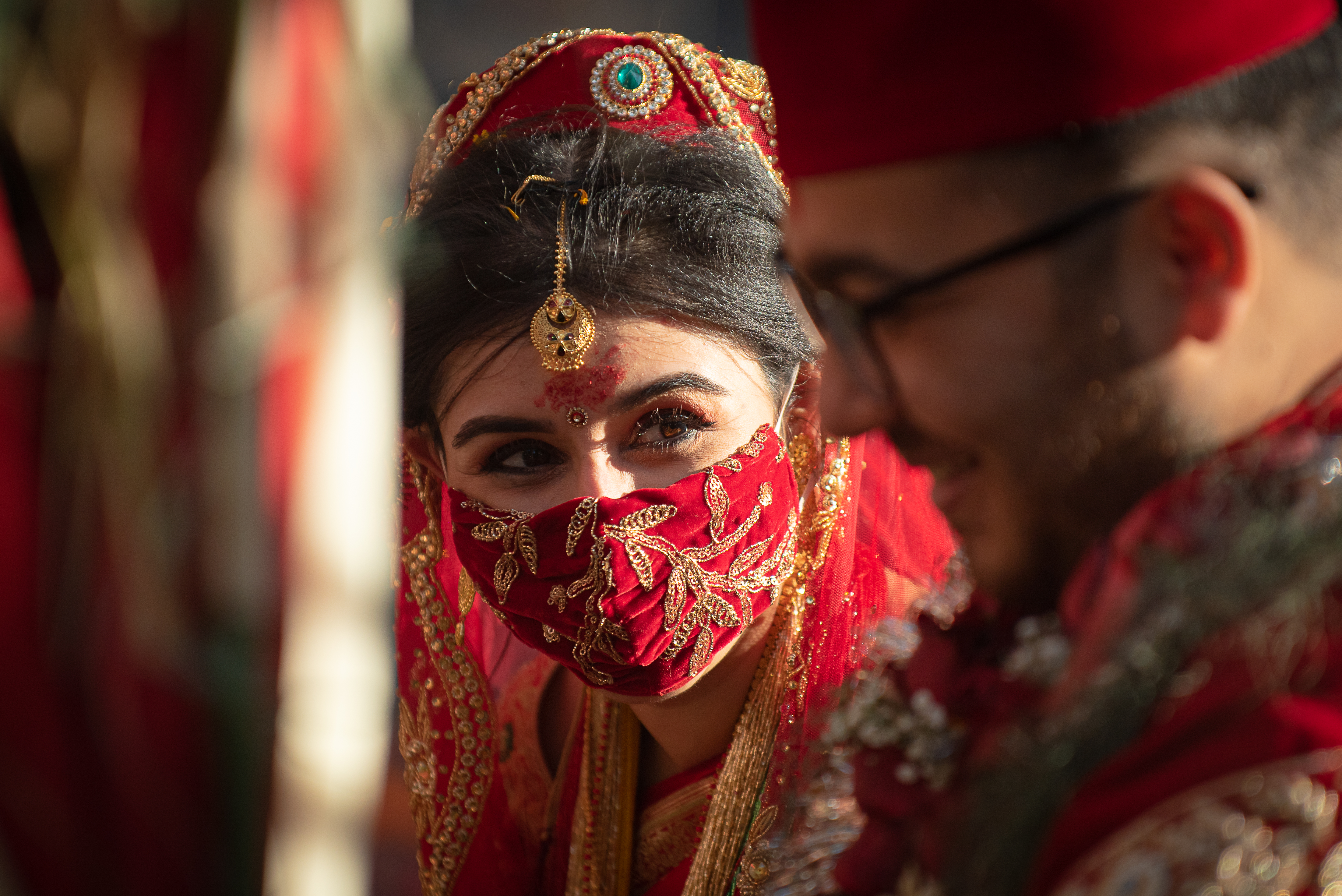
Where’s your mask, hubby-to-be?: The Nepali month of Baisakh marks the beginning of the wedding season in Nepal. But following the recent Covid-19 surge, the government has issued protocols that cap the number of participants in social or religious ceremonies at 25. Prior CDO approval is also required. In these unprecedented times, ApEx advices its valued readers to follow on the (pictured) bride's footsteps. Wear your mask at all times in public. Stay safe | Photo: Pratik Rayamajhi

Biz Brief | TVS Motors sponsors PUBG Mobile Championship 2021
TVS Motor Company, a reputed manufacturer of two-wheelers and three-wheelers in the world, this week announced their sponsorship for PUBG Mobile Championship 2021 in Nepal. The event is aligned to TVS Motor Company’s Bluetooth Connected scooter TVS NTORQ 125’s tagline, “Play Smart.”
PUBG is a popular game among the Gen Z of Nepal, and the championship will feature the best talents from the gaming realm. The championship, which started from April 18, will see three lucky winners will taking home the TVS NTORQ 125 SuperSquad Edition scooters.
“At Jagdamba Motors, our goal has always been to focus on leveraging platforms which will resonate with our target group, the youth of Nepal. We have nurtured such associations at regular intervals and will continue to build properties which create aspirations for TVS Motor Company products in the country,” Deepak Agrawal, Vice-President of Jagdamba Motors, said through a press release issued by the company,
The PUBG Mobile Championship 2021 is expected to witness participation from over 600 teams, 25 streaming channels and 16 streamers, including popular entities such as ‘4K Gaming Nepal’, ‘SK 49’ and ‘Mr. Hyozu’. The championship will span out over the next 45 days.


