

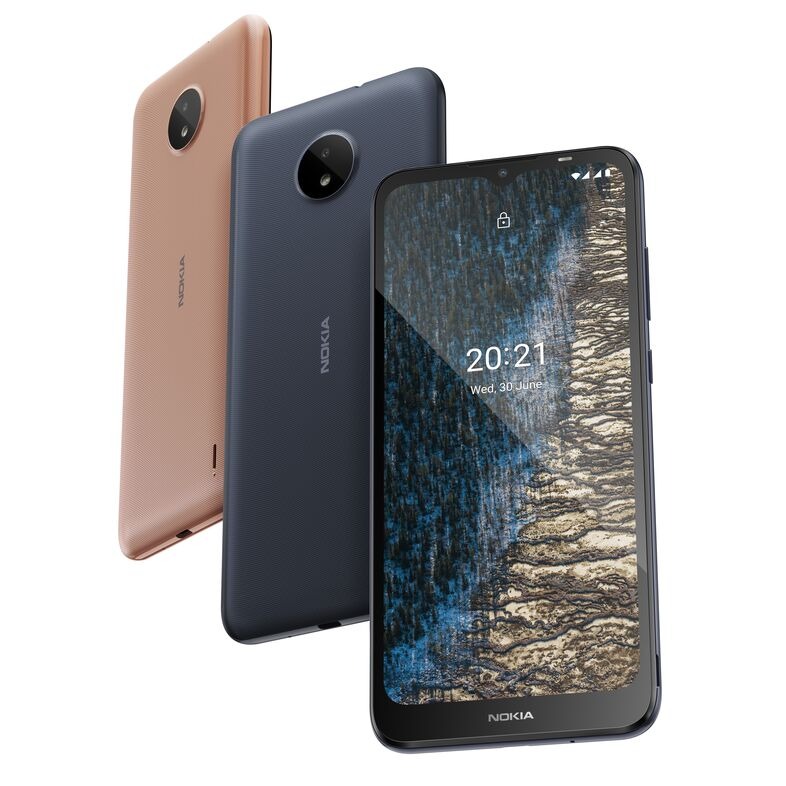
Biz Brief | Nokia C20 launched in Nepal
HMD Global has announced its newest C-series smartphone for the Nepali market–the Nokia C20. The Android 11 TM (Go edition) entry-level phone comes with a price tag of under Rs 11,000.
The C20 doesn’t just look sleek, it’s also built from quality materials, so it will stand the test of time, the company said in a statement. Nokia C20 will hit the market in Sand and Dark Blue and with 2/32GB configurations starting at Rs10,999.

Editorial: Broken justice
The controversy over the composition of the Supreme Court’s Constitutional Bench has made a mockery of the judicial process. It has also raised fears that the hallowed democratic principle of separation of powers has been trampled upon. First, by ignoring the criteria of seniority, Chief Justice Cholendra Shumsher Rana made a blunder while choosing the five-person bench, the all-important authority to interpret the national charter.
The plaintiff lawyers arguing against Prime Minister KP Oli’s decision to dissolve the House and call for a fresh election raised a fuss. Chief Justice Rana relented and reconstituted the bench on a seniority basis. Now, it was the turn of the lawyers defending the prime minister to object, as they accused the two new judges on the bench of being biased against the Oli government. Weeks of precious time that could have been spent debating an urgent issue of national interest were wasted.
Compared to their low faith in the executive or the legislative, the public faith in the judiciary is much higher. Yet this trust is eroding. Judicial appointments are being made mostly along party lines. Senior judges often court controversy. Political leaders in positions of power often speak openly on sub judice cases—and get away with it. And now, there is the controversy over the judges’ impartiality as they sit to interpret the constitution.
How can the public trust their interpretation? Ideally, we should have judges such as former Chief Justice Sushila Karki who simply refused to entertain any political meddling in the judiciary. She maintained a safe distance from political actors and interest groups. Her character was so clean that those who wanted to influence her to rule a certain way did not even bother to try. As a result, the decisions of her court were mostly beyond reproach. And that is how it should be.
As the Constitutional Bench presides over this important case, the judges have a wonderful opportunity to restore public faith in the judiciary. For this, it is vital that the judges not be seen as being swayed by pressure groups and strictly rely on their conscience to interpret the constitution. People are waiting with bated breath.

Biz Brief | Shrestha appointed NYEF President
In the 17th annual general meeting of Nepalese Young Entrepreneurs' Forum (NYEF) held virtually this week, the core values of the organisation: to encourage and motivate entrepreneurs to strive to innovate and create new ways of solving problems, thereby creating a positive impact for the society, as emphasized.
As entrepreneurs, one should strive to bring positive transformations in society by embracing change, a press statement issued by the company reads. In the meeting, a new national governing council was formed with Udeep Shrestha as president, Prakash Dev Palikhe as immediate past president, Ritesh Lamichhane as first vice-president, Sahara Joshi as second vice-president, Nivita Pradhan as woman vice-president and Sumod Saiju as vice-president of Chapter Coordination. Similarly, Pavitra Gautam, Kushal S Shrestha, Sudip Ghimire, Reecha Shrestha and Krishna Sapkota were elected members of the council.

Biz Brief | POCO M3 to hit Nepali market
POCO, the industry-redefining smartphone brand, this week announced the launch of its latest budget smartphone, POCO M3 in Nepal. Boasting a 48MP triple camera setup, 6,000 mAh battery, a beautiful FHD+ smartphone display, and a Qualcomm® Snapdragon™ 662 chipset, POCO M3 is the next “it” device for young entertainment-on-the-move enthusiasts.
POCO M3 marks the debut of POCO Nepal’s M-series: the brand’s foray into an entirely new category. The new product line builds on POCO Global’s success competing with top-of-the line flagships with its F-series, as well as the impact of its X series in the mid-range category, opening the brand up to a new set of global tech lovers.”
POCO M3 will be available in three color variants: Cool Blue, POCO Yellow, and Power Black, across authorized stores, online and retail partners starting June 07.

Editorial: Royal massacre: No going back
Monarchy had been an integral part of Nepali society since the unification of the territories currently clubbed under Nepal in the late 18th and early 19th centuries. Without the Shah monarchs, there would be no Nepal as we know it today. Sometimes they ruled directly, at other times they did so through their elected or unelected representatives and, for another 104 years, they were only figureheads. Yet they endured, for nearly two-and-a-half centuries.
Arguably, the first nail in the monarchy’s coffin was hammered in on 1 June 2001 when the entire family of King Birendra, the ruling monarch, was gunned down. The then crown prince Dipendra was named the culprit. He apparently took his own life after killing his family, and no new piece of evidence has emerged to suggest someone else was directly involved. Yet that is not how people saw it. The consensus then, and perhaps even now, continues to be that Birendra’s younger brother Gyanendra, who would later be the king, had a big hand in the massacre.
As the monarch, Gyanendra started getting increasingly authoritarian: assuming all executive powers, outlawing political parties, and controlling the media. This only confirmed people’s doubts about him. By the time the Seven Party Alliance started a joint campaign with then warring Maoists to oust the autocratic king in 2006, public opinion had turned firmly against Gyanendra. When the king, cornered at home and ditched by the international community, gave in to protestors, he knew full well he was signing on the monarchy’s death warrant.
Many Nepalis are disappointed with the course of events in the country in the two decades since the monarchy’s ouster. A sizable section of the population is again starting to hanker after the stable days of monarchy. But this will be a flawed course, for two main reasons. One, the federal-republic project in Nepal is only in its infancy, and it is too early to pass definite judgments on its success or failure. Two, there can be no going back from a situation where sovereignty is now fully vested in the people. On the 20th anniversary of the royal massacre, it is worth recalling the beloved Birendra and his family. But there is no point trying to revive an institution whose time has passed.

Panorama | Peace and poise
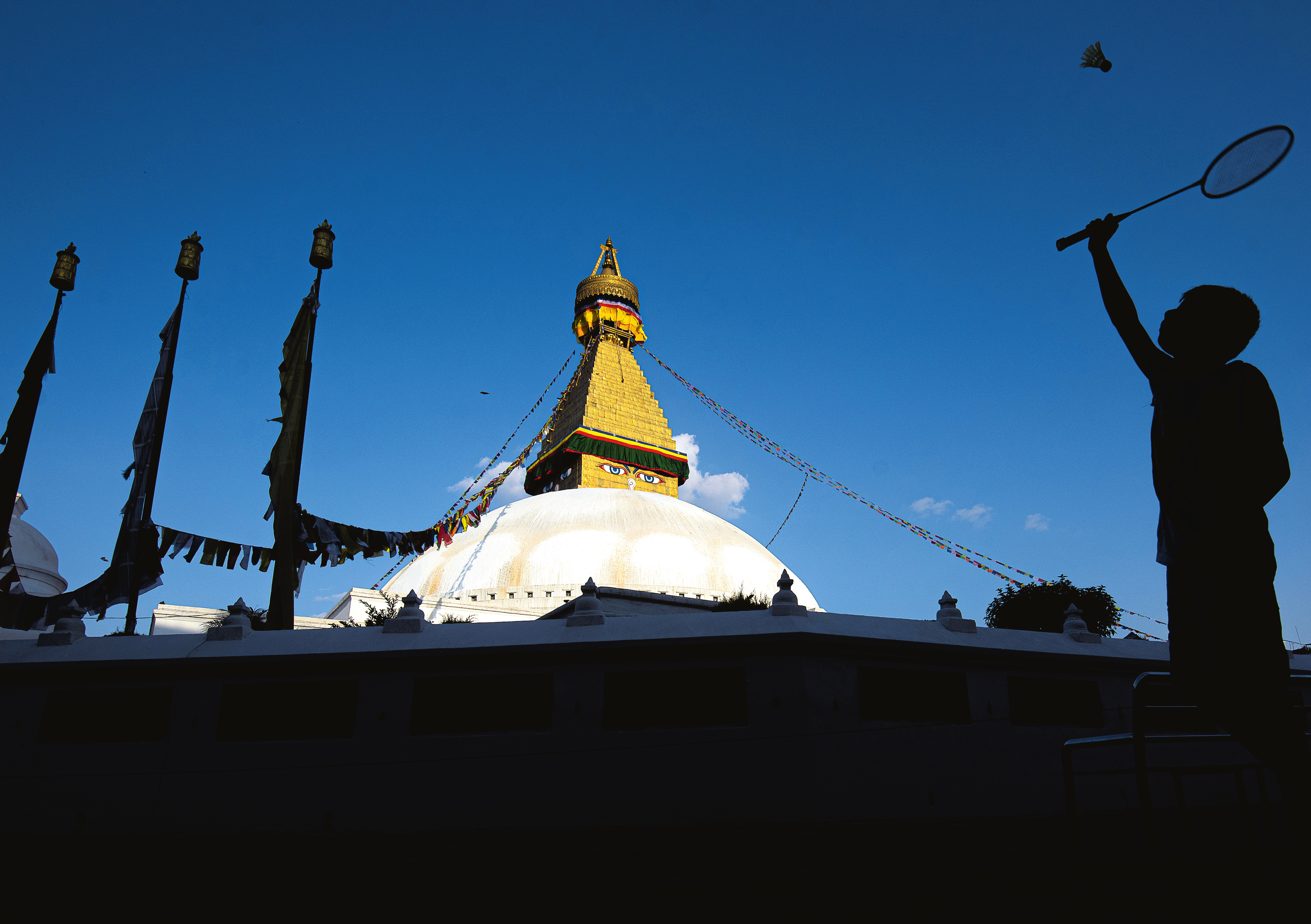
Peace and poise: A child plays badminton inside the premises of the Boudhanath Stupa, emptied due to the Covid-19 lockdown, in Kathmandu, on May 25. The following day was the Buddha Jayanti, the 2565th birth anniversary of Gautam Buddha | Pratik Rayamajhi

Biz Brief | Ncell extends support to government hospitals
Ncell Axiata Limited this week handed over the first batch of 150 oxygen concentrators to the Ministry of Health and Population (MoHP), extending its support to the government to mitigate the ongoing coronavirus (COVID-19) pandemic.
As part of its continued corporate social responsibility (CSR) in collaboration with the MoHP against Covid-19, Ncell has pledged to support the government with a total of over 150 units of portable oxygen concentrators, a press release issued by the company read. Supplemental oxygen is a basic medical requirement for the treatment of Covid-19 patients with low blood oxygen levels.
Andy Chong, CEO of Ncell, handed the first batch of oxygen concentrators on May 21 to Mahendra Prasad Shrestha, chief specialist at the MoHP. These oxygen concentrators will be handed over to district-level hospitals that are facing an acute shortage of life-saving oxygen.
People can call Ncell’s Covid-19 Hotline Service 9805554500, free of charge for any Covid- related health consultation with doctors and health professionals. From a call center set up at the Dhulikhel Hospital, Covid patients staying in home isolation across the country will also be provided daily health consultations delivered by qualified medical professionals.

Interview | Gorkha Brewery steps up to do its bit during crisis
The country is plagued by the Covid-19 pandemic. The health system has reached a critical stage where lack of oxygen and other health supplies has led to premature loss of life. In such a dire situation, the private sector has extended a helping hand to the government to manage the situation. Here’s an excerpt from conversation with Surendra Silwal, deputy managing director at Gorkha Brewery, a company that has stepped up to assist the government and the people to save lives.
What kind of support has Gorkha Brewery provided under its corporate social responsibility program to help those affected by the Covid-19 pandemic?
With support from Temasek Foundation, Singapore. and the Lotus Life Foundation, Gorkha Brewery has provided the government a variety of health products worth about Rs 250 million. The goods that arrived in Nepal on May 22 were handed over to Health Minister Hridayesh Tripathi on behalf of Gorkha Brewery the very next day.
We also expect additional medical supplies to arrive from Singapore in a few weeks. I would personally like to thank Benedict Cheong, chief executive officer of Temasek Foundation International, who played a vital role in providing the health care equipment.
What other activities is Gorkha Brewery conducting under its corporate social responsibility?
Under our CSR programs, we have run a myriad of different types of programs around the country. We run a school for children under Mukundapur Village Development project with the help of the Rotary Club. We provide all the expenses needed to run the school.
Apart from that, we have also been conducting free health camps at different times at the local level. We have been providing necessary assistance to other local schools from time to time. Similarly, we have provided and continue to provide necessary assistance for sports.
We also try to step in with whatever assistance possible during natural calamities and epidemics.
What role can a private company like yours play to keep the country’s economy afloat?
Our company, first of all, has contributed to keeping the country's economy afloat. In terms of production, we are producing something that would otherwise be imported. We are also trying to use local raw materials as much as possible. We try to reduce imports and that helps the economy.
In addition, we are also creating thousands of jobs and also making huge contributions to the country’s tax revenues.
Why do you think industries are failing to flourish in Nepal?
The role of the government is also important for the prosperity of industries. The government's policies should be industry-friendly to make industries and businesses flourish. We need long-term policies in our favor but we have a problem in this regard. Our policies keep on changing and we cannot keep up to them. There is too much bureaucracy and red tape that discourages industrialists both new and experienced.


