


Editorial: Oli’s olive branch
The CPN-UML Standing Committee’s June 30 decision to revive the party’s central committee that existed before the 16 May 2018 merger with CPN (Maoist Center) is a welcome step. ApEx has always advocated for intra-party cohesion in Nepal’s main democratic forces, and if the two factions of the UML could someone reunite, it would be wonderful news. Nepali polity is best served by having two or three strong political forces that fight along ideological lines; purely personal ambition-driven politics has done much to corrupt Nepali politics over the years.
Yet the June 30 decision may not be enough to interest disgruntled senior UML leaders like Madhav Kumar Nepal and Jhala Nath Khala who are not ready to trust Prime Minister and UML Chairman KP Oli easily again. They think this is just another ploy of PM Oli to prolong his tenure. If the Supreme Court rules in Oli’s favor again, they think he will not think twice about ditching them again.
Hence the onus is on Oli to prove he is ready to accommodate the concerns of the rival faction. Chief among these is their old gripe that Oli seldom consults them on important matters, for instance in his decision to bring in a faction of the JSPN into the federal government or in his appointment in vital constitutional organs. They would also like to see Oli share more power with them, both in the party as well as in the government.
Again, going into the next elections, ideally, Nepal should have no more than three or four main political actors who are vigorously competing for votes. Having such strong actors will help consolidate the main agendas and prevent the country from slipping back into the kind of dirty horse-trading that characterized the post-1990 national politics. In fact, the new constitution has specific provisions to protect against such an outcome. But constitutional provisions are only as good as those implementing them. We hope the prime minister has this time acted in good faith and he is serious about consolidating his party and thereby the national polity.

Panorama | That time of the year
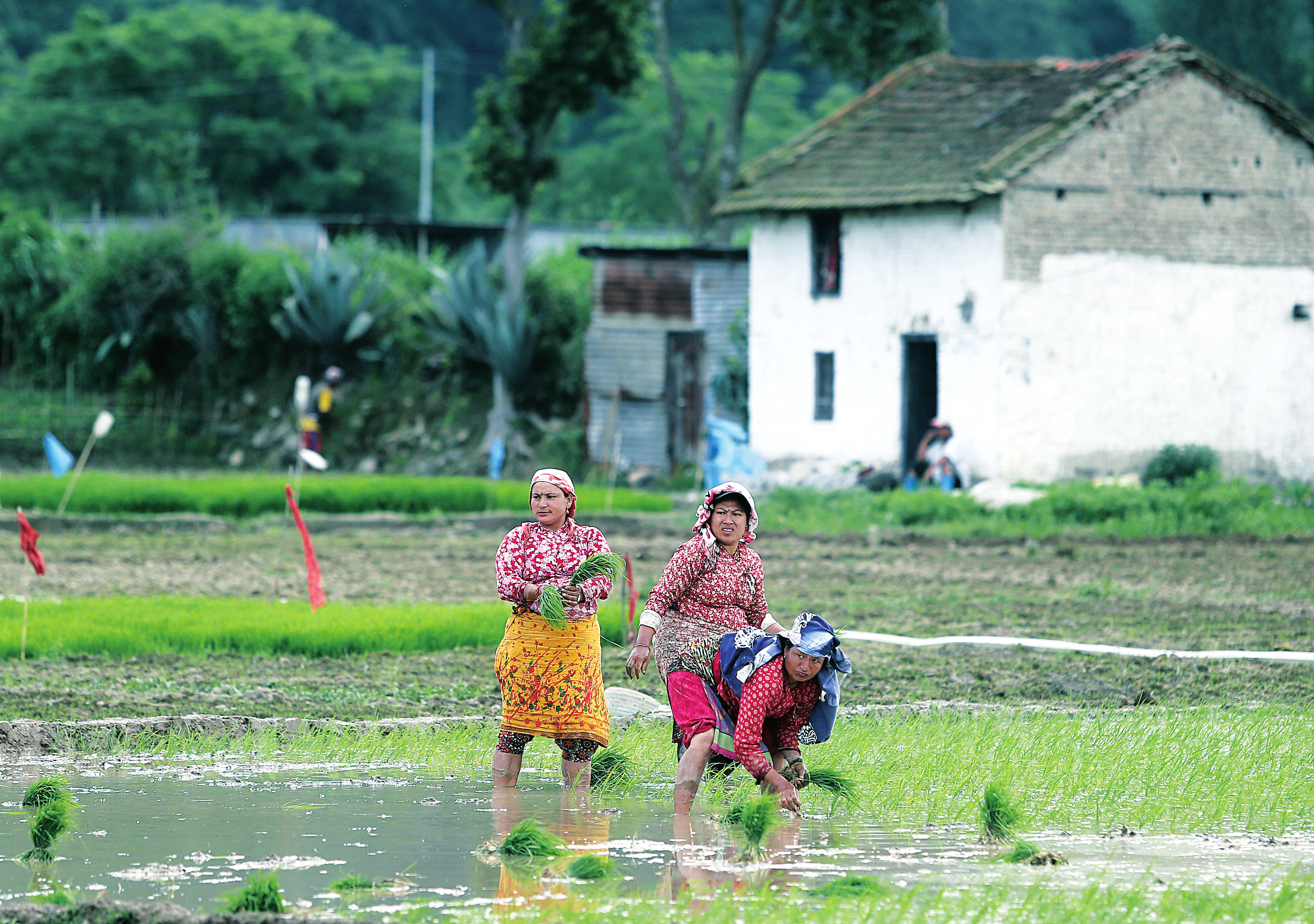
That time of the year: Local farmers of Khokana, Lalitpur start planting paddy after heavy rainfall in Kathmandu valley in the second week of June. Farmers across the country are preparing to plant rice with the monsoon's onset | Sunita Dangol

Business | Civil Group and its uncivil controversies
Just over a decade ago, the Civil Group was one of the biggest names in the Nepali corporate world. Group chairman Ichchha Raj Tamang Chairman rode the real estate bubble between the late 2000s and mid-2010 and profited handsomely. A qualified engineer and capable entrepreneur, Tamang became one of the pioneers of housing projects in Nepal. He then entered the banking sector.
Civil Homes, Civil Mall, Civil Bank, Civil Saving and Credit Cooperative, among two-dozen ventures, comprise the Civil Group. But the success story of Tamang turned sour as quickly as he had risen to fame, with multiple accusations of financial discrepancies and unscrupulous business practices.
Early 2020 saw the Department of Money Laundering Investigation initiate a probe into Tamang after financial transactions exceeding the given limit were made through his bank account. Tamang, also the chairperson of Civil Bank, along with his partner Keshav Lal Shrestha, had allegedly transferred more than Rs 1 billion from the account maintained by Civil Hotels at Civil Bank to the account of Civil Apartments in the same bank, all owned and operated by Tamang.
The department had also asked Civil Bank’s clarification on why it had not reported suspicions over those transactions to Nepal Rastra Bank. The result of the investigation is yet to be made public. When ApEx inquired about it with the department, we got the reply that “no information on this case can be divulged now”.
Just before the Civil Bank controversy, which lost the bank considerable goodwill, Civil Group’s Pokhara-based Civil Saving and Credit Cooperative also declared it was facing bankruptcy after mass withdrawals following reports of its impending collapse. The cooperative had overextended with its ambitious investments in real estate, hotel and hydropower, without earning the trust of account holders. It had invested around 90 percent of its deposits totalling Rs 7.5 billion in the realty business operated by the group.
Around the same time, Tamang also had a controversial fallout with his business partner Lal Kaji Gurung, a major shareholder in Civil Cooperative and also a partner in Civil Mall. This financial dispute led to court cases, further engulfing the group in controversy.
Editorial: Evolving Nepali football
As we near the business end of the Euro Cup and Copa America football tournaments, it is worth taking stock of our own men’s national team. As our interview this week with the most decorated Nepali footballer Biraj Maharjan, who has just retired from international football, suggests, there is room for optimism.
Only this May, Nepal won the Three Nations Cup it hosted. Then, to add to the excitement, Kuwait’s Abdullah Al Mutairi, a pro-licensed FIFA coach, was appointed the national team’s head coach. The team exceeded expectations at the recent World Cup qualifiers, even beating Chinese Taipei 2-0, which in turn helped Nepal make it to the next round of Asian Cup qualifiers.
One of the big disadvantages of Nepali players when playing stronger international opponents over the years has been their poor fitness. They didn’t eat the right diet, nor was their physical training up to international standards. Thankfully, things are changing. The national team as well as all top-tier Nepali clubs these days have trained dieticians and physical-training experts in their ranks to boost player fitness. Learning from the fitness regimens of international football stars, the Nepali players themselves have realized the importance of cardio and weight training. We can thus expect the team to only get fitter with time.
The new FIFA-certified coach will also enhance the tactical side of the national side’s game. As the players have themselves said, the start this year of the Nepal Super League, a franchise-based club tournament, will enhance their professionalism and make them more used to playing against quality international players. Such tournaments with corporate sponsors will also make them financially independent, allowing them to completely focus on football.
At last, the All Nepal Football Association (ANFA), the country’s football governing body, seems to have realized the importance of having a long-term vision. As discussed above, its new focus is on the seemingly small things that will collectively make a big difference a decade down the road. But it has to keep at it. Hopefully, in a generation, Nepalis will get to see their national team compete at the highest levels abroad, in Asia if not in the world.

Farmers protest Hulas Steel’s new plant
Hulas Steel Industries—one of Nepal’s biggest and oldest manufacturers—have allegedly encroached on public property for its new factory being built in Birgunj, Province 2.
The locals of Belwa village in Birgunj Metropolitan City Ward No. 31 have been protesting against Hulas Industries for illegally taking over a chunk of public land for a new factory. Also accusing the local ward office of conniving in Hulas’ scheme of illegally acquiring public property, the locals have stopped construction.
According to local sources, Hulas Steel Industries have encroached around two katthas (0.16 acres) of ailani jagga (public land). The tussle between the company and the locals around the property has escalated as the said land was being used in an irrigation project to provide water to hundreds of acres of agricultural land in the surrounding area.
Even as construction is obstructed, there has been no official statement from either Hulas or the local government. The locals, however, say their agitation will last so long as Hulas Industries’ venture continues to hamper their irrigation.

Panorama | We shall not forget
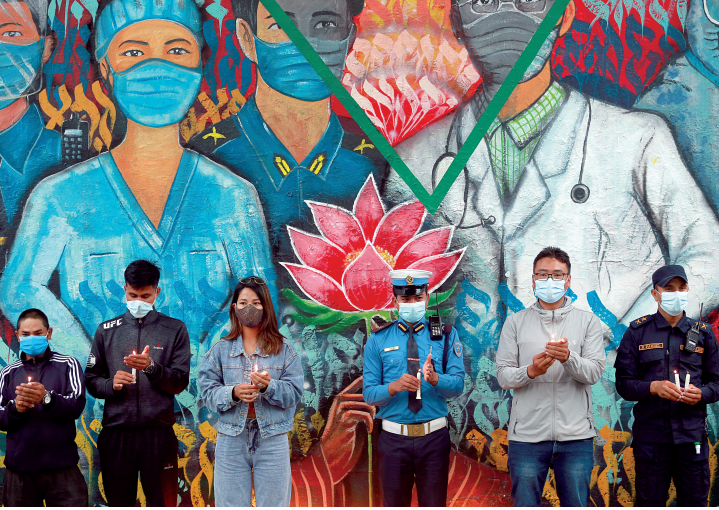
We shall not forget: Friends and families of the frontline workers who lost the battle against Covid-19 pay their tributes in front of a wall mural made to honor the departed, at Ratnapark, Kathmandu. Many doctors, nurses, hospital staffs and security workers among other essential professionals continue to provide their services by risking their lives | Dipen Shrestha

Editorial: Vaccines for Nepal: Too little too late
We have been there, done that. Confusion again reigns all around as the country continues to reel under an acute vaccine shortage, and the prohibitory orders are being lifted in various parts of the country, including Kathmandu Valley.
Less than three percent of the population has been fully vaccinated. For those who have gotten only their first dose, or around a tenth of the population, there is no guarantee of a second. The procurement process for more vaccines, we hear, has long been underway. Yet as of this writing, it is unclear where the next shipment is coming from. Instead, some disturbing news on vaccine delivery has emerged. Many elderly folks have been turned away from vaccine centers that supposedly ran out of jabs. But then there are also reports of expired vaccines being thrown away. These vaccines had reportedly been set aside for VVIPs but many of them didn’t show up on time.
Separately, the recent vaccination drive in Kathmandu with the China-made Vero Cell had to be interrupted when ministers, bureaucrats, and even high-profile journalists started sending their kith and kin for jabs, usurping the right of those in the 60-64 age group to get their first shot. The drive has resumed, but it is cold comfort for the 1.5 million folks whose second dose of Covishield is long overdue. Experts have repeatedly pointed that only mass vaccination will help the country emerge from the corona contagion; the various restrictive measures will, at best, only slow down the rate of infection.
The Oli government has badly bungled the vaccination drive from the start. Now the country is reliant on the goodwill of the international community to provide it with enough vaccines, mostly through the WHO’s COVAX initiative. The initiative has promised around 350,000 vaccine doses by the end of July. That is nearly not enough. The restrictive measures are being eased but without enough vaccines to inoculate the vast majority of the population, it will only be a matter of time before they return. And it could be much worse the next time.

Biz Brief | Coca-Cola committed to recycling
Coca-Cola in Nepal marked World Environment Day by providing an update on its World Without Waste program and announced the conclusion of the second edition of one of the largest mountain cleanup programs in the world—the Mountain Cleanup Campaign 2021.
Over 27,671 kg of waste collected from six mountains—Mount Everest, Lhotse, Makalu, Dhaulagiri, Pumori, Ama Dablam—was brought back to Kathmandu and handed over to Avni Venture for further segregation and recycling.
Director of the Mountain Cleaning Campaign, Brigadier General Himanshu Khadka of Nepali Army said, “This was possible due to the unwavering support from our environmentally responsible partners. We appreciate the continued support of Coca-Cola for the noble cause of saving the Himalayas for future generations.”
The campaign was led by Nepali Army with support from Coca-Cola and other stakeholders. It aimed at protecting the mountains and minimizing the effects of climate change by cleaning up the six highest peaks of the country. Coca-Cola has supported the mountain cleaning program since the campaign’s inception in 2019 with the aim of working towards protecting the environment and conserving the natural pride and beauty of Nepal, the company said in a statement.


