


Two students raped in Sundarharaicha of Morang
Two students have been raped in Sundarharaicha of Morang district. Police said both of them are 14 years old and eighth and ninth graders at a local school. The incident came to light after the parents started searching for the children, who had gone to the school, did not come home. DSP Deepak Shrestha of the District Police Office, Morang said that they had left home for the school on Friday. They had gone to Gaushala of Sundarharaicha to see a volleyball match after they found the school closed on that day. According to a preliminary investigation, Sachin Timinsina (20) of Sundarharaicha-2 and Pratap Tamang (23) of Sundarharaicha-6 lured the duo to a hotel and raped them. Police said that they kept the girls overnight in separate rooms on the second floor of the Hotel Inn Restaurant and Lodge at Belgachi in Sundarharaicha-7 and raped them. The parents urged police to search for the girls after they did not come home till late night. They returned home only on Saturday. DSP Shrestha said that they knew about the incident after the girls told their parents about the incident. Police arrested Timinsina and Tamang based on the complaint filed by the parents. They had filed a complaint at the Area Police Office, Belbari on Sunday. A team deployed under the command of Inspector Khagendra Dhamala nabbed them from their homes. Police have also apprehended Padam Karki (20) of Sundarharaicha-6 for helping Timinsina and Tamang. It has been learnt that police are preparing to send the girls to the Koshi Hospital in Biratnagar for the health check-up.

Gold being traded at Rs 100, 500 per tola today
The gold is being traded at Rs 100, 500 per tola in the domestic market on Monday. According to the Federation of Nepal Gold and Silver Dealers' Association, tejabi gold is being traded at Rs 100, 000 per tola. Similarly, the silver is being traded at Rs 1,380 per tola today.

Nepal shows no improvement
Nepal has continued to lag behind its neighboring countries when it comes to research and innovation. In the Global Innovation Index (GII) 2022, published by World Intellectual Property Organization (WIPO), Nepal has ranked in 111th position out of 132 economies. The WIPO report shows Nepal’s position has remained the same as that of last year. According to the report, Nepal performs better in innovation inputs than innovation outputs in 2022. Nepal is ranked 106th in innovation inputs, lower than both 2021 and 2020. As for innovation outputs, Nepal is ranked 111th which is higher than in 2021 but lower than in 2020. Nepal’s two immediate neighbors China and India have been ranked at 11th and 40th positions, respectively. The other South Asian countries Sri Lanka, Pakistan, and Bangladesh have been ranked higher than Nepal. Sri Lanka has been ranked at 85th position while Pakistan and Bangladesh are at 87th and 102 positions, respectively. GII ranks world economies according to their innovation capabilities. Consisting of roughly 80 indicators, grouped into innovation inputs and outputs, the GII aims to capture the multi-dimensional facets of innovation. The report has stated that Nepal’s performance is at expectations for its level of development. “Nepal produces less innovation outputs relative to its level of innovation investments,” says the report. Among the lower-middle-income group economies, Nepal performs above the group average in two pillars—market sophistication and business sophistication. Among the seven pillars of GII, Nepal's score is better in market sophistication and weakest in human capital and research. Nepal’s dismal performance in the area of innovation is basically attributed to the lack of government attention to creating an environment conducive to fostering innovation and creativity in the country. In the fiscal year, the government allocated Rs 196.4bn ($1.6bn) to the Ministry of Education, Science and Technology which is a nine percent increase from Rs 180.4bn in 2021. This increment, however, is insufficient to ramp up activities in scientific and technological research, according to experts. Nepal remains among the countries with low funding in the areas of science and technology as a percent of GDP. Government funding in science and technology stood at a meager 0.45 percent of GDP in FY 2022/23. Nepal’s ranking in GII
| Year | Position |
| 2022 | 111 |
| 2021 | 111 |
| 2020 | 95 |
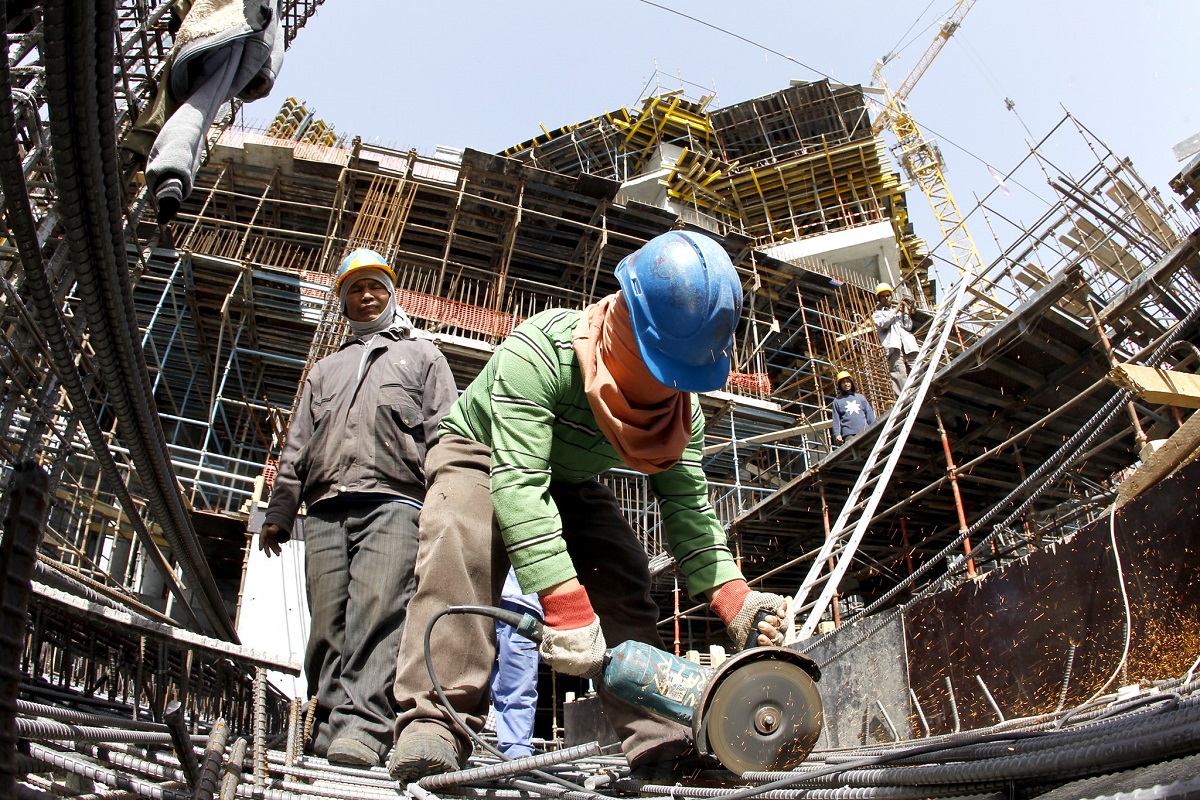
South Korea to recruit 40,000 Nepali workers in 2023
At a time when employment opportunities are increasingly becoming scarce in Nepal due to the economic slowdown, there is good news for Nepalis looking to work abroad. South Korea has agreed to allow an additional 40,000 Nepali workers for jobs in the country in 2023. Dandaraj Ghimire, spokesperson of the Ministry of Labor, Employment and Social Security, said the Korean government will be taking the workers under the Employment Permit System (EPS). As of now, the East Asian country has permitted 69,000 workers on its land under the EPS system. “They have consented to increase the number to 110,000 in the next one year,” said Ghimire. South Korea is one of the lucrative destinations for Nepali workers looking to work abroad. The country had taken 7,000-8,000 workers every year from Nepal between 2016 and 2019. During the Covid-19 pandemic, there was a sharp fall in intake to 955 workers in 2020 and 389 in 2021 because of travel-related and other restrictions. In 2022, the country agreed to take more than 9,000 workers from Nepal. According to Ghimire, the Korean government has targeted to employ 72 percent of these workers in the manufacturing business, while the remaining 30 percent will be sent for agriculture and animal husbandry. The workers selected for manufacturing will be assigned to work from 2023. In the EPS examination taken in September this year, a total of 7,142 individuals passed the test. Nepal and South Korea signed a memorandum of understanding for EPS for the first time on July 23, 2007. Following the pact, Korea has been hiring the required manpower via EPS. Meanwhile, the Korean government has revised the rule of the minimum wage to be effective from the beginning of 2023. In the new rule, the minimum wage rate will be around five percent higher than the existing wage range. According to EPS Center Nepal, a worker will be getting a minimum of 9,620 Korean won per hour from 2023. As of now, the rate has been fixed at 9,160 won per hour. A worker working for an average of 209 hours a month will receive more than 2.01 million won. South Korea has been allowing workers from 16 countries including Nepal under the EPS program. Citing the honesty and hardworking nature, Korean authority appears more lenient to Nepali workers compared to other countries, according to Ghimire. During the impacts of the Covid-19 pandemic, a large number of Nepalis who passed the Korean language and skill proficiency tests under EPS, waited for a long time to go to Korea for work. With request from the Nepali authority, the Korean government later on allowed Nepalis to go there on the basis of chartered flight and some quarantine provision. Also, the Korean authorities extended the visa of such workers by an additional year. Government expedites process to send Nepali nurses to UK Meanwhile, the government has expedited the process to send 10,000 Nepali nurses to the United Kingdom. According to Ghimire, both governments are currently working to prepare an implementation protocol for the purpose. “We have planned to send 200 nurses in the pilot phase,” he said. On Aug 22, Nepal signed a deal with the UK government to send around 10,000 Nepali nurses and each of them will be paid around Rs 400,000 per month. The competitive application process would be launched in the next few months. The World Health Organisation, however, has put recruitment of Nepali health workers on its ‘red list.’ Experts have criticized the government for turning a blind eye to the possibilities of exploitation in the recruitment process. Charging of extra fees by the consultants and possible shortage of nurses in the country, making the people shortfall in getting good health services, which Nepali people have been facing are among the concerns of the international organization. Nepal has 21 nurses per 10,000 people, compared with the UK’s 84 per 10,000.

Rabi Lamichhane elected RSP PP leader
Rastriya Prajatantra Party Chairman Rabi Lamichhane has been elected as the party’s Parliamentary Party leader. Party Spokesperson and General Secretary Dr Mukul Dhakal said that a meeting held on Monday unanimously elected Lamichhane as the Parliamentary Party leader. Rastriya Swatantra Party has won 20 seats—seven seats directly and 13 seats through the proportional representation electoral system. The party, however, is yet to choose chief whip and whip among others.

Simrik Air rescues injured Spanish climber from Mt Amadablam (In pictures)
Simrik Air has rescued a Spanish climber who slipped and injured his leg while climbing Mt Amadablam in Solukhumbu.
Zapata López Soje Manuel was rescued from the height of 6,300 meters of Mt Amadablam.
Simrik Air rescued him by using a long line rope. He was brought to the base camp soon after rescuing him from the mountain.
Later, he was brought to Kathmandu by a Simrik Air helicopter for treatment.
Manuel was climbing Mt. Amadablam on Sunday. The incident occurred between the second and third camps.
He had gone for mountaineering from the 8k Expedition Company.
Simrik Air pilot Siddharth Gurung, rescue specialist Chiring Dendup Bhote and Ang Tasi Sherpa rescued Manuel from Mt Amadablam by using a long line.
They used the long line as it was difficult to land the helicopter in that place.
“We succeeded in rescuing Manuel even in the bad weather condition,” Sherpa said, adding, “We faced difficulties in rescuing him due to strong winds. Despite difficulties, we continued our rescue efforts.”


Ayshanie Medagangoda-Labé: Nepal has made progress in multiple indicators
Ayshanie Medagangoda-Labé (Sri Lanka) is UNDP Resident Representative for Nepal. Prior to this appointment, Ayshanie was UNDP’s Deputy Resident Representative for Programme and Operations in Nepal. GM Media, a news agency, talked to her about a wide range of issues related to Nepal and the UN. How do you see the status of Nepal as seen in the Human Development Index? If I take this year’s human development report 2021/2022 and compare it to 1990 human development report data, I can definitely say Nepal has been improving like 90 percent of the other countries. Since 2019, we can observe a bit of a red flag that says something is happening that is not only for Nepal. So, we had a slightly bumpy road in 2019, 2020, 2021, and 2022, which we need to take into consideration while doing policy orientations, investments, planning, and budgeting types of work. Overall, Nepal is improving and has been improving, so we should not just rest on achievements made over the last 30-plus years. Looking at this year’s report, it seems Nepal is going down a bit overall in integrated indicators. Is it only because of Covid-19 or are there other factors as well? If you look into the last 32 years, HDR is trying to put forward interactions of people with security, democracy, culture, climate change and other aspects that interact with human nature and to see how people’s development changes with these issues. So, there is no exception on issues that the HDR is trying to put forward this year (2021/2022). We definitely had a covid pandemic, but we also live amid conflicts in Russia, Ukraine and other parts of the world. The pandemic affected everyone equally, conflicts affected us unequally. Now, we have obviously planetary pressures, climate change, pollution and all these pressures coming together making people scared. People are not really settled because of what is happening in the world. It's not only about environment and climate, it's also about conflicts, inequality and access to basics. So, this comes together and then there is the pursuit of transformation in the society. How people are trying new ways to cope with this uncertain situation? People are scared again. Can we work a way out to cope with this planetary pressure, conflict, climate change over this pandemic? People are trying different ways of working, that's the second tier of uncertainty. That is where you need protection, if you’re afraid of getting into certain areas where you’re not completely sure about what it is that you're living in. Then the third tier: Conflicts, disagreements, polarized societies because of disagreements in the society, the community, the family. This is what you face as a result of social and political polarization and disagreement that comes with it. The report tries to illustrate these three types of uncertainties, apart from new ways of coping with planetary pressures and how to try different things to ease them.... These three types of uncertainties are what we call uncertainty complexes. Because when you have different layers, it becomes a bit more complex than when you’ve to deal with only one set of complexities. You only have to deal with conflict then fine, but if you’ve to deal with conflict, if you’ve to deal with the failures to act and lose people and if you also have to deal with basically the political violence in a country or societal violence you might be adding yourself uncertainties and that becomes a bit more complicated to deal with. So, that is what the report is trying to put forward and also to show how these complexities are affecting human development, basically your choices, your options for education, health, and standards of living in a country. This is what the report is trying to illustrate and also offer some of the solutions, policy orientations that the researchers and the authors think that the country could consider and propose to their policymakers. Since all development partners—UN agencies, donors and other parties—are engaged in helping the government collect, plan, and implement, they are also responsible, in a way, aren’t they? Of course, the moment we are using taxpayers’ resources to fund development, accountability lies on everyone. So, you have the duty-bearers and all the development partners are part of that group of duty-bearers in the same account as the government or other institutions. Citizens, including those working in the government, also fall under the category of rights-holders. Basically, it is a role that is interchangeable and everyone is responsible because you have to show results of what you invest in a country. That is why we have mutual accountability, an important principle of development cooperation. It is not only one-sided but mutual accountability where everyone mutually accounts for what the party has agreed to work on together. That is why we are also showing the SDGs (Sustainable Development Goals). If you go to goal no. 17, the partnership is an extremely important goal that brings everyone together. There is a role for everyone within intercountry and intra-country (settings) giving everyone the opportunity to come together and make sure that we go there together by 2030 for Global Goals or 2050 for some of the climate targets that we get there by the commitments that we made. In terms of realizing SDGs, how is the government faring? Does this report indicate anything? Until 2019, most probably many of the SDGs were relatively on track not only in Nepal. Unfortunately, with covid, we know that SDGs will not be on track. I think the HDR speaks about it. We would have lost 6 years of development gains just after the pandemic. If we are not careful, if we do not invest in health systems in basic services this can be aggravated more, more pandemics can come. I think I read about 10,000 zoonotic species of viruses that are interacting with humans. That can, all of a sudden, become a pandemic. Your interactions with nature are such that there is room for anything. We are interacting with animals, plants, natural minerals, and with other natural sources. The way that we are expected to behave in harmony with these elements, if that is disturbed, we do not know the outcome of it. There is still time to be conscious about the way we behave, the way we use fossil fuels, the way we exploit biodiversity and forests. The way we look into the glacial lakes in Nepal for example—an extremely important freshwater resource for billions of people. We have some 6m people in Nepal living below multidimensional poverty, but what does it really mean? How many meals a day? Can they really pay the medical bill? Can they send their children to school? How to make sure that you invest in clean energy, you diversify clean energy resources, going from hydro to solar to wind and making sure that it is accepted and invested together? These are fundamental questions about what is important for Nepal in terms of SDGs, in terms of ambitions that Nepal expressed in 2020, 2021 in terms of clean energy targets making sure that 10-15% of your energy would be clean energy. For Nepal, there is still time to be back on track (in terms of SDGs). Even human development trends since 2019 show there are bumpy situations for Nepal like other countries. But it’s time to make conscious and collective decisions. By taking politically, economically, environmentally, socially and culturally sound decisions, Nepal could set an example, I think. What if local governments, at the forefront of development, do not act properly? I think Nepal is uniquely positioned with federalism. The path Nepal chose to go moving from unitary to federal system breaking either way that your service delivery is happening. So, you have 761 different ways to bring those services to the people. Of course, it is a bit complex, it needs a lot of coordination, it means a lot of collaboration, it also means a lot of challenges that would arise from coexistence of these different tiers together. But I think it's an opportunity. We definitely cannot forget the role of local governments in delivering basic services related to education, health, and livelihoods for people in their vicinity. Everybody has a role to play. What do you think the media can actually do individually on this report? I think the media should not only look at the Human Development Index and say Nepal lost or gained. That should not be the headline. It should really go to the analytics of the report. Basically, there are three pieces in the report. You have the whole theme explained through the chapters, then the methodology and then the statistical annexes. The balanced reading of all these pieces would be very very useful. While looking into gender dimensions of human development progress, we sometimes miss out how the men fared or the women fared compared to each other. What does it mean in terms of reproductive health, empowerment or market access for females, for women, for gender inequality index? If you see that, certain provinces will have to double their efforts to bring their indicators a bit higher and to make sure they’re on the right track. Nepal has done a lot of analytics, SDG baselines, for example, in all seven provinces. You have clustered SDG analytics. The media could go beyond the hour of publication or its launch to show interest in the report. You have a good cohort of LDCs to look at. In terms of different dimensions, where can Nepal learn from other developing countries or the LDCs, bring stories forward and have creative debate about the topic? Media can also train younger journalists on Human Development concepts, where it comes from and why it mattered in 1990 and what is its relevance in 2022 or what has changed between 1990 and 2022. So, those are basically giving substance for the younger generation to really do this critical thinking beyond the index and to go to the report to make sure that it is translated into Nepali and other languages. The media can go to universities, bring students to television platforms and ask them to speak about the report to create interest and curiosity among students about development issues and make sure that the debate takes place. That’s what we call thought leadership, critical thinking analytics. It will definitely shape their academic path and will ultimately get into their DNA in the way that they would be behaving in the country to make decisions.

Messi wins World Cup, Argentina beats France on penalties
Lionel Messi’s once-in-a-generation career is complete. The Argentina superstar is finally a World Cupchampion.
Messi scored two goals and then another in a shootout as Argentina beat France 4-2 on penalties Sunday to claim a third World Cup title despite Kylian Mbappé scoring the first hat trick in a final in 56 years, Associated Press reported.
Now there’s no debate. Messi is definitively in the pantheon of soccer’s greatest ever players, alongside Pelé — a record three-time World Cup champion from Brazil — and Diego Maradona, the late Argentina great with whom Messi was so often compared.
Messi has achieved what Maradona did in 1986, dominate a World Cup for Argentina.
Messi put Argentina ahead from the penalty spot and played a part in Angel Di Maria’s goal that made it 2-0 after 36 minutes.
Mbappé scored two goals in a 97-second span to take the game to extra time, and then Messi tapped in his second goal in the 109th minute. But there was still time for another penalty from Mbappé to take the thrilling game to a shootout, according to Associated Press.
Gonzalo Montiel scored the clinching penalty kick after Kingsley Coman had an attempt saved by Emi Martinez and Aurelien Tchouameni missed for France.


