


Subeksha Khadka's ‘Prema’ character-role

Subeksha Khadka, the winner of Miss Nepal International 2012 and World Miss University Nepal 2017, has made a comeback by signing up for Prema, an upcoming movie directed by Govind Singh Bhandari.
Khadka started her modeling career as a television presenter at the age of 17 and made her acting debut in the film Ranveer, which was also directed by Bhandari in 2019.
Beauty pageants have become a great platform for aspiring actors to pave their way to the big screen. Many models who have won the main title in competitions such as Miss Nepal have Nepali movie actors.
Khadka has been busy shooting the film in the past two weeks. The film holds a special place in her heart, she said on her Instagram.

Accidental injuries and deaths: Far too many
Earlier this month, an eight-year-old girl was rushed to Kathmandu Medical College and Teaching Hospital in Sinamangal after she poured herself a cup of pesticide and drank it, mistaking it for milk. She died four days later. At that time, her seven-year-old friend, to whom she had offered the same drink, was still battling for life at the hospital. The girl’s relative said the distraught mother blamed herself. She should have kept the pesticide out of her daughter’s reach. It was her carelessness that killed her daughter, she kept repeating.
“Accidental deaths are largely preventable,” says Dr Harihar Wasti, forensic expert at Tribhuvan University Teaching Hospital. While accidental deaths happen across all age groups, it’s more common among those with little knowledge of risk assessment—mainly children and workers with low skills and training. Nepal Police data recorded 596 accidental deaths in the fiscal year 2018/19, 536 in 2019/20, and 551 in 2020/21. “While the numbers might not be as staggeringly high as cases of suicide, rape, and other crimes,” says SP Ramesh Kumar Basnet, “most of these lives could have been saved with minimal precaution. And that is why it shouldn’t be sidelined as a trivial issue anymore”.
Road traffic accidents are the most common cause of accidental deaths. But other incidents like poisoning, electric shock, being swept away by rivers, and falling in bathrooms, stairs and from high areas also cause grave injuries and claim more lives than they would if some safety protocols were in place. Dr Wasti says except being struck by lightning every other accidental death is avoidable. It’s either a momentary lapse of judgement or little awareness about protecting yourself that leads to accidental injuries and fatalities.
However, there isn’t a one-size fits all solution to this, agree Dr Wasti and SP Basnet. Besides a general need to exercise more caution in day-to-day life, we also need to talk about these kinds of incidents and how they can be prevented. Apart from a lack of awareness about seemingly simple things—for instance not leaving electric wires exposed or labeling toxic materials properly and keeping them away from everyday items—easy access to acids and poisons also put lives at risk, say the experts.
SP Basnet recalls an incident that took place in Sankhu, a town 17 kilometers north-east of Kathmandu, during Holi this past year. Some boys mistook a bottle of acid for water and a girl ended up with injuries on her face and arms. A case was lodged against the boys and one of them was sent to the Juvenile Detention Center in Thimi, Bhaktapur. “It was an accident but action had to be taken because the girl was badly hurt,” says the SP. Just the fact that acid was lying around the house is appalling, something that should never have happened.
Dr Suyash Timilsina, medical coordinator at Danphe Care, a Kathmandu-based healthcare management company, says infrastructural and economic issues often lead to unfortunate incidents. Road accidents aren’t always due to driver’s negligence as faultily engineered roads make mishaps more likely. Many daily wage earners live in single rooms with their families where everybody has access to everything that’s there, from acid to rat poison. Not just that, very often, in these families, small children are left in care of other small children when their parents go out to work. This makes them vulnerable to all sorts of incidents, many of which could be fatal. SP Basnet says it’s not uncommon for newborn babies to die of suffocation in small, unventilated spaces.
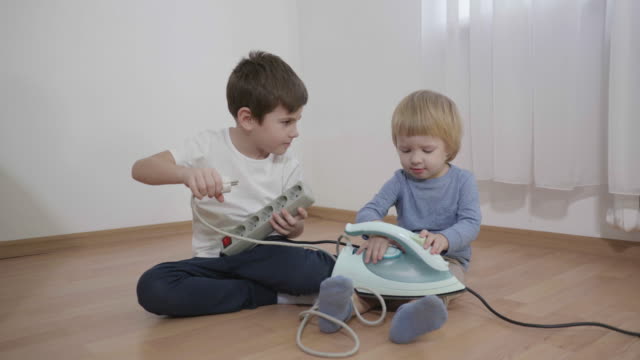 Photo: iStock
“Many people simply aren’t aware of the dangers of leaving children unsupervised. Many accidents also happen because of people’s reckless attitude towards safety,” adds SP Basnet. There’s a sense of invincibility that comes with experience or age, which can prove to be disastrous.
Dr Timilsina says there needs to be better regulation and monitoring of who’s selling pesticides and other hazardous agents, and to whom. An effective tracing system, where anything lethal can be traced back to the seller, could help control its easy market availability. But not everything can be regulated, especially in Nepal where laws are mostly limited to paper and there are roundabout ways to get anything done.
An effective way to curb this problem from snowballing is making people aware of the danger signs and the importance of strict adherence to safety protocols, says Dr Wasti. Radio talk shows and discussions on hazard minimization can make people more attuned to their surroundings. The target, Dr Timilsina adds, should be people who have no access to smartphones since those who lack information are the most vulnerable ones.
Prevention and management of accidents and injuries and deaths due to them is a neglected aspect of healthcare in Nepal. Dr Ramu Kharel, emergency medicine specialist, Brown University, and founder of HAPSA Nepal, a non-profit that has been working to strengthen Nepal’s health system, says emergency healthcare requires specific types of handling and that knowledge is missing in Nepal. “People panic during emergencies, it is human nature,” he says. An emergency hotline where you can call and have an expert guide you, step-by-step, is thus crucial for on-scene management of injuries. This, Dr Kharel adds, helps to control and stabilize a situation on-scene which is the first step of emergency medicine.
“How you handle an accidental case on-scene largely determines its outcome. Sometimes mishandling of cases causes further damage and by the time the patient reaches the hospital, it’s too late,” he says. What’s also crucial is an effective transport system where correct protocols are followed depending on whether it’s a case of poisoning, shock, or falling from trees. These two factors could make treatment hassle-free and efficient after the patient reaches a healthcare facility.
The problem, however, in Nepal is that there aren’t many trained staff or services in emergency management. Our emergency hotlines also don’t function smoothly—you are often made to wait as staff discuss what to do and then given a mobile number which will probably prove to be unhelpful. There isn’t a central helpline like 911 that directs your call to the police, or the ambulance or fire services depending on the nature of your emergency. A lot of precious time is lost trying to get someone to attend to you.
The only way to prevent worsening of accidental injuries and death, Dr Kharel insists, “is by building a system geared towards proper management of emergencies where the emphasis is on pre-hospital care as much as treatment”. But awareness on preventive measures and safety regulations can go a long way in lessening the number of accidental cases Nepal sees year after year.

Border closure wallops Birgunj hotels
Hotels and tourism-related businesses in Birgunj are on the verge of collapsing after tourists stopped coming to the town following the border’s partial closure to prevent the import of Covid-19.
The government sealed the border in March 2020 following a nationwide lockdown to contain the spread of the contagious disease. Although cargo vehicles and pedestrians are allowed to cross the border, Indian vehicles carrying tourists haven’t been allowed in for over a year and half.
“Tourism-related businesses in the Birgunj area have incurred losses of around Rs 1.5 billion after Indian tourists stopped coming,” says Hari Pant, president of the Hotel and Tourism Entrepreneurs Association, Birgunj.
"During the first wave of Covid-19, the industry lost around Rs 500 million. During the second wave, the total loss jumped to over Rs 1 billion." According to Pant, there are more than 70 hotels in operation in Birgunj and 10 more are being built. He says 60 to 80 percent of the customers and tourists who stay in hotels in the Birgunj area are Indians. "Four-five hotels in the bus park area have already been closed and some are preparing to shut," he says, adding that hotels in Birgunj are operating at 25 percent capacity.
Kuber Karki, a member of the association, says 60 percent of hotel workers lost their jobs due to the inability of hotels to operate at full capacity. "We have been unable to pay house rent as well as worker allowances and salaries," he says. Interest on loans and electricity bills are also increasing.
Karki, who runs Hotel Kumu Palace on Link Road, says he will have no choice but to close his hotel if the situation remains unchanged.
Hoteliers have been demanding that the Birgunj border crossing be fully opened as the infection rates have declined across the country, including in Birgunj. The association says the government has ignored their demands.
The association had handed over a memorandum to Parsa’s District Administration Office as well as District Covid Crisis Management Center on June 25 asking for permission to operate hotels, lodges and party palaces in Birgunj. These establishments later opened. Now the association is preparing to meet the prime minister and hand over another memorandum on the border.
A 20-minute documentary has been prepared about the impact of the epidemic and the closure of the border checkpoint on the hotel and tourism businesses in Birgunj, says Madhav Basnet, general secretary of the association.
Rachendra Thapa, manager at country Inn Hotel, says, "Thousands of freight vehicles as well as thousands of Nepali nationals cross over from India via Birgunj every day and they supposedly don’t bring Covid-19. But Indian tourists do? What are they thinking?"

Awards and decorations for Nepali entertainers
On the occasion of Constitution Day on September 19, the government announced the names of the recipients of various medals and decorations for this year.
Actors Keki Adhikari and Anmol KC and singers Prakash Saput and Hemant Sharma are on the list for Janasewa Shri. Comedian Kamal Gaonle, dancer Mahesh Prakash Hada, singer Navin Kumar Poudyal, deaf artist Sujal Bam, dancer Teriya Fauja Magar, artist Shiva Shankar Rijal (Jogendra), Rajkumar Rai, and Maithili artist Ranju Jha have also been chosen for the award.
Folk singer Bishnu Majhi, artists Nawal Khadka, Prakash Ghimire and Ramesh Budhathoki, actors Deepashree Niraula and Hemant Budhathoki, and singers Chandra Prasad Sharma, Kulendra Bishwakarma and Devika Pradhan, and musician Kastup Pant have also been named.
President Bidya Devi Bhandari will confer the medals on the recipients at a later date.


