

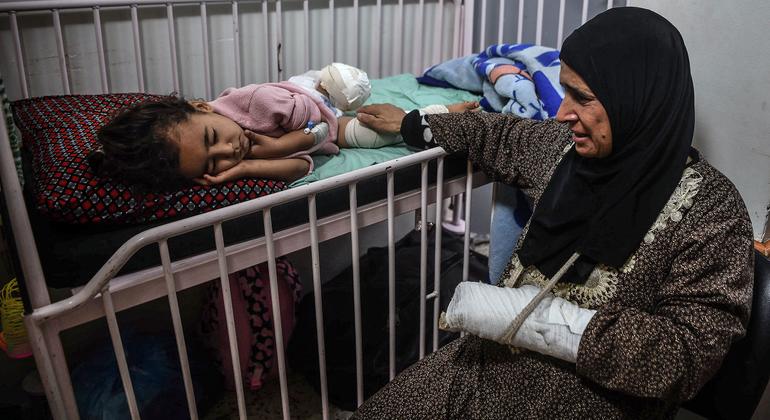


Myanmar earthquakes death toll nears 2,900, with 72 still missing in Thailand

The death toll from the Myanmar earthquakes neared 2,900, while 72 people remain missing in Thailand.
As reported by Myanmar's State Administration Council communications team, the death toll is 2,886, with 4,639 injured and 373 still missing, Xinhua News reported.
In neighboring Thailand, 72 people remain missing in Bangkok, where the search for bodies continues at the site of the collapsed State Audit Office tower block.
Two deadly earthquakes with magnitudes 7.7 and 6.4 shook Myanmar and Thailand last Friday, with the epicenter in the Sagaing region, which apparently experienced the worst damage.
Overnight, Thai and international rescue crews took turns using sniffer dogs and heavy machinery to raise massive concrete blocks to reach the missing people.
A rescue official acknowledged that the teams are restricted in the number of heavy machines they can deploy simultaneously, as doing so could risk shifting large, buried debris.
Around 100 personnel were inside the State Audit Office tower building in Bangkok when it fell on Friday due to tremors from a strong earthquake near Myanmar's Mandalay area.
Several countries provided aid to Myanmar in response to the earthquakes. Japan announced on Wednesday that it was ready to pay $6 million in emergency grants to earthquake victims.
The government has also sent a team of Nepal Army with medical relief after the devastating earthquake in Myanmar last week caused massive loss of human lives.

One dies of altitude sickness at Everest Base Camp
A person died due to altitude sickness at the Base Camp of Mt Everest.
The District Police Office, Solukhumbu identified the deceased as 55-year-old Lanima Sherpa of Gaurishankar Rural Municipality-9, Dolakha district.
According to Deputy Superintendent of Police Dwarika Prasad Ghimire, Sherpa was working at the Base Camp in Khumbu Pasang Lhamu Rural Municipality-4 of the district.
DSP Ghimire said that Sherpa, who fell ill at 7.30 pm on March 30, died at Thukla the next day while being taken to Khumjung Health Post by the horse.

Plastics in our bodies: A growing concern in Nepal
Pervasive presence of plastics in our environment has raised significant concerns globally, and Nepal is no exception. From the deepest ocean trenches to the highest mountains, microplastics and other plastic pollutants have infiltrated ecosystems and, alarmingly, the human body. Plastics, derived from petrochemicals and synthetic materials, are ubiquitous in modern life due to their durability, lightweight nature, and versatility, which have led to widespread use in packaging, textiles, construction, and healthcare. However, plastics present a substantial downside: they do not biodegrade easily. Instead, they break down into smaller particles known as microplastics—particles less than 5mm in size—that have been found in various food items, beverages, and even the air we breathe.
The pathways through which plastics enter the human body are diverse, starting with food sources. In Nepal, the consumption of freshwater fish from the country’s rivers and lakes is a significant avenue for microplastic contamination. Research conducted by the Nepalese Academy of Science and Technology (NAST) revealed concerning levels of microplastics in common fish species, such as Rohu and Catla, which form staple protein sources for many Nepalis. Marine organisms, mistaking microplastics for food, ingest these particles, leading to bioaccumulation up the food chain. When humans consume these fish, they inadvertently increase their microplastic intake, raising potential health concerns.
In agriculture, the practice of using plastic mulch has become commonplace among Nepalese farmers due to its benefits in weed control and moisture retention. However, this practice contributes to plastic pollution in the soil. As plastics decompose, they disrupt the availability of micronutrients essential for plant health, resulting in potential residues on produce grown in contaminated soil that may eventually enter human diets. Furthermore, the rise of packaged food products in urban areas like Kathmandu and Pokhara has increased exposure to microplastics. Many food items are sold in plastic packaging that can leach harmful chemicals into the contents, particularly under high temperatures during storage and transportation. The National Institute of Health and Population (NIHP) recently indicated concerns about certain packaged snacks containing microplastics, contributing to the overall apprehension about their health impacts.
Environmental exposure is another critical pathway. Air pollution in urban centers is a growing health concern, and airborne microplastics have been detected in air samples across Nepal. High levels of construction, vehicle emissions, and industrial activity suggest that individuals may be inhaling microplastic particles. Dr. Anuja Tamang, a pulmonary specialist in Kathmandu, noted that these inhaled particles could lead to respiratory issues and other chronic health conditions. Additionally, water sources in Nepal are increasingly threatened by plastic pollution. Rivers and lakes, often used as dumping grounds for plastic waste, pose a risk of microplastic contamination in drinking water supplies. A recent survey conducted by the Department of Water Supply and Sewerage detected microplastics in drinking water sources across several districts, raising serious concerns about the health implications for consumers.
Daily habits also contribute to plastic ingestion. Personal care products often contain micro plastics, known as "microbeads," found in soaps, scrubs, and toothpaste. Many consumers in Nepal remain unaware that their everyday skincare routines could lead to plastic exposure. Dr. Sabin Sharma, a dermatologist in Kathmandu, encourages consumers to seek out products free from micro plastics, advocating for natural alternatives that pose fewer risks to human health and the environment. Household items made from synthetic materials, such as cleaning supplies and furniture, can also release micro plastics. With regular use, these products can shed tiny plastic fibers into the air, presenting another route of inadvertent exposure over time.
The health implications tied to microplastic ingestion are still under investigation, but research is beginning to uncover potential risks. Studies suggest that microplastics may provoke inflammation, disrupt endocrine functions, and even contribute to various diseases, including cancer, metabolic syndrome, and reproductive issues. In Nepal, where healthcare resources may be limited, the growing burden of plastic-related health problems poses additional strains on the healthcare system. Dr. Pramila Shrestha, a public health expert, emphasizes the urgency of raising awareness regarding these health risks while advocating for more comprehensive studies to understand and mitigate the impact of microplastics on the population.
In conclusion, while the benefits of plastics in modern society are undeniable, the growing challenge of plastic pollution—particularly as it relates to human health—demands urgent attention, especially in resource-limited settings like Nepal. Comprehensive measures, including improved waste management practices, public education campaigns, and regulation of plastic use, are critical to mitigating the impact of plastic contamination in food, air, and water. As the data continues to emerge, it is essential for stakeholders, including policymakers, health professionals, and the general public, to collaborate in adopting sustainable practices that safeguard both human and environmental health.

Bhatbhateni security guard Parajuli honored with cash for retaliating against robbers
The Bhatbhateni Super Market has awarded security guard Krishna Prasad Parajuli.
Security guard Parajali was honored with Rs 511, 000 for retaliating against the people who came to rob the Koteshwor-based Bhatbhateni Super Market during the pro-monarchy protests on March 28.
Appreciating his contribution, the Bhatbhateni Super Market also promoted him by five more grades.
Along with him, other security guards have also been promoted and honored with cash.
Bhatbhateni Super Market owner Min Bahadur Gurung honored them with the cash.
A video of security personnel retaliating against those who came to rob the Bhatbhateni Super Market had gone viral on social media.
Gurung said that the Bhatbhateni Super Market incurred the loss of around Rs 7-8 million from looting and vandalism.


