


‘Paaila’ aims for global footprint
In Durbarmarg, Kathmandu, there is a robot that serves food (at Naulo Restaurant), and another one that is capable of navigating on its own and giving vital information (at the Nepal SBI InTouch branch). Many assume these robots are imported or have only been assembled in Nepal. But they are actually manufactured, in toto, by Paaila Technology, Nepal’s first robotics and artificial intelligence company with the intent of commercially selling robots. Five young graduates of IOE Pulchowk Campus started Paaila Technology in December 2016. At the time, Dipkamal Bhusal, Rabin Giri, Sagar Shrestha, Niraj Basnet and Wasim Akram Khan had each finished their Bachelor’s in Electronics and Computer Engineering. They were all classmates and none of them wanted to leave Nepal despite lucrative offers from abroad. Nor did they want to work for another company.
It was then that they met Aayush Kasajoo and Binay Raut, both from business background. The seven youngsters, all aged between 23 and 26, got together opened their company by renting two small rooms. At first, they did web and software development because that is all the work they got, informs Bhusal, 25, the managing director of Paaila.
That was before Nepal SBI Bank approached them for a robot for its SBI InTouch branch in Durbarmarg. Actually, the bank first approached the Pulchowk Robotics Club in 2017, and the club referred the bank to Paaila. “They asked us to make a robot, within a month, which could do basic things such as greet people,” says Bhusal. As plastic was expensive they used fiber glass. “If we use plastic dye, we need Rs 10 million in just fundamental capital,” adds Bhusal.
In the elaborate process of robot-making, Paaila Technology utilizes local manpower and resources to make robots. “We get the motor from Taiwan. Everything else is made right here in Nepal,” says Bhusal.
Their first robot for the SBI Bank was ready in July 2017. The bank was impressed with their ‘Pari’, and encouraged them to work on a better version of the robot, ‘Pari 2.0’. This latter robot, which was deployed at the bank in April 2019, is an intelligent business assistant robot designed to help bank customers. It is powered with features like face recognition, query answering, automatic docking system and autonomous navigation, and these features can be further enhanced for specific needs. Even museums have shown an interest in Pari. Just this May, Pari was deployed in the BP Koirala Memorial Planetarium Observatory and Science Museum at Kirtipur. At the inauguration ceremony of the museum, Pari, renamed Fulmaya by the museum, hosted the program. Fulmaya can answer some general knowledge questions, reply to queries about the museum, and guide visitors.
Between all this, in May 2018, Paaila also opened their own restaurant, Naulo, at Durbarmarg in order to test a service robot named Ginger. Ginger is already generating interest from buyers in Egypt, Singapore, India and China. “Every week, we get at least two queries about Ginger from abroad,” reveals Bhusal.
There has been such interest in Ginger as this service robot requires no human intervention to function. “Mostly, robots need to be told or touched in order to give them instructions. But we have made an independent system. Suppose there are four robots and there is a master robot. The master robot gets notified of food being ready in the kitchen. It communicates with other robots internally and sends signal to a free and nearest robot to go to pick-up region. This robot picks up food and delivers it to the table. If there is no work, the free robot goes to the charging station,” says Bhusal.
Currently Paaila plans to export Ginger for $9,800 and Pari for $20,000 apiece. Their target is to export at least eight Ginger robots and two Pari robots a month. With the queries they are receiving, Bhusal says they could export 10 to 15 service robots a month. But first the company wants to make the use of plastic fiber in robots commercially viable. They also want to have a dedicated support team in the country they are exporting to. Bhusal hopes that they will be ready to do so within the next nine months.
Paaila Technology wants to sell Naulo Restaurant as a franchise so if you want to buy Ginger, you would have to buy the whole franchise. But what if someone wants to buy a specific type of robot? Bhusal says they can try but it all depends on the available human resources. With 17 members in their team, they are currently capable of tweaking existing models. “But developing an entirely new robot may not be beneficial for our business in the long run,” Bhusal says.

Shun terror, start talking
As Finance Minister Yubaraj Khatiwada outlined the roadmap to the country’s prosperity in the federal parliament on May 29, many Nepalis were preoccupied with the bomb blasts in the national capital just a few days earlier. Many wondered why the government and the Communist Party of Nepal (CPN) led by Netra Bikram Chand ‘Biplob’ were not talking. But talking about what? The party’s demands are either vague or too radical. When APEX asked Chand about his demands, he replied: “The long and short of it is that we want an end to the way the crony capitalist class is impoverishing the people and bankrupting the country by capturing the economic, political and cultural arena and key sectors like education, health and real estate.”
Typical communist-speak. But what exactly does ending the reign of the ‘crony capitalist class’ entail? Wholesale nationalization of health and education? His party has also been bombing and taking ‘physical action’ against multinationals, which it accuses of sucking the country dry. Apparently, kicking them all out is the only viable option. Another of his contentions is that top Maoist leaders like Pushpa Kamal Dahal and Baburam Bhattarai ‘betrayed’ the revolution when they agreed to lay down arms in 2006. His party will thus push for the conclusion of the ‘incomplete people’s war’.
As Home Minister Ram Bahadur Thapa informed the parliament recently, the CPN has over the past few years been busy raising a militia to wage yet another bloody revolution. The party has been openly extorting businesses and NGOs to add to its war-chest. It has killed innocent people and made life difficult for everyone, and in doing so it is behaving more like a criminal outfit than a political party.
Yes, the Oli government has been rather harsh in dealing with Chand’s party. But it is also disingenuous of Chand to claim there has been no initiative for talks from the government’s side. Chand himself admits that there were many ‘informal’ approaches, which apparently amounted to nothing. It isn’t hard to guess why. In his own words, “we are not afraid of talks, but we are not convinced that they will address the issues raised by our revolution.”
The government should always be open for talks with a political party that has legitimate political demands. But how can there be meaningful talks when Chand refuses to abandon his violent and criminal ways? If the CPN wants the government and the civil society to consider it a credible political outfit, it should foreswear violence and declare itself ready for unconditional talks.

A ‘populist’ budget
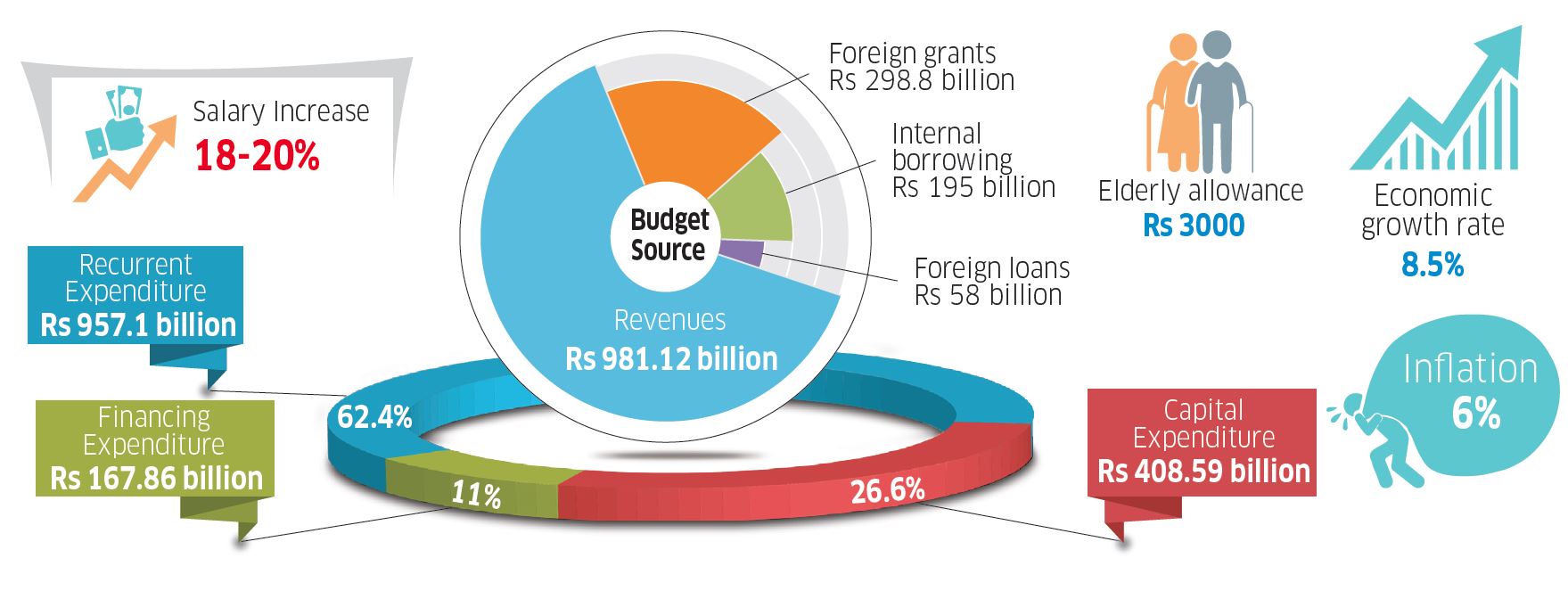
On May 29, Minister of Finance Dr Yubaraj Khatiwada unveiled a budget of Rs 1.53 trillion for the fiscal 2019/2020. The budget, which exceeds the current fiscal’s value by Rs 217 billion, has been termed ‘populist’ by some financial analysts while others have given it the tags of ‘over-ambitious’ and ‘unrealistic.’ Unveiling the fiscal budget in the federal parliament, Minister Khatiwada announced the government’s aim of achieving the ‘middle-income country’ status by 2030 while the economic growth rate for the coming year has been set at 8.5 percent, 1.5 percent more than the current year’s revised target. The targeted inflation is 6 percent.
What have become dearer?
Normally, prices of certain luxury goods increase with the yearly budget and the coming fiscal is no exception. Here’s a list of what will cost you more, and by how much.
| Petrol/Diesel (per liter) | Rs 1.5 |
| Telephone connection rate | Rs 500 |
| Casino royalty | 30 percent |
| Local beer (per liter) | Rs 165 |
| All Whisky/Vodka (per liter) | Rs 920- Rs 1,325 |
| Imported Wine (per liter) | Rs 370- Rs 430 |
| Domestic Wine (per liter) | Rs 135 |
| Brandy (per liter) | Rs 165 |
| Tobacco (per kg) | Rs 95 |
| Chewing tobacco (per kg) | Rs 610 |
| Cement (per ton) | Rs 220 |
| Mobile Phones | 2.5 percent |
| Cigarette (per carton) | Rs 495-Rs 2,715 |
| Juice (per liter) | Rs 11 |
| Pan masala (per kg) | Rs 610 |
| Kurkure/Lays (per kilo) | Rs 17 |
| Betel nut (per kilo) | Rs 225 |
| Energy drinks (per liter) | Rs 30 |
Highlights of the budget 2019/2020
- Rs 60 million for each MP to develop his constituency
- Elderly allowance increases by Rs 1,000, to Rs 3,000 a month
- Civil employees’ salaries raised by up to 20 pc
- Increased the tax threshold on individual income from Rs 350,000 to Rs 400,000
- Rs 130 billion for provincial and local levels
- Over Rs 43 billion allocated for drinking water and hygiene
- Rs 23.6 billion allocated for irrigation programs
- Rs 163 billion appropriated for Railway and Waterways
- Rs 400 million appropriated for ‘improvement’ of Bir Hospital

Entire ward without land ownership certificates
By Parmananda Pandey | Tikapur
Setraj Budha’s family moved to Tikapur in Kailali, a district in the western plains, from the hill district of Achham, in 1964. Many from his village had migrated to Tikapur around the same time. Together, they cleared the forest and have been farming and living in the land ever since. Interestingly, none of them have land ownership certificates.
Bhim Mahar lives and does farming in the same ward. His father Gagan Singh Mahar had migrated there from the hills. He had made the area his home after the District Forest Office, Kanchanpur, back in the mid-60s, gave migrants the go-ahead to “clear forest areas and settle”. Gagan Singh then built a house and raised his children there, but passed away without getting a land certificate.
Around 2,000 hectares of land in Ward 8 of Tikapur is officially not owned by anybody
Settlers in 80 percent of the land in Ward 8 of Tikapur are without a land certificate, even though they have been living there for years. Some have a certificate, but their land cannot be found in official records. Around 2,000 hectares of land in the ward is officially not owned by anybody.
“We made several efforts to solve this problem but to no avail,” says Ammar Bahadur Saud, a local, who does have a land ownership certificate, but his land is not found in official records.
Ward chair Dirgha Thakulla says, “Officials from the survey department have visited us multiple times, and taken measurements thrice, but they are yet to issue certificates.”
Lack of certificates greatly inconveniences the locals. For instance, they do not get subsidies from the agriculture ministry. “We have been unable to split or sell the land that we have had from our grandfather’s time. This has even led to family feuds,” says Sher Bahadur Budha, another local. Tikapur also shares a border with India and disputes over border issues erupt from time to time
‘Land ownership certificates for everyone within the next four years’
By Laxman Pokhrel | Butwal
The federal government has expressed its commitment to provide land ownership certificates within the next four years to all landless squatters living haphazardly in various urban settlements across the country. Minister for Land Management, Cooperatives and Poverty Alleviation Padma Aryal promised that the government would give priority to squatters who own land but do not have certificates to prove ownership, and to those living in unmanaged settlements.
On May 26, 464 land ownership certificates were distributed in Sainamaina municipality
She informed that the government’s drive to distribute land ownership certificates has already started. It began on May 26 from Buddhanagar in Sainamaina municipality in Rupendehi district. On that day, as many as 464 land ownership certificates were distributed. Minister Aryal said the drive would be expanded to other districts as well and reiterated the government’s promise to solve the problem of landless squatters during its tenure.

Quick questions with Keki Adhikari
Q. When you are down, what keeps you going?
A. The love I get at the very next step.
Q. What does your perfect day entail?
A. Giving my best shots on the set.
Q. Who would be your dream crew?
A. Working with Deepak Raj Giri dai and Deepa Shree Niraula di, which has already come true for me!
Q. How do you deal with negativity on social media?
A. I consider it, if I think it will improve me and ignore it otherwise.
Q. What is the weirdest or the best thing a fan has ever done for you?
A. Going crazy over my social media posts and fighting with each other over negative comments people make on my posts.
Q. What would be your superpower?
A. Vanishing whenever I want and reaching places where nobody can see me.
Q. What is an issue you feel deeply about and wish to highlight?
A. Equal pay for both genders.
Q. What comes to your mind when you hear the word ‘fame’?
A. Love and care. Getting recognized wherever you go.
Q. One Nepali celebrity you absolutely admire and why?
A. Priyanka Karki for being unapologetically herself.

Vault of history XIII: Singh, the uber-opportunist
General Nara Shumsher Rana was aghast when he heard K.I. Singh’s plan to oust the king. Singh had made Rana swear on the Gita to keep the plan a secret. But the vow did not stand a chance in the face of such an enormous conspiracy. When Rana revealed the plan to King Mahendra, the monarch said to him, “I didn’t think Singh was such a bad egg. Don’t worry, I’ll take care of it.” A few days later, Mahendra dissolved Singh’s cabinet.
Singh claimed he was made a victim of a conspiracy because he wanted to take action against those who plundered state coffers. He was trying to initiate a property audit by setting up a ‘Transaction Examination Commission’, which the palace had okayed. But his government was dissolved before he could do so. He had also tried to legally challenge his defeat in the 1959 general elections, including by inviting Indian legal experts to Nepal, again to no avail.
K.I. Singh desperately wanted to be prime minister again, but the palace—considering his rebellious nature—did not oblige
K.I. Singh was among the first politicians to welcome the December 1960 royal coup against the elected government. He was happy and optimistic about the downfall of the multi-party system and the advent of the Panchayat regime. Singh considered the parliamentary system ‘inauspicious’.
Although he was arrested in the royal coup, he was released after eight days. As a reward for his support to the Panchayat regime, King Mahendra nominated him as the chairperson of the Royal Council, a post that Singh had coveted. Singh also wanted to be placed higher in the political hierarchy than the deputy chairperson of the royal cabinet. According to Surendra Pratap Shah, then Royal Council Secretary, Singh asked King Mahendra whether he would be above “that sanyasi” in the hierarchy. (Singh was referring to Tulsi Giri.) Mahendra replied, “Each person is important in their own place. You will preside over the Royal Council, which Giri will attend. But he will be above you in hierarchy.” (Nepal Weekly, 23 October 2011).
Singh had been declared chairperson of the Royal Council, but before he took the oath of office, he announced his resignation, saying, “I cannot work under such a sanyasi. I would rather not be the chairperson.” The palace did not take Singh’s resignation favorably. Public expressions demanding action against those who defied royal edict were also being voiced.
Singh became disenchanted with the Panchayat regime when he could not get what he wanted. In February 1964, he announced a Satyagraha (passive resistance), arguing that corruption had worsened under the regime, that people were imprisoned without trial and that citizens were declared anti-national and barred from entering the country. This posed a challenge to the regime, which responded by arresting Singh.
He served a two-year prison sentence, after which he again joined the royal regime—first by entering local politics in his home district of Doti and subsequently by being elected a member of the National Panchayat. Singh desperately wanted to be prime minister, but the palace—considering his rebellious nature—did not oblige.
On 9 July 1979, he resigned from the National Panchayat and began advocating a multi-party system in the run up to the May 1980 national referendum. He made fiery speeches and left no stone unturned to discredit the Panchayat regime, going so far as to sling mud at high-level Panchas and accuse particular individuals of being ‘smugglers’ and ‘characterless’.
But after the referendum produced a victory for the Panchayat system, Singh saw that the days of the regime were not numbered. And he contested an election to the National Panchayat from the district of Rupandehi, where he had once waged a democratic rebellion. He won with flying colors, and was even considered a strong candidate for prime minister. But the palace wanted to continue with Surya Bahadur Thapa, as a reward for his role in the Panchayat’s victory in the referendum.
K.I. Singh died of cancer on 4 October 1982 while undergoing treatment in Bangkok. He was 75. In his political life, he received many appellations, such as ‘revolutionary’, ‘rebel’, ‘dacoit’, ‘capitulator’, ‘compromiser’ and ‘opportunist’.
The next column in the ‘Vault of history’ series will discuss the Indian military posts set up on the border with China, partly to contain K.I. Singh who was thought of as close to Beijing

It's time to play tennis
Did you know that playing tennis is just about the perfect whole-body exercise? If you are a fan of Roger Federer or Serena Williams, you know it’s a fun sport too. So why don’t you pick up a racket and start today? Here are three places you can both play and train in this global sport.
Hem’s Tennis Academy In Kathmandu
Open from 6 am to 6 pm, Hem’s, located at Tukucha Marg, Baluwatar, is the place to go if you want to learn tennis as a novice. The academy offers tennis lessons every morning from 7 am to 8 am on weekdays for just Rs 5,000 a month. Not a morning person? You may also choose when you want to practice or learn tennis and join an hourly class. Per hour charge is Rs 700, whether you play by yourself or choose a coaching option. They will even customize training for you! Call 986-1944476 for further inquiries.
Nepal Tennis Association In Kathmandu
This tennis court in Chapagaun Marg, Satdobato, Lalitpur, being run by Nepal Tennis Association, a non-profit, is easy to spot. Play or hone your tennis skills under the guidance of the official guardians of Nepali tennis. Hourly classes starts from Rs 500. The rate varies depending on who you are learning from. If you want to just play tennis, the hourly rate is Rs 150. For more information, call 01-5202144.
Pokhara-Kaski District Lawn Tennis Association In Pokhara
This association aims to provide all tennis-related facilities to people of Pokhara from all ages and social backgrounds. Located at Pokhara Rangasala in Prithivi Chowk, the association organizes a number of local tennis events you can participate in. If you want to book the court for an hour, it will cost you Rs 500. If you want to join classes, monthly fee ranges from Rs 5,000 to Rs 15,000 depending on the coach. Call 980-6563478 for further information.

Quick questions with Nishan Chauhan
Q. If you could have coffee with one celebrity, who would it be and why?
A. Akshay Kumar, because he blurs the line between an on-screen hero and a real life one.
Q. What makes a perfect day for you?
A. Hitting the gym, having a healthy diet and rest!
Q. What suggestion would you like to give to people who are hitting the gym right now?
A. Don’t give up. Push yourself harder and remember that the pain you feel today is the strength you will have tomorrow.
Q. What would be your superpower?
A. To detect lies. Not the flashiest superpower, but it would get the job done.
Q. If you had only one day left to live, how would you spend it?
A. In spite of being a foodie, I follow a very strict diet plan. If it was my last day, I would eat all food that I crave.
Q. What is the most difficult thing for you as a model?
A. The attention and the pressure to maintain a perfect body. Skin and hair needs to be always ready for the job!
Q. How do you maintain the discipline required for bodybuilding?
A. By ignoring negativity and working hard on myself.
Q. What would you like to say to people who are unhappy with their bodies?
A. You are never too late to do anything. Start a healthy life from today!


