


Minister for Culture, Tourism and Civil Aviation Prem Ale resigns
Minister for Culture, Tourism and Civil Aviation Prem Ale resigned from his post on Sunday.
He handed over his resignation letter to Chairman Madhav Nepal in the party office, Chairman Nepal's Secretariat said.
Withdrawing his signature from the group 10 CPN (Unified Socialist) lawmakers who had submitted a memorandum expressing dissatisfaction over the party's decision to reshuffle ministers on Friday, Ale said that he would resign within 24 hours.
Ale, who handed over his resignation letter to Chairman Nepal, is preparing to organize a press conference.
Earlier on June 5, the Secretariat meeting of the CPN (Unified Socialist) had decided to recall the ministers representing the party in the government.
But, Prime Minister Sher Bahadur Deuba and CPN (Maoist Centre) Chairman Pushpa Kamal Dahal said that the CPN (US)'s decision to reshuffle the ministers will be implemented after the completion of budget discussions.
A Central Committee meeting held on Saturday had decided that the party would not wait for Prime Minister Deuba and Dahal now and would take the delay as an insult.

Government cuts public transport fares
A day after the Nepal Oil Corporation (NOC) slashed the prices of petroleum products, the Department of Transport Management reduced the public transportation fares on Sunday.
The department reduced the fares of public transportation plying in the inter-state with effect from today.
The NOC had slashed the prices of petrol by Rs 20 per liter and diesel and kerosene by Rs 29 per liter.
The department has reduced the public transportation fares by 5. 41 percent.
Similarly, the department has also reduced the fares by 6. 97 percent and 7. 68 percent for cargo carriers serving routes in the hills and the Tarai respectively.

Woman found dead in Jajarkot
A woman was found dead in a jungle in Jajarkot.
Bhagwati Shahi (42) of Nalgad Municipality-1 was found dead in the jungle near her house.
Locals informed police after the body started stinking.
Looking at the nature of the body , police said that the woman died or murdered a week ago.
DSP Santosh Niraula of the District Police Office said that they are investigating the case.
He said that police have taken Shahi's husband under control for interrogation.

Fire breaks out near tower of Bharatpur Airport
A fire broke out near the tower of the Bharatpur Airport on Sunday.
The flame that broke out this morning was taken under control within 10 minutes.
There will be no obstruction in the take off and landing as there was no damage to the tower due to the fire, Information Officer at the District Police Office, Chitwan Narhari Adhikari said.
He said that the fire broke out near the tower at around 4 am due to a short circuit.

Monkeypox not a global emergency 'at this stage': WHO panel
The World Health Organization said the escalating monkeypox outbreak in more than 50 countries should be closely monitored but does not warrant being declared a global health emergency, Associated Press reported.
In a statement Saturday, a WHO emergency committee said many aspects of the outbreak were "unusual" and acknowledged that monkeypox - which is endemic in some African countries - has been neglected for years.
"While a few members expressed differing views, the committee resolved by consensus to advise the WHO director-general that at this stage the outbreak should be determined to not constitute" a global health emergency, WHO said in a statement.
WHO nevertheless pointed to the "emergency nature" of the outbreak and said controlling its spread requires an "intense" response.
The committee said the outbreak should be "closely monitored and reviewed after a few weeks." But it would recommend a re-assessment before then if certain new developments emerge - such as cases among sex workers; spread to other countries or within countries that have already had cases; increased severity of cases; or an increasing rate of spread.
WHO Director-General Tedros Adhanom Ghebreysus convened the emergency committee on Thursday after expressing concern about the epidemic of monkeypox in countries that haven't previously reported the disease, according to Associated Press
"What makes the current outbreak especially concerning is the rapid, continuing spread into new countries and regions and the risk of further, sustained transmission into vulnerable populations including people that are immunocompromised, pregnant women and children," the WHO chief said.
Monkeypox has sickened people for decades in central and west Africa, but until last month, the disease had not been known to cause significant outbreaks in multiple countries at the same time and involving people with no travel links to the continent.
Declaring a global health emergency means that a health crisis is an "extraordinary" event requiring a globally-managed response and that a disease is at high risk of spilling across borders. WHO previously made similar declarations for diseases including COVID-19, Ebola in Congo and West Africa, Zika in Brazil and the ongoing effort to wipe out polio.
The emergency declaration mostly serves as a plea to draw more global resources and attention to an outbreak. Past announcements have had mixed impact, given that WHO is largely powerless when trying to convince countries to act.
WHO said this week it has confirmed more than 3,200 monkeypox infections in about 40 countries that haven't previously reported the disease. The vast majority of cases are in men who are gay, bisexual or have sex with other men and more than 80% of the cases are in Europe.
A leading WHO adviser said last month the spike in cases in Europe was likely tied to sexual activity by men at two raves in Spain and Belgium, speculating that its appearance in the gay and bisexual community was a "random event." British officials have said most cases in the U.K. involve men who reported having sex with other men in venues such as saunas and sex clubs.
Scientists warn that anyone in close, physical contact with someone infected with monkeypox or their clothing or bedsheets is at risk of catching the disease, regardless of their sexual orientation, according to Associated Press.
People with monkeypox often experience symptoms like fever, body aches and a rash; most recover within weeks without needing medical care.
Monkeypox in Africa mostly affects people who come into contact with infected wild animals, like rodents or primates. There has been about 1,500 reported cases of monkeypox, including 70 deaths, in Congo, Cameroon and the Central African Republic.
To date, scientists haven't found any mutations in the monkeypox virus that suggest it's more transmissible or lethal, although the number of changes detected show the virus has likely been spreading undetected for years.
The version of the disease transmitting beyond Africa typically has a fatality rate of less than 1%, while the version seen in Africa can kill up to 10% of people affected.
WHO is also creating a vaccine-sharing mechanism for monkeypox, which could see vaccines go to rich countries like Britain, which currently has the biggest outbreak beyond Africa.
Some experts warned that could entrench the deep inequities seen between rich and poor countries during the coronavirus pandemic.
"France, Germany, the US and UK already have a lot of resources and plenty of vaccines to deal with this and they don't need vaccines from WHO," said Dr. Irwin Redlener, an expert in disaster preparedness and response at Columbia University, according to Associated Press.
"What we should be doing is trying to help the countries in Africa where monkeypox has been endemic and largely neglected," he said. "Monkeypox is not COVID, but our attention should not be so distorted that it only becomes a problem when it is seen in rich countries."
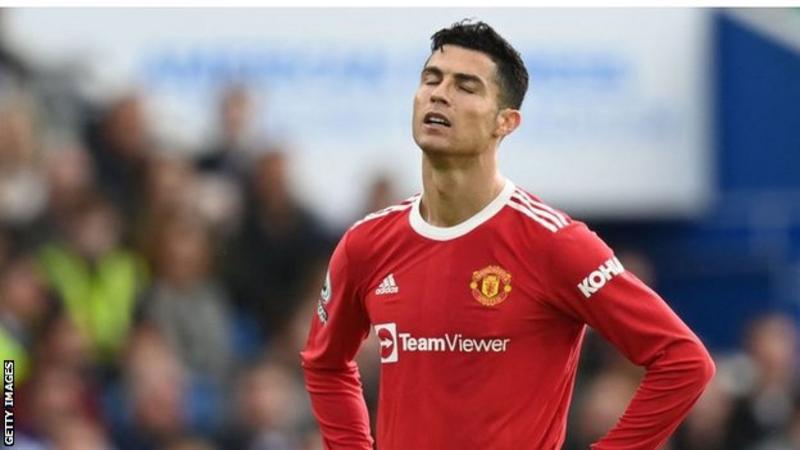
Cristiano Ronaldo: Manchester United expect forward to stay despite Chelsea links
Manchester United expect Cristiano Ronaldo to be part of their squad next season despite reports linking him with Chelsea, BBC reported.
The Portuguese forward's agent Jorge Mendes met new Blues chairman Todd Boehly last week and Ronaldo was said to have been part of the discussions.
United sources feel there was nothing untoward in the meeting as Mendes advises a huge number of top players.
They are adamant that the 37-year-old is not for sale.
The five-time Ballon d'Or winner still has a year left on his Old Trafford contract and is expected to be a central figure in new manager Erik ten Hag's squad for the coming season.
Ronaldo was one of few players to escape severe criticism at United last term, according to BBC.
However, although he finished third in the Premier League's Golden Boot standings with 18 goals, there were claims that his presence prevented United from adopting a high-pressing game, which contributed to their dismal form.

G7 face battle for unity as cost of Ukraine war mounts
The Russian war against Ukraine will inevitably dominate the summit of G7 nations in Bavaria, BBC reported.
And the leaders of the US, UK, Germany, France, Italy, Canada and Japan face a difficult challenge.
They are aiming to put on a show of unity and resolve over the war. In recent months, the Western alliance has shown signs of strain and fatigue.
Some voices - particularly in France, Germany and Italy - have asked if it might not be better for the war to end, even if it came at the cost of Ukraine having to cede territory. A recent cross-Europe opinion poll suggested some voters put solving the cost-of-living crisis ahead of punishing Russia.
Others argue about the need to salvage some kind of relationship with Russia in the future.
Countries like the UK, Poland and the three Baltic States have been resisting these arguments, saying that any peace deal with Moscow that is not on Ukraine's terms would lead to further Russian aggression in the future. President Zelensky is likely to reinforce this argument when he addresses the summit virtually on Monday, according to BBC.
So the G7 leaders are expected to try to use the summit to clear these muddy waters, promising more weapons to Ukraine and more sanctions against Russia. The idea will be to send a signal to Russian President Vladimir Putin that the West has the strategic patience to maintain its support for Ukraine, even if it faces domestic political pressure at home from voters concerned about rising prices.
The problem for G7 leaders is they also face growing pressure to show they are tackling the global economic crisis. The soaring price of fuel and food is causing hunger and unrest across the world. And some countries are pointing the finger at the West.
Many countries in the global south do not share Western concerns about Russian aggression. They see the conflict as a European war and seem unmoved by Western arguments that Vladimir Putin is acting as a colonial aggressor. And they blame Western sanctions - as much as Russia's invasion - for the rising costs of gas and oil, and the massive shortage of wheat and fertiliser.
To try to resist this narrative, G7 countries are expected to use the summit to show they are acting to help countries round the world - with development aid, debt restructuring, climate finance, help finding alternative sources of energy and, of course, fresh efforts to get grain out of Ukraine's ports. That is why German has invited the leaders of India, Indonesia, Senegal, Argentina and South Africa to the summit, to hear their perspective and show the rest of the world the G7 is listening.
So on the one hand, these Western leaders must show resolve to keep backing Ukraine, and on the other, they must show a readiness to fix the global economic shocks that some blame, in part, on the war, BBC reported.
One senior US official described the dilemma thus: "How do we maximise pain on Putin's regime? How do we minimise spillbacks back to the rest of the world?"
That is quite a circle to square.

Protesters at US Supreme Court decry abortion ruling overturning Roe v. Wade
Hundreds of protesters descended on the US Supreme Court on Saturday to denounce the justices' decision to overturn the half-century-old Roe v. Wade precedent that recognized women's constitutional right to abortion, Reuters reported.
The sweeping ruling by the court, with a 6-3 conservative majority, is set to vastly change American life, with nearly half the states considered certain or likely to ban abortion. Conservative Justice Clarence Thomas suggested the court's reasoning could also lead it to reconsider past rulings protecting the right to contraception, legalising gay marriage nationwide, and invalidating state laws banning gay sex.
The crowd featured both abortion opponents wearing T-shirts reading “I am the Pro-Life Generation” and abortion rights supporters chanting “my body, my choice.”
“The Supreme Court has made some terrible decisions,” Democratic President Joe Biden said on Saturday.
He added that the White House would look to police how states enforce bans, with administration officials having already signaled they plan to fight attempts by states to ban a pill used for medication abortion.
“The decision is implemented by states,” Mr. Biden said. “My administration is going to focus on how they administer and whether or not they violate other laws.”
Christian conservatives had long fought to overturn Roe, with Friday’s ruling a cherished win that was the result of a long campaign to appoint anti-abortion justices to the top court. The ruling had the support of all three justices appointed by former President Donald Trump, according to Reuters.
It is at odds with broad public opinion. A Reuters/Ipsos poll last month found that about 71% of Americans - including majorities of Democrats and Republicans - said decisions about terminating a pregnancy should be left to a woman and her doctor, rather than regulated by the government. That support is not absolute: 26% of respondents polled said abortion should be legal in all cases while 10% said it should be illegal in all cases, with the majority supporting some limits.
The ruling will likely influence voter behavior in the Nov. 8 midterm elections, when Mr. Biden's Democrats face a high risk of losing their razor-thin majorities in the House of Representatives and possibly the Senate. Some party leaders hope the decision will win over suburban swing voters, though activists expressed disappointment and demoralization at suffering such a defeat while their party held total power in Washington.
“They can ask for vote for more power but don’t they already have the Congress and the White House?” said Patricia Smith, a 24-year-old supporter of abortion rights, who was headed to the Supreme Court to protest. “They have not been able to pass much in terms of legislation despite the power, so what is the point?”
The decision came just a day after the court issued another landmark ruling finding that Americans have a constitutional right to carry a concealed gun for protection — leading them to invalidate a New York state law that set strict limits on concealed carry permits.
The two rulings showed an aggressively conservative court ready to flex its muscle and remake American life at a time when Congress is often deadlocked and struggles to pass major policy changes, Reuters reported.
It also signaled that Chief Justice John Roberts, a conservative who preferred to act incrementally, no longer holds the power to slow the court's action. Roberts had voted to support the Mississippi abortion ban that was the subject of Friday's decision, but did not vote to overturn Roe itself.
During a call with journalists on Saturday, a group of Democratic state attorneys general said they would not use their offices to enforce abortion bans.
“We are not going to use the resources of the Wisconsin Department of Justice to investigate or prosecute anybody for alleged violations of the 19th century abortion ban,” said Josh Kaul, that state’s attorney general. “I’ve also encouraged district attorneys, sheriff prosecutors and police chiefs in our state not to use their resources to investigate or prosecute abortions.”
The White House on Saturday said it would challenge any efforts by states to restrict women’s ability to travel out of their home state to seek an abortion, according to Reuters.


