


Mind Matters | Emotionally fragile
I cry over the littlest of things especially when I’m criticized by my family. I don’t mean to but I get hurt easily. I know this isn’t the right response and I want to work on it. I know this will also affect my relationship with my family members and I don’t want that. What can I do?
Answered by Rishav Koirala, researcher and physiatrist
It’s not uncommon for individuals to experience strong emotional reactions, such as crying, when faced with criticism, particularly from family members. These emotional responses can be influenced by a combination of personal sensitivities and the deep emotional connections inherent in familial relationships. The impact of persistent emotional distress, especially when rooted in familial criticism, can extend beyond the immediate moment, potentially contributing to the development or exacerbation of mental health issues like anxiety or depression.
To effectively address these emotional challenges, it’s crucial to engage in a multifaceted approach. Firstly, acknowledging and accepting these emotions without self-blame is essential. Emotions are complex, and allowing oneself to feel without judgment is the starting point for understanding and managing them.
Taking time to reflect on the specific triggers within the criticism can provide valuable insights. Understanding what aspects of the criticism evoke such strong emotional responses can help uncover underlying concerns or insecurities. This self-awareness can then serve as a foundation for developing strategies to cope with and navigate these triggers.
Building effective communication skills is another key aspect of managing emotional responses within the family dynamic. Expressing one’s feelings and needs openly and honestly can foster a deeper understanding among family members, potentially reducing the likelihood of misunderstandings and conflicts.
Exploring and adopting coping strategies tailored to individual preferences is crucial. This might involve activities such as mindfulness, journaling, or engaging in hobbies that provide a sense of joy and relaxation. Building a personalized toolbox of coping mechanisms enhances one’s ability to manage emotions effectively.
In cases where emotional responses persist and significantly impact well-being, seeking professional support is highly advisable. Therapy or counseling provides a safe and supportive environment for individuals to delve deeper into their emotions, understand underlying issues, and develop practical strategies for improved mental health. Prioritizing emotional well-being is a fundamental aspect of self-care, and with the right support, individuals can work towards building resilience and navigating family dynamics more effectively.
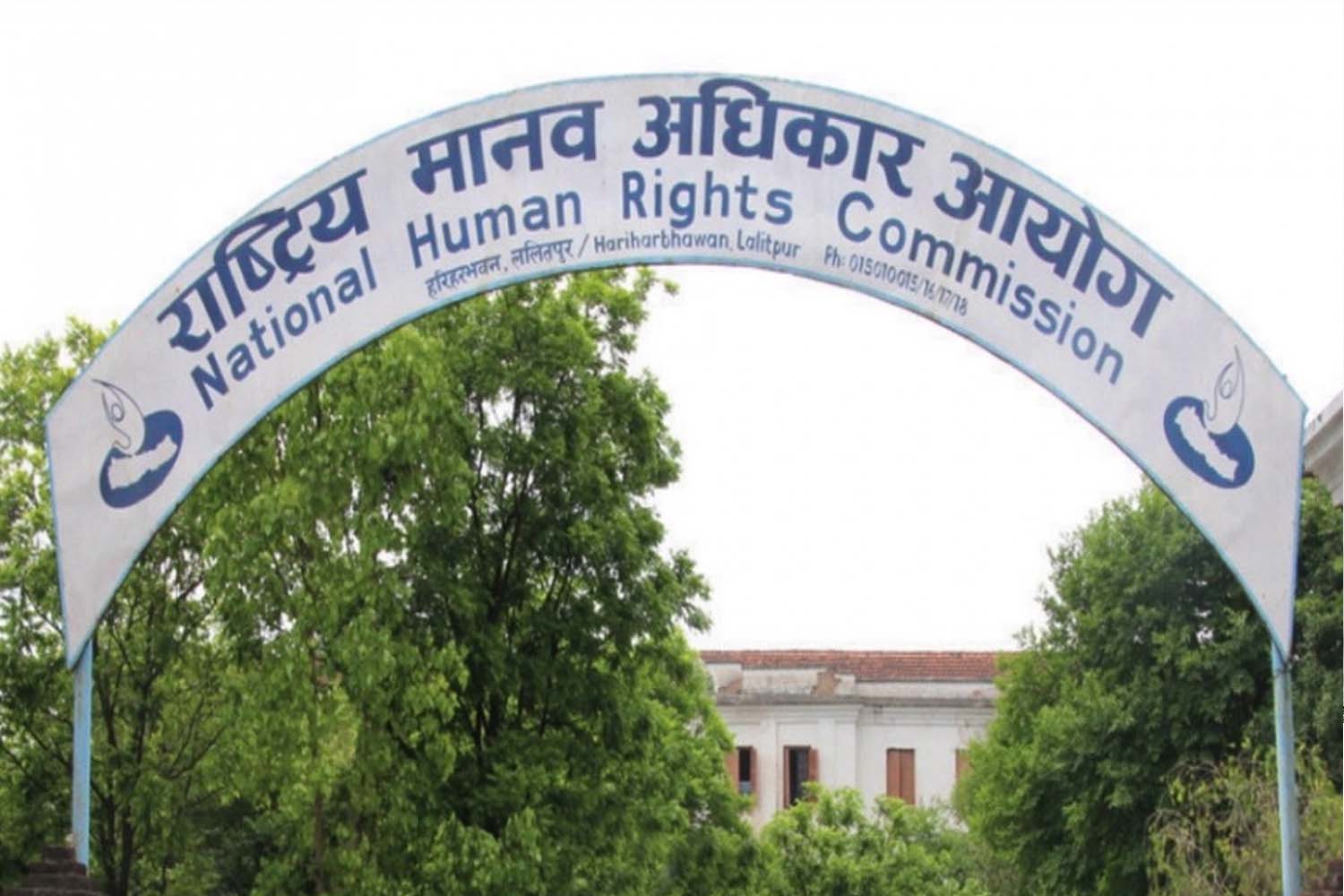
Stop making hateful remarks, using unnecessary force: NHRC
The National Human Rights Commission (NHRC) has said that its attention has been drawn towards the hateful remarks made public in various social media platforms after the demonstrations held by Yuwa Sangh, the youth wing of CPN-UML, and businessman Durga Prasain under the “Rastra, Rastriyata, Dharma-Sanskriti and Nagarik Bachau Andalon.”
The commission said that it on Friday monitored Tinkune area, the venue Prasain had announced to stage a demonstration today, and the area of Bhaktapur-based Durga Prasain’s residence.
During the monitoring, the rights watchdog found the security personnel arresting the people gathered at Tinkune for the demonstration.
The Commission urged the security agencies not to use unnecessary force on protesters.
While addressing the programs on Thursday, both sides made hateful remarks targeting each other against the Constitution, law and human rights, leading to a clash in Balkhu which left some people injured, the Commission said in a statement.
The Commission said that it has found posters and audio-visual materials along with hateful remarks against high-ranking state officials made public in various social media sites.
The constitutional rights watchdog concluded that these kinds of hateful activities are against Nepal's Constitution, national and international laws and against the spirit of human rights.

CESIF organizes round table discussion on Nepal-India bilateral relations
Centre for Social Inclusion and Federalism (CESIF) organized a round table discussion on Nepal-India bilateral relations, focusing on the Prime Minister’s visit to India from May 30 to June 3, 2023. The discourse brought together distinguished parliamentarians, experts, journalists, former bureaucrats and diplomats.
Raj Kishor Yadav, chairperson of the International Relations and Tourism Committee at the House of Representative, was the chief guest speaker of the discussion.
Similarly, former Minister for Energy, Water Resources and Irrigation and lawmakers Barsha Man Pun, Udaya Shumsher Rana and Sunita Baral were the prominent speakers of the event.
The Prime Minister’s official visit to India last May/June further strengthened Nepal-India close ties in many fronts, including power trade, cross-border infrastructures, among others.
The visit was noted by many as a fruitful development to the existing relations; however, the burden now falls upon the implementation of the deals and agreements signed. The discussion was aimed at critically analyzing the visit and reviewing the implementations of the deals and agreements reached, reads a statement issued by Centre for Social Inclusion & Federalism.
The dialogue was moderated by the Executive Chair of CESIF, Ambassador Vijay Kant Karna.
In his opening remarks, he reflected that the visit showed an increased political trust as evidenced by PM Modi’s pledge on border issues to be resolved through dialogues. “Nonetheless, controversial issues like border disputes demand considerable preparation and consensus from both sides,” Ambassador Karna analyzed.
The dialogue brought together diverse views from the parliamentarians and participants, according to the statement.
Lawmaker Baral expressed satisfaction regarding economic perks that were achieved during the PM’s visit to India.
Likewise, lawmaker Pun agreed on the fact that slowly and gradually, an environment of trust is being witnessed which has obvious economic perks.
Similarly, lawmaker Rana emphasized on compartmentalizing structural and economic issues while dealing with India. “Issues like border disputes require a long-term solution, and the present concentration should be on economic aspects,” he reflected.
Chief Guest Yadav concluded that it is important for Nepal to also learn of India’s concerns in order to effectively navigate diplomatic hurdles. “Nepal and India’s issues are interconnected, and thus we need to carefully tread the path,” he shared.
During the program, all the participants expressed that there is a trust deficit between Nepal and India, and that there has to be diversification and decentralization of diplomacy, the statement further reads.
Regarding the PM’s visit to India, while some remarked it to be successful, some also expressed dissatisfaction.
The crux lies in the implementation of the deals and agreements signed, which is yet to be seen.
However, it would be unfair to anticipate a radical breakthrough, in this visit, on longstanding contentious issues that have plagued Nepal-India relations for decades. This isn’t to claim that there was no room for further negotiations and deals but owing to the limitations, only so much could have been achieved.

Rs 22.85bn FDI commitments received in four months
Nepal has received foreign investment commitments, totaling Rs 22.85bn, for 199 business ventures in the first four months of the fiscal year 2023/24.
According to the Department of Industry (DoI), foreign investors have pledged investments amounting to Rs 18.35m across 178 new industries. Additionally, commitments totaling Rs 3.72bn have been made for 21 existing industries.
In the fourth month (mid-Oct to mid-Nov) of 2023/24 alone, foreign investors expressed a commitment to invest Rs 2.74bn. This includes Rs 1.75bn earmarked for 27 new industries and Rs 56.3m dedicated to share purchase agreements (SPA) and share subscription agreements (SSSA) in two existing industries, according to the DoI.
However, the actual investments received by Nepal are notably lower. According to Nepal Rastra Bank (NRB), the central monetary authority, the country received foreign investments amounting to Rs 3.37bn in the first three months (mid-Sept to mid-Oct) of 2023/24.
In the first four months of 2022/23, Nepal attracted foreign investment commitments of Rs 33.14bn. The DoI approved 327 foreign investments during that period, promising the creation of 17,012 jobs. The commitment figure stood at Rs 54.14bn in the first four months of 2021/22.
The breakdown of foreign direct investments (FDIs) in the first four months of 2023/24 reveals commitments for 170 small industries, five medium-sized, and three large industries. The tourism sector received the highest investment commitment, followed by the service, manufacturing, ICT, and infrastructure sectors.
As of mid-July 2022, the total stock of FDI in Nepal reached Rs 264.33bn, as per the central bank, with contributions from 57 different countries.
However, the trend of repatriations by foreign investors from Nepal continues to outpace the FDI received. In the first four months of 2023/24, foreign investors repatriated Rs 748.67m as royalty and Rs 1.41bn as dividends. In the same period of the fiscal year 2022/23, foreign investors took home Rs 2.12bn in dividends and Rs 875.40m in royalty.
According to the central bank, foreign investors repatriated Rs 26.7bn as dividends in 2020/21.

Gold price drops by Rs 200 per tola on Friday
The price of gold has dropped by Rs 200 per tola in the domestic market on Friday.
According to the Federation of Nepal Gold and Silver Dealers’ Association, the yellow metal is being traded at Rs 116, 300 per tola today. It was traded at Rs 116, 500 per tola on Thursday.
Meanwhile, tejabi gold is being traded at Rs 115, 750 per tola. It was traded at Rs 115, 950.
Similarly, the silver is being traded at Rs 1,450 per tola today.

Dr Katrin Hagen: We have to invest more on women’s projects in farming
Toni Hagen needs no introduction, given his huge contribution to Nepal. In the 1950s and '60s, first as a Swiss development officer and later as a United Nations expert, he trekked through a largely uncharted country and introduced it to the world. He was an acute observer and sympathetic critic of the process of modernization and change in Nepal. His legacy is being continued by his daughter Dr Katrin Hagen through the Toni Hagen Foundation and other initiatives. She talks with Kamal Dev Bhattarai of ApEx about Nepal and Nepali society.
Please tell us about your first visit to Nepal.
When I first came to Nepal, I was very small and it was 1953 so I remember very few things. What I remember is because I have seen the photos and I was told many things by my father.
Kathmandu at that time was totally different. There was no road connection with India, there was a flight three times a week. Soon the airport was built in Pokhara and sometimes we used to go there. At that time, in Pokhara, there were no hotels, nothing, only the old villages.
How many times have you been to Nepal?
The first time I came was in 1953 and the second time I came in 1962 when my father was in charge of Tibetan refugees again I came in 1975 for the trekking and since I have been coming to Nepal regularly, maybe more than 40 times. In the last 20 years, I came to Nepal two times a year except there was the Covid-19 pandemic.
What is your observation about Nepal that was in the 1970s and now?
Obviously, there is a big difference. In this period, Nepal’s forest is growing. At that time, forests used to belong to the government so everybody wanted to chop down trees and they did not care about the forest. As soon as it was handed to the community forest, then they took care of it and the areas of the forest increased. When you see the photos of Shivapuri taken in 1960 and current photos, you can see more trees.
What is your overall impression about Nepal?
There are many problems here but there are many good things as well. You always compare Nepal with Switzerland and have some similarities as well. Nepal is four times bigger than Switzerland, its population is four times bigger, and the percentage of cultivable land and land that is not possible to cultivate is around the same percentage. About politics, I do not speak, it is very unstable but it is not only in Nepal. Politicians around the world look for power and money. There are many non-governmental organizations and many Nepalis who want to do something and there are people who are doing something for Nepal. One thing that I still admire very much is Nepal is unique, you have press freedom and you can say what you want. There is diversity, different religions go together and do not fight each other. I hope it will not be influenced by India where Hindus have started fighting against Muslims. My father used to talk about Nepal’s multi-ethnicity and religion.
What are the major challenges in Nepal’s mountain area?
This spring, I was in Dailekh and then I visited Jumla. Of course, the road there was very bad. One thing I said and which my father used to say is that road building is okay because you can bring your products to the big towns, but it is not good if it is only used to bring Chinese and Indian goods in the valleys. There is no development for you. In the market, I see very nice apples in plastic which are from China and are not good for the environment. There are many projects to bring apples from Jumla to Kathmandu and other markets but people do not buy them because they do not look nice. My father, always, used to say farmers should be provided the proper price of their products so that they can survive.
What is your view on social inclusion and gender equality in Nepal?
We have to invest more on women's projects in farming. In the rural areas, women are working in the fields and men are in the Arab countries. We have to strengthen them even more.
What are the Toni Hagen Foundation’s major areas of work in Nepal?
We have two projects. One is related to a medical project where we support mostly orthopedic medical camps all over the place. For this, I have visited many remote places and villages in Nepal. Through the Toni Hagen Foundation, we want to provide knowledge to the underprivileged group about democracy and what it means for them. Even now, we are trying to do something in the youth Parliament to ensure that the youths are more involved in politics. Besides these, of course, my father’s main speech was “Now we all have experts but no farmers who can speak about farmers.” Now, the excessive use of fertilizer is damaging the soil and now there is climate change. What I heard already from different projects is that farmers are not getting water at the right time, and there are more landslides.
How do you evaluate Nepal’s democracy?
On paper, it is very good. You have press freedom which is one of the most important things in Nepal.
Is Nepal’s democracy strong?
I am not a politician. I do not want to be involved in Nepal’s internal politics. Compared to other countries in the region, Nepal is very good at democracy. Compared to democracy in Switzerland, and Germany, Nepal’s democracy is medium.
What were the dreams of Toni Hagen about Nepal?
One of the things that my father adored was that Nepal is a multicultural country. Nepal’s multi-religion, multicultural and multi-ethnicity is one of the unique things in Nepal. He was very much concerned about the Hindu king, the Hindu religion which means one religion is more important. But he was of the view that all religions should be treated equally. We do provide support for the protection and promotion of all religions and ethnicities to create awareness. This is unique in the world and you should keep it, not destroy it like in India now. There should not be domination of a single religion like in India. Of course, there is one language i.e. Nepali but other languages should be protected too.

Police arrest Durga Prasain supporters in Tinkune
Police have arrested the supporters of controversial businessman Durga Prasain who came to attend a pre-scheduled program at Tinkune under the “Rastra, Rastriyata, Dharma-Sanskriti and Nagarik Bachau Andolan.”
According to eyewitnesses, police have rounded up eight-nine supporters of Prasain who came to attend the program.
Police have also launched a search operation in the Tinkune area.
Earlier on Thursday, Prasain had announced that they would hold programs at Tinkune from today by organizing a press conference.
Meanwhile, issuing a statement on Friday, the District Administration Office, Kathmandu said that stringent action will be taken in accordance with the law against those found indulged in disturbing peace in the society.
The administration also said that it has not granted a permission to Prasain to hold programs in Tinkune.

Durga Prasain under house arrest
Security forces have put Durga Prasain, a medical entrepreneur turned monarchist, under house arrest to prevent him from leading the protests.
In a show of strength, Prasain on Thursday organized a mass meeting in Balkhu.
In the meantime, supporters of Prasain clashed with security personnel while they were attempting to march toward Singhadurbar to press for the restoration of monarchy and Nepal as a Hindu state.
This came after clashes between the supporters of Yuwa Sangh, the youth wing of the CPN-UML, and Prasain’s supporters.
Immediately after Prasain’s address in Balkhu where he told supporters to picket Singhadurbar and thrash leaders of major political leaders, police fired teargas canisters and water cannons at the supporters marching toward Singhadurbar, resulting in minor injuries on both sides.
Prasain has been courting controversy for making objectionable comments in violation of the law of the land.
Recently, he organized a program by playing Nepal’s monarchy-era national anthem and undermining the republican anthem, apparently in violation of the Constitution of Nepal 2015.
Section 15 of the Procedure for Use of the National Flag and National Anthem (First Amendment), 2076 has prohibited the use of the national anthem in an insulting and inappropriate manner, whereas Section 17 of the procedure has assigned the responsibility of monitoring and regulating it to the Chief District Officer.
Also, Prasain has made remarks targeting a specific community. In many interviews, he has urged people to join his campaign, promising that individual bank loans up to Rs 2m will be written off on the night the republican order becomes history.


