


Republic of Korea, UNICEF hand over essential health and hygiene supplies to floods and landslides affected people
Ambassador of the Republic of Korea to Nepal Park Tae-young and UNICEF Representative to Nepal Alice Akunga visited floods and landslides affected communities in Kavrepalanchowk District on November 29.
They officially handed over essential health and hygiene supplies to the people hit hard by floods and landslides and opened a child-friendly space, reads a statement issued by the Embassy of Republic of Korea in Nepal.
Nepal witnessed heavy rainfall in September, which caused widespread flooding and landslides. Tens of thousands of homes were damaged and destroyed, as well as thousands of water and sanitation facilities, and hundreds of schools and clinics.
The government of the Republic of Korea has decided to provide US$500,000 in humanitarian aid to Nepal to support the latter’s ongoing relief efforts.
Korea has been working closely with UNICEF to reach the floods-affected communities, including Kavre District, Udayapur District, Okhaldhunga District, Solukhumbu District and Saptari District, with lifesaving supplies, as well as social and protection services, according to the statement.
“We are proud to partner with UNICEF to ensure that the most vulnerable people and their communities affected by the disasters receive critical support in a timely manner”, says Park Tae-young, Ambassador of the Republic of Korea to Nepal. “Today, we distributed lifesaving supplies, including WASH supplies and newborn kits for mothers and their infants, which included warm clothes and blankets essential to keep them warm as temperatures are dropping at the start of winter.”
Korea has been providing immediate support to Nepal during difficult times, including the 2015 Nepal earthquake, the Covid-19 pandemic, and last year’s earthquake in Jajarkot.
Ambassador Park highlighted various aspects of Korea- Nepal relations, focusing on mutual interest and common concerns of both countries.
The Republic of Korea committed to further deepen the friendly ties grounded in mutual respect and understanding.
Korea and Nepal celebrate the 50th anniversary of their diplomatic relations established in 1974.

President Paudel undergoes successful prostate surgery
President Ram Chandra Paudel has successfully undergone prostate surgery.
According to the press statement issued by Prof Dr Ghanashyam Gurung, Officiating Executive Director of the TU Teaching Hospital at Maharajgunj, Kathmandu, the surgery was performed on the President using advanced technology.
The President was admitted to the hospital this morning for prostrate treatment. His health condition is said to be normal at present.

Nepal, China sign BRI Cooperation Framework
Nepal and China have signed the Belt and Road Initiative (BRI) Cooperation Framework. The agreement was signed today in Beijing.
Acting Foreign Secretary Amrit Bahadur Rai and China's National Development and Reform Commission's Deputy Head Liu Sushe signed the document on behalf of their respective sides.
The signing ceremony took place on the third day of Prime Minister KP Sharma Oli's four-day official visit to the People's Republic of China at the invitation of his Chinese counterpart Li Qiang.

Construction of 400 kV substation in Bahrabise progressing rapidly
The construction of a 400 kV substation in Bahrabise Municipality, Sindhupalchok, is advancing at full speed. This twelve-phase substation is being developed to integrate electricity from hydroelectric projects on the Tamakoshi and Sunkoshi rivers and their tributaries into the national transmission system, enhancing the country’s overall power grid.
The construction of 220/132 kV and 132/11 kV substations at the same location has already been completed, and equipment testing has been finalized. Meanwhile, all equipment for the 400 kV twelve-bay substation, which employs Gas Insulated System (GIS) technology, has been delivered to the site.
Civil structures to house the power transformers are nearing completion and connection work is underway. The building to accommodate the control room and GIS equipment is still under construction. Equipment connection will commence once the civil structures are finalized. The project has achieved approximately 70 percent overall progress, with completion expected by June.
Nepal Electricity Authority (NEA) Executive Director Kulman Ghising visited the construction site on Saturday, urging project teams to expedite the remaining work to ensure early completion.
“Once the 400 KV Bahrabise substation is operational, electricity from hydroelectric projects in the Balefi and Bhotekoshi river corridors can be transmitted to Dhalkebar via the Bahrabise-Khimti 400 kV transmission line and exported to India,” said Ghising. “Prioritize this project and accelerate the work to finish ahead of schedule.”
Three substations—Khimti, Bahrabise, and Lapsiphedi—are under construction as part of the 400 kV substation project. The Tamakoshi-Kathmandu 220/400 kV transmission line project, which includes a 43 km transmission line from the New Khimti substation in Ramechhap to Bahrabise, is nearing completion.
Of the 118 towers planned for the Khimti-Bahrabise line, 117 foundations are complete, with 115 towers erected and 36 km of wire stretched. The final tower is under construction, and the Khimti-Bahrabise section is expected to be operational by February.
Similarly, construction of the 46 km Bahrabise-Lapsiphedi 400 KV double-circuit transmission line is progressing. Out of 122 towers, 118 foundations are complete, 117 towers erected, and 42 km of wire stretched. Work on the remaining towers is ongoing. The Lapsiphedi-Changunarayan 132 KV transmission line has also been extended to enable electricity penetration into Kathmandu Valley. However, local opposition continues to impact progress.
Upon the completion of the 400 KV transmission line funded by the Millennium Challenge Corporation (MCC), electricity will be able to flow from Lapsiphedi to the new Butwal substation at Bhumhi in Nawalparasi (Bardghat Susta West), significantly boosting Nepal’s transmission capacity.

Nepal’s credit rating spurs reform calls
On the occasion of the 28th anniversary of the Society of Economic Journalists-Nepal (SEJAN), an interaction on managing the economy highlighted the importance of leveraging Nepal’s first sovereign credit rating. Speaking at the event held in Kathmandu on Saturday, economic stakeholders emphasized the need for strategic action to capitalize on the nation’s BB- credit rating, describing it as encouraging and full of potential benefits.
Deputy Prime Minister and Finance Minister Bishnu Prasad Paudel hailed the sovereign credit assessment results as a matter of national pride, placing Nepal second in South Asia after India. Stressing the need to turn this achievement into tangible outcomes, he urged constructive criticism of the government and acknowledged responsibility for any recent economic challenges. “If issues have arisen since this government took office, I take responsibility,” he said, adding that positive developments and signs of progress are visible. He emphasized creating a conducive business environment to uplift private sector morale, warning that political instability remains a significant obstacle.
Shivraj Adhikari, Vice-chairperson of the National Planning Commission, noted that Nepal’s sovereign credit rating has sparked a constructive debate and called for the discussion to focus on reform. He stressed the importance of identifying investment opportunities and fostering more dynamic economic discourse.
Nepal Rastra Bank Governor Maha Prasad Adhikari acknowledged Nepal’s credit rating as a positive achievement but highlighted lingering economic challenges. He called for a balanced approach, emphasizing that dependence on monetary policy alone is insufficient. “All state agencies must contribute equally to correct the current situation,” he said.
Economist Achyut Wagle criticized the government for its failure to identify new revenue sources, which he said weakens the state. Highlighting the decline in revenue as a percentage of GDP—from 24–25 percent to 12–13 percent—he expressed concerns over inadequate attention to non-financial management.
Representatives from the private sector underscored the need for government action to raise their morale, despite some positive economic indicators. Sunil KC, President of the Nepal Bankers’ Association, described the credit rating as a remarkable achievement under challenging circumstances and urged the government to sustain it.
Kamlesh Agarwal, President of the Nepal Chamber of Commerce, pointed to historical issues as the main factor behind the sector’s current challenges. Similarly, Rajesh Kumar Agarwal, President of the Confederation of Nepalese Industries, identified the economic slowdown as a pressing problem and suggested revisiting past policies to address unresolved issues.
Chandra Prasad Dhakal, President of the Federation of Nepalese Chambers of Commerce and Industry, highlighted the private sector’s role in the government’s economic reform initiatives. He emphasized the need to review import restrictions, stating that such measures alone would not resolve the country’s economic problems.
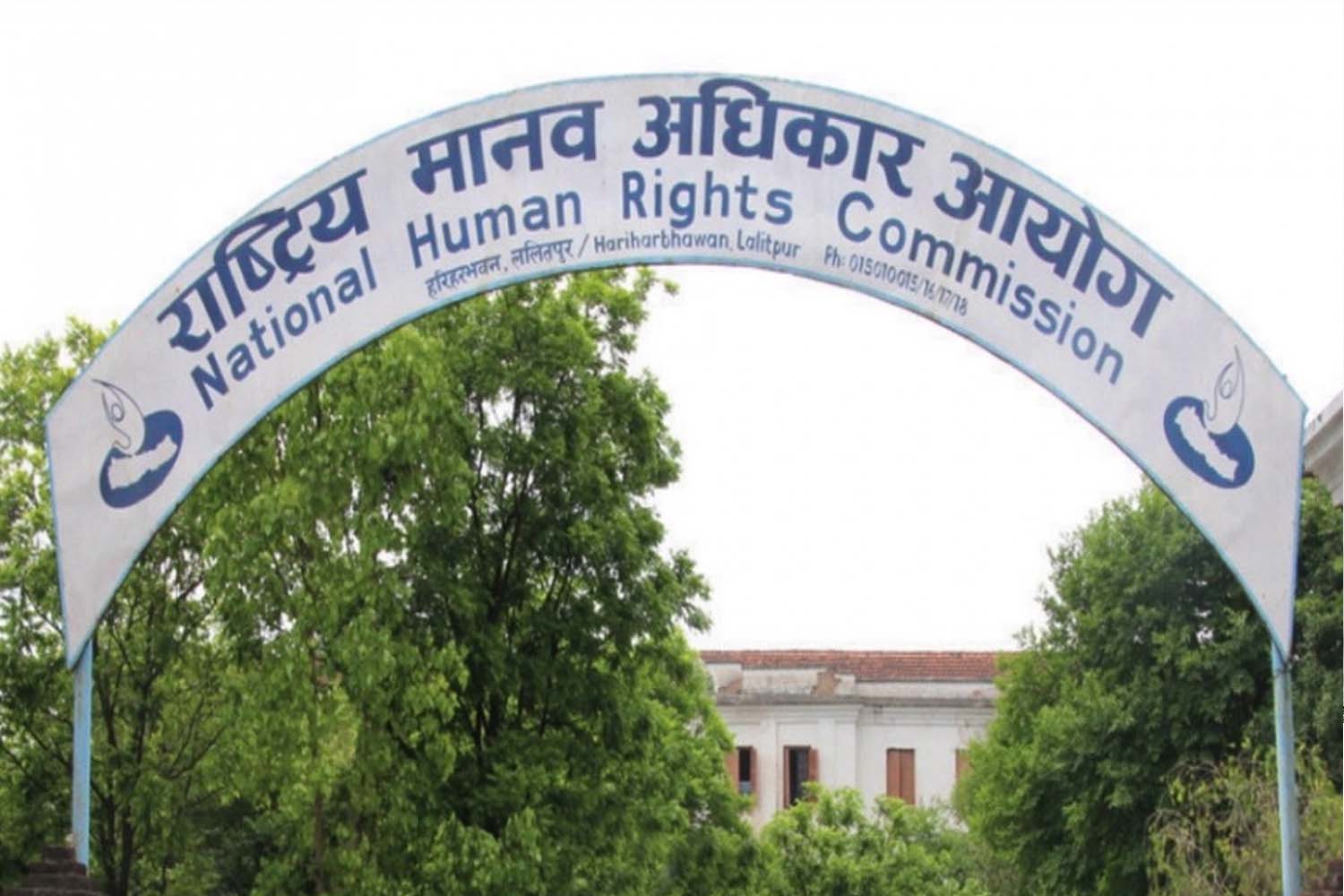
NHRC expresses concern over lack of disabled-friendly infrastructures
The National Human Rights Commission (NHRC) has expressed its concern over people with disabilities (PWD) facing the lack of accessibility to the service provider agencies making it tougher for them to avail services and facilities.
Unveiling the report about provisions of mental health rights in the Gandaki and Bagmati Provinces as of 2081 BS on last Tuesday, the Commission stated that although the quality of the buildings of the service provider agencies was high, those infrastructures were not disabled-friendly.
The report shows that public as well as private healthcare facilities were far from being disabled-friendly. So was the case with rehabilitation centers and other organizations, it was mentioned.
Some new buildings had lift and ramp for wheel-chairs, the PWD could not have the surety of easily accessing the restrooms, bathroom and canteens in those buildings, the report highlighted.
Furthermore, the report brought to the fore the grave issue of PWD's rights to attending to their basic needs such as food, clean drinking water and comfortable accommodation facilities was being neglected.
Also, there is a scarcity of skilled human resources such as psychologists, psychiatrists, nurses and social mobilizers among others in the Bagmati and Gandaki Provinces for the PWD, the report noted.
The National Health Insurance Program also appears to be ineffective for the people with mental health issues or psychological disabilities as their access to it was limited, it was reported.
Commission's Chairperson Tap Bahadur Magar shared that the research and study attempted to examine or identify the quality of treatment, care and support mechanism for the people with mental problems and psychological disabilities.
It is stated that widespread differences were seen from the perspective of sanitation at the organizations and rehabilitation centres visited in course of the study.
The study showed that in some organizations the sanitation standard was found to be good while it was average in some others. It is stated that most of the organizations have not really paid attention to the topic of confidentiality.
The study report stated that several of the private hospitals lacked disabled-friendly toilets.
The study mentioned that people with mental issues and those with psycho-social debility had limited access to quality mental health services in Gandaki Province which has a dominant rural population as compared to Bagmati province.
NHRC Chairperson Magar said the study has tried to identify the quality of treatment, care and support that people with mental issues and those with psycho-social debility have.
"The study has recommended to the government and the stakeholder bodies to ensure the rights of people with psycho-social disabilities and to promote their mental health and wellbeing," he said.
Dr Krishna Poudel, Head of the Ministry of Health and Population's Policy, Planning and Monitoring Division, said that the Ministry has not been able to extend services of psychiatric doctors and specialists in remote areas including in the Sudurpaschim Province.
"A lot of work has to be carried out with minimum resources. Although there are mental health wards at the Provincial hospitals, we have not been assigning specialists in all the seven provinces. We are trying to appoint specialists there," he added.
NHRC urges three tiers of government to protect rights of people with disabilities
Meanwhile, the National human Rights Commission (NHRC) has urged all the three tiers of the government to give priority to the issues of people with disabilities in the policy, plans, programs and budget.
The NHRC also urged the federal, provincial and local governments to protect and promote the rights of the disabled persons. It called attention of the three levels of government to these issues in the context of the International Day of Persons with Disabilities (IDPD) on December 3.

Nepal will reap benefits from BRI: PM
Visiting Prime Minister KP Sharma Oli has said that Nepal would reap benefits from the Belt and Road Initiative (BRI).
In his address to a program held at Peking University, PM Oli expressed the belief that China has strongly supported Nepal's development and the BRI project initiated under the visionary leadership of President Xi Jinping would further deepen bilateral relations between the two countries.
On the occasion of the 70th anniversary of the establishment of diplomatic relations between Nepal and China in 2025, PM Oli said that high-level visits would be exchanged between the two countries to add a new dimension to the bilateral relations.
The Prime Minister further said that an old university like Peking could also contribute to the educational development of Nepal.
PM Oli was welcomed by University Chair Prof Gong Qihuang. Other members of the prime minister-led delegation were also present on the occasion.
Prime Minister Oli is also scheduled to address the Nepal China Business Forum today itself.

President Paudel admitted to TUTH for prostate treatment
President Ram Chandra Paudel has been admitted to Tribhuvan University Teaching Hospital (TUTH) for prostate treatment.
Acting Executive Director of the hospital, Prof Dr Ghanashyam Gurung informed that the President was admitted for treatment this morning.


