


Ambassador Maeda encourages Japanese scholarship students
Japanese Ambassador to Nepal Maeda Toru hosted a send-off party at his Residence for Nepali students who will be studying in Japan under the Japanese Government Scholarship granted by the Ministry of Education, Culture, Sports, Science and Technology of Japan.
The Government of Japan grants this scholarship to international students who want to pursue higher studies in Japan for undergraduate, graduate, specialized training college students, and teachers. Japan started selection of Nepali students in 1957, just one year after the establishment of diplomatic relations between the two countries.
This spring, six Nepali students in total - three for master’s, two for undergraduate and one for specialized training college – will go to Japan to obtain their degrees and specialized skill, reads a statement issued by the Japanese Embassy in Kathmandu.
On the occasion, Ambassador Maeda congratulated the successfully selected scholarship students and expressed his hope that they would make their best efforts in a good learning environment in Japan.
The Ambassador also encouraged the students to venture out of the school to experience various aspects of Japanese culture, and make Japanese friends. He stated that he believes that with the knowledge and experience thus acquired, the students will contribute to Nepal's development and play an important role in Japan-Nepal relations in the future.
Dr Sunil Babu Shrestha, president of Japanese Universities Alumni Association, Nepal (JUAAN) also offered valuable advice to the students about life and university in Japan, as he himself had experienced them, according to the statement.
The Embassy is confident that these young scholars will serve as an important bridge between Japan and Nepal and contribute to further strengthening mutual understanding, friendship, and cooperation between the two countries.

Unified Socialist to support pro-republican forces
The CPN (Unified Socialist) has said that it will provide all possible support to all programs held in favor of a federal democratic republic.
Accordingly, the party has directed its subordinate committees and organizations to actively participate in demonstrations, public meetings and protests carried out in favor of the republic to defeat those who are engaged in anti-republic activities.
The party has issued a circular to all its committees to generate public opinion in favor of the republic by uniting leftist forces with common political principles and collaborating with change advocates, said Deputy Chief of the Central Publicity Department, Damodar Aryal.
Meanwhile, the party has also requested all party members to make the protest and mass meeting to be organized by the Socialist Front in Kathmandu on March 28 a success.
He informed that the party, which has launched a socialist campaign across the country by prioritizing good governance, job creation, economic prosperity and social transformation, is working to expand its membership.

Firewood still fuels Nepal’s kitchens (Photo Feature)
Despite advancements in energy access, more than half of Nepal’s households still rely on firewood for cooking, according to the final results of the National Census 2021. Out of 6.66m households nationwide, 51 percent frequently use firewood as their primary cooking fuel. However, the data shows a decline in firewood usage compared to the 2011 census, which reported that 64 percent of households used firewood. The latest figures indicate a 13 percent decrease over the past decade. Meanwhile, 44.3 percent of households now use liquefied petroleum (LP) gas for cooking.

The use of household energy varies by geography. Approximately 20 percent of homes rely on modern energy sources such as electricity and LP gas for cooking, while 80 percent still use traditional fuels like firewood, agricultural residues, and dung cakes. Access to electricity also varies significantly. While 99 percent of households in the Tarai region are connected to the national grid, only 32 percent of homes in the Himalayan region have grid electricity. As a result, many families in the hills and mountains depend on forests for energy needs.

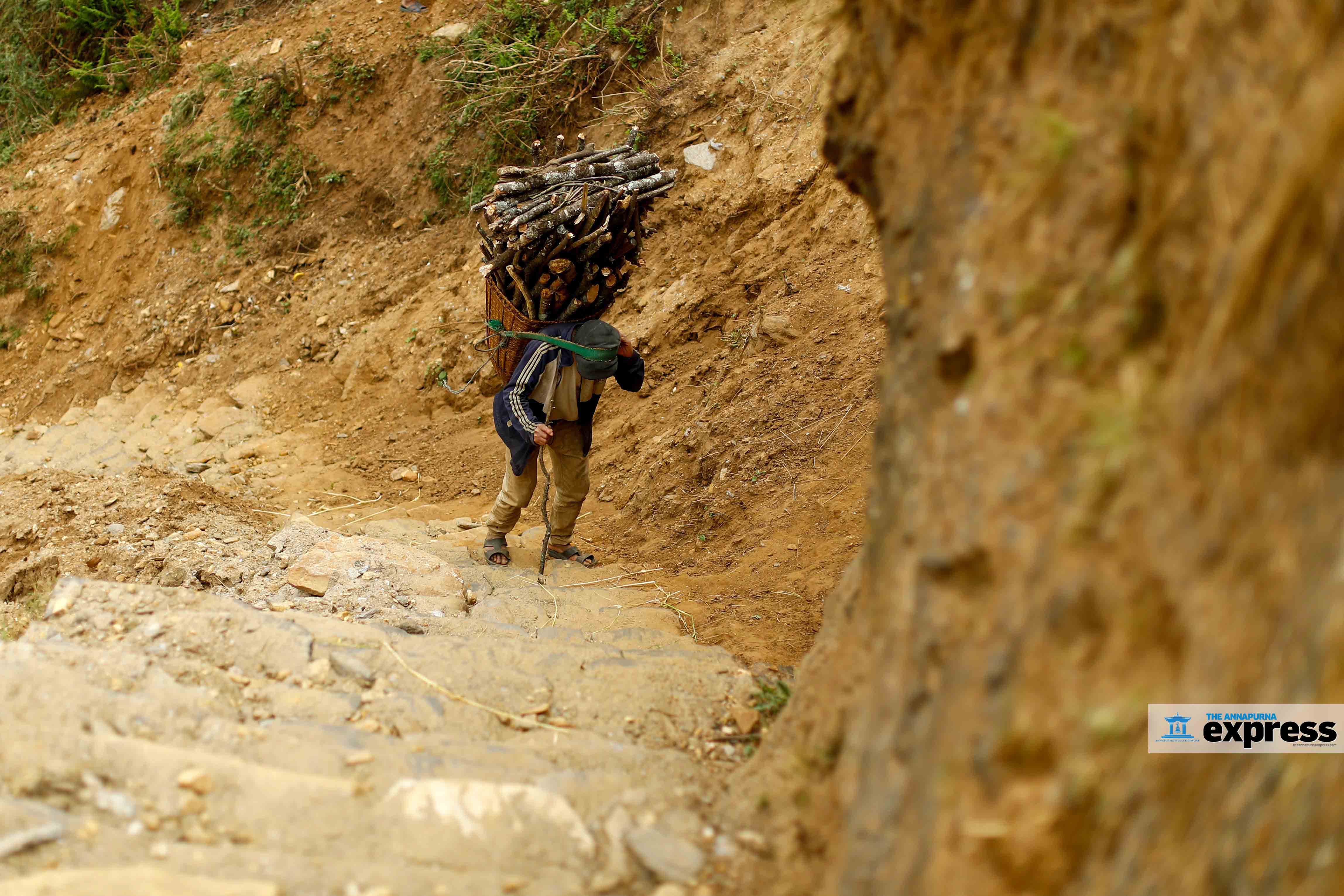
A survey conducted by the International Development Association (IDA) in 2022 found that 80 percent of rural households and 44.6 percent of urban households still used firewood for cooking. In contrast, LP gas was used in 89 percent of urban households and 57.3 percent of rural households. Additionally, 17.4 percent of rural households and 5.4 percent of urban households use agricultural residues and dung cakes as fuel. Electricity is used for cooking in 7.3 percent of rural households and 14 percent of urban households.


Regionally, firewood remains the dominant household fuel. In the Himalayan region, 96 percent of households use firewood for cooking, followed by 79 percent in the Tarai and 65.5 percent in the hills. Overall, firewood accounts for 84.9 percent of Nepal’s total household energy consumption.
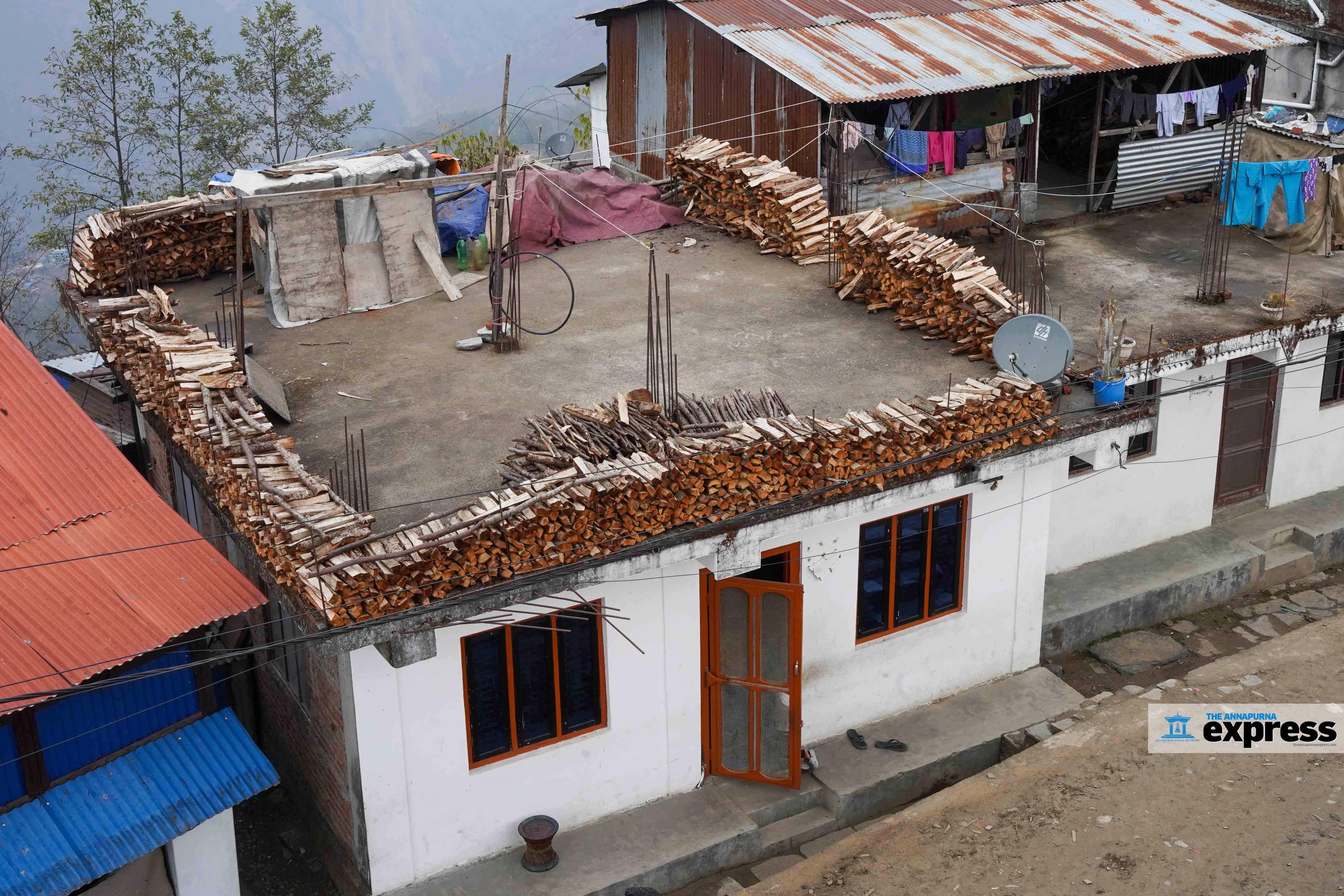

The heavy reliance on firewood raises concerns about deforestation, air pollution, and health risks from indoor smoke exposure. Expanding access to clean energy sources such as LP gas, electricity, and renewable alternatives could significantly improve household energy efficiency and environmental sustainability in Nepal.


Mind Matters | Dealing with failures
After experiencing repeated failures, some people lose the will to try again. How can they rebuild resilience and move forward without fear?
Answered by Khusbhu Agarwal, Psychologist, Happy Minds
The first few effects of persistent failure feels like a myriad of negative emotions. Disappointment, frustration, sadness, and even shame will always feel overwhelming. Ignoring these emotions is to build a wall against a fully blown dam. It’s hard when you fail over and over again, as this prevents you from attempting new things. Re-establishing resilience is not an instant solution, but rather a process that is attainable. To do so, it’s as simple as talking to a trusted family member, friend or therapist, as they would be able to give you the emotional support you seek. Doing this allows you to not suppress the feelings of disappointment, sadness, and frustration as your emotions will rather be validated.
Journaling, on the other hand, also helps you to process your thoughts and gives you a sense of clarity. Speaking to someone can also help you shift or change your perspective and the way you view failure. It’s crucial to look at failure as a learning curve instead of a benchmark to judge your worth. The way you perceive failure greatly impacts your ability to bounce back from it. Sometimes generalizing leads to a specific conclusion like everyone on this planet will fail or at least face one type of obstacle in their contacts and not letting every hurdle prevent them from succeeding in life. On top of that, it’s taxing when people don’t appreciate hard work. You should always celebrate your achievements on a personal level as those are reminders to yourself that effort was made and progress was achieved. Such easily achievable tasks can assist in rebuilding your confidence. Additionally, being kind to yourself, in the same way you would extend compassion towards others who are struggling, is extremely crucial.
Strategies and mindset both play a role in resilience, so building practical strategies is equally important. Positivity is one of the many tools that aids in resilience. Surrounding yourself with people who exhibit positivity can energize you and help you during difficult situations. Creating a strong supportive network can serve as a safe place when you experience troubling times.
The nervous system can be calmed through meditation, deep breathing exercises, and yoga. The basic physical needs of having carbs as comfort foods, working out, and dozing off to regain energy is vital in enabling further productivity. Pick a day in your calendar and block it off to schedule worrying. It might sound odd but this stops you from worrying for days and aids in breaking down problems into simple constructive and achievable bits.
Understand that it’s vital to remain open minded towards whatever change comes your way and change your plans accordingly as it’s impossible to manage every result. What is manageable is your effort and attitude. Let your worries motivate you instead of letting them control you and take reasonably calculated steps out of your safe space. Picture your triumph, see yourself successfully completing your objectives as it also serves to inspire and increase your self-belief. Even tiny steps can aid you in beating fear and developing momentum. Also,don’t ignore the fact that every single person is living with a certain sense of vulnerability, learning to accept what they don’t know and concentrating on the now.
Having strong determination and resilience is an overall lifetime journey, not a one time event. Achieving goals requires continuous purposeful actions, kindness towards yourself, and willingness to develop and make changes. If these techniques are put in practice consistently, people can build their strength and determination, overcome their fears, and be able to look forward with a sense of purpose and hope.

Three bills tabled in National Assembly
Minister for Communications and Information Technology, Prithvi Subba Gurung, on behalf of Prime Minister KP Sharma Oli, presented a proposal in today's meeting of the National Assembly (NA), seeking consideration of the Bill to Amend Some Nepal Acts Related to the Promotion of Good Governance and Public Service Delivery received from the House of Representatives.
Soon after the discussion on the proposal began, lawmaker Renu Chand argued that Rule 93 of the National Assembly Regulations, 2075 BS required that any bill brought through an ordinance in the Parliament should be done so as a replacement bill, but the word 'replacement bill' had not been mentioned in the bill presented by the Minister and, therefore, discussions could not be held on the bill.
National Assembly Chair Narayan Prasad Dahal announced that the meeting has been postponed for some time due to the conflict in the provisions of the regulations.
Three bills have been tabled in the National Assembly today.
National Assembly Secretary Dr Surendra Aryal tabled the Bill to Amend Some Nepal Acts Related to Improvement of the Economic and Business Environment and Investment Promotion, 2081 BS, the Privatization (First Amendment) Bill, 2081 BS and Economic Procedure and Financial Responsibility (First Amendment) Bill, 2081 BS with the message received from the House of Representatives.

Europe working on plan to replace US in NATO in five to 10 years
NATO countries are attempting to avoid potential upheaval if the United States withdraws from the transatlantic military, alliance according to Aljazeera.
According to a new report, Europe's major military forces are developing plans to assume increased responsibility for the continent's defense from the United States, including a pitch to President Donald Trump's administration for a managed handover over the next five to ten years.
The United Kingdom, France, Germany, and the Nordic nations are among those involved in informal but organized conversations aimed at reshaping the North Atlantic Treaty Organization (NATO) security bloc, according to The Financial Times, citing four European officials, Aljazeera reported.
The announcement coincides with a report by Bloomberg News on Friday that, in the face of Trump's repeated threats to leave the organization and NATO's political infighting with the US, the alliance will ask Europe and Canada to increase its weapons and equipment stocks by 30%.

Putin would breach Ukraine deal if it is not defended, says PM
Russian President Vladimir Putin would breach a peace deal with Ukraine if it is not defended, Sir Keir Starmer has said, after attending a meeting of senior military leaders in London, BBC reported.
The UK prime minister said any agreement to stop the fighting between Russia and Ukraine would "only be lasting" if there were "security arrangements in place".
He was speaking at Permanent Joint Headquarters in Northwood, London, where more than 20 countries gathered at a closed meeting to discuss proposals for troops in Ukraine to help guarantee the country's security as part of any peace deal.
Sir Keir said security arrangements would make clear to Russia there would be "severe consequences if they are to breach any deal".
The prime minister said the UK and its allies were moving from "political momentum" to "military planning", which he said had "to be done now" before a deal was agreed.
He said: "It is vitally important we do that work because we know one thing for certain, which is a deal without anything behind it is something that Putin will breach, according to BBC.
"We know that because it happened before. I'm absolutely clear in my mind it will happen again".
Sir Keir ruled out redeploying UK troops from countries such as Estonia to commit to Kyiv, saying: "There's no pulling back from our commitments to other countries."

PM Oli: No immediate plan to visit Lipulekh-Kalapani
Prime Minister KP Sharma Oli has stated that there are no immediate plans for his visit to Lipulekh, Kalapani, and Limpiyadhura. During a question-answer session in Parliament on Thursday, Rastriya Prajatantra Party (RPP) lawmaker Buddhi Man Tamang asked the Prime Minister when he would visit the disputed territories and whether any plans had been made.
In response, PM Oli said, “There is no immediate plan, but a visit could happen in the future.” He also counter-questioned MP Tamang, asking if he had made any plans to visit the areas himself.
PM Oli revealed that he has been trying to contact Maoist Center Chairperson Pushpa Kamal Dahal regarding unresolved issues of the peace process. He stated that while the government is committed to finalizing appointments for the Truth and Reconciliation Commission and the Commission for the Investigation of Enforced Disappearances, Prachanda has been unavailable due to health reasons. “As soon as we establish contact, the remaining tasks of the peace process will move forward,” he said.
PM Oli also addressed the operation of Gautam Buddha International Airport, stating that efforts are underway to bring it to full capacity. He mentioned that the government has been working with relevant agencies to develop a concrete action plan. He highlighted incentives such as reduced passenger service fees, ground handling, landing, parking, and navigation charges to attract airlines.
Currently, Al Jazeera, FlyDubai, AirAsia, and Nepal Airlines operate international flights from the airport. Additionally, the government has initiated labor permit services from the Butwal Labor and Employment Office and is expanding immigration and banking services at the airport.
The government plans to provide startup loans to at least 500 entrepreneurs this year, PM Oli announced. He stated that the selection process for startup loans at concessional interest rates is in its final stage. The initiative aims to foster innovation, encourage entrepreneurship, and create employment opportunities within Nepal.
He emphasized that while Nepali youths have the freedom to seek employment and education abroad, the government is actively working to create job opportunities at home. “The narrative that nothing can be done in Nepal is misleading. We are taking steps to build an industrial-friendly environment to encourage domestic and foreign investment, boost productivity, and reduce trade deficits,” he added.
PM Oli expressed concern over the increasing number of Nepalis leaving the country, particularly those taking irregular migration routes to reach the United States. “Some degree of migration is understandable, but leaving farmlands barren, taking loans, and opting for illegal routes to reach the US, only to face deportation, is not ideal,” he said. He attributed the issue to a lack of awareness and stressed the need to educate the youth about sustainable opportunities in Nepal.
PM Oli informed Parliament that the government has allocated Rs 50m for road construction in the remote village of Changru in Darchula. “The village has historically lacked proper road access. In response to local demands, we have started constructing a horse trail to connect it to the district headquarters,” he said. Additionally, he mentioned that roads are being developed in all district headquarters of Karnali Province with the support of the Nepal Army.
The upcoming Federal Civil Service Act will address the reservation demands of Tharu, Muslim, and other marginalized communities, PM Oli assured lawmakers. In response to questions from lawmaker Bina Kumari Thanet, he said that the proposed legislation, currently under discussion in Parliament’s State Affairs Committee, includes provisions for reserving quotas for Tharu and indigenous communities in civil service positions. He also reiterated the government’s commitment to inclusive representation in public appointments.
Meanwhile, Janata Samajbadi Party (JSP) leader Prabhu Sah boycotted the PM’s question-answer session in Parliament, accusing Oli of failing to address his previous questions. Before walking out, Sah urged that the session be removed from the agenda, claiming it had lost relevance. “By not responding to my queries, the Prime Minister has disrespected the entire Parliament and the Speaker’s authority,” he said.


