


Preservation of historical heritages is our common responsibility: President Paudel
President Ram Chandra Paudel has said all the three tiers of the government should pay attention to the development, conservation and promotion of the invaluable heritages of the country having a multi-ethnic, multi-linguistic culture and tradition.
Addressing the inauguration ceremony of the reconstructed Shree Degutaleju Temple and the unveiling of the stone inscription in Patan Durbar Area today, President Paudel stressed the need for awareness, consciousness and concern at the citizen level for heritage conservation.
"For our future generations, these invaluable heritages are an important link in understanding our time, history and ancestors. It is our common responsibility to preserve and promote such important places of the country and protect many heritages which were the mark of hard work and efforts of and the gift from the ancestors," said President Paudel.
Stating that Nepal, a beautiful country of unique geographical diversity, has many beautiful natural, religious, cultural and historical places as nature's boon, he said that countless temples, Shaktipeeths, shrines and pilgrimage sites are linked with the civilization, culture and national pride of Nepalis.
The Head of State said that Degutaleju Temple is a precious heritage of Patan Durbar Area, which is included in the World Heritage List, President Paudel said that the heritages here, a major destination for domestic and foreign tourists, have made Nepal known at the international level.
Our historical, religious and cultural heritages across the country are the pride and identity of Nepal and Nepalis, the President said, adding that although the reconstruction and restoration of historical heritage damaged in the Gorkha earthquake was challenging, that the successful reconstruction of the Degutaleju Temple has enhanced the beauty of this World Heritage Site.
On the occasion, Minister for Culture, Tourism and Civil Aviation Badri Pandey lauded the challenging work done by Lalitpur in preserving heritage and culture in the country. He said Japan's cooperation and dedication of the locals was important in the reconstruction of this heritage in the past 10 years while maintaining the history with marinating archaeological structure.
He said it was the duty of all of us to protect Nepal's diverse culture and nature. He stressed the need to develop Nepal as an open museum by giving priority to it and making it known to the world. Japanese Ambassador to Nepal Maeda Toru said that the reconstruction of the heritage damaged by the earthquake has been successful due to the continuous support of the international community and the tireless efforts of Nepalis.
He wished that this temple would continue as a friendship between Nepal and Japan forever. Mayor of Lalitpur Metropolitan City Chiribabu Maharjan shared that the construction of the archaeological heritages has been completed through a locals' committee by giving responsibility to the locals.
He expressed the belief that the heritage sites reconstructed now would remain safe even when there was a bigger earthquake than in 2072 BS.
Chairperson of Degutaleju Temple Reconstruction Committee Kiran Man Pradhan shared that the responsibility of rebuilding the temple damaged by the 2072 BS earthquake has been successfully completed.
He opined that he had worked for future generations by rebuilding this important historical heritage.

Gold price drops by Rs 1, 900 per tola on Sunday
The price of gold has dropped by Rs 1, 900 per tola in the domestic market on Sunday.
According to the Federation of Nepal Gold and Silver Dealers' Association, the gold is being traded at Rs 174,500 per tola today. It was Rs 176,400 per tola on Friday.
Similarly, the price of silver has also dropped by Rs 70 per tola and is being traded at Rs 1, 800 per tola today.

"Summit of Friendship: 75 Years of Annapurna Ascent" exhibition at Alliance Française, Pulchowk
The French Embassy in Nepal in collaboration with the Alliance Française Kathmandu, inaugurated the exhibition title "Summit of Friendship: 75 Years of Annapurna Ascent" on April 4. The Alliance Française in Pulchowk will host the exhibition until April 18, 2025.
The exhibition, which was curated by Swaraj Man Chitrakar, retraces the first successful ascent of Annapurna I (8,091 meters) by a Franco-Nepali team on June 3, 1950. As the first human conquest of an 8,000-meter summit, this accomplishment was a major turning point in the history of climbing and contributed to the development of a close relationship between France and Nepal.

Addressing the event, French Ambassador to Nepal Virginie Corteval underscored the importance of Nepali Sherpas in the success of the 1950 expedition. The Ambassador emphasized that their knowledge and passion have become instrumental in the mountaineering sector ever since.

The exhibition also highlighted the contributions of Nepali climbers, evolution of climbing, and major events throughout the decades. It is a part of a larger series of events planned by Team France for 2025 to celebrate the historic ascent.
A video on the 1950 Annapurna trip will be screened on April 23 followed by a conversation with experts in sustainable mountaineering.
In June 2025, the Nepali version of Maurice Herzog's classic book Annapurna: Premier 8000 will be released. Alliance Française finished the translation, which was supported by the French government.

Furthermore, a panel debate on climate change in the Himalayas will be held in October or November 2025.

21-member working committee formed under Gurung in Nepal Carpet Manufacturers and Exporters Association
A new working committee has been elected under the leadership of Balram Gurung in the Nepal Carpet Manufacturers and Exporters Association.
A 21-member working committee was elected under the chairmanship of Balram Gurung, who is also the Chairman of Everest Loom Company, from the seventh anniversary and third convention of the association.
Those elected are senior Vice Chairperson Dawa Sherpa, Vice Chairpersons Radha Kumari Pant, Sonam Lama, Dan Bahadur Chand, General Secretary Sukuman Bomjan, Secretary Ashish Lama, Bivas Yonjan, Treasurer Rajesh Kumar Rayamajhi, Co-Treasurer Dima Jangbu Sherpa, members Dolmo Bomjan Tamang, Lamin Maya Lama, Ang Dorje Sherpa, Pushpa Ratna Maharjan, Bhim Bahadur Tamang, Krishnaman Prajapati, Chhatralal Shrestha, Suresh Lama, Krishna Bikram Shah, Narahari Thapa and Namlang Tenzing.

Mind Matters | Adult friendships
As people grow older, friendships naturally change, but some struggle to maintain strong connections. How can one build and sustain deep friendships in adulthood?
Answered by Rika Rijal, Consultant Psychologist
Building and sustaining deep friendships in adulthood can be challenging due to busy schedules, career pressures, family responsibilities, and changing priorities. However, it’s definitely possible with intentional effort.
Being proactive and intentional can be helpful. Don’t wait for others to reach out—be the one to check in, suggest a coffee meetup, or plan a get-together. Similarly, set regular hangouts. Consistency is the key. Whether it’s a monthly dinner, a weekly call, or joining a hobby group, making time for friends strengthens bonds.
Also, sometimes pursuing common interests can also help. Joining clubs, fitness classes, book clubs, or volunteer groups will help naturally meet people who share your interests. Friendships often develop more easily when you’re engaged in activities you enjoy.
Similarly, deep connections form when people feel safe sharing their true selves. Share your thoughts, struggles, and joys, and encourage your friends to do the same. Authenticity builds trust. Listening attentively and empathetically is essential. Show genuine interest in your friends’ lives, ask thoughtful questions, and avoid distractions during conversations.
Be the friend who shows up, whether it’s for a celebration or during a tough time. Reliability and dependability strengthen relationships over time. Not every friend will fulfill every need, and that’s okay. Some friends may be great for deep conversations, while others are wonderful for fun adventures. Appreciate the diversity in your connections. Building deep friendships takes time. Not every initial connection will develop into a lifelong bond, and that’s natural. Keep nurturing the ones that feel mutual and positive. Life gets busy, and sometimes friendships drift. Don’t let guilt stop you from reaching out after a long time—most people appreciate the effort to reconnect, even after a gap. Healthy boundaries are essential in friendships. Make sure your relationships are balanced, where both people give and take without feeling drained or used. Sometimes, potential friends come from unexpected places—neighbours, colleagues, or even brief encounters at events. Stay open to new connections!
Friendship in adulthood might take more effort, but the rewards of strong, supportive relationships are worth it. By being intentional, consistent, and kind, you can create and sustain friendships that bring joy, comfort, and meaning to your life.

People’s understanding of autism
World Autism Awareness Day, observed on April 2nd, aims to promote understanding and acceptance of individuals with autism spectrum disorder (ASD). This day serves as an opportunity to raise awareness about autism. For many, autism is still a relatively misunderstood condition, with varying levels of awareness across generations. ApEx spoke to three people to find out how aware they are about this condition.
Amos Bhomjan, 22
Autistic people are differently abled but they also have extraordinary capabilities. I came to know about autism when I was really young but I don’t exactly remember how and when. I think that the current generation is aware about autism but the older generation didn’t understand it much and thus there were many myths about it. I once attended a seminar where a pediatrician was talking about autism with a group of parents. I think the medical fraternity is trying hard to make people understand what it is and how to deal with it and that’s a good start.
Aayushma Bhattarai, 24
I heard about autism eight years ago, let’s say when I was 16-17 years old. But I started understanding it only a few years back. I don’t think people in Nepal really know what autism is. The younger generation who are educated and active on social media might know about it but the vast majority is still fairly unaware. I think people widely use social media these days so the best way to create awareness would be to use different online platforms. However there’s a lot of miscommunication and misunderstanding in social media as well and that should be monitored wisely.
Rakesh Prajapati, 33
I was about 21 years old when I came to know about autism and I don’t think normally people know what autism is in Nepal. I have to admit that I came to understand it very late in life. And I must confess that till this date I’m not fully aware of what it is actually like. I think the school curriculum should include autism and awareness campaigns must be conducted among the senior or the middle aged citizens to make more people aware about it. This can help empower autistic people in the long run.
Meeting with PM Oli was productive, says Indian PM Modi
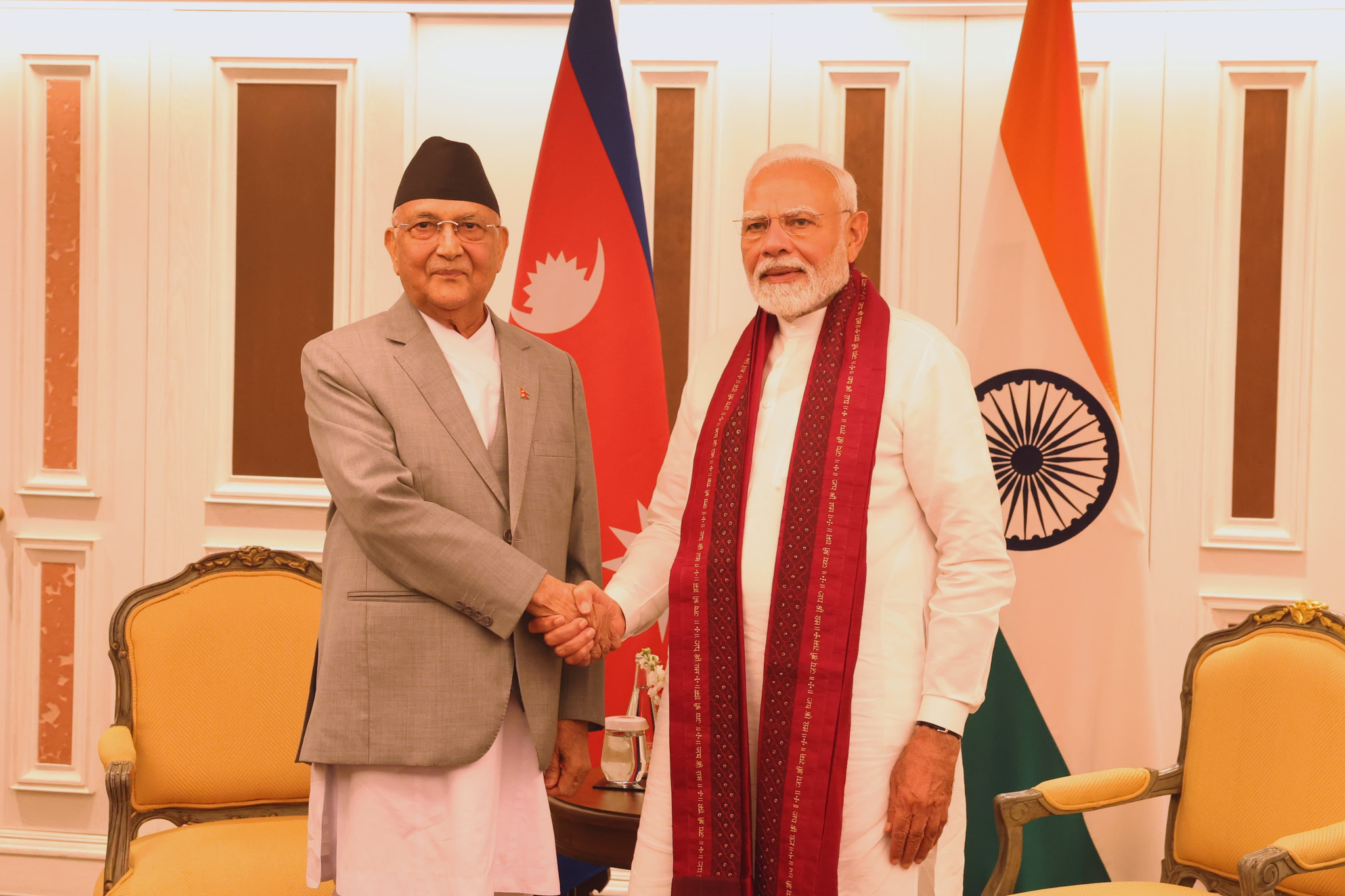
Indian Prime Minister Narendra Modi said that he had a productive meeting with Prime Minister KP Sharma Oli in Bangkok.
Taking to Twitter, he said, “India attaches immense priority to relations with Nepal. We discussed different aspects of India-Nepal friendship, especially in sectors like energy, connectivity, culture and digital technology.” “We also talked about some of the key positive outcomes from this year’s BIMSTEC Summit, especially in the areas of disaster management and maritime transport."
The two Prime Ministers had a one-on-one meeting for about 45 minutes at Hotel Mandarin Oriental in Bangkok, Thailand.
The meeting took place as per the schedule after the conclusion of the Sixth Summit of the Bay of Bengal Initiative for Multi-Sectoral Technical and Economic Cooperation (BIMSTEC).
Earlier, they had met in New York on September 23, 2024 on the sidelines of the 79th Session of the United Nations General Assembly.
Had positive talks with Indian Prime Minister: PM Oli
Prime Minister KP Sharma Oli has said that he had a positive and good conversation in a meeting with his Indian counterpart Narendra Modi today.
"I and Indian Prime Minister Modi-ji have had a good and positive dialogue. So much for now,” PM Oli said.
The two Prime Ministers had a one-on-one meeting for about 45 minutes at Hotel Mandarin Oriental in Bangkok, Thailand.
The meeting took place as per the schedule after the conclusion of the Sixth Summit of the Bay of Bengal Initiative for Multi-Sectoral Technical and Economic Cooperation (BIMSTEC).
Earlier, they had met in New York on September 23, 2024 on the sidelines of the 79th Session of the United Nations General Assembly.


