


Russia Invites PM Modi To Attend Victory Day Parade On May 9
Russia has formally invited Prime Minister Narendra Modi to Moscow's triumph Day Parade on May 9, which commemorates the Soviet triumph over Nazi Germany in World War II.
The invitation was confirmed by Andrey Rudenko, Russia's Deputy Foreign Minister. This comes in the midst of speculation that PM Modi may skip the event, Firstpost reported.This suggests that PM Modi's visit is now being discussed between the two countries, with Moscow hoping that the Indian Prime Minister will attend the high-profile event.
Russia has invited leaders of several friendly nations to attend this year's Victory Day parade.In January 1945, the Soviet Army launched an offensive against Germany, according to Firstpost.
For the first time in almost five years, Prime Minister Modi traveled to Russia in July 2024. At an economic conclave in 2019, he traveled to Vladivostok, a place in the far east.
PM Modi invited Russian President Vladimir Putin to come to India during the most recent visit and Putin has already accepted.
However, the dates of Putin's visit have not been revealed yet.
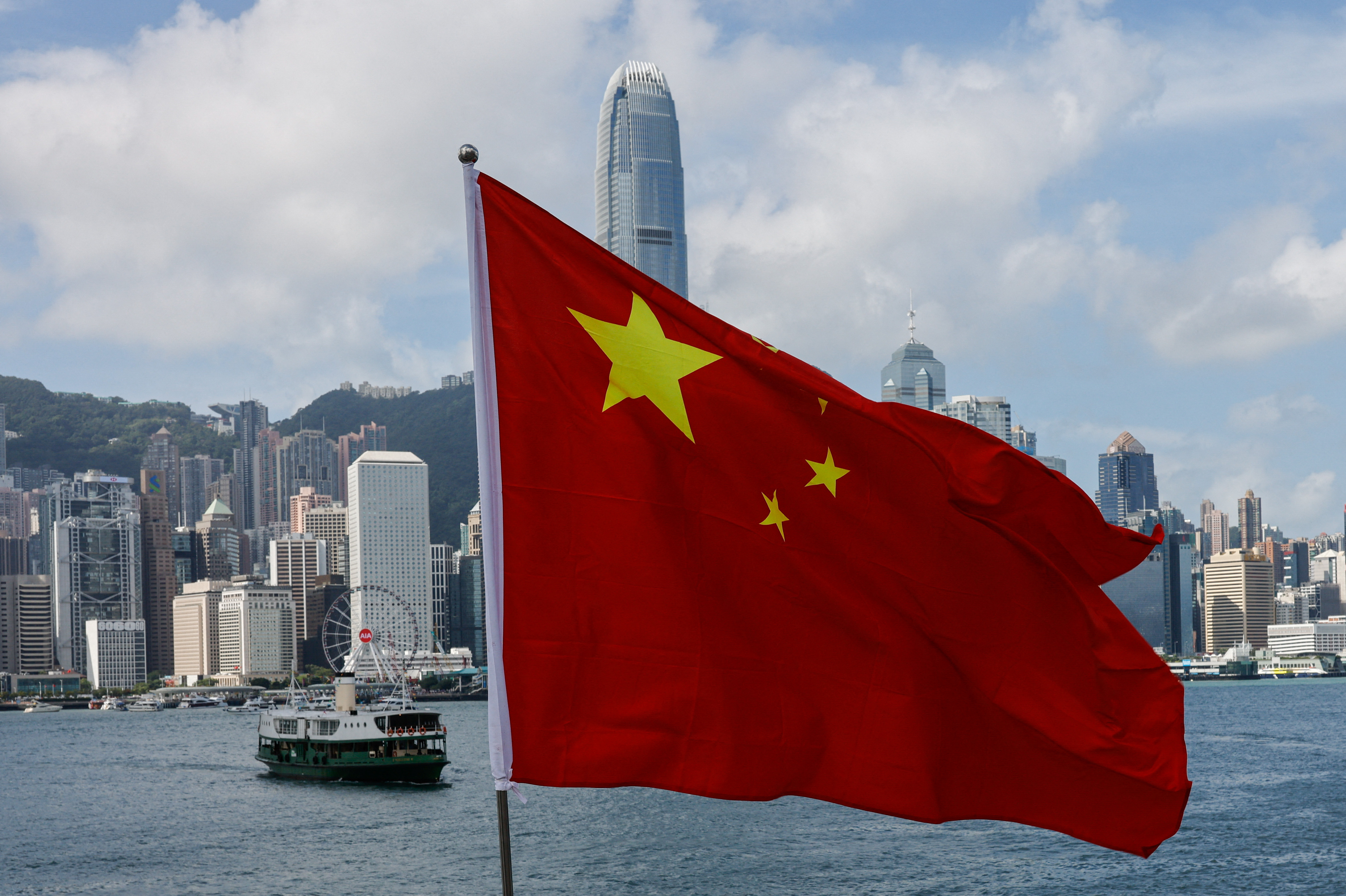
China announces 84% retaliatory tariffs on US goods
China has announced new tariffs of 84% on the US, in a response to US president Donald Trump’s trade war that will raise fears of further escalation.
According to Reuters, the Chinese ministry of finance has declared that taxes on US imports will increase to 84% beginning Thursday, up from 34% previously announced.
On Wednesday, Trump imposed 104% tariffs on Chinese exports to the United States. China's announcement describes Mr. Trump's tariffs as "a mistake on top of a mistake".
Stock markets fell further on China's announcement of retaliatory tariffs, Reuters reported.
The FTSE 100 is down 3.4%. The Stoxx 600 index, which monitors Europe's largest corporations, is now down 4.2%. Germany’s Dax has fallen 3.4% today, while France’s Cac 40 has dropped 3.4%.

Nepse surges by 32. 90 points on Wednesday
The Nepal Stock Exchange (NEPSE) gained 32. 90 points to close at 2, 680.52 points on Wednesday.
Similarly, the sensitive index surged by 1.80 points to close at 446. 58 points.
A total of 10,073,822-unit shares of 317 companies were traded for Rs 1. 80 billion.
Meanwhile, Nepal Micro Insurance Company Limited (NMIC) was the top gainer today, with its price surging by 9. 98 percent.
Likewise, Sindhu Bikash Bank Ltd (SINDU) was the top loser as its price fell by 8.05 percent.
At the end of the day, total market capitalization stood at Rs 4. 44 trillion.

Entrepreneurs demand resumption of regular flights at Gautam Buddha Int'l Airport
Entrepreneurs and the business community of Rupandehi have drawn attention of bodies concerned, demanding operation of regular flights at Bhairahawa-based Gautam Buddha International Airport.
Organizing a press meet here today, the Siddhartha Chamber of Commerce and Industry, Rupandehi, the Siddhartha Network Rupandehi and the Rupandehi Chamber of Commerce announced a phase-wise agitation program to press for fulfillment of their demand.
Industrialists said they would launch decisive agitation together for the operation of regular flights at Gautam Buddha International Airport. A joint agitation struggle committee has also been formed for the agitation to be launched at leadership of Siddhartha Network Rupandehi.
Under the first-phase agitation program, discussion will be held with representative of different political parties of Rupandehi district, people's representatives of local levels as well as people's representatives elected in federation and province assembly as well as Chiefs of concerned Airlines, said Committee Coordinator and Chairperson of Siddhartha Network, Anil Kumar Gyawali.
Similarly, a peace protest will be organized in front of the airport in presence of thousands of people, attention of the Prime Minister, Tourism Minister, Finance Minister, Labor Minister, Health Minister, secretary of concerned ministries and chief of Nepal Airlines Corporation would be drawn about the agitation program, he mentioned.

Migrant workers health test fee raised to Rs 9,500
Workers heading to foreign job destinations will now have to pay nearly 50 percent more for health examinations. The Ministry of Labor, Employment, and Social Security has raised the health check-up fee to Rs 9,500 through a minister-level decision made last week. Issuing a notice, the ministry stated that the comprehensive package for all health tests for migrant workers will now cost Rs 9,500. The ministry introduced the new health test fee by amending the guidelines related to the listing, renewal, and monitoring of health institutions conducting medical examinations for migrant workers.
This decision has sparked concerns about affordability and the quality of services for Nepali workers seeking employment opportunities abroad.
Additionally, the ministry has formed a committee of experts to prepare a report within a month to transition the health examination process to an electronic system. As per the notice, 34 types of health tests are included in the package. Likewise, registered health facilities will have to upgrade their infrastructure to provide all 34 types of tests within two months of the notice's publication. Ministry officials will then observe and approve the upgraded facilities. According to the notice, the registration of facilities that fail to upgrade their infrastructure as required will not be renewed.
The notice also stated that final approval for workers heading abroad will only be granted after the designated tests are completed and duly uploaded to the Department of Foreign Employment. The ministry decided to increase the health test fee despite the recommendations made by a task force in December last year. The task force, led by Dipendra Raman Singh, had suggested integrating the health examinations of migrant workers into the government-run health insurance scheme.
Among others, the task force emphasized the need for uniformity in health examination fees, the appointment of health counselors in countries with over 100,000 Nepali workers, and a requirement for at least B-grade laboratories for testing. Currently, medical checks for migrant workers are conducted at C-grade facilities. The report, however, had not recommended increasing the health check-up fees.
Around 700,000 Nepalis leave for foreign employment every year after obtaining a labor approval permit from the ministry. Additionally, a significant number of people travel to job destinations on visit visas and arrange employment on their own.

ADB projects 4.4 percent economic growth for Nepal in 2025
The Asian Development Bank (ADB) has projected Nepal's economy will grow 4.4 percent this year, up from 3.9 percent in 2024.
The Asian Development Outlook (ADO) April 2025, launched today states that growth in Nepal is expected to accelerate in both 2025 and 2026. It is projected to increase from 3.9 percent in 2024 to 4.4 percent in 2025 and 5.1 percent in 2026. Robust consumption supported by higher remittance inflows, moderate inflation, and increased private and public investments will underpin Nepal's economic activity.
Similarly, Nepal's inflation is estimated to be at 5.2 percent in 2025 and 5 percent in the following year.
Likewise, economies in developing Asia and the Pacific are projected to grow 4.9% in 2025, down from 5.0% last year, according to the report.
Solid domestic demand and strong global appetite for semiconductors driven by the artificial intelligence boom are supporting growth, but tariffs and trade uncertainty will act as a headwind. Regional growth is expected to decline further to 4.7% next year, the ADB said in the. Inflation is projected to moderate to 2.3% this year and 2.2% next year as global food and energy prices continue to decline.
The growth forecasts were finalized prior to the April 2 announcement of new tariffs by the US administration, so the baseline projections only reflect tariffs that were in place previously. However, ADO April 2025 does feature an analysis of how higher tariffs may affect growth in Asia and the Pacific.
The report notes that while economies in the region are resilient, faster and larger-than-expected changes in US trade and economic policies pose risks to the outlook. Along with higher US tariffs, increased policy uncertainty and retaliatory measures could slow trade, investment, and growth.
The region will be challenged by rising trade barriers and significant trade uncertainty, but solid domestic demand and electronics exports will support growth. Regional growth is forecast at 4.9% in 2025 and 4.7% in 2026. Inflation will moderate to 2.3% in 2025 and 2.2% in 2026 as global commodity prices decline further, enabling many regional central banks to ease monetary policy, the report states.
Escalations in conflict and geopolitical tensions could hamper regional prospects, the ADB said. "Although conflict and geopolitical tensions in the Middle East have eased, the outlook remains highly fragile. Downside risks for the region could materialize if conflict escalates again, which could lead to supply chain disruptions, higher and more volatile food and energy prices, and elevated global economic uncertainty and risk aversion.
Risks also remain regarding prospects for an end to Russia’s war in Ukraine. While economies in the Caucasus and Central Asia could benefit from greater economic stability and investor confidence, the realization of these gains remains highly uncertain and subject to the terms of any proposed peace deal."

Teachers stage protest in Kathmandu today also demanding School Education Act
The Nepal Teachers' Federation has continued its protest in Kathmandu on Wednesday as well demanding the School Education Act.
Refusing the government’s offer to sit for talks, the Federation staged a demonstration in Maitighar-Babarmahal area today also.

Teachers from across the country have been stagting protests in the Capital for the past few days demanding the issuance of the School Education Act and implementation of the agreements signed with the government time and again in the past.
Though the Ministry of Education, Science and Technology has called the teachers for talks for the second time, the Federation has refused to sit for the dialogue putting forth various demands.

Saying that they did not stage the protest with new demands, the Federation said that there is no meaning in sitting for the talks.
The agitating teachers said that they would not sit for talks until their demands are met.


China nursing home blaze kills 20; one arrested
Twenty people were killed in a fire that broke out in an apartment for the elderly at a nursing home in China, state media said on Wednesday, while authorities arrested its owner as they investigate the cause, Reuters.
It was the latest in a series of similar incidents in recent years, including a fire at a hospital in the capital in 2023 that killed 26 patients and wounded dozens.
Tuesday's fire in the city of Chengde in the northern province of Hebei blazed for two hours before it was doused, the official Xinhua news agency and the state-backed Global Times newspaper said, citing local authorities, according to Reuters.


