


Gold price increases by Rs 500 per tola on Wednesday
The price of gold has increased by Rs 500 per tola in the domestic market on Wednesday.
According to the Federation of Nepal Gold and Silver Dealers’ Association, the precious yellow metal is being traded at Rs 185, 300 per tola today. It was traded at Rs `84, 800 per tola on Tuesday.
Similarly, the silver is being traded at Rs 1, 970 per tola today.

Woman dies in Kathmandu house fire
A woman died in a fire that broke out at a house in Makhantole, Kathmandu Metropolitan City-24 on Wednesday.
Police said that the fire erupted due to cooking gas leakage.
Kathmandu District Police Range spokesperson Apil Raj Bohara said that the blaze broke out at a four-storey house belonging to Dayaram Shrestha.
The identity of the deceased person has not been ascertained yet.
Bohara said that efforts are underway to put off the fire.
The fire also spread to the neighboring house, according to police.

The price of care
The International Nurses Day is celebrated on May 12 every year to mark nurse’s contribution to society. In Nepal, we often get to hear that nurses aren’t paid well and are thus generally vying to go abroad. ApEx spoke to three nurses to find out where they think the problem lies and what can be done to secure their future in their own country.
Rachana Suwal, 35
In Nepal, nurses face numerous struggles, including low salaries, long working hours, inadequate benefits, and limited career growth opportunities. The challenges are even worse in public hospitals, where understaffing forces nurses to work long shifts without proper compensation. Most nurses in Nepal are underpaid.There is no proper overtime pay and many hospitals don’t follow labor laws regarding overtime, leave, and bonuses. Countries like the USA, UK, Australia, and Gulf nations offer five to ten times higher salaries than Nepal. There, nurses get better facilities, structured shifts, and professional growth opportunities too. Nepal lacks specialization opportunities, while foreign countries provide advanced training and promotions. Nepal must value nurses as essential healthcare pillars. Better pay, working conditions, and career opportunities can stop the brain drain and strengthen Nepal’s healthcare system. Otherwise, the exodus of skilled nurses will continue, harming the nation’s medical services.
Rabina Kawan, 35
Nurses in Nepal face several struggles in their profession, including issues of payment, understaffing, and an imbalanced patient-to-staff ratio, leading to shift duty challenges and excessive workload. Many are forced to work long hours, especially during night shifts, in unsafe environments. Despite holding bachelor’s degrees in nursing, many nurses are undervalued and underpaid, often treated as volunteers or dominated by other professionals in healthcare settings. Inappropriate job placements that don’t match their qualifications or experience further demotivate them. To address these issues, the government must develop and implement better policies that include fair salary scales, job security, paid benefits, and opportunities for professional growth. Eliminating unpaid volunteer roles, ensuring appropriate staffing, and involving nurses in policy-making and leadership decisions are essential. Creating a positive image of the nursing profession through recognition, appropriate appraisal, and specialization opportunities in areas like ICU, OT, and cardiology can help retain talent. Celebrating nursing contributions and ensuring dignity and respect for their work are key to uplifting the profession in Nepal.
Jamuna Kafle, 38
I have been working in this field for 12 years and I believe I have been doing great at my institution. Many nurses at different hospitals complain about low salaries though they work hard, oftentimes clocking in long hours. Nursing is a job that isn’t valued properly by people and patients too, with most just looking to point out our mistakes. It’s the same everywhere and that can be disheartening. Students pay a lot to study nursing but in the end they don’t get good jobs and are forced to go abroad for better opportunities. I think the government rules on salary structure and working hours also need to be implemented in the private sector. Most private hospitals pay nurses very little and it’s not enough for them to look after their families. I believe low salary is one of the main reasons why nurses choose to go abroad.
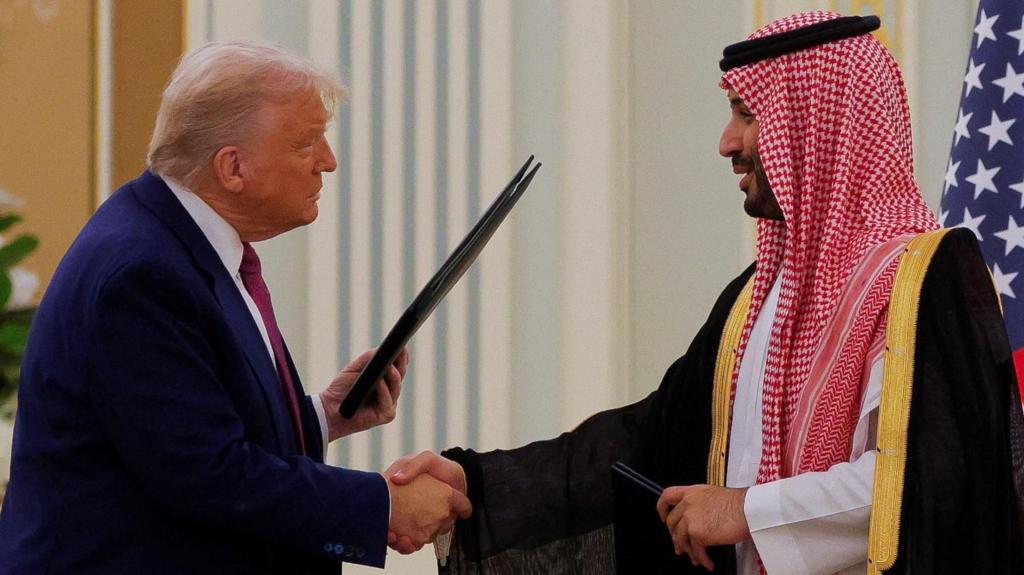
Trump says US-Saudi bond 'more powerful than ever', after signing $142bn arms deal
US President Donald Trump signed a $142bn (£107bn) defense deal with Saudi Crown Prince Mohammed bin Salman during a visit to Riyadh, aimed at strengthening US-Saudi ties.
Speaking in the Saudi capital, Trump praised the Crown Prince as "an incredible man" and stated that US-Saudi relations are "more powerful than ever", BBC reported.
Trump also announced the easing of US sanctions against Syria, claiming the move is intended to give the country "a chance at greatness." He stated willingness to deal with Iran, but warned that failure to do so would result in "maximum pressure" and steps to limit Iran's oil shipments.
Trump expressed optimism that Saudi Arabia will join the Abraham Accords, which were negotiated by Israel and several Gulf governments during his first administration.
Regarding the ongoing battle in Gaza, Trump remarked that Gazans deserve a better future, but that progress is unattainable if their leaders "kidnap, torture, and target innocent people ", according to BBC.
The visit is part of Trump's four-day diplomatic tour of Saudi Arabia, Qatar, and the United Arab Emirates.

China’s deputy speaker confirmed as chief guest of Sagarmatha Sambaad
Preparations for the first-ever Sagarmatha Sambaad, set to take place in Kathmandu from May 16–18, are in their final stages.
The organizers have confirmed that all logistical and technical arrangements meet international standards to ensure the event’s success. Hosted by the Government of Nepal at the Soaltee Hotel, the dialogue will focus on the theme “Climate Change, Mountains, and the Future of Humanity.”
The high-level forum aims to address urgent global environmental challenges, particularly climate change and its disproportionate impact on mountain ecosystems and vulnerable communities. The event, which will be held biennially from now on, will convene 140 foreign delegates from 40 countries, including ministers, senior government officials, diplomats, donor agency representatives, climate experts, environmentalists, and development leaders. Together, they will seek regional and international cooperation for a unified response to the climate crisis.
According to Sambaad Secretariat Deputy Speaker of China Xiao Jie is confirmed as a chief guest of the program.
He is vice chairman of the standing committee of the 14th National People’s Congress. Other high-level guests of the programs are Bhupender Yadav, Minister of Environment, Forest and Climate Change of India, and Mukhtar Babayev, COP29 Presidency, Minister of Ecology and Natural Resources of Azerbaijan.

Elon Musk joins Trump in Saudi Arabia as US seeks billion dollar deals
Tech entrepreneur Elon Musk and other well-known visitors joined President Donald Trump on his first significant diplomatic trip of his second term, which took him to Saudi Arabia.
Trump was hosted by Crown Prince Mohammed bin Salman at a formal lunch in Riyadh. The visit marks the start of a four-day tour of Saudi Arabia, Qatar, and the UAE, aimed at securing major investments in the US economy, according to BBC.

Home Minister Lekhak vows to transform prisons into industrial village
Home Minister Ramesh Lekhak has said that the prisons would not only be transformed into open correction homes but also into an industrial village.
Inaugurating the newly constructed building and facility of the Morang Prison Office today, Home Minister Lekhak made it clear that the aim is to modernise the prison and transform it into an industrial village with the objective of helping inmates make productive use of their time and earn a living.
He stated that although there is a mandatory provision to keep the convicted persons in jail in accordance with the prevailing legal provisions, the government is sensitive to the human rights of the inmates.
Stating that the human rights of all individuals will be guaranteed in a democracy, the Home Minister informed that necessary preparations are underway to address the complaint of prison buildings being fewer compared to the number of inmates and the lack of necessary infrastructure.
The Minister of Internal Affairs and Law of Koshi Province, Rewati Raman Bhandari, expressed confidence that the newly constructed prison building will provide additional facilities to inmates, clarifying that the government is on the side of human rights along with the proper utilization of inmates’ labour.
The Chief District Officer of Morang, Indradev Yadav, expressed his commitment to address the issues seen in the prison and to treat the inmates appropriately.
Lawmaker Amanlal Modi, Province Assembly member Bhim Parajuli, Chief of the Federal Urban Development and Building Construction Office Pradeep Kumar Singh, and Director General of the Central Department of Prisons Narayan Bhattarai expressed their views in favour of the employment and human rights of prisoners.
The Department of Building has stated that a total of Rs 361 million and 285 thousand has been spent for the construction of the newly built prison building. The new building is constructed in the complex of the old District Jail located at Hathkhola in Biratnagar.
The prison building can accommodate 218 male and 99 female inmates.

“Sagarmatha Sambaad will seek solutions to climate crisis”
Lawmakers have put forth their views on contemporary issues in today’s meeting of the House of Representatives.
On the occasion, Thakur Prasad Gaire said organizing ‘Sagarmatha Sambaad’ for climate justice at a time when the country is facing climate-induced crisis, is the matter of pleasant and expressed the belief that the program would seek solutions to the climate crisis.
He shared that there should not be any delay to establish climate justice as the risk of flood and landslide as well as incidents of other natural disasters are increasing due to climate change.
Similarly, Dig Bahadur Limbu demanded the government to allocate a budget for irrigation and drinking water facility at Morang constituency-1 as sources of drinking water and irrigation are drying up due to floods that occurred last September.
Likewise, Dol Prasad Aryal drew the government’s attention to create an environment for disaster management on time as the citizens have to face difficulties due to landslide and flood during rainy season while Tara Lama Tamang asked the government to resettlement of the families displaced after expansion of Shuklaphanta Wildlife Reserve.
Tosima Karki demanded the government to forward construction activities of Kathmandu-Tarai-Madhes fast track, the national pride project and Dikpal Kumar Shahi urged to make power supply at Aathbis municipality of Dailekh systematic.
Similarly, Deepak Bahadur Singh stressed the need of stopping policy-level corruption while Narayani Sharma drew the government’s attention towards power outage at a time when mercury is rising in Tarai-Madhes.
Likewise, Nisha Dangi pointed out the need for a country’s sustainable development, skill development training and employment as well as quality education and good governance.
Pushpa Bahadur Shah asked the government to allocate a budget for Achham District Hospital in the coming fiscal year as a contract for construction of a 50-bed hospital has been forwarded.
Other lawmakers including Prakash Jwala, Prem Bahadur Maharjan and Bindabasini Kansakar also put forth their views.
Lawmakers call for formulating budget that meets citizens’ aspiration for development
Lawmakers have emphasized that the budget for the upcoming fiscal year should be brought in a way that addresses the high economic growth rate and the development aspirations of citizens.
In today’s meeting of the House of Representatives, they stated that the budget should be focused on the implementation of fundamental rights, infrastructure development, productivity enhancement, and job creation.
Those airing their views on this line were Deepak Giri of the Nepali Congress, Juli Kumari Mahato of the CPN-UML, Ranendra Barali of the CPN (Maoist Center), Santosh Pariyar of the Rastriya Swatantra Party and Anisha Nepali of the Rastriya Prajatantra Party.


