


China rejects US accusations on South China Sea at UN
China’s UN envoy Geng Shuang rejected US accusations over the South China Sea during a Security Council debate, calling the US the “biggest threat” to regional peace.
Responding to US Representative Dorothy Shea, Geng stated that the Council is not the appropriate forum for the issue and accused the US of inciting tensions by sending military vessels under the guise of "freedom of navigation", Xinhua reported.
He reaffirmed China's rejection of the 2016 arbitration ruling and emphasized that collaboration with ASEAN members helps to maintain regional peace. Geng also asked the United States to respect the one-China principle. He emphasized China's commitment to peaceful dialogue and international maritime cooperation.

Only about a third of capital budget spent in 10 months
With just two months of the current fiscal year remaining, the government is significantly behind on both its revenue collection and expenditure targets. The government had allocated Rs 352.35bn for capital expenditure for the fiscal year 2024/25. However, as of mid-May, only Rs 121.36bn, just 34.44 percent of the annual target, has been spent. Although past trends show capital spending rises in the final months of the fiscal year, the remaining Rs 232bn is likely to remain unutilized.
In the last fiscal year, only 63.47 percent of the Rs 302bn capital allocation was spent. Capital spending has averaged around 60 percent over the past four years, a steep decline from the pre-covid average of 70 percent and a sharp fall from highs of over 80 percent percent in 2017/18. These figures reflect a system that struggles with efficiency, planning and execution.
Performance has also been weak on the revenue side. By mid-May the government had collected Rs 927.55bn in revenue, 65.35 percent of the annual target to raise Rs 1,419.30bn. To meet this target, the government needs to raise nearly Rs 500bn over the next two months which is highly improbable if not impossible. Total government income, including foreign grants and other sources of income, reached Rs 954.92bn by mid-May.
The government had projected a total revenue of Rs 1,471bn in the current fiscal year. Meanwhile, total expenditure stood at Rs 1,164.04bn, or 62.57 percent of the target. The budget deficit now stands at Rs 208bn. The government made a downward revision of the revenue target to Rs 1,286bn through the mid-term review of the fiscal budget in February. However, even this revised figure now appears out of reach, as the government would still need to collect Rs 364bn in the remaining two months.
Sluggish revenue collection and lower-than-expected foreign grants have affected revenue mobilization in the current fiscal year. The government has been able to mobilize foreign aid of only Rs 16.11bn out of the targeted Rs 52.32bn over the past 10 months. In contrast, the government has already spent more than 68 percent of its recurrent budget. Out of Rs 1,140bn allocated for recurring expenses such as salaries, pensions and subsidies, Rs 767bn, or 68.2 percent of the total allocation, has already been spent. The government has also spent 71.96 percent of the amount set aside for financial management.

Putin visits Kursk region after repelling Ukrainian incursion
Russian President Vladimir Putin paid a visit to Russia's western Kursk region on Tuesday, following the recent departure of Ukrainian forces.
He met with volunteers and inspected the Kursk-II nuclear power plant, accompanied by senior officials including as Sergei Kiriyenko and acting Governor Alexander Khinshtein, according to Reuters.
Russia claimed it beat back a significant Ukrainian assault in April, during which Kyiv's forces momentarily seized up to 1,400 square kilometers with drones and Western weapons.
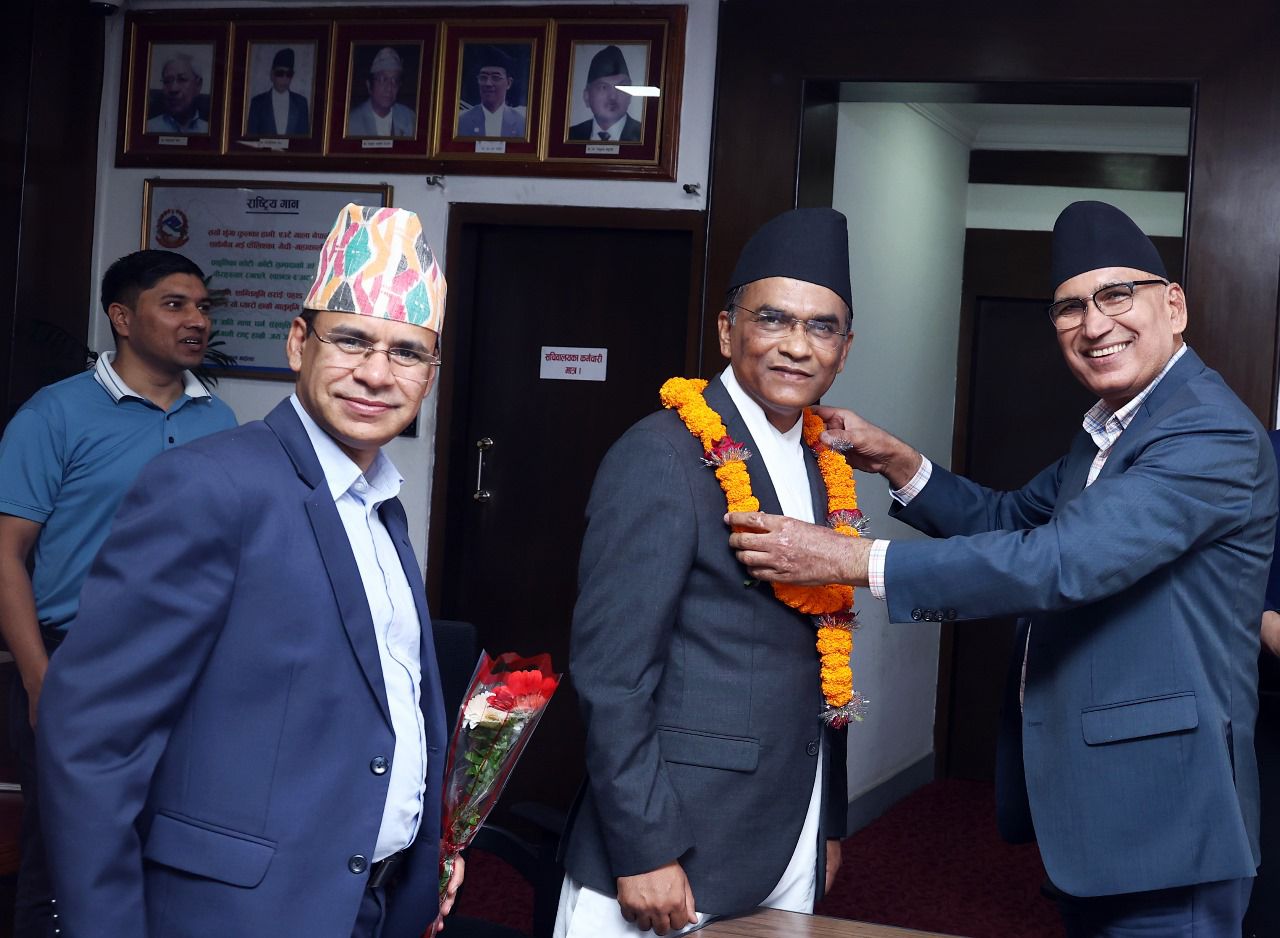
Governor Poudel meets with Finance Minister Paudel
Newly appointed Governor of Nepal Rastra Bank (NRB) Biswo Poudel called on Deputy Prime Minister and Finance Minister Bishnu Paudel on Wednesday.
On the occasion, DPM Paudel congratulated the newly appointed Governor and extended best wishes for his successful tenure.
Furthermore, DPM Paudel expressed his confidence that Governor Poudel would take important and result-oriented initiatives to address the economic and monetary sector's challenges by ensuring smooth coordination between the fiscal and monetary policy.
In reciprocation, the new NRB Governor reaffirmed the NRB's commitment to facilitate implementation of the Ministry of Finance's fiscal policy through the Central Bank's monetary policy.
Moreover, he pledged to emphasise enhancing supervisory capabilities of the central bank to strengthen efficiency of the financial sector.
Industry, Commerce and Supplies Minister Damodar Bhandari, Finance Secretary Ghanashyam Upadhyay and Revenue Secretary Dinesh Kumar Ghimire among others were present on the occasion.
A Cabinet meeting held on Tuesday evening decided to appoint Poudel as the 18th Governor of Nepal Rastra Bank.

Laos introduces new vaccine education toolkit
The Ministry of Health, with cooperation from development partners, has created a new vaccine education toolkit aimed at enhancing understanding among Laos' low-literacy and ethnic communities.
The toolkit contains animated movies and infographic flashcards that explain how vaccinations work, what to expect after vaccination, and the significance of immunization, according to Xinhua.
To enable greater accessibility, health staff are translating the information into numerous local languages. The resources, which are available in both mobile and print formats, help health workers during home visits and community outreach.
The initiative also helps parents track their children’s immunization schedules, aiming to boost vaccine acceptance and timely coverage nationwide, Xinhua reported.

Newly appointed Governor Poudel decides to print new notes of Rs 500 and 1000
Newly appointed Governor of Nepal Rastra Bank Biswo Poudel has decided to print new notes of Rs 500 and 1000.
Poudel, who took the oath of office and secrecy amidst a ceremony held at the Supreme Court, said so after assuming the office on Wednesday.
He said that he will move ahead by coordinating with everyone in order to make the country’s economy dynamic.
Chief Justice Prakash Man Singh administered the oath of office and secrecy this morning.
The government on Tuesday appointed Poudel as the 18th Governor of Nepal Rastra Bank (NRB).
The decision to appoint Poudel as the new Governor of Nepal Rastra Bank was made during a Cabinet meeting held on Tuesday evening at the Prime Minister’s official residence in Baluwatar.

Poudel sworn in as new Nepal Rastra Bank Governor
Newly appointed Governor of Nepal Rastra Bank Biswo Poudel took the oath of office and secrecy on Wednesday.
He took the oath of office and secrecy before Chief Justice Prakash Man Singh Raut amidst a ceremony held at the Supreme Court.
The government on Tuesday appointed Poudel as the 18th Governor of Nepal Rastra Bank (NRB). The decision was made during a Cabinet meeting held on Tuesday evening at the Prime Minister’s official residence in Baluwatar.
Three names were recommended for the position by a committee led by Deputy Prime Minister and Finance Minister Bishnu Paudel. The committee shortlisted Poudel, Acting Governor Neelam Dhungana and former Secretary Dinesh Bhattarai for the role earlier on Tuesday. The governor’s post had remained vacant since April 7, after the end of the previous term.
Before the Cabinet decision, Prime Minister KP Sharma Oli and Nepali Congress President Sher Bahadur Deuba held discussions regarding the appointment. Initially, Gunakar Bhatta, Executive Director at NRB, was considered for the role, reportedly with backing from Deuba. However, consensus could not be reached, and Deuba subsequently proposed Poudel as a compromise candidate.
As Governor, Paudel will serve as the chief economic advisor to the government and play a key role in formulating monetary policy in line with fiscal policy.
He previously served as the Vice-chair of National Planning Commission (NPC), Senior Economic Advisor at the Ministry of Finance, Chairperson of the board of governors of ICIMOD, president of the Colombo Plan council and chair of Regional Economic Cooperation and Integration (RECI) in Asia and the Pacific. Additionally, he also served as the Chief Economic Advisor of Confederation of Nepalese Industries (CNI), and a member of the Board of Directors of Sanima Bank and Sanima Middle Tamor Hydropower Company.
He also ran as a Nepali Congress candidate from Chitwan-1 in the 2022 parliamentary elections but lost to Rastriya Swatantra Party (RSP)’s Hari Dhakal.
Earlier, advocates Pratibha Upreti and Bishal Thapa had filed the writ at the Supreme Court, demanding that Poudel be disqualified from the position. However, the Supreme Court administration dismissed the writ. The advocates had submitted an application to reverse the writ rejection decision, but the court did not entertain the request.
US to skip G20 summit in South Africa
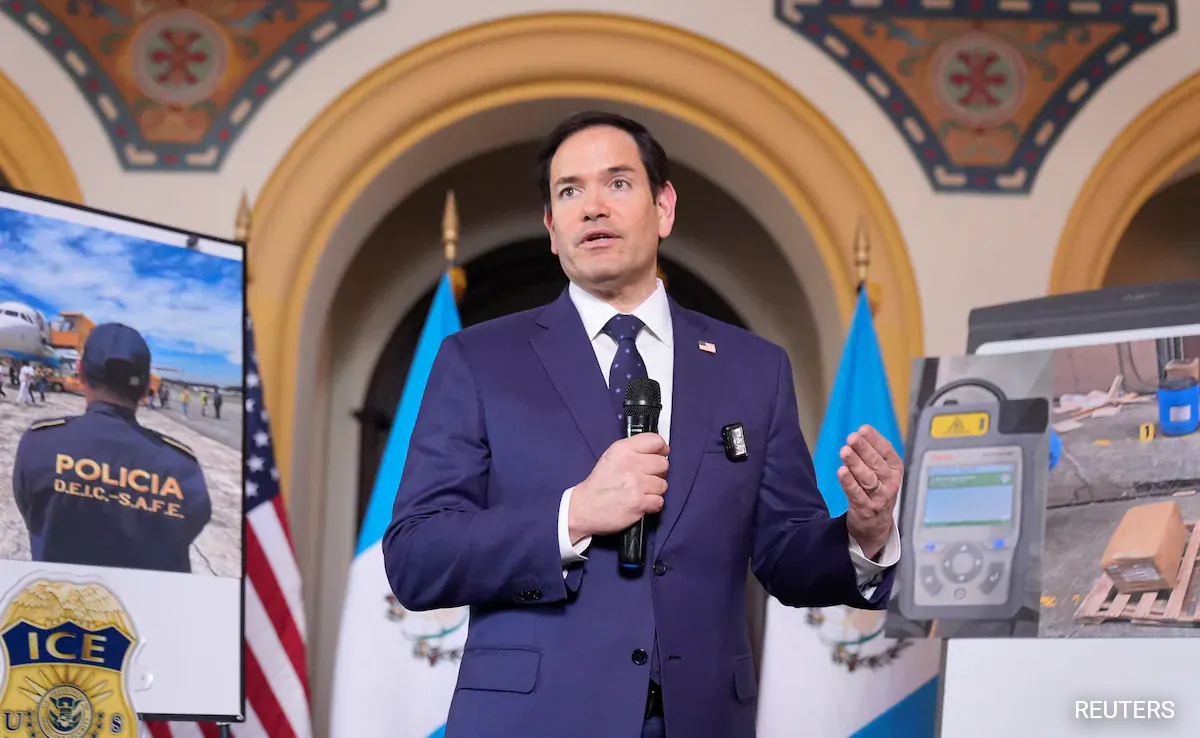
US Secretary of State Marco Rubio announced Tuesday that President Donald Trump will not attend the upcoming G20 summit in South Africa. Speaking before the Senate Foreign Relations Committee, Rubio said the decision was made due to the summit’s agenda, which the administration believes does not align with US priorities.
The announcement comes amid growing tensions between the two countries. Relations have worsened since South African President Cyril Ramaphosa signed the Expropriation Act into law in January. In March, the US expelled South Africa’s ambassador, Ebrahim Rasool, Xinhua reported.
Despite the strained ties, Ramaphosa is currently visiting the US and is expected to meet with Trump to discuss trade and bilateral cooperation.


