


Prosperity possible only through institutional development of republic: Deuba
Nepali Congress (NC) President Sher Bahadur Deuba has said that the prosperous, civilised and progressive Nepal could be built through the protection of the Constitution and institutionalisation of the federal democratic republic system.
On the occasion of the Republic Day today, he extended his best wishes to all Nepalis residing at home and abroad, stating that it is everyone's shared responsibility to protect the historic achievements gained through the sacrifices of the Nepali people.
The former Prime Minister also expressed his belief that this day will inspire everyone to work for consolidating inclusive democracy and social justice with equality and prosperity.
He expressed his respect for all those contributing to the protection and promotion of democracy, the message reads.
"Many individuals have sacrificed their invaluable lives in every democratic movement for civil freedoms, national independence, the establishment and restoration of democracy, and for its protection and promotion", Deuba noted in the message.
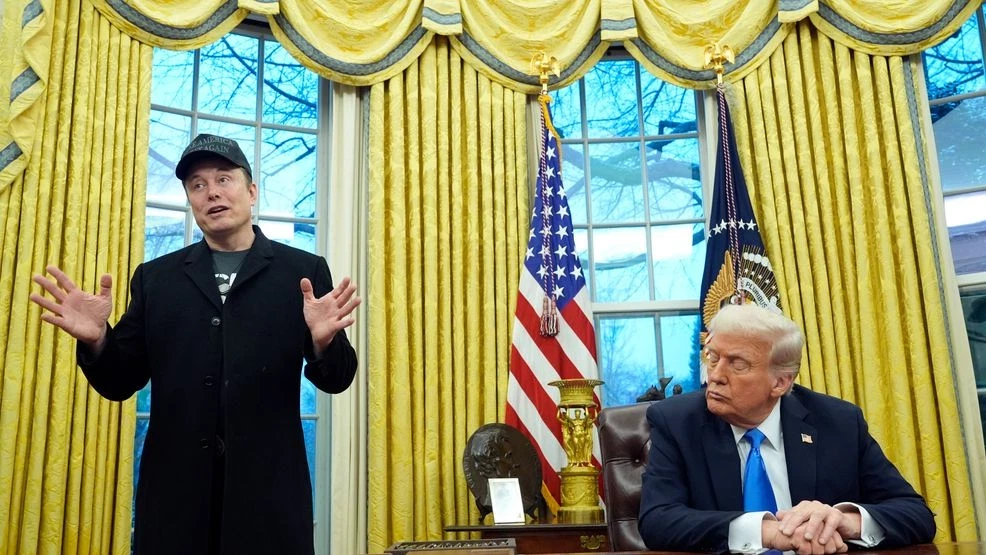
Elon Musk to step down from Trump’s cost-cutting task force
Billionaire Elon Musk has announced that his role in US President Donald Trump’s cost-cutting task force is coming to an end. Musk has served as a special government employee, helping lead the Department of Government Efficiency (Doge) since its formation earlier this year, according to BBC.
Musk's position permitted him to work for the government for up to 130 days annually. With that deadline approaching, his resignation is expected by the end of May.
In a post on X, Musk praised President Trump for the opportunity and expressed confidence in the agency's future, describing it as a model for cutting unnecessary government expenditure, BBC reported.
A White House official confirmed Musk’s offboarding would begin Wednesday night. His exit follows criticism of Trump’s recent multi-trillion dollar bill, which includes large tax breaks and increased defense spending.

US trade court blocks Trump's sweeping tariffs
A US federal court has ruled that President Donald Trump exceeded his authority by imposing sweeping global tariffs, declaring them unconstitutional. The Court of International Trade found that the 1977 International Emergency Economic Powers Act (IEEPA) does not grant the president unilateral power to regulate trade through tariffs—a power the Constitution reserves for Congress.
The ruling came in response to a lawsuit filed by the Liberty Justice Center on behalf of small businesses affected by the tariffs. The court noted that the administration’s justification did not meet the legal threshold of an “unusual and extraordinary threat”, according to BBC.
The White House promptly filed an appeal, arguing that the tariffs were necessary for national economic security and aligned with the president's "America First" strategy. The case is one of several judicial challenges to Trump's trade policies, which have triggered instability in global markets since April.

Trump issues two-week ultimatum to Putin
US President Donald Trump has given Russian President Vladimir Putin a two-week deadline to show intent to end the war in Ukraine, warning of a “different” US response if delays continue.
Trump's remarks come after a steep increase in Russian strikes across Ukraine, which has resulted in scores of casualties. Despite a recent call between the two leaders and talk of a potential peace memorandum, no progress has been made.
The administration previously paused US military support to Ukraine in March but has not demanded major concessions from Russia. Trump’s public criticism of Putin has intensified, though it has yet to shift Russia’s stance, BBC reported.

EU, UAE begin free trade talks amid US tariff tensions
The EU and UAE have launched negotiations for a Free Trade Agreement, aiming to boost trade in goods, services, digital commerce, and strategic sectors like renewable energy. Talks will begin in June following a meeting in Dubai between EU Trade Commissioner Maros Sefcovic and UAE Minister Thani Al Zeyoudi, as reported by Xinhua.
Ursula von der Leyen, President of the European Commission, described the decision as a significant step toward improving EU-Gulf ties. The negotiations come as the EU aims to reduce its reliance on US trade, following US President Donald Trump's declaration of a 50 percent tax on EU exports, which has now been postponed until July 9. Trump welcomed the talks but warned of trade measures if no deal is reached.

UN rejects Israeli accusation over Gaza aid delay
The United Nations on Wednesday rejected Israeli claims that it has failed to collect humanitarian aid waiting at the Kerem Shalom crossing into Gaza.
According to Xinhua, Israeli UN Ambassador Danny Danon said, “There are more than 400 trucks already on the Gaza side of the fence, waiting to be distributed. But the UN has failed to pick them up. We opened the crossings. We provided safe routes for those trucks. But the UN did not show up.”
UN spokesman Stephane Dujarric dismissed the accusation, stating that UN staff are risking their lives to collect aid and are facing severe access restrictions. He said all UN missions to retrieve aid on Wednesday were denied by Israeli authorities and described the process as slow and tightly controlled.
Dujarric urged Israel to allow international journalists into Gaza to assess the situation independently, Xinhua reported.

Trump administration to 'aggressively' revoke visas of Chinese students
The Trump administration will begin revoking visas of Chinese students with ties to the Chinese Communist Party or those studying in sensitive academic fields, Secretary of State Marco Rubio announced.
Visa criteria will also be revised to increase scrutiny of future applicants from China and Hong Kong. US embassies have been instructed to suspend student visa appointments as expanded social media vetting is implemented, according to BBC.
Last year, around 280,000 Chinese students enrolled in US colleges. Their numbers have dropped due to strained US-China relations and tighter immigration policies.
The administration has already canceled thousands of student visas and halted funding at numerous universities. Many international students are now expressing concern and regret about studying in the United States under these new restrictions, BBC reported.

Parliament meeting postponed till 1:30 pm Thursday
A meeting of the House of Representatives has been postponed till 1:30 pm Thursday.
The Federal Parliament Secretariat shared this information by issuing a notice today.
The meeting scheduled for 11 am started at 1 pm today.
The meeting was postponed for half an hour after the opposition lawmakers staged a protest demanding resignation of the Home Minister Ramesh Lekhak and formation of high-level probe committee, citing irregularities on visit visa.
As the Parliament failed to convene, the Secretariat then rescheduled it for 3:30 pm by issuing a notice.
Speaker Devraj Ghimire held a discussion with chief whips of major political parties to forge consensus on the differences, but the agreement eluded, thereby prompting the Speaker to postpone the meeting till tomorrow.


