


Events September 27 - September 28
Visit Fitness Forever
| 2 pm, Saturday, September 28 Mauri Lazimpat, Kathmandu |

Presented by Nepal Wellness Festival, Fitness Forever is an event illustrating how dance, fitness, and music form a divine synergy. Dance and fitness instructors will demonstrate how these three elements are interrelated.
Listen Midival Punditz Nukhta Tour
| 9 pm, Friday, September 27 LEVEL 3, Labim Mall Patan, Lalitpur |
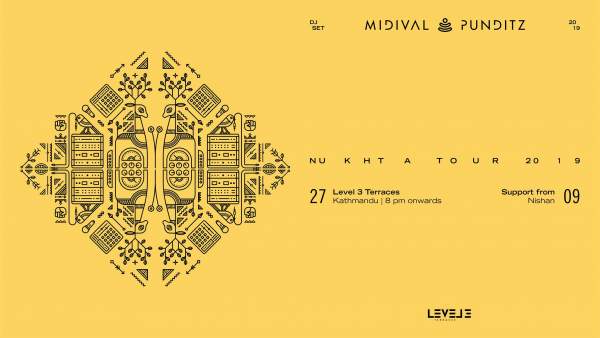
The Punditz are back in Kathmandu! The Midival Punditz are easily India’s biggest electronica act. The past two decades have seen the rise of the electronica scene within India and no single band has had more influence on its growth than Midival Punditz.
Party Corona Sunsets Ft. Jimi Jules
| 5 pm, Friday, September 27 Kathmandu Marriott Hotel Naxal, Kathmandu |

Jimi Jules—the one and only Watergate Records prodigy—makes his way to Nepal for the first time to kick off the #CoronaSunsets! Supported by Nepal’s very own Finzok, Enhancify and Fat Frog.
Celebrate Changa Chait-2076
|
1 pm, Saturday, September 28 |
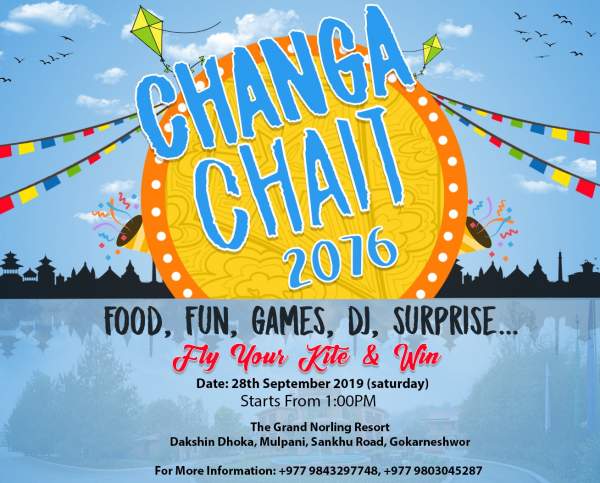
It’s that time of the year again. Welcome the festive vibe and cherish the moment together with your family and friends, along with good food, DJ sessions, fun games, and many more surprises.

Nepal has to clearly state that it won't join any alliance or block: Interview with Madhu Raman Acharya
There seems to be confusion over whether or not Nepal subscribes to the American Indo-Pacific Strategy. What do you think?
Our neighbors and other big powers often come up with such initiatives that push their strategic, political and economic interests. Now, the US has come up with its Indo-Pacific Strategy (IPS), which was earlier called ‘Asia Pivot’. China has its Belt and Road Initiative (BRI) and India its Look-East policy. So new policies and initiatives will continue to be launched. We do not have the luxury of rejecting such initiatives outright, so we should adopt a cautious approach. Our reality also does not allow us to extend unconditional support to any such initiative. From the Chinese perspective, the BRI increases two-way investment, trade volume, and flow of tourists, and China takes the responsibility of building connectivity infrastructure.
It also emphasizes that the BRI strengthens member countries’ energy security, transit economy and strategic independence. On the other hand, the IPS talks about transparent and open investment and protecting individual sovereignty. The US is saying that, unlike China, it does not force any country to sign a document. It also says that it does not provide cumbersome loans but easy grants and aid, and as such there is a clear distinction between the IPS and the BRI.
Do you think our government is struggling to juggle between these two visions of China and the US?
Now there is some confusion. The government is making some effort to clarify its position. Our support for the BRI is conditional, in that the BRI should be in our national interest. When we select some projects we should see that it helps us economically, increases our connectivity, and works to our interest. This applies to both the BRI and the IPS.
Should Nepal join the IPS only when its non-military nature is confirmed, if that is at all the case?
On the IPS, we have not been asked to be a member or sign a document. So there is no need to consider whether to join it or not. The question right now is whether we support it. The US is describing it as a geographical construct. If so, there are questions about whether we should support it, as Nepal lies between two big countries and the IPS is a strategy of a third country. There is some confusion because we are yet to draw a fine line. Now, there is a tendency of saying okay to both sides without taking a clear position. This approach does not work. Somewhere, we have to draw a clear line.
When there is a new strategy or initiative, we have to make four considerations. First, we have to stick to our national interest. Second, the initiative should be based on certain principles as Nepal is a non-aligned country and has certain norms. Third, we have to weigh the extent of economic benefits. Fourth, we should not compare one with another. We have to frankly tell our foreign friends that our approach on any initiative would be based on these four principles, which would also be a straight-forward approach.
How does Nepal handle the competing interests of China and the US?
There is new polarization in the world. China is emerging fast and there is a cold war-like relationship between China and the US. China is pushing for an alternative leadership of the world system. Whenever a new power emerges, the tussle between old and new is inevitable. We should not be a victim of their competing interests but rather look to protect our own. The problem right now is that we are yet to draw a clear outline. We are receiving huge economic assistance from the US. It is a superpower and has a big role in the operationalization of the world system. But China is also a big power and our neighbor. And India has reservations over the BRI. Due to these factors, we haven’t made adequate progress. So my advice would be to move ahead with the help of the principles I talked about earlier.
So it really does not matter whether the IPS is a military strategy?
The Americans emphasize that it is not a military strategy and I trust them. They have not asked us to be a member of a certain military block. But they want other countries to be on their side, which is natural. The IPS seems to be aimed against China. Again, we have to clearly tell our foreign friends that we will always act in our national interest and won’t allow Nepal to be used against any other country. The problem right now is that our approach is reactive, and even so we are not reacting the right way. If we come up with a clear policy on neighboring countries and big powers, it is not difficult to deal with these policies and strategies.
What could India’s role be in the Indo-Pacific Strategy and what would be its impact in Nepal?
India seems to be indifferent to the conflict in Nepal over the IPS and the BRI. India seems to have realized that it has been sidelined. In fact, this may be the first time that India feels sidelined in Nepal. Though India is a part of the Indo-Pacific, it does not seem too keen on it. Perhaps India is in a mood to work from behind the scenes for a change.
How does Nepal fit in the IPS?
After our foreign minister’s visit to Washington, the US State Department issued a press statement highlighting Nepal’s central role in the Indo-Pacific. Before that, there was not much talk about our part in the IPS. Our foreign minister says he made no commitment vis-à-vis the IPS, and I believe him. A foreign minister cannot decide on such a big issue on his own. But there is no clarity on how we deal with it. We have to clearly say we would not join any alliance or block, whether it is led by India, China, the US, or any other country, but we support initiatives that are in line with our national interests. We have to clearly convey what is compatible with our interests and what is not. Yet, up until now, we have been afraid to take such a clear stand.
It appears that all American assistance to Nepal will be channeled through the IPS from now on. How do you see this?
Even before the BRI was unveiled China was supporting Nepal’s infrastructure development. So it would be problematic if it now decides to keep all past and present projects in a single BRI basket. Likewise, there is long-standing cooperation with the US, including military cooperation. It would again to unwise to put everything into one IPS basket. Only specific projects should be dealt with under the BRI because we have several other long-term projects which China. And with the US, the Millennium Challenge Cooperation agreement was signed well before the the IPS was unveiled. So why see it as part of the IPS? If the BRI and the IPS become these all-encompassing strategies, people will naturally think that they are mutually exclusive.
Would you link the expected visit of Chinese President Xi Jinping to Nepal to the growing American activism here?
In his first term, Chinese President Xi visited many South Asian countries but not Nepal. In my view, Xi’s visit did not take place due to the anti-China activities in Nepal after the 2008 Beijing Olympics and due to our volatile internal political situation. Now there have been multiple high-level visits from Nepal to China and several agreements have been signed. As you mentioned, the US activism could be a reason for the visit. But our focus should be on how to advance Nepal-China bilateral cooperation during his visit, and not how a third country will be affected by it. There has been no progress on the BRI projects. First, we took a long time to sign the MoU and now there is a long delay over project selection. It would be wonderful if there is progress on these projects during Xi’s visit.
Some speculate that Xi will make a stopover visit while others think he could stay here for a night. Whether he is coming here via Tibet or India seems to be another point of debate. How important are these things in diplomacy?
They matter a lot. For example, Chinese Foreign Minister Wang Yi came here from Pakistan. This is meaningful. Likewise, our President stayed in Beijing for nine days. When the Chinese foreign minister was in Nepal recently, he went on a trek, which suggests a lack of agenda. But I think just the fact that the Chinese president will be coming after such a long time is significant in itself. And even if he is here only for eight or nine hours, that should be sufficient to talk to the Nepali president, meet the prime minister, attend a state dinner, and sign some agreements.
Finally, do you think Nepali negotiators somehow don’t understand their Chinese counterparts, which in turn hinders bilateral cooperation?
We have a long experience of working with the Chinese. On the BRI, I think most problems are due to a lack of clarify among our political leadership. After joining it, we were confused about the types and number of projects. Initially, we selected three dozen projects which have now been trimmed down to nine. Out of three dozen projects, one dealt with building a view tower in Nagarkot. This was laughable. When we deal with China, we have to think of how to secure connectivity, transit, and about maintaining our strategic independence

Mahindra XUV 300: Decidedly premium
Nepal Drives
Mahindra have a certain degree of quirkiness to their designs, and they have had both hits and misses in their lineup. We’d say they hit the nail right on the head with the Mahindra XUV 500 and the Scorpio. The Thar has amassed a cult following and even the Scorpio Pik Up looks absolutely amazing. However, there are models like the Mahindra KUV 100 and the Quanto that are difficult to love.
Regardless, Mahindra have always had a certain air of nonconformity to their products. And now there is the new XUV 300: Mahindra’s newest representative for the compact SUV segment. We thus have in front of us a completely non-quirky premium crossover.
Exterior
The XUV 300 adopts a conventional design language that looks classy and sporty, but still has a robust feel to it thanks to the boxy design. The car is solidly built with 68-percent high-strength steel. Thumb down on the door metal and there is very little flex.
Mahindra have had to keep the length of the XUV300 to under-four meters for tax savings, but they have not compromised on the profile design. The floating roofline with the blackened pillars improves the dynamism of the vehicle. The larger wheels give it a robust look and the side cladding and roof rails enhance its crossover appearance.
Much like the grilles seen on the XUV 500, the XUV 300 gets a piano black grille featuring a large Mahindra badge, a chrome strip on the top, and multiple small chrome inserts. Sleek DRLs are integrated in the projector headlight cluster and in a very unique way extend into the bumper, merging with the fog lights. Maybe they haven’t lost their quirkiness completely.
The rear haunches are one of our favorite things about how the XUV 300 looks. They add character to the appeal of the compact XUV 300. The rear has a neat little spoiler with integrated LED HMSL (High Mounted Stop Lamp). The taillights are beautifully styled and sit on either side of the well-sculpted tailgate. A large silver skid plate adds a sporty character to the rear.
Interior
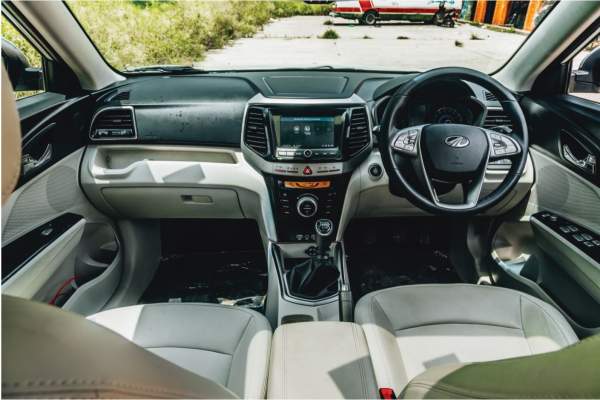
On the inside you do see that a lot of hard plastic is used, but it is of high quality. The dashboard’s styling is functional. It has a ‘beige & black’ theme with silver inserts, while piano black has been used on the center fascia (climate control panel) and air-con vents. While the lower part of the dashboard is beige, the carpets and floor mats are black. Ergonomically, the cabin is well laid out and all controls are easy to find and reach.
If you and your passenger usually have trouble with the cabin temperature, you are in luck with the XUV 300 because you get a first-in-segment dual zone fully automatic climate control. You also get an option of a sunroof.
On the center console you get a 17.78cm touchscreen infotainment system (not available on the base variant) equipped with Bluetooth, AUX & USB connectivity, and it is compatible with Apple and Android Auto. It also doubles as a reversing camera display. On the instrument console display you get all the information you need. A useful one that comes to mind is the tyre position display for when you park and start out. The instrument console (with speedo and odometer) gets multicolor illumination, which is great.
Although the functionality is limited, you also get a Blue Sense App with Smart watch connectivity.
The leatherette (artificial leather) seats are comfortable and provide adequate support to the thighs and back. All three passengers get adjustable headrest and three-point seat belts, which are cool to have. You can comfortably seat three people in the rear, even with taller individuals out on the front. These rear seats can be split 60:40 for flexible boot space. The boot space, however, is only 257 liters, the smallest in the segment, and the loading lip is also pretty high.
Fun to drive
On our hands we had the 1.5-liter diesel variant, one that claims to have the best in segment torque of 300Nm produced at 1500-2500rpm. These impressive numbers translate well when you’re driving. The unknowing heavy right foot of an unsuspecting driver will catapult you forwards with surprising menace. The engine properly wakes up at around 2,000 rpm and you instantly fall in love with it. And because of the strong torque reserve at the bottom end you will notice that you are not shifting gears too often.
You will also notice that the XUV 300 is geared more towards tarmac driving. Although it isn’t too fazed by unexpected road undulations, the suspension is definitely on the firmer side. Luckily, this makes it a peach for driving on pitched roads and on corners.
Speaking of corners, the XUV 300 gets the segment-first smart steering system that gives you the option of choosing between Comfort, Normal, and Sport modes. Although there isn’t a huge world of differences between the modes, we definitely noticed that the steering firms up and gives better feedback when put on sport mode. For open stretches and corners we stuck to the sport mode as well. In the city, we chose to try out the other two modes, which worked well, but we ultimately went back to sport mode again.
With a kerb weight of 1,360 kg, the diesel has a power-to-weight ratio of 85 BHP/ ton, is class-leading, and the power is handled well. Till date, all offerings from Mahindra in this segment have been old-school SUVs with body-on-frame constructions. This worked against them because most urban buyers today prefer more modern monocoque-based crossovers.
The XUV300 is the first with a monocoque construction, making it more car-like to drive. The top variant gets a segment-first seven airbags. It is equipped with all-around disc brakes which come as standard, another segment-first. Other segment-firsts include heated ORVMs, smart steering system, and front parking sensors.
Verdict
The XUV 300 is a great car. Although it appears to be a Sangyong Tivoli with its rear end chopped to squeeze into the 4-meter mark, the Mahindra XUV 300 is a completely new car. It uses Mahindra’s own engine and suspension, and all the body panels are new as well.
The performance is tremendously satisfying, and it makes up for the fact that it likes sticking to the tarmac. Further, as Mahindra already have the TUV 300 for more rugged driving, it seems the XUV 300 has purposefully been made for smoother driving.
The little sibling to the XUV 500 does have one factor that will make buyers think twice: the price. Maybe it’s because of the driving fun it offers, or the long list of segment firsts offered; Mahindra have made the XUV 300 a decidedly premium offer.

It’s time to…
Take a guided photo tour
In Kathmandu valley and Pokhara
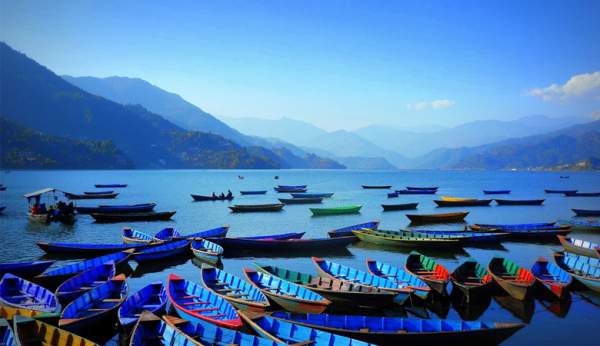
Nepal is undoubtedly a photographer’s delight, a land of eternal fascination. Explore snow-capped mountain peaks, its people, architectural marvels, incredible Himalayan landscapes and extraordinary culture of Nepal while learning from the best photo-mentors. The guided photo-experience takes you to Kathmandu, Bhaktapur, Patan and offers the living representation of how the entire Kathmandu Valley would have looked like during the medieval periods. All of these cities have glorious architecture, massive durbar or royal courts, temples built in unique pagoda style—which are believed to be the stairways to the heaven. The itinerary also includes a visit to Pokhara.
The tour is 6 days and 5 nights.
Get in touch with the host Indian Photo Tours team at 9811044788.
Make a Thaili
In Pokhara
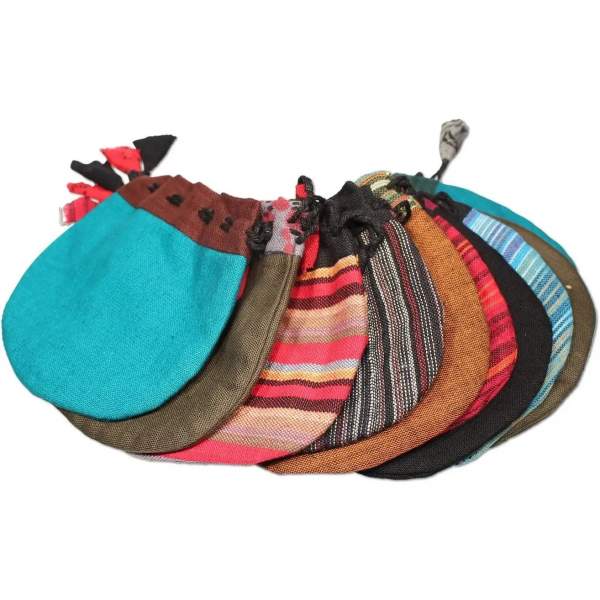
If you buy jewelry at a local market, you’ve surely noticed the Thaili, those little colorful pouches local women hold in their hands. Carrying money isn’t the only use of Thaili as mobile phone, camera and keys can also be stored in it. The Women’s Skills Development Organization (WSDO) teaches you how to make one in three hours, for just Rs 1,500, inclusive of all tools and materials. This is a simple process and you can explore your creativity as you get to choose colors of threads you would like to combine. You also get to mingle with the women at WSDO who have been in operation for over three decades.
Call 061534025 for more detail.
Fly Kites
In Lalitpur
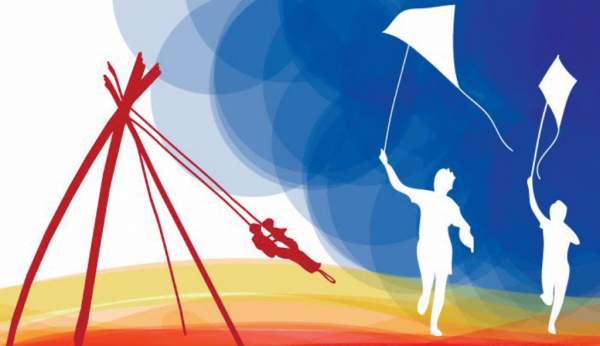
As Dashain approaches, many kites will soon be seen in the sky. Under the cozy sunshine, the pure blue sky will be packed with of different sizes and shapes. To mark the World Tourism Day, Visit Nepal 2020, and to welcome Dashain festival and promote tourism in South Lalitpur, Countryside Camps is hosting the second episode of the traditional Nepali kite flying festival. Fly kites, challenge fellow kite-flyers, cut their cords, and enjoy some yummy food and drinks. There will also be a local cultural dance show. There is no entry fee but you can donate what you want and the proceeds will be used to buy clothes for local children.
The event is from 11 am to 3:30 pm from September 27 to October 3.
Call 9851079005 for more detail.

Events
| Listen Nomadic Sounds 7 pm, Friday, September 20 Kathmandu Jazz Conservatory Jhamsikhel, Lalitpur |
Nomadic Sounds if a concert featuring "SER O DUO," all the way from Chile. Their performance include composition of other musicians, own compositions, improvisation and approaches to world music. They will be performing songs from different parts of the world.

| Visit Mommy & Baby Nepal 10 am, Saturday, September 21 Malla Hotel Thamel, Kathmandu |
“Mommy & Baby” is a first of its kind exhibition and fair designed especially for mother and kids to introduce ranges of national and international products. The event will also host multiple fueling station sharing information and services. The entry is free.
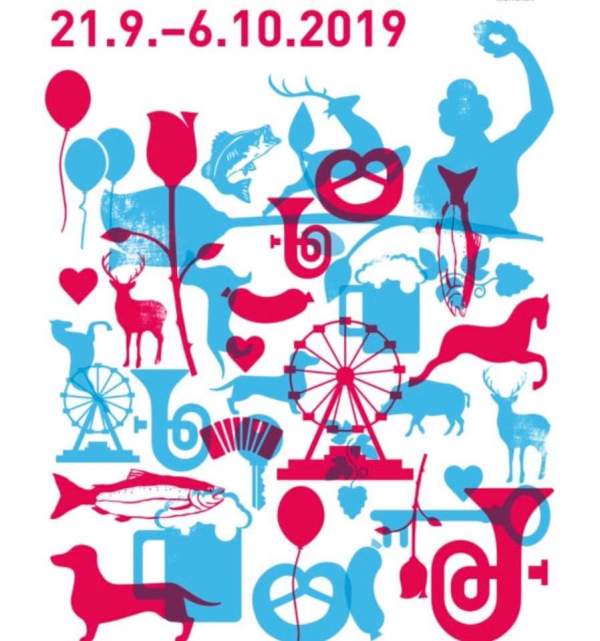
| Enjoy Oktoberfest Vol 1 5 pm, Saturday, September 21 EVOKE Jhamsikhel, Lalitpur |
The first volume of the month-long Oktoberfest will feature beer, barbecue and live reggae music as well as drinking games.
Cover: Rs 500 with one free beer
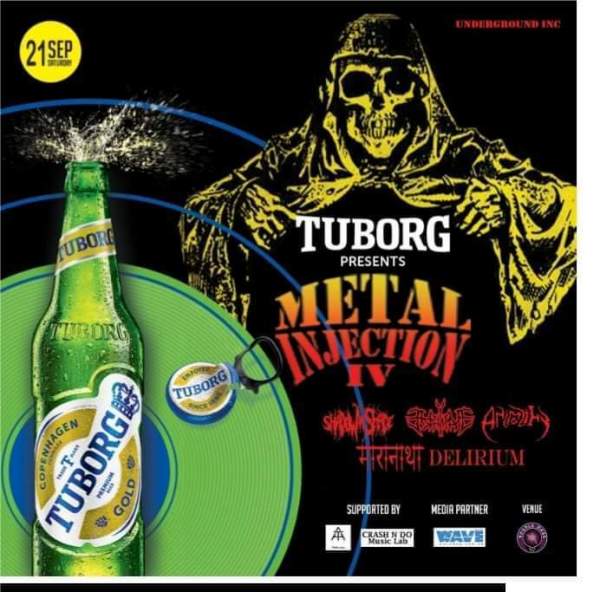
| Attend Metal Injection IV 2 pm, Saturday, September 21 Purple Haze Rock Bar Thamel, Kathmandu |
The fourth instalment of the Metal Injection concert presented by Tuborg is boasts of a heavy line up consisting of Shadow in Shade; Asphyxiate; Animality; Maranatha and Delirium.
Tickets:
Rs 300 - Presales
Rs 500 – Door sales

India Vs South Africa
South Africa A could add only seven runs to their overnight score as they were bundled out for 186 in the first session of day four. Shardul Thakur knocked over Lutho Sipamla to end South Africa’s second innings. The visitors set a non-threatening a target of 48 runs for the hosts to chase down. Chasing 48, India A lost the wicket of their skipper, Shubman Gill, early on. Lungi Ngidi took two wickets with the new ball including Gill and Ankit Bawne who was promoted up the order. Ricky Bhui was promoted up the order as well as Ruturaj Gaikwad did not open. The wicketkeeper-batsman Srikar Bharat lost his wicket to new ball bowler Dane Piedt. However, Shivam Dube helped his side finish with a flourish. Dube hit two back-to-back sixes to finish off the match and guide India A to an easy win in the first unofficial Test.
| Date: September 18, Wednesday Place: Dharamshala, India Time: 7:15 pm |

Hit and Miss
|
Miss
Asan N’JieEmmerdale have sacked Asan N’Jie after he was filmed threatening to “knife” and “kill” Hollyoaks’ Jamie Lomas. Pictures and footage of the row between Asan, 25, and Jamie, 44, reveals the pair squaring up to one another Asan was recorded threatening to “knife” him. The dispute, which is said to involve money, is believed to have been started by Asan, who was heard goading Jamie. Asan issued a groveling apology and said in a statement: “My behaviour at the TV Choice Awards was completely unacceptable and very much out of character.” |


Quick questions with Shiva Pariyar, Singer
Quick questions with Shiva Pariyar, Singer
1) How would you describe yourself in three words?
A: An honest artist, a good guy, and a responsible family person.
2) What are you most scared of?
A: My past mistakes.
4) In one word, what is music to you?
A: My life.
5) A song you would like to dedicate to your fans?
A: Sangai dubdai chhu timro yaad ma!
6) A person from the music industry you always look up to?
A: Gopal Yonjan.
7) How would someone get your special attention?
A: By being honest.
8) What is one message you would give to your fans?
A: Listen to Nepali songs with your heart.
9) What is your favorite food?
A: Rice, lentils, pickle, and vegetables.
10) If today was the last day of your life, how would you spend it?
A: I would spend my entire time remembering my daughter.


