


The Triangle Conference: Vote of thanks
Vote of thanks
The Annapurna Express would like to thank all esteemed panelists, speakers, and moderators (pictured alongside) who made the first edition of our signature ‘The Triangle Conference’ (Nov 25-27) a roaring success. You were the beating heart of the event that was aimed at getting the stakeholders in government, business, and academia talking, with the ultimate goal of harmonizing their work for the greater good of the country and the people.
This conference would also not have been possible without the generous help from our sponsors—Standard Chartered Bank, Global College, and the National Democratic Institute—who wholeheartedly supported our novel venture. The Express team is also in Vote of thanks debt to Annapurna Media Network Chairman Capt Rameshwar Thapa (who so readily backed our vision), Group CEO Sanat Neupane (the brain behind the conference), and our Publishing Director Sachan Thapa (for his enormous help with the event’s live TV broadcast).
A big thanks to all our other AMN colleagues who helped us with the event as well as the many more of our friends from outside the organization for their invaluable feedback and guidance. In the end, The Express would like to reiterate its commitment to the AMN’s ‘Unity for Sustainability’ campaign and vows to make all its events as climate-friendly as possible.
Thank you, everyone.
The Annapurna Express Editorial team
Day 1
Session 1: Nepal 2030
Nepal’s national capabilities. What do we have? What do we need? Our progress on SDGs and development.
Panelists:
 Kewal Bhandari, Secretary, National Planning Commission
 Indra Adhikari, Political Analyst
 Bishal Chalise, Assistant Professor, TU
 Pawan Tuladhar, Tourism Entrepreneur, Dharma Adventure
 Sunaina Ghimire Pandey, MD, General Technology Pvt. Ltd.
Session 2: Post-pandemic mental health, youth and workforce
Nepal was already burdened by a growing mental health epidemic. The pandemic made it worse. How do we get them, and the youth in particular, in a better shape and again contributing to the national economy?
Panelists:
 Manoj Gajurel, Comedian/Mental Health Campaigner
 Dr Rishav Koirala, Psychiatrist, Grande Hospital
 Bhawana Shrestha, Co-founder, My Emotions Matter
 Shreeya Giri, Founder/MD, Happy Minds
Session 3: Nation-building and leadership
 Kulman Ghising, MD, Nepal Electricity Authority
 Dr Sanduk Ruit, Senior Eye Surgeon
Day 2
Session 1: The triangular relationship gaps
Why are Nepal’s Government, Academia and Economy not in harmony? How do we get them talking and collaborating more?
Panelists:
 Bhim Prasad Subedi, Chairperson, UGC Board
 Manushi Yami Bhattarai, Politician, JSPN
 Suman Dahal, Researcher/Lecturer, Apex College
 Sohan Sha, Education Researcher, Martin Chautari
 Kushum Shakya, Economist
Session 2: Political parties and electoral governance
Heading into the next set of elections, how are our political parties gearing up? How is the election commission?
Panelists:
 Bishnu Dahal, Political Analyst
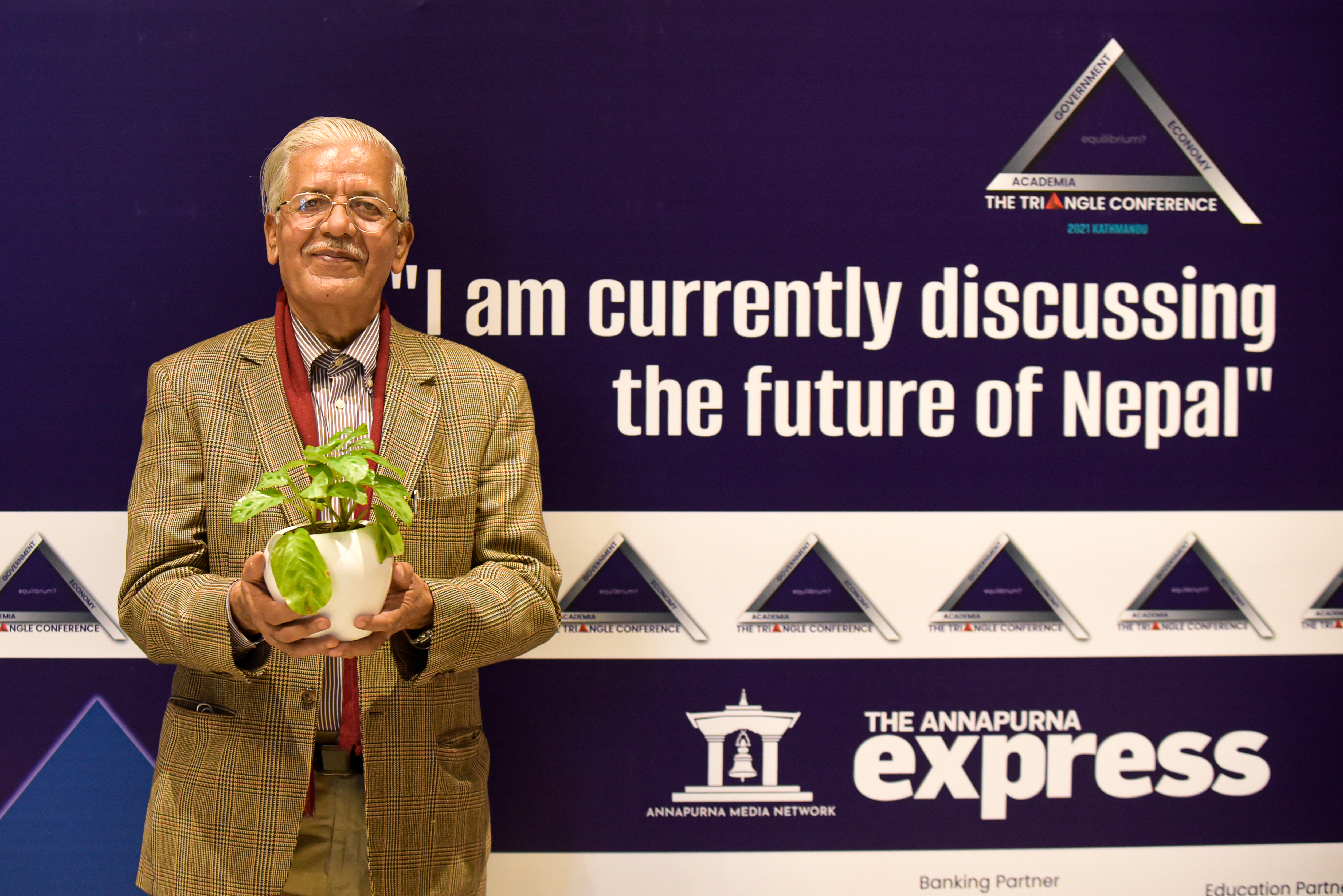 Neel Kantha Uprety, Former CEC/Electoral Finance Researcher
 Lokesh Dhakal, Politician, Nepali Congress
 Yogesh Dhakal, Senior Journalist
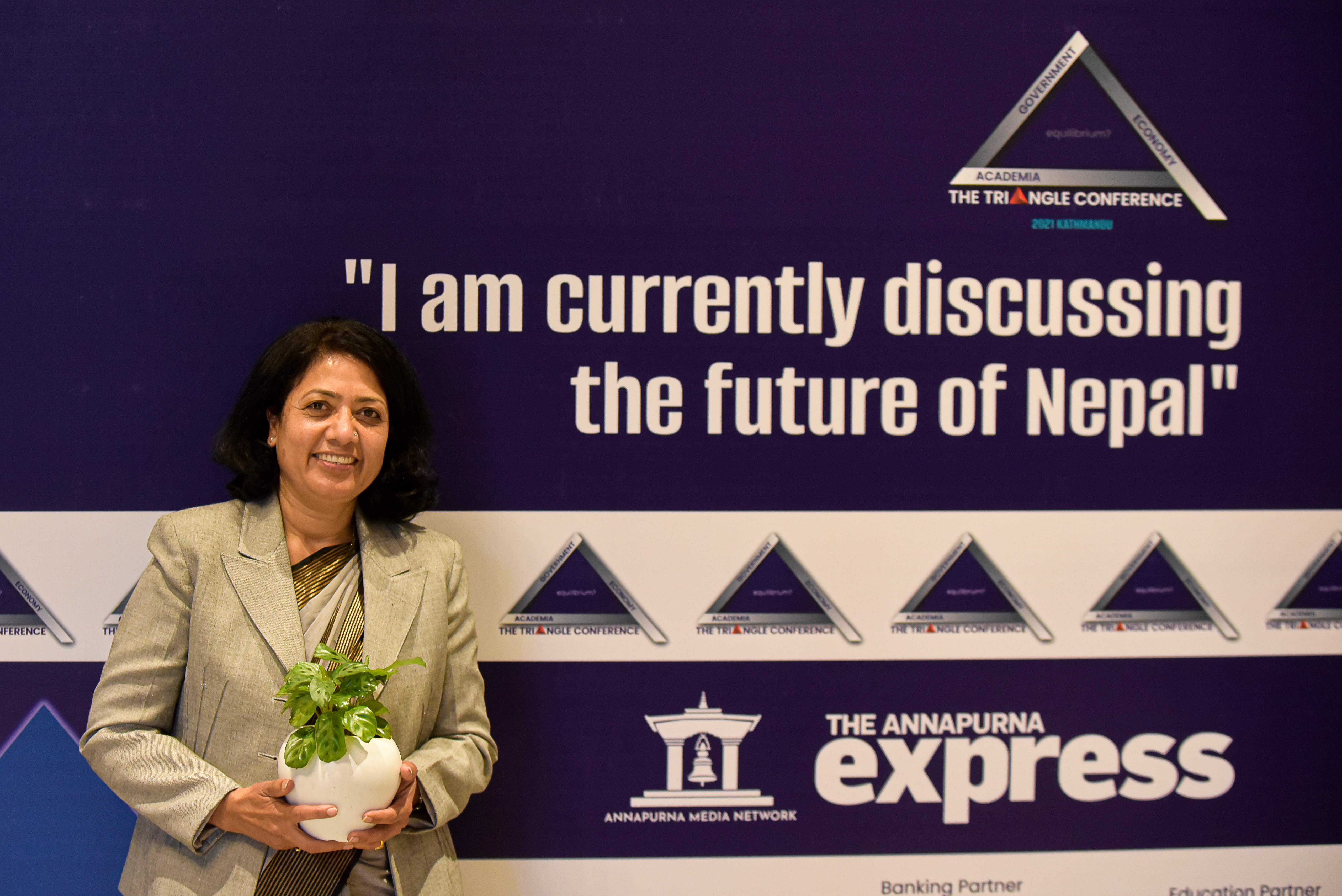 Bimala Rai Poudel, MP, National Assembly
Day 3
Session 1: Leadership: What’s missing?
What are we missing in leadership development? How do we create leaders, in every field?
Panelists:
 Prakash Chandra Pariyar, Secretariat Member, Bibeksheel Sajha Party
 Malvika Subba, Media Personality
 Dr Tshering Lama, Co-founder, Idea Studio
 Anjana Bishankhe, MP, HoR, CPN (Maoist Center)
 Devendra Pokharel, Director, Cocina Mitho Chha
Session 2: Workforce 2025
The traits, ideas, characteristics, competencies, concepts of the workforce Nepal needs by 2025.
Panelists:
 Namrata Pandey, Regional Director, Bangladesh International Mediation Society
 Daniel D. Shrestha, CEO, Cogent Health
 Jeevan Baniya, Researcher/Assistant Director, Social Science Baba
 Anil Muni Bajracharya, Deputy Director, Research Division, CTEVT


Fraud case against Century bank
A fraud case has been filed against Century Commercial Bank and Greenhill City, a housing company, for allegedly embezzling over Rs 10 million while selling a housing unit.
According to Beema Post, the bank, the housing company, and Shanta Sharma signed an agreement under which Century provided Greenhill a loan of Rs 13.1 million on 13 January 2019 for Sharma to buy the house, valued at Rs 32.2 million. Sharma paid Rs 10.3 million as an advance in cash. The bank, which handed over the loan amount to Greenhill, made Sharma pay the monthly installments for it.
On 21 October 2021, Sharma received a letter from Greenhill saying that she has only paid Rs 10.3 million for her house and that she needs to pay up the rest of the amount. The company, in its letter, didn’t acknowledge its receipt of Rs 13.1 million from the bank.
Also read: NB Group ‘unfit’ to buy NBB shares
The victim now says that Century and Greenhill have colluded to embezzle the Rs 13.1 million the bank issued to the company following the agreement on January 13. Greenhill has also not completed all construction-related works of the house.
Sharma recently moved the high court seeking action against the bank and the company stating that her repeated complaints filed at the central bank remained unheard.
This is not the first time that Century has been involved in a controversy. Recently, it lost Rs 50 million due to unscrupulous business practices by signing a remittance agreement with a mysterious overseas company, but the central bank is yet to take action against its employees

Editorial: Exclusionary UML
The constitution of Nepal 2015 requires political parties to ensure “such inclusive representation in its executive committees at various levels as may be reflecting the diversity of Nepal”. CPN-UML and its (reelected) Chairman KP Sharma Oli have made a mockery of the provision by selecting a single Madhesi and a couple of women in its new 19-member office-bearers team. Women comprise over half of the national population while the Madhesi-Tharu cluster make up over 33 percent. Yet they are minimally represented. Tharus and Muslims have been completely excluded. This is not the make-up of a national political party.
This panel of office-bearers is unconstitutional and hence liable to legal challenge. More than that, it is indicative of our major political parties’ blatant disregard for inclusion. The situation is not much different in Nepali Congress, CPN (Maoist Center) or the newest kid in the block, CPN (Unified Socialist). Yet even among them, UML fares the worst. The party had a great opportunity to clean up its ‘anti-Madhesi’ and ‘anti-inclusion’ image this time, yet the incumbent chairman decided to give continuity to the status quo by ramrodding his handpicked list of nominees for various party organs.
Also read: Editorial: Heed conflict victims
For long UML has been seen as a status quoist force that owes its rise to the traditionally dominant communities, and its stranglehold over the NGO sector from which it mints money to plough into national elections. There is also little to suggest that the party believes in its stated ideology of ‘people’s multiparty democracy’ which, at its heart, was aimed at reflecting Nepal’s ethnic, linguistic and religious diversity in party hierarchy and programs.
Oli has calculated that he needs a coterie of trusted lieutenants to effectively run the party, so what if most of them share similar ethnic backgrounds? The broader calculation is that pandering to traditionally privileged caste groups, the core UML vote-bank, will again pay off come election-time. In next-door India Narendra Modi has shown the electoral effectiveness of catering almost exclusively to the adherents of one religion. Nepal’s top politicians have likewise chosen to follow their majoritarian instincts, to the detriment of the new federal republic.

Nepali horror flick set for release
With the end of the festive season, the Nepali cinema industry is witnessing a slew of new releases, mostly of the movies that had for long been postponed. The producers of ‘Kathaputali’, one of the most anticipated horror movies, have now announced their movie’s release date: 1 January 2022.
Movies are often released on Fridays but this time the Kathaputali team has settled on a Thursday as it is a national holiday because of Tamhu Loshar.
Written by Sampada Malla and directed by Bhimsen Lama, it features Gauri Malla, Mithila Sharma, Karma, Shilpa Mashke, Usha Rajak, Suvarna Thapa, and others.
The movie has already received awards at various international film festivals. It recently won two awards at the Winter Film Awards in the United States.
The entire post-production work of the film took place in London.

Eating Out | Eat. Drink. Read. Repeat
As you walk from Naxal to Gahana Pokhari, a cozy cafe with shelves stuffed with books will catch your eyes. It’s a sign to take some time off your day and sink into the warm and lively setting of Bodhi. The café, which was earlier located in Maharajgunj, recently shifted to its much-bigger premises in Naxal.
_20211201134020.jpg "Bodhi books and bakes")
Whether you want to snuggle up with a book on your own, a cup of steaming hot chocolate in your hands, or you intend to share a vibey dinner, the inviting spirit of Bodhi is worth a visit. It offers a menu of diverse tastes with a diary of recipes from different parts of the world. The live drinks bar is the perfect antidote to your weeklong fatigue. Oh, and there is sufficient underground parking.
_20211201134127.jpg "Bodhi books and bakes")
Bodhi
Chef’s Special Dishes:
Loaded machos
Enchiladas
Spaghetti Bolognese
Opening time: 8:00 AM to 10:00 PM
Location: Naxal
Meal for 2: Rs 1,500
Card/Phone pay: Yes
Reservation: Yes
_20211201140012.jpg "Bodhi books and bakes")

The Triangle Conference begins
The Triangle Conference initiated by The Annapurna Express, the sister publication of Annapurna Media Network, kicked off on Monday at Hyatt Place, Kathmandu.
‘The Triangle Conference: Let’s discuss the future of Nepal’ (November 25-27) is a platform initiated by The Annapurna Express to get these stakeholders talking and hasing out their differences so that they can work in mutually beneficial ways.
During the seven sessions spread over three days, politicians, bureaucrats, academics, private sector representatives, student leaders and other representatives from the three sectors will discuss the gaps in their communication, their future vision for Nepal, entrepreneurship, leadership, and policy issues.
Chairman of AMN and today’s chief guest, Capt. Rameshor Thapa said, “Our media house wants to keep this debate going so that we can find solutions to outstanding problems.”

AMN launches ‘Unity for Sustainability’ campaign
Annapurna Media Network (AMN), a leading media house in Nepal, has launched a two-year ‘Unity for Sustainability’ campaign which aims to collaborate with concerned stakeholders on climate change issues.
The campaign, which will come into force on 1 January 2022, was announced amid a special function in Kathmandu on November 24.
To fight climate change individual steps are not enough and all stakeholders need to jointly work and raise their voices. Right now, these stakeholders are not working in unison and there is a lack of coordination, and hence no concrete output. AMN hopes to change this state of affairs by bringing together climate stakeholders and fostering meaningful interactions between them.
Inaugurating the campaign, AMN Chairman Capt. Rameshwar Thapa said we are passing through a severe climate crisis so all stakeholders must be united and work in collaboration. “Annapurna Media Network will raise the issue of climate change in a vibrant and profound way. Our news, editorial, and other news items need to be refined in line with the crisis caused by climate change,” he said.
Stating that we are passing through a phase of climate crisis, Chairman Thapa urged concerned stakeholders to join hands on climate change issues. This is our both professional and social responsibility and our campaign will enhance dialogue on climate change issues, he said.
Also read: The Triangle Conference: Righting the government-academia-business mismatch
Sachan Thapa, Director, AMN, reiterated the group’s commitment to consistently take up the climate agenda, with the goal of bringing meaningful changes to Nepal’s climate policies. Not just that. AMN, he said, wants to articulate Nepal’s collective voice as the country cries out for climate justice and for compensation from the biggest polluters in the world. “Towards this goal, we are ready to partner with any interested party that wants to use our platforms to disseminate climate awareness and to help Nepal meet its climate-related goals, including the ones made at the recent COP26 in Glasgow, Scotland.”
Biswas Baral, Editor-In-Chief of The Annapurna Express, said AMN’s latest commitment is to consistently champion the climate agenda in Nepal and help the country deal with what is an increasingly growing menace. And we believe it is the Nepali youth who have to take ownership of this agenda now. The Annapurna Express will help them do so, he said. Baral further said: “As a part of our focus on youth and climate change, we will be publishing exclusive features on a weekly basis. These will help the youth understand climate change, but also give them an understanding of how they can personally contribute to stopping the phenomena.”
Akhanda Bhandari, editor of Annapurna Post, Shambhu Kattel, Annapurna Post Digital news Chief, Tikaram Yatri, Chief Editor AP1 TV and, Shiromani Dawadi, Station Manager at Annapurna Radio presented their respective plans on how to cover the climate change issues in the outlets they lead. AMN's media outlets are working on different climate change themes.
As the country witnesses more and more extreme weather events and our lives and livelihoods witness drastic changes, it is vital that our youths be made aware of climate change and its deleterious impact as early as possible. This means including climate change in school and college curriculum, and this is also something The Annapurna Express will push for.

Editorial: Heed conflict victims
Lack of resources has never been the problem with Nepal’s transitional justice process, even though paucity of manpower and money for the two transitional justice bodies are a symptom of the underlying malaise. The root malady continues to be an utter lack of political will. There is zero political will to carefully investigate war-time rights abuses and to prosecute the guilty. This is certainly so with the two main parties of the current ruling alliance: Nepali Congress and CPN (Maoist Center).
Top Maoist leaders fear any kind of in-depth investigation could snare them. The same applies to some senior Nepali Congress leaders like Sher Bahadur Deuba and Krishna Prasad Sitaula who were in top government positions as the state tried to suppress the Maoist insurgency. Then there is the Nepal Army—which led anti-insurgency efforts in the second half of the decade-long conflict—that has repeatedly thwarted any attempt at fair and independent investigation. With such powerful forces arrayed against them, no wonder thousands of conflict victims await justice.
Also read: Editorial: Nepal COP-ing badly
Fifteen years since the signing of the Comprehensive Peace Agreement to formally end the civil war, conflict victims are no closer to a closure. The hope of the abovementioned actors is that the issue of transitional justice will fade away with time. Yet the pain of the families that lost their loved ones—who were either killed or ‘disappeared’ during the conflict—won’t go away so easily. In fact, the longer they are kept waiting, the more the old wounds will fester, which in turn will increase the risk of the conflict reigniting or of a new one flaring up. Nor will the international community easily forget, and Nepal’s image abroad will continue to suffer.
The Maoist insurgency happened as large sections of the Nepali society felt left out of the political and social mainstream. This is still the case today. The importance of addressing the grievances of the marginalized sections of the society—and no group has been as marginalized and mistreated in recent times as the conflict victims—and bringing them into the national mainstream thus cannot be exaggerated. Only then a truly inclusive society be created and only then will lasting peace be ensured.


