


Mind Matters | Reason behind insomnia
I am a 21-year-old student with a terrible case of insomnia. I have tried everything possible to get a good night’s sleep, from exercising till exhaustion to using sleeping pills–all to no avail. I feel tired and sleepy but I can barely get myself to sleep for two hours. Some days, I am up all night and asleep all day. This has been going on for six months now. I started having this problem in my teenage and it's only gotten worse. What should I do? —An insomniac
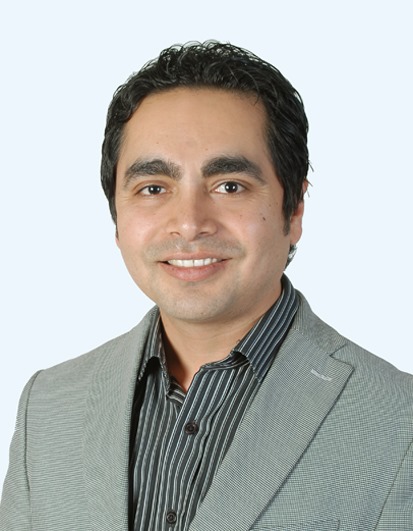
Answered by Rishav Koirala, Psychiatrist and Researcher
Most of the time when a patient claims to have a sleeping disorder or insomnia, it is usually a secondary problem. Mostly, it is a symptom of other mental health issues like anxiety and depression. My professional experience tells me that it is only about 10 percent of the time when sleeping disorder is a primary issue. So, to figure this out, you will have to go through a proper assessment with a professional to identify the root cause of your sleeping disorder. Only then can we move towards treatment.
You also mentioned the activities you have tried to sleep better. You should know that some of those activities do more harm than good. For instance, tiring yourself out through exercise is not good, for excessive workout has a bad effect on your sleep, causing distress and sleep disorder. On the sleeping pills, did you take them after professional consultation? If not, I suggest you get off those pills immediately. If a professional prescribed it, then chances are those pills do not suit you. If that medication does not work, another might.
Concerning your sleep pattern, sleeping all day and being awake at night is the worst enemy of your mental health. I suggest you look up ‘sleep hygiene’ on the internet and try some of the tips to improve your sleep schedule. Some things included with ‘sleep hygiene’ are: going to bed and waking up at the same time every day, including weekends; ensuring your bedroom is quiet, dark, relaxing and at a comfortable temperature; and avoiding large meals, caffeine and alcohol before bed.
Further, there are times when we feel like we have not fallen asleep, while our body is actually getting enough sleep. We wake up thinking we got minimal rest but in reality, our body will have had an adequate amount of sleep to support us throughout the day. You getting only two hours of sleep a night for the past six months also suggests this. If a human body gets only two hours of sleep a day, it will not function after a week or even less. So your body might be getting adequate sleep but you feel sleep-deprived because of stress.
My first suggestion for you would be to go through some techniques to maintain sleep hygiene, which you will find on the internet. Second, it is good to seek professional help, if you haven’t, to identify the root cause of your sleep disorder. Only then can you proceed to the solution.

Thames Assemblage to take place on July 7 and 8
Thames International College is organizing Thames Assemblage 2022 is bringing together the three annual flagship events Nepal Social Work Symposium, Thames Business Gabfest, and Art Carnival.
The Assemblage will be held at Taragaon Museum on July 7 and 8, 2022, and will gather leading experts, practitioners, intellectuals, and students to deliberate upon various issues and ideas through interdisciplinary lenses, as relevant to the dynamic environment we live in. It will also bring together students in a celebration of their artistic expressions.
Academics, public intellectuals, civil society leaders, politicians, civil servants, non-profit professionals, activists, social workers, media personalities, entrepreneurs, business thinkers, strategists, technologists, economists, writers, poets, artists, and educators are invited as guest speakers.
This year, Thames is making an effort to invite speakers and address topics we feel would resonate with young, aspiring students. Students as young as high school students can participate in the symposium as the audience. Former Prime Minister Baburam Bhattarai will speak on: Nepal after 10 years: social and economic perspectives. Editor-in-Chief of Kantipur Daily Sudheer Sharma will speak on Geopolitics and Nepal.

3 Chinese nationals arrested in Pokhara
Police on Thursday raided a company operated by Chinese nationals on the damside of Pokhara on suspicion of carrying out illegal activities.
Police raided the company this afternoon and took three Chinese nationals under control on suspicion of carrying out illegal activities.
They had been defrauding people with false promises of helping them get jobs through IT companies.
SP Ramesh Thapa of the District Police Office, Kaski said that they have taken the Chinese nationals under control for interrogation.
Police said that they are looking into the case.

Nepal reports 55 new Covid-19 cases on Thursday
Nepal reported 55 new Covid-19 cases on Thursday.
According to the Ministry of Health and Population, 1, 532 swab samples were tested in the RT-PCR method, of which 36 returned positive. Likewise, 1, 166 people underwent antigen tests, of which 19 were tested positive.
The Ministry said that no one died of virus in the last 24 hours. The Ministry said that 17 infected people recovered from the disease.
As of today, there are 280 active cases in the country.

Nepse surges by 74. 93 points on Thursday
The Nepal Stock Exchange (NEPSE) gained 74. 93 points to close at 2,037.64 points on Thursday.
Similarly, the sensitive index surged by 12.63 points to close at 391. 78 points.
Meanwhile, a total of 7,254,070 unit shares of 227 companies were traded for Rs 2. 45 billion.
In today’s market, all sub-indices saw green. Life Insurance topped the chart with 296.05 points.
Meanwhile, Nepal Finance Limited was the top gainer today, with its price surging by 10. 00 percent. Global IME Bank Limited Debenture was the top loser as its price fell by 3.89 percent.
At the end of the day, total market capitalisation stood at Rs 2. 90 trillion.

Government transfers CDOs of Rupandehi and Makwanpur
The Ministry of Home Affairs has reshuffled the Chief District Officers of Rupandehi and Makwanpur districts.
Home Minister Bal Krishna Khand transferred the CDOs of Rupandehi and Makwanpur districts on Wednesday.
Chief District Officer of Makwanpur Bharatmani Pandey has been transferred to Rupandehi.
Similarly, Joint Secretary of Home Ministry Rajendra Dev Pandey has been appointed as the Chief District Officer of Makwanpur.
The Ministry has appointed Rishiram Tiwari, Chief District Officer of Rupandehi district, as the Director General of the Immigration Department.

15 fall sick after consuming toxic mushroom in Butwal
Fifteen persons have taken ill after consuming toxic mushroom in Butwal.
Among them, five are undergoing treatment at the Intensive Care Units and their condition are critical, the Area Police Office, Butwal said.
Rina BK (28) of Nayagaun, Butwal Sub-Metropolitan City-12, Kamala BK (28), Supriya BK (8), Bishnu BK (38), Durga BK (33) and Hum Bahadur BK (50) have fallen sick after consuming mushroom brought from a jungle, the Area Police Office, Butwal said.
Thag Bahadur KC, Chief at the Area Police Office, Butwal, said that Hima Kumari Chantyal (62) and Gauri Maya Sen (62) of Laxminagar, Butwal-4, Dipa Sen (65), Yethartha GC (14), Manju Sen (42), Hari Sen (64) and Prakash Sen (37), Pema Thapa (45) of Shantichok, Belbas, Sushila Roka (43) and Rima BK (28) have also taken ill.

Let’s contest upcoming elections by forging alliance of leftist parties: Gautam tells Oli
CPN-Unity National Campaign Coordinator Bamdev Gautam has proposed an alliance of communist forces in the upcoming Parliamentary and Province Assembly elections.
During a meeting held with CPN-UML Chairman KP Sharma Oli in Balkot on Thursday, Gautam floated a proposal to contest the upcoming elections by forging an alliance of leftist parties.
"The defeat of communists is certain if they contest the elections on their own. That is why, let's contest the Parliamentary and Province Assembly elections by forging alliance, " he said.

Gautam told Oli that CPN (Maoist Centre) Chairman Pushpa Kamal Dahal and CPN (Unified Socialist) Chairman Madhav Nepal have also expressed their readiness to contest the elections by forging an alliance of leftist parties.
The CPN-Unity National Campaign Coordinator further said that he would be involved in the campaign to unite the Nepal Communist Party.
According to a source, Oli is positive towards the proposal. But, he said that Dahal and Nepal should change themselves first.


