


Dr KC begins hunger strike in Dhangadhi
Senior orthopedic surgeon Dr Govinda KC has begun a hunger strike in Dhangadhi. He started his hunger strike at the LN Chowk-based Krishna Temple in Dhangadhi, putting forth seven-point demands. Dr KC has demanded that the number of doctors in government hospitals should be increased based on the number of beds and half of the budget of the local level should be allocated to health and education among others. He said that he was compelled to stage the hunger strike after the government did not heed to his demands within the given time frame.

Speaker Sapkota, Chinese leader Li hold meeting in New Baneshwor
Speaker Agni Prasad Sapkota and Li Zhanshu, Chairman of the Standing Committee of the National People’s Congress of China, the Chinese speaker, held a meeting on Monday.
The duo held the meeting at the Baneshwor-based Parliament building.
“Respected Speaker Agni Prasad Sapkota and the Chairman of the Standing Committee of the National People’s Congress of China Li Zhanshu, who is on a Nepal visit, held a meeting. They held the meeting at the Tilicho Hall in New Baneshwor,” Speaker’s Secretariat said.
The Chinese leader arrived in Kathmandu on a four-day visit to Nepal this afternoon.
During his stay in Nepal, he is scheduled to pay courtesy calls on President Bidya Devi Bhandari and Prime Minister Sher Bahadur Deuba.


Two ambassadors take oath of office and secrecy
President Bidya Devi Bhandari administered oath of office and secrecy to two Nepali ambassadors at a special ceremony organized at the Office of the President in Shital Niwas on Monday. The Head-of-State administered the oath to Nepal's ambassador to Myanmar, Harish Chandra Ghimire and ambassador to Malaysia, Dilli Raj Poudel, the Office of the President stated. Minister for Foreign Affairs Narayan Khadka and high government officials were present on the occasion.

Nepal records 171 new Covid-19 cases, one death on Monday
Nepal reported 171 new Covid-19 cases and one death on Monday. According to the Ministry of Health and Population, 2, 600 swab samples were tested in the RT-PCR method, of which 127 returned positive. Likewise, 2, 359 people underwent antigen tests, of which 52 were tested positive. As of today, there are 2, 271 active cases in the country.

Nepse plunges by 13. 54 points on Monday
The Nepal Stock Exchange (NEPSE) plunged by 13. 54 points to close at 1,912.74 points on Monday. Similarly, the sensitive index dropped by 2. 39 points to close at 372. 34 points. A total of 2,613,540 unit shares of 225 companies were traded for Rs 83 billion. Meanwhile, United IDI Mardi RB Hydropower Limited was the top gainer today with its price surging by 4. 17 percent. Likewise, Nepal Investment Debenture was the top loser with its price dropped by 9. 58 percent. At the end of the day, the total market capitalization stood at Rs 2. 74 trillion.

Chinese Speaker Li Zhanshu arrives in Kathmandu
Li Zhanshu, Chairman of the Standing Committee of the National People’s Congress of China, arrived on a four-day official visit to Kathmandu on Monday.
Speaker Agni Prasad Sapkota welcomed Li who arrived at the Tribhuvan International Airport this afternoon.
A team led by the Chinese speaker will directly head towards Hotel Soaltee.
The Chinese Embassy has booked the hotel for them for four days.
They are scheduled to come to the Baneshwor-based Parliament building after resting for some time at the hotel where Sapkota and Li will hold a meeting.
During the meeting, the duo will sign a bilateral agreement, it has been learnt.
Leader Li will pay a courtesy call on Prime Minister Sher Bahadur Deuba and Foreign Minister Narayan Khadka on Tuesday.
He is scheduled to pay a courtesy call on President Bidya Devi Bhandari on Wednesday.


Loan shark victims, police clash in Chandragiri, over dozen injured (In pictures)
Over a dozen people were injured when loan shark victims clashed with police at Tinthana in Chandragiri-15 on Monday.
Police baton charged the victims while they were heading towards Maitighar to stage a demonstration against loan sharks.
The clash ensued after the victims were not allowed to leave Tinthana, Chandragiri-15 where they have been staying for the past 41 days.
Police have also taken some of them under control.
They have been demanding justice and immediate action against loan sharks.


Buddhi Narayan Shrestha: The man who gave us new map of Nepal
Quick facts
Born on 1 May 1941 in Okhaldhunga
Went to Vanasthali Vidyashram, Kathmandu
Graduated from Tri Chandra College and post-grad from Tribhuvan University, Kathmandu
Started government job at the Department of Survey in 1965
Husband of Lily Shrestha
Father to Anu Shrestha, Muna Shrestha, Archana Shrestha and Kanchana Shrestha
 From an early age, I was interested to know about different countries and their attractions. I used to read about those countries and visualize what they looked like. Perhaps, that’s what got me into majoring in geography.
I was born and raised in Okhaldhunga. I came to Kathmandu after completing my eighth grade in my village; it was a nine days’ walk.
I got my IA, BA and MA degrees from Tribhuvan University and a land survey diploma course from West Bengal Survey Institute, Calcutta. I also took a course on land use planning from the University of Guelph, Canada.
My land surveying background got me a job in the Survey Department of Nepal in 1965. I worked there for 26 years and retired after completing a five-year tenure as the department’s director general.
While working in the department, I got the opportunity to participate in national and international training. These trainings taught me a lot about geography and international boundaries. Because of my knowledge and expertise, I was given the opportunity to lead the government delegation of the Nepal-India Joint Technical Level Boundary Committee and Nepal-China Boundary Committee several times to resolve the inter-country border issues.
After my retirement, I established Bhumichitra Mapping Company with my colleagues from the Survey Department. The company works as a private consultant for land-related works.
In 1995, I wrote an article for the Kantipur daily titled ‘Jange Khambako Darja’. It was about India’s encroachment of a border pillar between Nepal and India in Jhapa district. After the piece was published, many readers asked me to continue such writings. I then started writing on border issues regularly. My writing journey also pushed me into conducting my own research on borders.
My first book ‘Nepalko Simana’ was on my experience during the border dispute negotiations with India and China. It won the Madan Puraskar in 2001. This recognition encouraged me to write more. I have written 14 books to date.
My second book ‘Border Management of Nepal’ was published in 2003, and it featured for the first time the ‘Chuche Naksa’ (Nepal’s map including the disputed regions in the North West). I wrote the book in English so that the international community can read it and know the reality.
Soon after I published the book, many scholars, politicians, ministers and lawmakers asked me for a copy of the map.
As a border analyst, I established the statistical data of India-encroached territory of Lipulekh-Kalapani-Limpiyadhura 372 sq km, Susta 145 sq km and 89 sq km in other 69 places, being a total of 606 sq km.
[caption id="attachment_30782" align="alignnone" width="1024"]
From an early age, I was interested to know about different countries and their attractions. I used to read about those countries and visualize what they looked like. Perhaps, that’s what got me into majoring in geography.
I was born and raised in Okhaldhunga. I came to Kathmandu after completing my eighth grade in my village; it was a nine days’ walk.
I got my IA, BA and MA degrees from Tribhuvan University and a land survey diploma course from West Bengal Survey Institute, Calcutta. I also took a course on land use planning from the University of Guelph, Canada.
My land surveying background got me a job in the Survey Department of Nepal in 1965. I worked there for 26 years and retired after completing a five-year tenure as the department’s director general.
While working in the department, I got the opportunity to participate in national and international training. These trainings taught me a lot about geography and international boundaries. Because of my knowledge and expertise, I was given the opportunity to lead the government delegation of the Nepal-India Joint Technical Level Boundary Committee and Nepal-China Boundary Committee several times to resolve the inter-country border issues.
After my retirement, I established Bhumichitra Mapping Company with my colleagues from the Survey Department. The company works as a private consultant for land-related works.
In 1995, I wrote an article for the Kantipur daily titled ‘Jange Khambako Darja’. It was about India’s encroachment of a border pillar between Nepal and India in Jhapa district. After the piece was published, many readers asked me to continue such writings. I then started writing on border issues regularly. My writing journey also pushed me into conducting my own research on borders.
My first book ‘Nepalko Simana’ was on my experience during the border dispute negotiations with India and China. It won the Madan Puraskar in 2001. This recognition encouraged me to write more. I have written 14 books to date.
My second book ‘Border Management of Nepal’ was published in 2003, and it featured for the first time the ‘Chuche Naksa’ (Nepal’s map including the disputed regions in the North West). I wrote the book in English so that the international community can read it and know the reality.
Soon after I published the book, many scholars, politicians, ministers and lawmakers asked me for a copy of the map.
As a border analyst, I established the statistical data of India-encroached territory of Lipulekh-Kalapani-Limpiyadhura 372 sq km, Susta 145 sq km and 89 sq km in other 69 places, being a total of 606 sq km.
[caption id="attachment_30782" align="alignnone" width="1024"]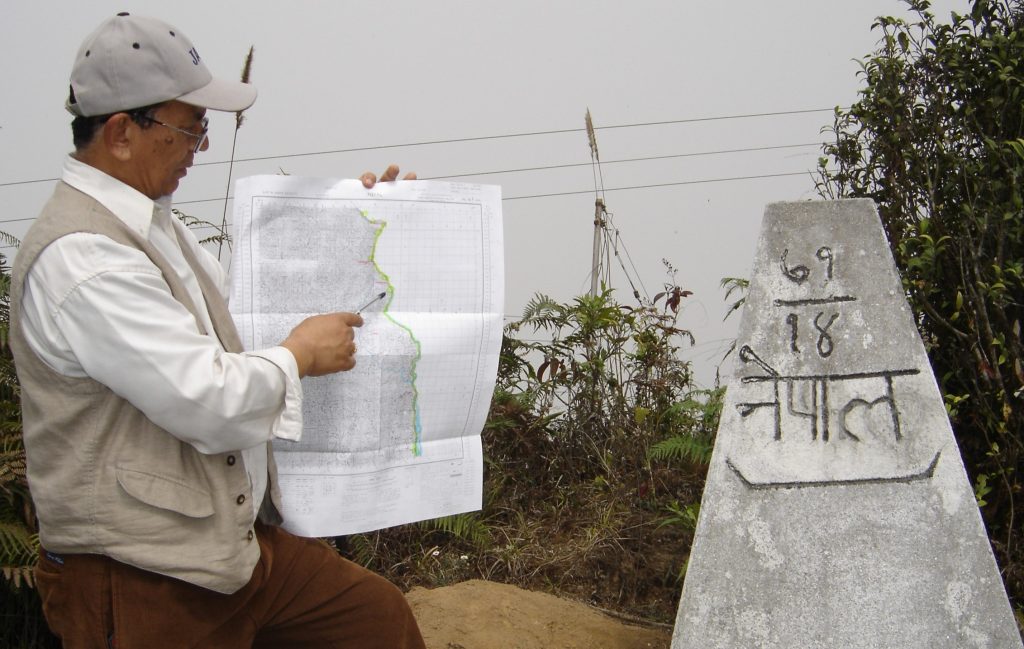 Buddhi Narayan Shrestha verifying the border pillar number 71/14 at Manebhanjyang, Illam | Photo: Manoj Pandit[/caption]
This map was the basis for the endorsement of the new official map of Nepal by the KP Oli-led government in 2022.
I scoured through many libraries around the world, including the ones in London and New York. At the Library of Congress in New York, I discovered that the origin of the Mahakali River was Limpiyadhura, not Lipulekh.
When India published its official map including Nepali territory in 2019, I joined protests from the US. I spoke outside the White House in Washington and the UN building in New York. I explained to the protest attendees how India started encroaching on Nepali land from 1962. We even met David Hunter, representative of UN Secretary-General Antonio Guterres and handed over a memorandum of request to free the Nepali territory from Indian occupation.
My campaign to reclaim Nepali territory did not start in 2019, though. I have been urging almost every government and prime minister since 1999 to do something about the border issue.
The then prime minister Krishna Prasad Bhattarai and his government was the only leader who actually showed some concern. Bhattarai even issued a directive to form a committee to investigate the border issues, but he was soon out of the government.
I have also inspected various spots on the boundary verifying map for the documentary film ‘Greater Nepal—In Quest of Boundaries’ directed by Manoj Pandit. One of my books ‘International Boundaries of Nepal’ is published in Latvia, Europe, and is translated into eight languages (Russian, German, French, Dutch, Italian, Spanish, Portuguese, and Polish).
Besides, I have also worked as a board member of the Institute of Foreign Affairs (IFA), Ministry of Foreign Affairs from 2012 to 2016. I was the member secretary of the City Planning Commission (CPC) at Kathmandu Metropolitan City for a year in 2003. I have also collaborated with the International Boundaries Research Unit (IBRU), UK; Association for Borderland Studies, US; South Asian Studies Association of Australia; and Transparency International Nepal, among others.
Even in India, I have attended many border-related conferences. Command and Staff Colleges of the Nepal Army, Armed Police Force, and Nepal Police often invite me as a guest lecturer. I have always believed that border issues with neighboring countries should be resolved through dialogue based on historical maps and related documents.
Lately, I have been engaged in research, study, publications, presentations, and discussions on the boundary of Nepal, border management, and border-related issues in Nepal. I do not just find the problems related to boundaries, but also try to find solutions and suggest the government. I am determined to contribute to protecting the national boundary and preventing territorial encroachment from neighboring countries. We need to create awareness for national integrity, security, and solidarity through border research.
Buddhi Narayan Shrestha verifying the border pillar number 71/14 at Manebhanjyang, Illam | Photo: Manoj Pandit[/caption]
This map was the basis for the endorsement of the new official map of Nepal by the KP Oli-led government in 2022.
I scoured through many libraries around the world, including the ones in London and New York. At the Library of Congress in New York, I discovered that the origin of the Mahakali River was Limpiyadhura, not Lipulekh.
When India published its official map including Nepali territory in 2019, I joined protests from the US. I spoke outside the White House in Washington and the UN building in New York. I explained to the protest attendees how India started encroaching on Nepali land from 1962. We even met David Hunter, representative of UN Secretary-General Antonio Guterres and handed over a memorandum of request to free the Nepali territory from Indian occupation.
My campaign to reclaim Nepali territory did not start in 2019, though. I have been urging almost every government and prime minister since 1999 to do something about the border issue.
The then prime minister Krishna Prasad Bhattarai and his government was the only leader who actually showed some concern. Bhattarai even issued a directive to form a committee to investigate the border issues, but he was soon out of the government.
I have also inspected various spots on the boundary verifying map for the documentary film ‘Greater Nepal—In Quest of Boundaries’ directed by Manoj Pandit. One of my books ‘International Boundaries of Nepal’ is published in Latvia, Europe, and is translated into eight languages (Russian, German, French, Dutch, Italian, Spanish, Portuguese, and Polish).
Besides, I have also worked as a board member of the Institute of Foreign Affairs (IFA), Ministry of Foreign Affairs from 2012 to 2016. I was the member secretary of the City Planning Commission (CPC) at Kathmandu Metropolitan City for a year in 2003. I have also collaborated with the International Boundaries Research Unit (IBRU), UK; Association for Borderland Studies, US; South Asian Studies Association of Australia; and Transparency International Nepal, among others.
Even in India, I have attended many border-related conferences. Command and Staff Colleges of the Nepal Army, Armed Police Force, and Nepal Police often invite me as a guest lecturer. I have always believed that border issues with neighboring countries should be resolved through dialogue based on historical maps and related documents.
Lately, I have been engaged in research, study, publications, presentations, and discussions on the boundary of Nepal, border management, and border-related issues in Nepal. I do not just find the problems related to boundaries, but also try to find solutions and suggest the government. I am determined to contribute to protecting the national boundary and preventing territorial encroachment from neighboring countries. We need to create awareness for national integrity, security, and solidarity through border research.
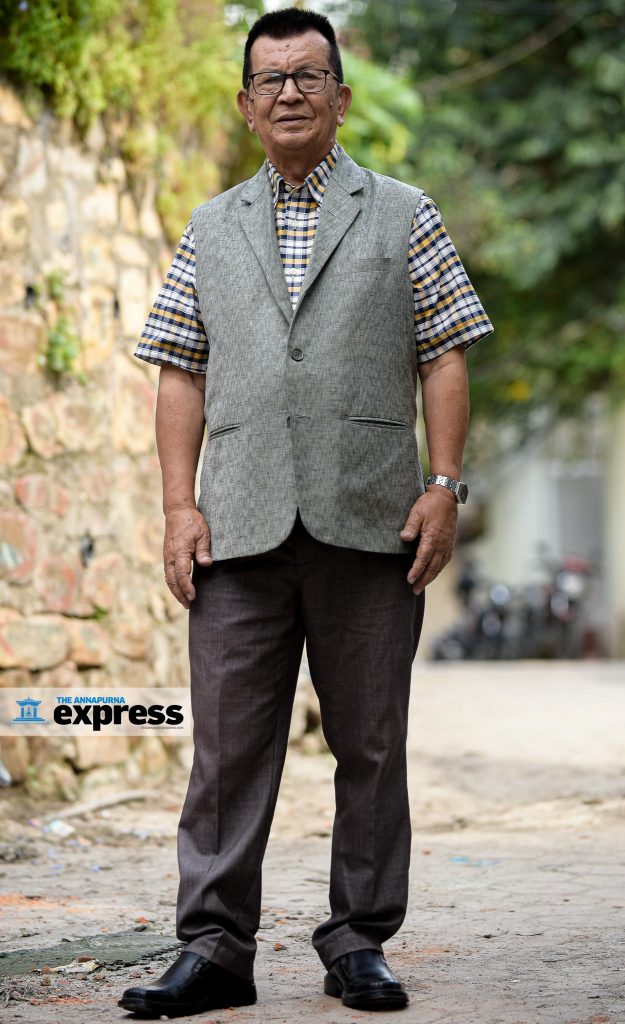 About him
Lily Shrestha (Wife)
About him
Lily Shrestha (Wife)
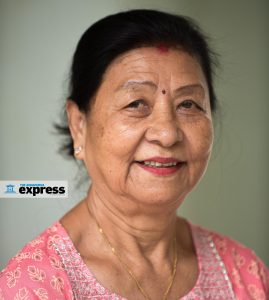 My husband cares a little about his personal life because for him, this country and its people are his home and family. He has dedicated his life to border study and research. Together, we have visited Nepal-India border areas many times and I have seen him work. His love and dedication for Nepal amaze me.
Lok Raj Baral (Friend)
My husband cares a little about his personal life because for him, this country and its people are his home and family. He has dedicated his life to border study and research. Together, we have visited Nepal-India border areas many times and I have seen him work. His love and dedication for Nepal amaze me.
Lok Raj Baral (Friend)
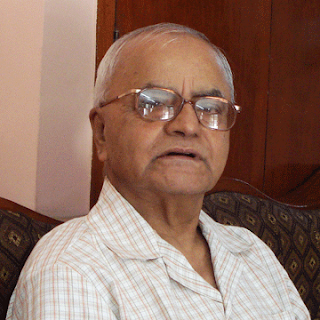 Buddhi Ji and I have been friends since 1959. We were classmates in our BA and MA. We have even shared a room for a couple of years. His research on borders has revealed many truths to the public. I have cited his findings in my books as well. But there are a few issues that we two do not agree on. I nevertheless admire his dedication and work.
Dhruba Hari Adhikari (Colleague)
Buddhi Ji and I have been friends since 1959. We were classmates in our BA and MA. We have even shared a room for a couple of years. His research on borders has revealed many truths to the public. I have cited his findings in my books as well. But there are a few issues that we two do not agree on. I nevertheless admire his dedication and work.
Dhruba Hari Adhikari (Colleague)
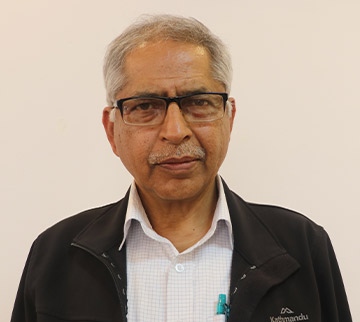 I have read most of his books and reviewed a few of them. As a border researcher, he has a broad knowledge on Nepal-India boundaries. Few of his findings have been opposed by some researchers, but he has consistently defended them. His works inspire and encourage others to study and research about national and international boundaries.


