


PM Dahal and UML Chair Oli hold meeting in Baluwatar
Prime Minister Pushpa Kamal Dahal and CPN-UML Chairman KP Sharma Oli held a meeting in Baluwatar on Friday. Oli reached Baluwatar to discuss the Common Minimum Program (CMP) of the government, distribution of ministries among the coalition partners and contemporary political issues. The first meeting of the ruling coalition has decided to make former prime minister Oli the coordinator of the ruling coalition parties. UML General Secretary Shankar Pokharel said that a high-level mechanism was formed under the headship of Oli to coordinate with the government. Senior leaders of the new ruling coalition will be in the mechanism. The mechanism will prepare a draft of the CMP of the government within five days. Pokharel said that a committee has been formed under the leadership of Deputy Prime Minister and Finance Minister Bishnu Poudel to fix the CMP of the government. Barshaman Pun of the CPN (Maoist Center), Dr Mukul Dhakal of the Rastriya Swatantra Party and Dr Dhawal Shumsher Rana of the Rastriya Prajatantra Party will be in the committee. Members from Janata Samajbadi Party, Janamat Party, and Nagarik Unmukti Party will also be added to the committee. Dahal became prime minister for the third time with the support of seven political parties including the CPN-UML.

Pelé, Brazil’s mighty king of ‘beautiful game,’ has died
Pelé, the Brazilian king of soccer who won a record three World Cups and became one of the most commanding sports figures of the last century, died Thursday. He was 82, Associated Press reported.
The standard-bearer of “the beautiful game” had undergone treatment for colon cancer since 2021. The medical center where he had been hospitalized for the last month said he died of multiple organ failure as a result of the cancer.
“Pelé changed everything. He transformed football into art, entertainment,” Neymar, a fellow Brazilian soccer star, said on Instagram. “Football and Brazil elevated their standing thanks to the King! He is gone, but his magic will endure. Pelé is eternal!”
A funeral was planned for Monday and Tuesday, with his casket to be carried through the streets of Santos, the coastal city where his storied career began, before burial.
Widely regarded as one of soccer’s greatest players, Pelé spent nearly two decades enchanting fans and dazzling opponents as the game’s most prolific scorer with Brazilian club Santos and the Brazil national team.
His grace, athleticism and mesmerizing moves transfixed players and fans. He orchestrated a fast, fluid style that revolutionized the sport — a samba-like flair that personified his country’s elegance on the field.
He carried Brazil to soccer’s heights and became a global ambassador for his sport in a journey that began on the streets of Sao Paulo state, where he would kick a sock stuffed with newspapers or rags.
In the conversation about soccer’s greatest players, only the late Diego Maradona, Lionel Messi and Cristiano Ronaldo are mentioned alongside Pelé.
Different sources, counting different sets of games, list Pelé’s goal totals anywhere between 650 (league matches) and 1,281 (all senior matches, some against low-level competition.)
The player who would be dubbed “The King” was introduced to the world at 17 at the 1958 World Cup in Sweden, the youngest player ever at the tournament. He was carried off the field on teammates’ shoulders after scoring two goals in Brazil’s 5-2 victory over the host country in the final.
Injury limited him to just two games when Brazil retained the world title in 1962, but Pelé was the emblem of his country’s World Cup triumph of 1970 in Mexico. He scored in the final and set up Carlos Alberto with a nonchalant pass for the last goal in a 4-1 victory over Italy, according to Associated Press.
The image of Pelé in a bright, yellow Brazil jersey, with the No. 10 stamped on the back, remains alive with soccer fans everywhere. As does his trademark goal celebration — a leap with a right fist thrust high above his head.
Pelé’s fame was such that in 1967 factions of a civil war in Nigeria agreed to a brief cease-fire so he could play an exhibition match in the country. He was knighted by Britain’s Queen Elizabeth II in 1997. When he visited Washington to help popularize the game in North America, it was the U.S. president who stuck out his hand first.
“My name is Ronald Reagan, I’m the president of the United States of America,” the host said to his visitor. “But you don’t need to introduce yourself because everyone knows who Pelé is.”
Pelé was Brazil’s first modern Black national hero but rarely spoke about racism in a country where the rich and powerful tend to hail from the white minority.
Opposing fans taunted Pelé with monkey chants at home and all over the world.
“He said that he would never play if he had to stop every time he heard those chants,” said Angelica Basthi, one of Pelé’s biographers. “He is key for Black people’s pride in Brazil, but never wanted to be a flagbearer.”
Pelé’s life after soccer took many forms. He was a politician -- Brazil’s Extraordinary Minister for Sport -- a wealthy businessman, and an ambassador for UNESCO and the United Nations.
He had roles in movies, soap operas and even composed songs and recorded CDs of popular Brazilian music.
As his health deteriorated, his travels and appearances became less frequent. He was often seen in a wheelchair during his final years and did not attend a ceremony to unveil a statue of him representing Brazil’s 1970 World Cup team. Pelé spent his 80th birthday isolated with a few family members at a beach home.
Born Edson Arantes do Nascimento, in the small city of Tres Coracoes in the interior of Minas Gerais state on Oct. 23, 1940, Pelé grew up shining shoes to buy his modest soccer gear, Associated Press reported.
Pelé’s talent drew attention when he was 11, and a local professional player brought him to Santos’ youth squads. It didn’t take long for him to make it to the senior squad.
Despite his youth and 5-foot-8 frame, he scored against grown men with the same ease he displayed against friends back home. He debuted with the Brazilian club at 16 in 1956, and the club quickly gained worldwide recognition.
The name Pelé came from him mispronouncing the name of a player called Bilé.
He went to the 1958 World Cup as a reserve but became a key player for his country’s championship team. His first goal, in which he flicked the ball over the head of a defender and raced around him to volley it home, was voted as one of the best in World Cup history.
The 1966 World Cup in England — won by the hosts — was a bitter one for Pelé, by then already considered the world’s top player. Brazil was knocked out in the group stage and Pelé, angry at the rough treatment, swore it was his last World Cup.
He changed his mind and was rejuvenated in the 1970 World Cup. In a game against England, he struck a header for a certain score, but the great goalkeeper Gordon Banks flipped the ball over the bar in an astonishing move. Pelé likened the save — one of the best in World Cup history — to a “salmon climbing up a waterfall.” Later, he scored the opening goal in the final against Italy, his last World Cup match.
In all, Pelé played 114 matches with Brazil, scoring a record 95 goals, including 77 in official matches.
His run with Santos stretched over three decades until he went into semi-retirement after the 1972 season. Wealthy European clubs tried to sign him, but the Brazilian government intervened to keep him from being sold, declaring him a national treasure.
On the field, Pelé’s energy, vision and imagination drove a gifted Brazilian national team with a fast, fluid style of play that exemplified “O Jogo Bonito” -- Portuguese for “The Beautiful Game.” His 1977 autobiography, “My Life and the Beautiful Game,” made the phrase part of soccer’s lexicon.
In 1975, he joined the New York Cosmos of the North American Soccer League. Although 34 and past his prime, Pelé gave soccer a higher profile in North America. He led the Cosmos to the 1977 league title and scored 64 goals in three seasons, according to Associated Press.
Pelé ended his career on Oct. 1, 1977, in an exhibition between the Cosmos and Santos before a crowd in New Jersey of some 77,000. He played half the game with each club. Among the dignitaries on hand was perhaps the only other athlete whose renown spanned the globe — Muhammad Ali.
Pelé would endure difficult times in his personal life, especially when his son Edinho was arrested on drug-related charges. Pelé had two daughters out of wedlock and five children from his first two marriages, to Rosemeri dos Reis Cholbi and Assiria Seixas Lemos. He later married businesswoman Marcia Cibele Aoki.

We are ready to cooperate with Dahal-led government: India (With video)
India said that it would move ahead by cooperating with the new government of Nepal. During a press conference organized at the Ministry of External Affairs of India on Thursday, it was said that India is willing to work together with the new government of Nepal led by CPN (Maoist Center) Chairman Pushpa Kamal Dahal. Saying that Nepal and India have a unique relationship, Arindam Bagachi, spokesperson for India's Ministry of External Affairs, said that India is ready to move forward together with the new government to strengthen it. “We hope to work together with the new government of Nepal to strengthen the unique relationship between the two countries,” he said, adding, “We have a people-to-people relationship and we will strengthen it together.” Before the elections, India had said that it was ready to cooperate with the new government of Nepal, he recalled.

Ashesh Malla: For the love of theater
Quick facts
Born on 3 April 1955 in Dhankuta
Went to Gokarneshwor High School, Dhankuta
Graduated from Mahendra Morang Campus, Post-grad from Tribhuvan University
Started drama from 1961
Husband of Sabitri Kakshyapati
Father to Sampada Malla and Avineet Malla
 Theater has always been a part of my family. I was born and raised in Dhankuta, but my ancestors were from Bhaktapur, a place steeped in art and culture. So, the element of theater and drama was always there in my family, no matter where they went. My family naturally had a profound influence on me during my formative years.
Every year we used to set up a huge stage for actors to perform their plays in Dhankuta. I used to see the actors rehearse, and sometimes I would get to play the role of a kid in the plays they were staging. I participated in jatras as well.
After completing my school, I left for Biratnagar for my further studies. But I would be back for a month or so during jatras.
I always knew what I wanted to do with my life, and all my family and friends were supportive of me. They used to encourage me to write my own plays and stage it in our village. They really believed in me. This was how the theater troupe called ‘Nawa Kalakar Sanskritik Samudaya’ was formed in 1974. I wrote my first play ‘Tuwalole Dhakeko Basti’ in 1975. The play was staged at my school, and surprisingly, we had a lot of audience.
Buoyed by the audience response, we took the play to Dharan. We booked a cinema hall there to perform the play. Next, we went to Biratnagar and to Kathmandu, where we performed at Rastriya Naach Ghar. In Kathmandu, our play was staged for one-month straight. It was a big deal for us, because it was our first play.
Most of my friends returned to Dhankuta after the play was over, but I decided to stay behind. I wanted to do something big in the field of theater, and Kathmandu was where I could pursue my dream.
I enrolled myself at Tribhuvan University (TU) for a master's degree in arts. I wasted no time making use of the university auditorium to stage plays. This was how my theater journey began in Kathmandu.
At the time, the country was still under the Panchayat regime. There was no freedom of expression. Speaking against the government was a criminal offense.
Theater has always been a part of my family. I was born and raised in Dhankuta, but my ancestors were from Bhaktapur, a place steeped in art and culture. So, the element of theater and drama was always there in my family, no matter where they went. My family naturally had a profound influence on me during my formative years.
Every year we used to set up a huge stage for actors to perform their plays in Dhankuta. I used to see the actors rehearse, and sometimes I would get to play the role of a kid in the plays they were staging. I participated in jatras as well.
After completing my school, I left for Biratnagar for my further studies. But I would be back for a month or so during jatras.
I always knew what I wanted to do with my life, and all my family and friends were supportive of me. They used to encourage me to write my own plays and stage it in our village. They really believed in me. This was how the theater troupe called ‘Nawa Kalakar Sanskritik Samudaya’ was formed in 1974. I wrote my first play ‘Tuwalole Dhakeko Basti’ in 1975. The play was staged at my school, and surprisingly, we had a lot of audience.
Buoyed by the audience response, we took the play to Dharan. We booked a cinema hall there to perform the play. Next, we went to Biratnagar and to Kathmandu, where we performed at Rastriya Naach Ghar. In Kathmandu, our play was staged for one-month straight. It was a big deal for us, because it was our first play.
Most of my friends returned to Dhankuta after the play was over, but I decided to stay behind. I wanted to do something big in the field of theater, and Kathmandu was where I could pursue my dream.
I enrolled myself at Tribhuvan University (TU) for a master's degree in arts. I wasted no time making use of the university auditorium to stage plays. This was how my theater journey began in Kathmandu.
At the time, the country was still under the Panchayat regime. There was no freedom of expression. Speaking against the government was a criminal offense.
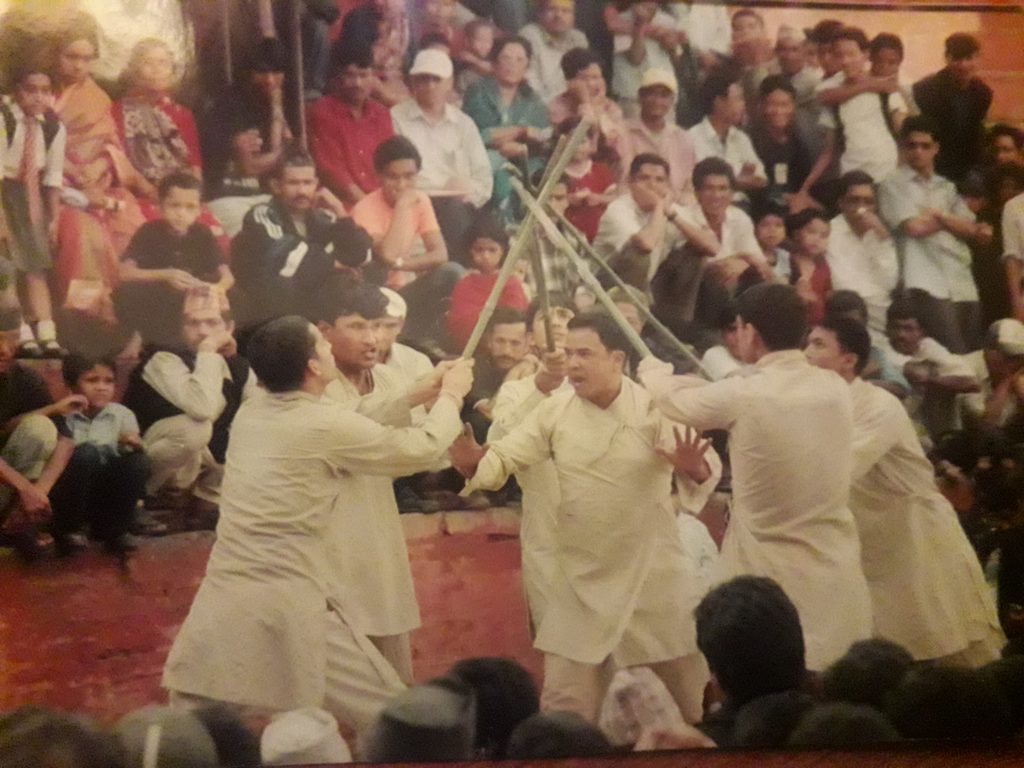 I was deeply affected when I heard that Bhim Narayan Shrestha, my neighbor from Dhankuta, had been sentenced to death for anti-government activities. The incident inspired me to write a play that satirized the political system of the time. When the play was staged, it angered the government to end. My theater team and I were assaulted behind the curtains for this transgression. But that didn’t stop us from speaking up against the Panchayat. I wrote another play, which was shut down on the third day of production. Such was the political scenario of Nepal. I rebelled against the powers that be and I was punished. I no longer had a stage to showcase my play. But I had a few university friends who were willing to help me out.
We needed our own place to freely work on plays. In 1982, we established Sarwanam Theater, but we still didn’t have a stage to perform our plays.
The government was not letting us perform. The district administration offices were censoring plays across the country. There was no place where we could freely express our thoughts and ideas through art. I increasingly grew hopeless when it occurred to me that I could perform my plays anywhere. All I needed was the audience. So I thought, “Why not just perform on the street?” This was how I came up with the concept of street theater (Sadak Natak).
I wrote a play called ‘Hami Basanta Khojirahechau’ and staged it at the coronation garden of TU. Almost every student loved it. We were invited by other colleges to perform the play. After that I also wrote plays like ‘Atirikta Aakash’ and ‘Ma Bhaneko Hami’. They were light dramas that indirectly reflected the then political scenario of Nepal.
Soon enough we were being asked to perform street dramas in many places. We went everywhere we could. Sometimes police would stop us while traveling. But that didn’t stop us from showcasing our plays.
Our street dramas played a key role in the 1990 revolution and even after that. Street dramas were part of every Nepali revolution and popular political movement. I didn’t know until late that street plays were popular in foreign countries as a form of protest as well.
After the restoration of democracy in 1990, street dramas went beyond political themes. There were street dramas with social messages and even commercial advertisements.
I stopped performing street plays after 1994, until the Election Commission requested me to write a play about the Constituent Assembly in 2008, which was to be showcased in all districts of Nepal on the same day and same time. I guess it could have been a world record.
When I look back at my career, I don’t know how I did it. I persevered despite the government threats and pressure. Perhaps my passion for theater arts got me through it all. That passion is still there.
I was deeply affected when I heard that Bhim Narayan Shrestha, my neighbor from Dhankuta, had been sentenced to death for anti-government activities. The incident inspired me to write a play that satirized the political system of the time. When the play was staged, it angered the government to end. My theater team and I were assaulted behind the curtains for this transgression. But that didn’t stop us from speaking up against the Panchayat. I wrote another play, which was shut down on the third day of production. Such was the political scenario of Nepal. I rebelled against the powers that be and I was punished. I no longer had a stage to showcase my play. But I had a few university friends who were willing to help me out.
We needed our own place to freely work on plays. In 1982, we established Sarwanam Theater, but we still didn’t have a stage to perform our plays.
The government was not letting us perform. The district administration offices were censoring plays across the country. There was no place where we could freely express our thoughts and ideas through art. I increasingly grew hopeless when it occurred to me that I could perform my plays anywhere. All I needed was the audience. So I thought, “Why not just perform on the street?” This was how I came up with the concept of street theater (Sadak Natak).
I wrote a play called ‘Hami Basanta Khojirahechau’ and staged it at the coronation garden of TU. Almost every student loved it. We were invited by other colleges to perform the play. After that I also wrote plays like ‘Atirikta Aakash’ and ‘Ma Bhaneko Hami’. They were light dramas that indirectly reflected the then political scenario of Nepal.
Soon enough we were being asked to perform street dramas in many places. We went everywhere we could. Sometimes police would stop us while traveling. But that didn’t stop us from showcasing our plays.
Our street dramas played a key role in the 1990 revolution and even after that. Street dramas were part of every Nepali revolution and popular political movement. I didn’t know until late that street plays were popular in foreign countries as a form of protest as well.
After the restoration of democracy in 1990, street dramas went beyond political themes. There were street dramas with social messages and even commercial advertisements.
I stopped performing street plays after 1994, until the Election Commission requested me to write a play about the Constituent Assembly in 2008, which was to be showcased in all districts of Nepal on the same day and same time. I guess it could have been a world record.
When I look back at my career, I don’t know how I did it. I persevered despite the government threats and pressure. Perhaps my passion for theater arts got me through it all. That passion is still there.
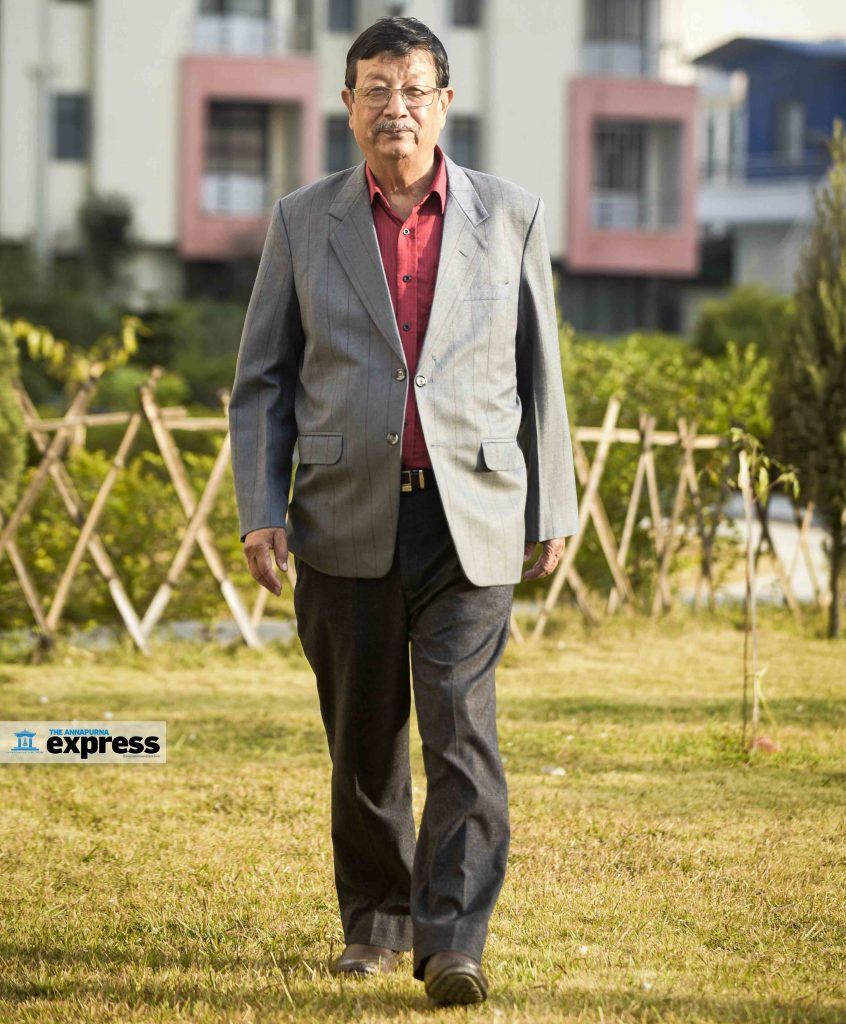 About him
Sabitri Kakshyapati (Spouse)
About him
Sabitri Kakshyapati (Spouse)
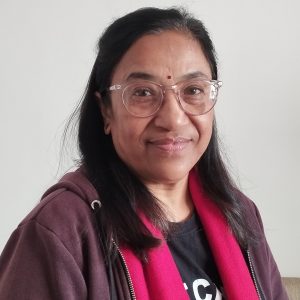 I don’t have to explain how good he is professionally, as the entire country has seen his work. In his personal life, he is a wonderful husband and a father. Being a working woman, I needed his support and he has always helped me with that. He doesn’t believe in patriarchy and is involved in kitchen works and all. He has always provided professional and personal space for his family members.
Harihar Sharma (Friend)
I don’t have to explain how good he is professionally, as the entire country has seen his work. In his personal life, he is a wonderful husband and a father. Being a working woman, I needed his support and he has always helped me with that. He doesn’t believe in patriarchy and is involved in kitchen works and all. He has always provided professional and personal space for his family members.
Harihar Sharma (Friend)
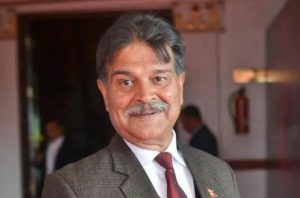 I have known him for a long time. I have seen his ups and downs in his personal and professional life. Despite the challenges in different political environments, he fought for democracy through his art. He is a revolutionary theater artist, a brilliant poet and a down-to-earth human. Being active in the profession for such a long time is not a joke and not everyone’s cup of tea.
Usha Rajak (Student)
I have known him for a long time. I have seen his ups and downs in his personal and professional life. Despite the challenges in different political environments, he fought for democracy through his art. He is a revolutionary theater artist, a brilliant poet and a down-to-earth human. Being active in the profession for such a long time is not a joke and not everyone’s cup of tea.
Usha Rajak (Student)
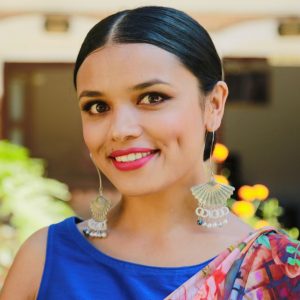 Though I knew him during a theater competition around two decades ago, I was formally introduced to him only in 2018. He cast me for a lead role in his play ‘Arko Kurukshetra’ which was a theatrical comeback for both of us. He always expects great performances from his actors. With him, we get to explore the philosophy of classics like Mahabharat and modern day activism too. Despite being a celebrated theater figure, he is humble and has made theater available for everyone.

Nepse surges by 56. 88 points on Thursday
The Nepal Stock Exchange (NEPSE) gained 56.88 points to close at 2,029.03 points on Thursday. Similarly, the sensitive index plunged by 9.98 points to close at 391. 30 points. A total of 8,024,559 unit shares of 257 companies were traded for Rs 2. 86 billion. Meanwhile, Himalaya Urja Bikas Company Limited, Sanima Life Insurance Limited and Srijhansil Laghubitta Bittiya Sanstha Limited were the top gainers today, with their price surging by 10. 00 percent. Nepal Bank Debenture was the top loser as its price fell by 3.95 percent. At the end of the day, total market capitalization stood at Rs 2. 93 trillion.

Tida Wiwattada: Permanent makeup has a huge scope in Nepal
Tida Wiwattada is a certified instructor and a specialist at Biotouch International Beauty Academy. With more than 15 years of experience in this field, she has been serving as a founder and director of Biotouch Thailand. Founded in 1980 in California, Biotouch is a leading manufacturer of permanent and semi-permanent beauty products. The company sells its products in 77 countries and has trained over one lakh technicians worldwide. Biotouch Thailand was established in 2013 to produce technicians in Southeast Asia. Tida believes women and beauty complement each other like two puzzle pieces. Ramkala Khadka talked with Wiwattada about the scope of permanent makeup and expanding beauty entrepreneurship while she was in Nepal for a beauty seminar conducted by Zoom Beauty Academy. Is this your first visit to Nepal? How does it feel to be here? It's my second visit, actually. In September, I was here for the first time. Back then, I did not understand things and people much, but tried to adjust. This time, I feel more comfortable. I really love this country. Lots of places here are really interesting. People here are so nice, kind and caring. You were here for a beauty seminar organized by Zoom Beauty Academy. Why do you think this kind of seminar is important for Nepali beauticians? Beauty techniques are quite popular around the world. In Nepal, some techniques are still new. So, this type of seminar helps raise awareness about the field. This is a very good opportunity for those wanting to start a career in this sector or start a business. Cosmetics is not just about patting makeup products on the face or hair on a daily basis. It has become more of a business. Permanent makeup, Hollywood shimmer eyebrow, ice lips contouring, scalp micro pigmentation and eyebrow mapping techniques are very popular worldwide. By attending the seminar, beauticians learnt those techniques and gained confidence to introduce some services in their business. Equipped with new techniques, they will get more customers. You have attended several seminars and beauty events in many countries. What differences did you observe between Nepali beauticians and beauticians from other parts of the world? In a space of 10 years, I have attended almost 400 seminars in Thailand and other parts of the world. I went to Vietnam more than 20 times, apart from visiting a number of other countries, including the Philippines, Singapore, India, the UAE and Great Britain. In Thailand alone, we have conducted more than 200 seminars like this. I see a lot of opportunities for beauticians in Nepal. We are here to share our experience and knowledge. Nepali women can start a new career in permanent makeup, which is a new field in itself. In course of time, this field might become quite popular here as well. This kind of technique or service is very popular worldwide. The beauty industry is expanding in Nepal as well. Can Nepali beauticians get more profit by providing these services? First of all, I believe in knowledge and training. You have to learn proper ways of doing business, get good training in every field. That's why I encourage my students to learn right from the basics. If you learn using the right method, you can start with confidence. If you depend on social media for knowledge and skills, you won't get the details. Nepal is a really nice country and lots of foreign tourists come here. If Nepali beauticians are properly trained, they can provide the right kind of services by maintaining safety standards. That's why, I think this seminar will help makeup artists grow their businesses further. You mean promoting the beauty sector helps in promoting tourism in Nepal? That's right because again permanent makeup is really popular around the world. In Thailand, 15 years on, permanent makeup is still popular. In Nepal, very few people know about permanent makeup, but it doesn't mean it's not popular. If you start this business and provide satisfactory services to the customers, you will be popular. If your service is world class, foreigners will also visit the country for their own benefit. Permanent makeup technique is a new concept for us. Please explain what it is. Permanent makeup is the evolution of beauty. Somehow it’s not only beauty, we can enhance the looks and look more beautiful. Some people might have health issues. We can help them look more confident. For example, people who contracted cancer might not have eyebrows. We can also help people who have contracted breast cancer. Permanent makeup can help such people by enhancing their looks. People take a lot of time to draw eyebrows. Permanent makeup helps them by saving their time and making them prettier. If you use permanent eyebrows, it’s going to stay around six months to a year or two. So, this technology is more customer-friendly. It's not only about eyebrows, it's about your body as a whole. It has become a desirable choice for those who want to save time from traditional makeup routine and achieve long-lasting beauty results. In Nepal, do you see a great scope for permanent makeup and baby glow techniques? Yeah! Both of them are getting more popular day by day. Many clients are looking for the service. You can have groovy skin using a technique, without applying makeup. For reasons like this, a lot of people find this technique quite interesting. People are shifting from chemical to herbal makeup products. How can we address their concerns about possible side effects of permanent makeup? For permanent makeup, there are products from different brands in the market. There are right kinds of products for skin and hair, products that are safe to use. Our company, Biotouch, has also brought different products to the market. We can use it for people having health issues like cancer. We have been in the market for over 42 years. We never had problems. While applying permanent makeup, we use pigment tested in Europe and the US (by USFDA). Our products don’t have toxic materials. They don’t harm the skin and also do not cause cancer. Have you thought of expanding your products here in Nepal? So far now, we are cooperating with Zoom Beauty Academy. Those looking for services, training and products can contact Zoom. Beauty brings confidence to all people. Every woman or man loves to look good. When men get older, for example, eyebrows may be gone for some reason. We can make eyebrows look better. It's not about man or woman, everyone can look better and more confident from outside and inside using our products. In our daily life, what should we do to take care of our skin and hair? First of all, you should eat good food and sleep well. Food has a vital role in keeping skin healthy. Then comes treatment and techniques to look better. Also for the skin, we have a technique, we call it water shy cover glass skin. This convenient technique gives your skin a glow without makeup. What type of food do you suggest for healthy skin and hair? I observed that a lot of Nepali people love to eat vegetables. That is very good for skin and hair. The greens help with generation of new skin, along with fruit and water. Another important tip: Wash your face every day and apply some kind of moisturizing cream. These days, children and adults are suffering from hair loss. Your tips on stopping hair loss? This problem is pervasive not only in Nepal but all over the world. We got this problem after Covid. You need a lot of vitamins, maybe from food or from supplements to grow new hair and skin. We have solutions both for men and women. We call it SMP (scalp micropigmentation). Using this technique, we create the falling-off-the-hair-look giving an impression of puffy hair. There is a growing entrepreneurship in the beauty sector. How can we make it more competitive in the global market? I have been to many countries for training. These visits have helped me gather knowledge for myself and my academy. That's how I feel. The quest for beauty is a never-ending one. That's why, we never stop learning. Despite having a lot of experience, I never stop learning. New techniques are on the cards, offering us a lot of opportunities in this field. If you have adequate knowledge, you can start a business anywhere in the world. By learning new techniques, you can grow your business. Everyone is looking for services that make them look good. Like in Thailand, we have a lot of students here. These people want to learn the skills, techniques and start their own business or career in a matter of months. Pollution is a great problem everywhere. How can we make our skin and hair safe from pollutants? Pollution also damages the skin. I think the situation here is no different from Thailand. Because in Thailand also, there are lots of cars and construction of high-rise buildings is going on. So, we have a lot of pollution. Here are a few tips: Before going out, wash your face. The sun is going to burn your skin, so put on sunscreen and clean it up after coming back. Clean up your face after each outing even if you have not applied the makeup. And choose beauty products based on the type of skin—normal, oily or dry, etc.

Anu Anwar: Not taking sides serves the interest of non-great powers
Anu Anwar is a Ph.D. candidate at the Johns Hopkins School of Advanced International Studies, US. He is also a fellow at the Faculty of Arts and Sciences and an associate in research at the Fairbank Center for Chinese Studies at Harvard University. Kamal Dev Bhattarai of ApEx spoke to him with a focus on Chinese President Xi Jinping’s third tenure and its implication in the neighborhood policy and other international issues. How do you evaluate Xi Jinping’s neighborhood policy since he came to power in 2013? Xi Jinping’s neighborhood policy can be characterized into two categories—cooperation and appeasement on the west and confrontation and resistance on the east. In the west, China is touting the Belt and Road Initiative as the principal umbrella under which Xi Jinping organized his foreign policy with neighbors. Relations with its neighbor on the northwest and southwest are principled on connectivity, development, and people-to-people ties. For example, in a speech in Mongolia in 2014, Xi noted “a good neighbor is more valuable than gold” and showed a sign of compromise to make peace on its outer periphery. On the contrary, Xi’s neighborhood policy in the southeast is principled on sovereignty, territorial integrity, and national rejuvenation slogan. Clearly, China has shown an uncompromising and firm stance on issues that it perceives in its core national interest. Whether the question of the South China Sea, Taiwan or India, China has taken a more assertive stance, and Xi himself has shown reluctance to follow his predecessor's “hide-bide” dictum. His pattern of action suggests he has concluded China is too big to hide now, and therefore assertiveness is the only chance it has to continue its ascendance. Do you think there will be any changes in his neighborhood policy in his third term? The Chinese Communist Party is a mysterious black box. It's always hard to anticipate the party’s precise policy direction, but I think the general trend of China’s neighborhood policy will remain unchanged. Beijing may take further positive steps to stabilize its relations with the US. I think it will even be willing to make significant concessions to the US. But I also think that China will try to isolate its US policies from its policies in other domains, including neighborhood policy. The so-called fang (relaxing) and shou (tightening) cycle suggests Xi’s third term might be more inclined to relaxing its policy toward the West in general. But it is less likely to succeed as the West now sees China as more of a competitor than a prospective partner. So, the prospects for status quo ante vis-à-vis US-China relations remain slim. How do you see the growing US-China rivalry in South Asia and where does India stand on it? In South Asia, there are two ways to understand the US-China rivalry. First is the misleading way of looking at South Asia as a synonym of India. Many get tempted to see the region that way, but this analysis misses the fact that South Asia consists of eight countries. This clearly underappreciates the power and strategic value of seven other countries of the region. If we see it in a superficial way, it appears as though in the US-China competition, India is increasingly aligning with the US, though with significant reservation on how far and how much substance that alignment could bring for the US and its allies. But if we take a careful look, not a single country in South Asia supports India’s regional leadership. These countries are resistant to coercive tactics that India deploys, and they see India as a bigger concern for them than China. But they generally appreciate US-extended engagement in the region. The problem is that India doesn’t welcome extra-regional power in the region, and that includes the US. This makes the US regional approach in South Asia complicated and really doesn’t advance US regional objectives. What is your take on the engagement of South Asian countries with China, particularly on BRI? South Asian countries generally welcome extra-regional powers to play a greater role, as India, despite being the largest in terms of size, lacks resources. India’s economy is just a fraction of China’s. In terms of modernization, India is at least three decades behind China. Still, India is perhaps the only major country in Asia that opposes the BRI, yet interestingly, it takes the highest amount of loan from Beijing-based AIIB. The rest of the South Asian countries are in dire need of the kind of assistance that China’s BRI offers such as infrastructure, physical and visible development, connectivity, and investment in industries. However, I do not see that South Asian countries, in general, have any particular affinity to China. They are just acting in their own national interest. If other extra-regional powers such as the United States could offer a better deal on those fronts, South Asian countries would prefer US investment. Sadly, there are no substantial offers, except only from Japan, which is playing some sort of balancing act against China’s inroads. However, South Asian countries are also cautious of the excessive reliance on China. Sri Lanka is not a good example when they think of extensive engagement with China. Smaller countries in this region are feeling the heat of great power rivalry, what are your suggestions for small countries in the conduct of their foreign policy? Every country is feeling the heat, regardless of how big or small they are. Australia is not a small country, but it is experiencing the consequences for taking a strong stance against China. Truth is, if a country’s national power is significantly weaker than either China or the US, it will certainly suffer. As Tanzanian President Julius Nyerere reminded us decades ago with an African proverb: “When elephants fight, it is the grass that suffers”. Seeing from this lens, some observers are trying to define this competition only in security terms and argue that in a shooting war, no one else really matters much, except the great powers. Maybe there is some truth to the argument, but the fact remains that in the era of proliferation of strategic nuclear weapons, direct military confrontation between great powers is highly unlikely. And this is where the opportunity as well as danger lies for the non-great powers. If the rivalry turns into a confrontation, great powers will fight but that fight will take place beyond their own borders, essentially in a third country. For example, what is going on right now in Ukraine. However, there is a way out for non-great powers. They could blunt the pressure from both the US and China by attracting more secondary states into their own orbit. They could form an alliance, even if informally, among themselves and decide not to take either side. In the end, each country has to care about its national interest first. Secondary states’ national power is weaker than either China or the US when compared on a one-to-one basis, but they can put up a strong resistance if they could form a coalition. ASEAN has so far shown considerable success in that direction. During the Cold War, the Non-Aligned Movement also showed that. Not taking sides serves the best interest of non-great powers. But in this current world order, how this will unfold, is yet to be seen.

Two-way trade resumes as China reopens borders
China plans to reopen borders on January 8 by abandoning quarantine and downgrading other safeguards against Covid-19. This is the country’s last step in shedding three years of zero-Covid and pivoting to living with the virus, The South China Morning Post reports. After almost three years of closed borders, this will reopen the country to those with work and study visas, or seeking to visit family, BBC reports. But it comes as China struggles with the virus's ferocious spread in the wake of restrictions being lifted. Reports say hospitals are overwhelmed and elderly people are dying. The true toll—daily case counts and deaths—is currently unknown because officials have stopped releasing Covid data. From January 8, travelers to China will only need to present a negative PCR test result from the previous 48 hours at customs to enter the country, the State Council announced on Monday night, according to the report. The State Council said China would officially scrap centralized quarantine and Covid-19 tests on arrival from that date. Travelers will also no longer have to apply to Chinese embassies for a health code before departure. Nepal-China border virtually remains closed after the coronavirus outbreak. This has seriously affected two-way trade and transport. The Nepali side is requesting China to open the border but the northern neighbor is citing its strict zero-Covid policy. Nepal’s Ambassador to China Bishnu Pukar Shrestha said Nepal is requesting Beijing officials to remove the border hassles as soon as possible. After three years of closure, Rasuwagadhi-Kurung, a key crossing point for the bilateral trade between Nepal and China, was reopened from Tuesday. Nepal has started importing Nepali products to China. China will scrap restrictions on international passenger flights, increase the number of flights in stages, and optimize the distribution of routes, according to the statement, according to Xinhua news agency. Airlines will continue to carry out disinfection on board, and passengers are required to wear masks when flying, it said. China will further optimize arrangements for foreigners traveling to China for work, business, study, family visits, and reunions, and provide visa facilitations accordingly. Measures will be taken to ensure that freight at various ports will return to pre-epidemic levels as soon as possible, and outbound tourism for Chinese citizens will be resumed in an orderly manner, said the statement, according to Xinhua. With the opening of the border, Nepal-China engagement that was restricted for nearly three years is likely to increase. Rasuwa/Kerung port between Nepal and the People’s Republic of China has officially resumed its operation for two-way trade from Tuesday, said the Ministry of Foreign Affairs. The Department of Commerce of the Tibet Autonomous Region of the People’s Republic of China organized an official ceremony in Kerung today to observe the opening of the port. Similarly, Hilsa/Purang port has also been opened for one-way trade from 26 December 2022. The resumption of the ports is expected to augment bilateral trade between Nepal and China, the Ministry said.


