


Xi Jinping handed unprecedented third term as China’s president
Xi Jinping has been handed an unprecedented third term as president, capping a rise that has seen him become China’s most powerful leader in generations, The Guardian reported.
In a carefully choreographed ceremony in Beijing, Xi held up his right fist and placed his left hand on a red leather copy of China’s constitution.
In the oath - beamed live on state television across the nation - he vowed to “build a prosperous, strong, democratic, civilized, harmonious and great modern socialist country”.
The appointment by China’s rubber-stamp parliament comes after he was handed another five years as head of the Chinese Communist party (CCP) and the military – the two more significant leadership positions in Chinese politics – in October.
Since then, 69-year-old Xi has faced challenges including mass protests over his zero-Covid policy and its subsequent abandonment that saw countless people die.Those issues have been avoided at this week’s National People’s Congress (NPC), a closely watched event that over the next two days is also set to appoint Xi ally Li Qiang as the new premier, putting him in charge of managing the world’s second largest economy, according to The Guardian.
The lawmakers have focused instead on a sweeping revamp of Beijing’s science ministry and tech capabilities in the face of what one NPC deputy described as foreign attempts at “containment and suppression” of the country’s rise.
The body on Friday passed reforms to government institutions unveiled earlier this week, including a sweeping overhaul of the country’s science and technology ministry in the face of what one NPC deputy described as foreign attempts at “containment and suppression” of the country’s rise. New reforms also included the formation of a financial regulatory body and national data bureau.
The beginning of China’s new political term also saw former vice premier Han Zheng elected as its new vice-president and Zhao Leji, former chief of the party’s top anti-corruption commission, as the new parliamentary chair. Both are members of China’s highest political decision-making body, the Politburo Standing Committee. The election process, carried out at the Great Hall of the People at Beijing’s Tiananmen Square, lasted around an hour.
Xi’s reelection is the culmination of a remarkable rise from a relatively little-known party apparatchik to the leader of a global superpower.
For decades China - scarred by the dictatorial reign and cult of personality of founding leader Mao Zedong - has eschewed one-man rule in favour of a more consensus-based, but still autocratic, leadership.
That model imposed term limits on the largely ceremonial role of the presidency, with Xi’s predecessors Jiang Zemin and Hu Jintao relinquishing power after 10 years in office.
Xi has torn up that rulebook, abolishing term limits in 2018.
His coronation this week sets him up to become modern China’s longest-serving head of state, and will mean Xi will rule well into his seventies and - if no challenger emerges - even longer.
But the beginning of his unprecedented third term leading China comes as the world’s second-largest economy faces major headwinds, from slowing growth and a troubled real estate sector to a declining birthrate.
Relations with the United States are also at a low not seen in decades, with the powers sparring over everything from human rights to trade and technology, according to The Guardian.
In a speech to delegates at the Chinese People’s Political Consultative Conference (CPPCC), which runs alongside the NPC this week, Xi criticised Washington’s “containment, encirclement and suppression of China”.
China, he said, must “have the courage to fight as the country faces profound and complex changes in both the domestic and international landscape”.
Xi will make a speech on Monday before the annual parliamentary session closes, as China faces multiple challenges including an economy hobbled by three years of Covid curbs and worsening relations with the West.

Speaker Ghimire congratulates President-elect Paudel
Speaker of the House of Representatives (HoR) Devraj Ghimire held a meeting with President-elect Ram Chandra Paudel. During the meeting, he congratulated Paudel on his election to the post of President and wished for a successful tenure. Nepali Congress senior leader Paudel was elected as the President in the election held on Thursday. Paudel was a joint candidate of CPN (Maoist Centre), CPN (Unified Socialist), Janata Samajwadi Party Nepal, Loktantrik Samajbadi Party Nepal, Janmat Party, Nagarik Unmukti Party, Rastriya Janamorcha and Nepal Samajwadi Party along with his party, the Nepali Congress. On the occasion, Speaker Ghimire informed the President-elect about his upcoming visit to Bahrain. He is leaving for Bahrain to take part in the 146th Assembly of the Inter-Parliamentary Union (IPU). The 146th Assembly is being held in Manama, Bahrain from March 11-15. Speaker Ghimire's Press Advisor Shekhar Adhikari said that the Speaker also informed President-elect Paudel that he would not be able to attend his swearing in ceremony as he has to leave Bahrain to take part in the program. Meanwhile, Paudel expressed his greetings for the success of the IPU Assembly.

Prez shall do no wrong
The Constitution of Nepal has envisaged the President as the symbol of national unity, the defender and protector of national unity. But have the holders of the highest office been able to live up to these provisions? Some serious soul-searching has become necessary, in light of the fact that the two Presidents have courted their share of controversies, fair or otherwise. While they had a golden opportunity to preside over a country transitioning from a unitary system to federalism by becoming the protector and the defender of the Charter and a true symbol of national unity, they faced charges of failing to rise above partisan interests and even intruding into the domain of the executive and the legislative. This does not mean that the first citizen of the country should keep mum even when the executive, powered by a majority in the parliament, tramples on civil liberties and attacks the very tenets of democracy. The institution should not only play by the rules, but should also be seen as doing the same, to retain public faith in the new system. There are ample examples from the neighborhood and beyond of political figures rising above petty interests and steering a country in transition. So, the argument that a political figure cannot be a true symbol of national unity cannot be entirely true, to say the least. The onus is on the third President to learn lessons from the predecessors and best practices in the neighborhood and much beyond. Only by rising above petty interests and adhering to the Charter in its letter and spirit can the head of state earn moral authority to make the executive and the legislature stay within their respective bounds. Only by staying away from controversies can the institution transform into a symbol of national unity. This is especially important at a time when certain forces are yearning for olden days and olden days. Their voices will only get stronger if the political system of the day fails to deliver. As the guardian of the Constitution and the country, the President should be able to instill faith in the new system of governance, especially at a time when it is at its lowest lows. The onus is on the President of Nepal to do no wrong, for the sake of the country, the people and the longevity of the system.

Chitwan-2 by-election: Parties provided election symbols
The Election Commission (EC) has provided election symbols to 18 political parties for the Chitwan-2 by-election slated for April 23. Nepal Workers and Peasants' Party, Mongol National Organization, Rastriya Nagarik Party, Nepali Congress, Rastriya Janamukti Party, Rastriya Janamorcha, CPN-UML, CPN (Maoist Centre), Rastriya Swatantra Party, CPN (Unified Socialist), Nagarik Unmukti Party, Hamro Nepali Party, Puna Jagaran Party Nepal, Maulik Jarokilo Party, Rastriya Mukti Andolan Nepal, Nepali Congress (BP), Rastriya Prajatantra Party and Jaya Janmabhumi Party Nepal were provided with the election symbols. The constituency became vacant after the Supreme Court invalidated Rastriya Swatantra Party President Rabi Lamichhane’s election to the House of Representatives over citizenship issue.
Over 350 MW connected to the national grid in this fiscal year
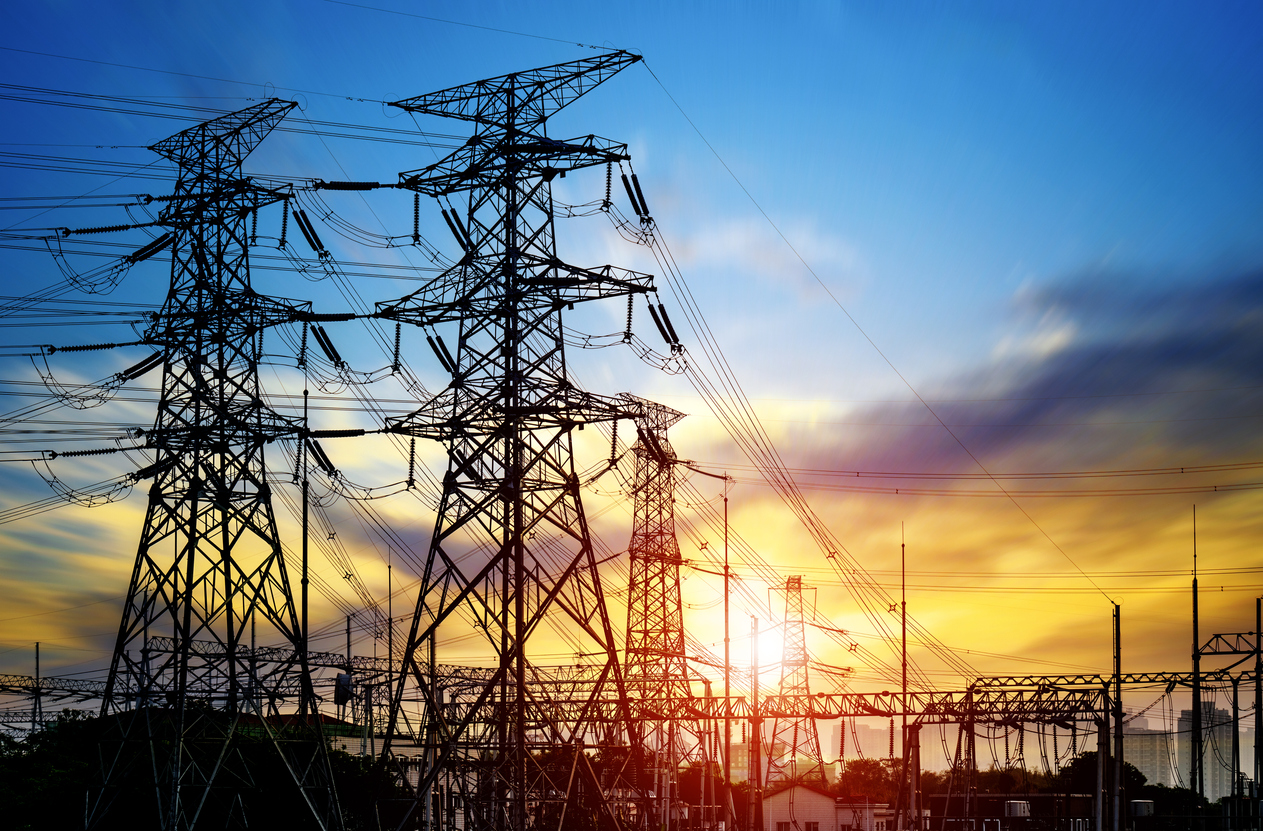
In what could be termed an eventful year for the domestic power sector, a total of 351.24 MW of electricity has been connected to the national grid in the current fiscal year. With electricity generated from 20 power projects being connected to the national transmission system, the total installed capacity in the country has reached 2,619.24 MW by the first week of March 2023. The fiscal year 2022/23 saw Nepal's largest private sector-developed project Solukhola (Dudhkoshi) Hydroelectric Project starting its commercial operation. The Solukhola (Dudhkoshi) Project is the country's largest power project developed by the private sector to date. Developed by Sahas Urja Limited, the 86 MW Solukhola Project began commercial operation on March 1. Nepal Electricity Authority (NEA) Spokesperson Suresh Bhattarai said that the number of projects to be connected to the national system has been increasing in recent times. NEA has projected an additional 811 MW of electricity will be added to the national grid in the current fiscal year. The state-owned power utility expects the 111 MW Rasuwagadhi, 57.3 MW Sanjen and Upper Sanjen, 102 MW Madhya Bhotekoshi, and 54 MW Super Dordi to come online by the end of this fiscal year. With the start of commercial operation, the Solukhola (Dhudkoshi) is the third largest hydroelectric project currently in operation in Nepal. The largest hydropower project in operation in Nepal is Upper Tamakoshi with an installed capacity of 456 MW. The second largest project, Kaligandaki Hydropower A, has a capacity of 144 MW. However, both are government-owned projects. Sahas Energy Limited received a license to develop Solukhola (Dhudkoshi) from the Department of Electricity Development (DoED) on September 17, 2014 and started construction of the run-of-river project in February 2018. The total cost of the project was Rs 11.86 billion. A consortium of 10 banks and financial institutions headed by the Nepal Investment Bank (now Nepal Investment Mega Bank) disbursed loans amounting to Rs 8.65 billion to the project. The company's promoters' equity was Rs 2.45 billion while Rs 1.05 billion was raised from the capital market. The commencement of commercial operation of Solukhola (Dudhkoshi) has been termed a milestone by the independent power producers. Krishna Prasad Acharya, Chairman of the Independent Power Producers' Association Nepal (IPPAN), said that the construction of the 86 MW project by the private sector is a significant achievement. "At a time when the private sector was struggling to develop a 5-10 MW project, Sahas Urja attempted a big hydroelectric project which has now started commercial production," said Acharya, adding, "The private sector's contribution to electricity generation in Nepal is significant. Therefore, the government needs to further support the private sector." Him Prasad Pathak, President of Sahas Urja said that the project has been brought to completion overcoming many challenges. "We succeeded in bringing the project into commercial operation despite challenges. This has encouraged us to develop large projects up to 500 MW with domestic investments in the future," he said. Power Project connected to national grid in this fiscal
| Project | Developer | Capacity |
| Simara Solar Project | Api Power Company | 1 MW |
| Grid Connected Solar PV Project | National Solar Power Co. Pvt. Ltd | 5 MW |
| Dordi Khola HEP | Himalayan Power Partner Pvt. Ltd | 27 MW |
| Chepe Khola Small | Aashutosh Energy Pvt. Ltd | 8.63 MW |
| Dordi-1 Khola | Dordi Khola Jal Bidhyut Company | 12 MW |
| Upper Balefi A | Balefi Hydropower Company | 36 MW |
| Lower Likhu | Swetganga Hydropower and Construction Ltd | 28.1 MW |
| Dordi-A | Liberty Energy | 25 MW |
| Mayakhola | Mayakhola Hydropower Company | 14.9 MW |
| Solu Dudhkoshi | Sahas Urja Ltd | 86 MW |
| Saiti Khola | Saidi Power | 0.99 MW |
| Som Radhakrishna Solar Farm | Nepal Solar Farm | 4 MW |
| Puwa-2 | Peoples Power | 4.96 MW |
| Middle Modi | Middle Modi Hydropower | 15.1 MW |
| Mid Solu Khola | Mid Solu Hydropower | 9.5 MW |
| Kalangagad | Kalanga Hydro Pvt. Ltd | 15.33 MW |
| Upper Kalangagad | Sanigad Hydro | 38.46 MW |
| Upper Machhakhola | Bikas Hydropower Company | 4.55 MW |
| Upper Piluwakhola | Menchhiyam Hydropower | 4.72 MW |
| Makarigad | Makarigad Hydropower | 10 MW |
| Total | 351.24 MW |

Satish Kaushik passes away at 66
Actor-writer-director Satish Kaushik passed away at the age of 66 in Gurugram on March 9. His body will be brought to Mumbai after a postmortem is conducted, The Times of India reported.
His close associate and best friend Anupam Kher took to Twitter to announce the sad news. Kher's Tweet stated, "I know 'death is the ultimate truth of this world' But I never thought in my dreams that I would write this thing about my best friend #SatishKaushik while alive. Such a sudden full stop on friendship of 45 years!! Life will NEVER be the same without you SATISH! Om Shanti!" Kher also shared a black and white photo where he and Kaushik are seen together.
Kangana Ranaut also reacted to the news and shared, "Woke up to this horrible news, he was my biggest cheerleader, a very successful actor and director #SatishKaushik ji personally was also a very kind and genuine man, I loved directing him in Emergency. He will be missed, Om Shanti."Satish Kaushik was born on April 13, 1956. His breakout role was that of the character Calendar in Shekhar Kapur's Mr India. He had also made an impact with early releases like Jaane Bhi Do Yaro, Mandi and Woh 7 Din.
Kaushik made a transition to direction with Roop Ki Rani Choron Ka Raja. Tere Naam and Hum Aapke Dil Mein Rehte Hain are some of his popular films as director, according to The Times of India. Reacting to the actor's demise, Subhash Ghai told ETimes, "There are very few actors who are close to me in real life. People who I can call and share happy and sad moments with. Satish was one of them since the time we worked together in 'Ram Lakhan'. I met him last month. We spoke about Karan Razdan's film about the premier of that movie. Satish was very excited as usual. He was speaking about his next film, the next movie he's going to direct. He was a great artiste, whether he was on stage, on the big screen, small screen or whether he was writing. He was great at everything he did."
Tourism businesses impatiently await Chinese visitors
While Southeast Asian countries such as Thailand, Singapore, and Malaysia are seeing a surge in the number of Chinese visitors since February, Nepali travel trade entrepreneurs are still waiting for the inclusion of Nepal in the Chinese government's list for outbound group tours. Nepal was excluded when China first published the list of outbound destinations for Chinese citizens in January this year after the country abandoned the strict travel measures related to the Covid-19 pandemic. Despite China not including Nepal in its list of outbound travel destination countries, there has been a growth in the number of Chinese nationals visiting Nepal in February. A total of 2,266 visitors from the northern neighbor came to Nepal in February compared to 1,426 in January. Travel agencies involved in bringing Chinese tourists said they are waiting for the inclusion of Nepal in the Chinese outbound group tours list. According to them, there have been increasing inquiries from Chinese travel agencies of late. While there is growth in the FITs (free independent travelers) in recent months, group travelers from the northern neighbor are yet to visit Nepal. "There are no group tour movements from the northern neighbor," said Bishwesh Shrestha, owner of C&K Travels, which specializes in Chinese tourists. "We are waiting for the Chinese government to include Nepal's name in the list of countries where Chinese can travel." Once China includes Nepal in the list, travel trade entrepreneurs said they can start their preparations in Nepal as well as in China. According to them, travel agencies in China have started their homework about Nepal, especially the new hotels added last year, and the cost part. "The Chinese travel agencies have started collecting information," said Shrestha. When China announced the reopening of outbound travel for its citizens, travel trade entrepreneurs in Nepal were quite hopeful of welcoming a good number of Chinese guests in 2023. The Chinese Ministry for Culture and Tourism on January 20 issued the first list of the 20 countries where Chinese tourists could travel. China had included Thailand, Indonesia, Cambodia, Sri Lanka, Maldives, Malaysia, the Philippines, Singapore, Laos, United Arab Emirates, Egypt, Kenya, South Africa, Russia, Switzerland, Hungary, New Zealand, Fiji, Cuba, and Argentina as an outbound destination for Chinese citizens. The Global Times, an influential Chinese newspaper, China's outbound travel has reported a rapid rebound in the month since the country resumed cross-border group tours on February 6, with more passenger trips and increased flight capacity. Asian countries and regions are among the most popular tourist destinations, taking more than 80 percent of the growth, with Thailand, Singapore, and Malaysia ranking as the top three destinations in terms of outbound passenger trips from mainland China. The missing of Nepal from the list, according to Nepali travel trade entrepreneurs could affect the government's target of welcoming 1 million tourists in 2023. Before the pandemic-related travel restrictions began in early 2020 in Nepal and across the world, China was the second largest source market for Nepal after India as the country welcomed 169,543 tourists from the northern neighbor in 2019. A total of 1.19 million foreign tourists visited Nepal in 2019 before the pandemic disrupted global tourism. According to travel trade entrepreneurs, a significant contribution of Chinese tourists would be required if Nepal wants to meet the target of 1 million in 2023. In 2022, tourist arrivals reached over 600,000 without any significant contribution from China. Nepal welcomed only 9,595 Chinese tourists in 2022. With Chinese airlines also resuming their Nepal operations, travel trade entrepreneurs said air connectivity is no more issue now. While China Southern and Air China are already operating their flights to Kathmandu, Sichuan Airlines is resuming its Kathmandu flights on March 20. “There is no problem for Chinese tourists to visit Nepal,” said a tour operator.

RSP to vote for Ram Chandra Paudel in presidential election
The Rastriya Swatantra Party has decided to vote for Ram Chandra Paudel in the presidential election. A meeting of the party held on Thursday made the decision to this effect. The party, however, did not make the decision public due to the election code of conduct. The RSP Chief Whip Santosh Pariyar said that the party has decided to vote for a person who plays a role to strengthen the democracy and to protect the system. The Rastriya Swatantra Party has 19 lawmakers. Nepali Congress senior leader Ram Chandra Paudel and CPN-UML Vice-Chairman Subash Nembang are vying for the post of President. The voting for the election is underway at the Parliament building in New Baneshwor. The counting of votes will start soon after the completion of voting.


