


Nepal: Voting underway to elect new Vice-President
Voting is underway to elect a new President of Nepal at Lhotse Hall of the federal Parliament Building, New Baneshwor on Friday. Astalaxmi Shakya (Bohara) of the CPN-UML, Mamata Jha of the Janamat Party and Ramsahaya Prasad Yadav of the Janata Samajbadi Party are in the race. Voting that started at 10 am will end at 3 pm today, Assistant Election Officer, Amrita Kumari Sharma said. Separate voting centers have been determined for the members of federal Parliament and Province Assembly. Two types of ballot papers have been printed for the Vice-Presidential election-2079. The ballot for the federal Parliament members is of red color while it is of green color for the Province Assembly members. The names and photos of candidates have been printed in the ballot papers. The weightage of a vote cast by a member of federal Parliament will be equivalent to 79 whereas the weightage of a vote cast by a PA member will be equivalent to 48. There are 332 voters of the federal Parliament and 550 voters of the PA in the election. Arrangements have been made to count votes shortly after voting, said Sharma. The Vice-President shall be assigned to look after affairs in the absence of the President. The tenure of the Vice-President is five years. This is the third Vice-Presidential election since the country adopted the federal democratic republic system in 2008.

Madhes Province govt to reward Gulsan Jha, Arif Sheikh with Rs 200,000 each
The Madhes Province government has decided to facilitate the Nepali cricket team players—Gulsan Jha and Arif Sheikh—with a cash prize of Rs 200, 000. The government announced to provide the cash prize of Rs 200,000 each to --Jha and Sheikh, expressing happiness over Nepal's qualification to the ICC Men’s Cricket World Cup Qualifiers. The provincial government decided to provide the cash prize to both the players of Madhes Province as an incentive. Extending gratitude to the Nepali cricket team over its improbable win against the UAE, Chief Minister Saroj Kumar Yadav announced to provide cash prize to the cricketers.

Nepal: Vice-Presidential election today
Voting for the election to the post of Vice-President of Nepal is taking place today. Astalaxmi Shakya (Bohara) of the CPN-UML, Mamata Jha of the Janamat Party and Ramsahaya Prasad Yadav of the Janata Samajbadi Party are in the race. All the preparations for voting taking place at Lhotse Hall of the federal Parliament Building, New Baneshwor from 10:00 am to 3:00 pm have been completed, according to Assistant Election Officer, Amrita Kumari Sharma. Separate voting centers have been determined for the members of federal Parliament and Province Assembly. Two types of ballot papers have been printed for the Vice-Presidential election-2079. The ballot for the federal Parliament members is of red color while it is of green color for the Province Assembly members. The names and photos of candidates have been printed in the ballot papers. The weightage of a vote cast by a member of federal Parliament will be equivalent to 79 whereas the weightage of a vote cast by a PA member will be equivalent to 48. There are 332 voters of the federal Parliament and 550 voters of the PA in the election. Arrangements have been made to count votes shortly after voting, said Sharma. The Vice-President shall be assigned to look after affairs in the absence of the President. The tenure of the Vice-President is five years. This is the third Vice-Presidential election since the country adopted the federal democratic republic system in 2008.

Editorial: Wake up, parliament
What is the main task of a parliament? Here, we are not talking about an assembly of some nocturnal creatures. We are talking about an organ of the state consisting of elected representatives of the people. We are talking about a sovereign body that represents the will of the people expressed through adult franchise. Worldwide, parliaments worth their names do one major thing. They make laws. But Nepal’s parliament is emerging as an exception. For years, a chronic disease has been ailing the parliament, preventing it from functioning properly. Crucial Bills getting nowhere attest to this sorry state of affairs. The Truth and Reconciliation Bill is a case in point and so is the Anti-money Laundering Bill. The failure to get the TRC Bill through the parliament is tantamount to denying justice for the victims of the decade-long insurgency. It does not enhance Nepal’s image in international fora like the United Nations. There is another cause for alarm also. Recent reports suggest that Nepal faces graylisting for failing to introduce and enforce laws against money-laundering. At a time when the national economy is not in the pink of health, the government should have presented this crucial Bill without further delay as graylisting will hit Nepal’s domestic and international business transactions hard. The presidential election, the upcoming vice-presidential vote, the vote of confidence and the ongoing dispute over the opposition party have consumed much of our lawmakers’ energies. It is the responsibility of a government to give business to the parliament. The government should wake up to this responsibility and work in close coordination with political parties across the aisle for the passage of crucial Bills and a smooth functioning of the parliament. Otherwise, there are chances of a relapse into the Ordinance Raaj where governments used to rule through ordinances after failing to have their way in the parliament. This time, chances are that such a rule may not be a smooth sailing, given the international outcry against TRC Bill and Anti-Money Laundering Bill. The government and the parliament should wake up and act before it’s too late.

Revenue collection takes a blow due to macroeconomic headwinds
After the import control measures led to a big slump in revenue collection, the government first lifted the over seven-month ban on the imports of automobiles, liquors, and expensive mobile sets effective from mid-December last year. Then, on January 20, the Nepal Rastra Bank (NRB) annulled the nearly year-long provision of cash margin of up to 100 percent in the banks to open letters of credit (LCs) for the imports of around 300 goods. However, the decisions of the government and NRB to roll back their previous steps, which were introduced a year ago to tackle the worsening problems in the external sector of the economy have not been fruitful for the government in terms of meeting the revenue targets. According to the Financial Comptroller General Office (FCGO), the government’s revenue collection continues to remain dismal totaling Rs 584.29bn as of mid-March, 2023 compared to Rs 688.38bn in the same period of the last fiscal year 2021/22. The revenue collected so far is not enough even to cover the recurrent expenditure of the government which stands at Rs 610.21bn as of mid-March, 2023. The Department of Customs (DoC) and Inland Revenue Department (IRD), the major agencies of the country's tax regime, have reported dismal revenue figures as of March 15 of the current fiscal year. According to DoC, it collected Rs 250bn, which is 58 percent of the target of Rs 433bn. “The impact of the policy reversal on import control has not been reflected in the customs revenue,” a senior DoC official said. The country receives nearly half of its revenue through taxing imported goods. Import taxes on vehicles are among the largest sources of revenue. But even after the government lifted the import ban, automobile dealers have not rushed to import the vehicles. In fact, the automobile dealers have not yet cleared around 2,800 four-wheelers parked at Birgunj and other customs yards of the country, according to the customs officials. The vehicles were imported in recent months based on LCs opened before the import restrictions were imposed in April last year. “We have long been asking the auto dealers to get them cleared but they have refused to do so, complaining about the non-availability of loans in the automobile sector,” the official said. In FY 2021/22, the government collected revenue of Rs 66.30bn from the imports of four and two-wheelers, DoC data shows. The story is the same with the inland revenue collection. According to IRD, the revenue collection as of mid-March of this fiscal year stood at 79.68 percent of the target. A total of Rs 281.99bn has been collected by IRD as of mid-March against the target of Rs 353.91bn. The department had raised Rs 284.88bn in revenue during the same period of the last fiscal year. In late January, the government decided to reduce administrative expenditure by 20 percent. Subsequently, the government trimmed its expenditure plan (budget) for the current fiscal year 2022/23 by 13.59 percent through the mid-term review of the budget. This translates to a reduction of a staggering Rs 243.83bn in the budget for FY 2022/23. The revised budget now amounts to Rs 1,549.99bn. On May 29, former finance minister Janardan Sharma had presented a budget of Rs 1,793.83bn with an ambitious 8 percent economic growth target. But during the first quarter of the current fiscal year, the economy grew by just 0.8 percent. Industrialists and businesspersons say the demand for goods and services has slumped as the economy is facing several problems currently. According to revenue administration officials, meeting the revenue targets is difficult because of the macroeconomic headwinds.

VT 13 completes its shooting in Nepal
At the time when many Nepali films are being shot in foreign lands, Nepal’s own natural beauty and rich cultural heritage have been attracting many foreign film and documentary makers to do their shooting here. Not only that, various international television commercials (TVC) have also been shot in Nepal. Recently VT 13 (Working Title), a Hindi movie, produced by Sony Pictures International and Renaissance Pictures has been filmed in the beautiful scene of Nepal. The film is directed by Shakti Pratap Singh Hada, and is based on true events. It features Varun Tej and Manushi Chhillar in the lead role. The film was shot from March 3 to 9 in the Langtang Valley, Sindhupalchowk Jugal Mountain and periphery. For the first time ever, A Shotover F1 6 Axis Gyro Stabilized Camera System was used to get immense shots of the mountains and valleys for the film. The system uses IMU and Brain to analyze all the vibrations, oscillations and bumps and correct all of them using heavy duty motors and magnets. The Shotover F1 enables broadcasters and filmmakers to achieve super stable shots even at a speed of 300 kmph. VT13 being a movie based on fighter jets and high speed action, usage of these types of camera systems has proven to be extremely important for achieving dynamic shots. The Shotover was operated by trained and experienced Indian cinematographer Shaikat Chakraborty. He has years of camera experience across India and abroad in most hostile environments. The Visual Effects Supervisor of the film is Durga Prasad Ketha who has been working in Telugu, Tamil, Malayalam, Kannada and Hindi feature films for over 22 years. The Line Producer of the film is Phurba Sherpa. He is record holder producer and director and has worked in many international projects for CNN, National Geographic and ABC among others.

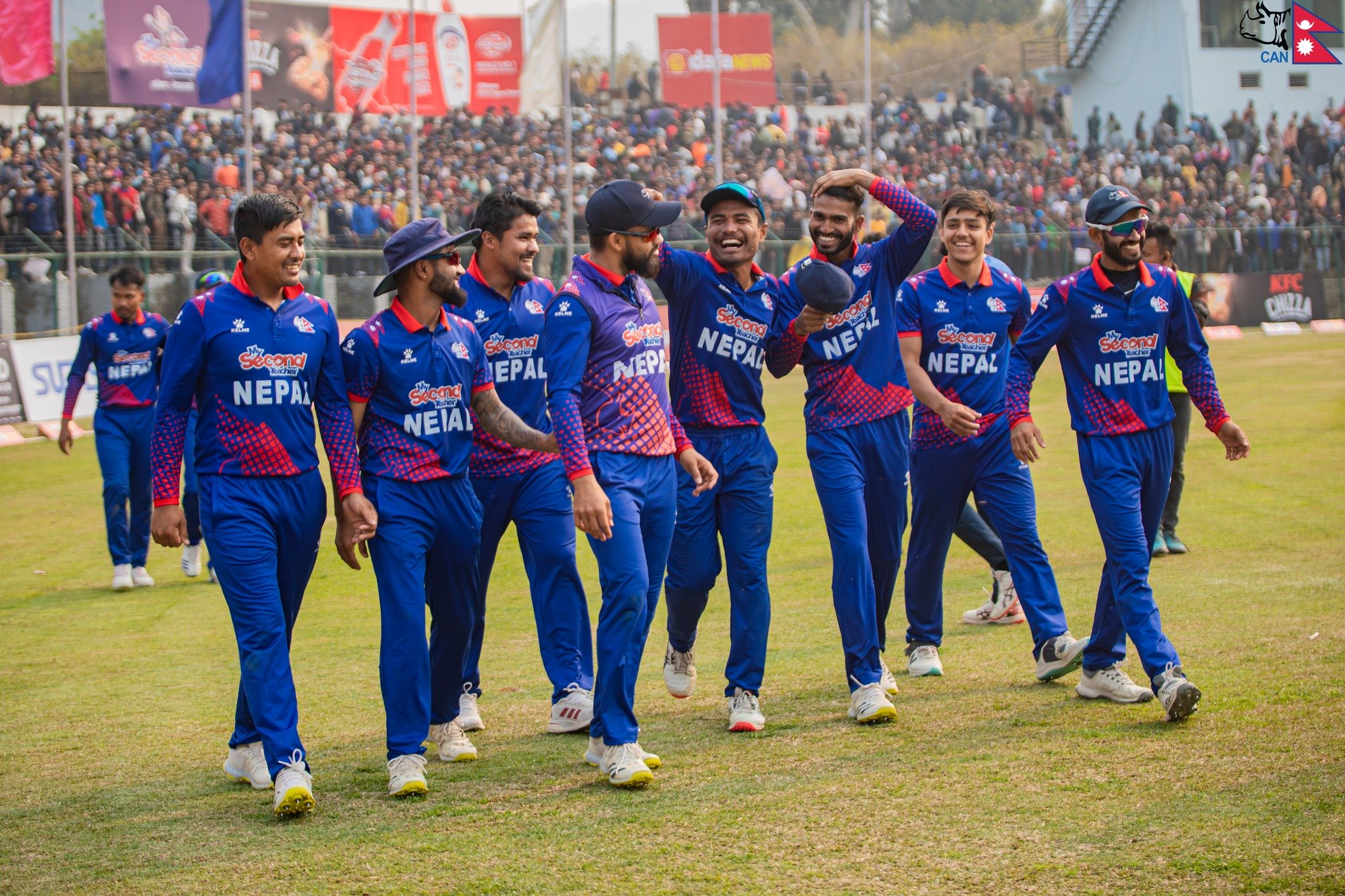
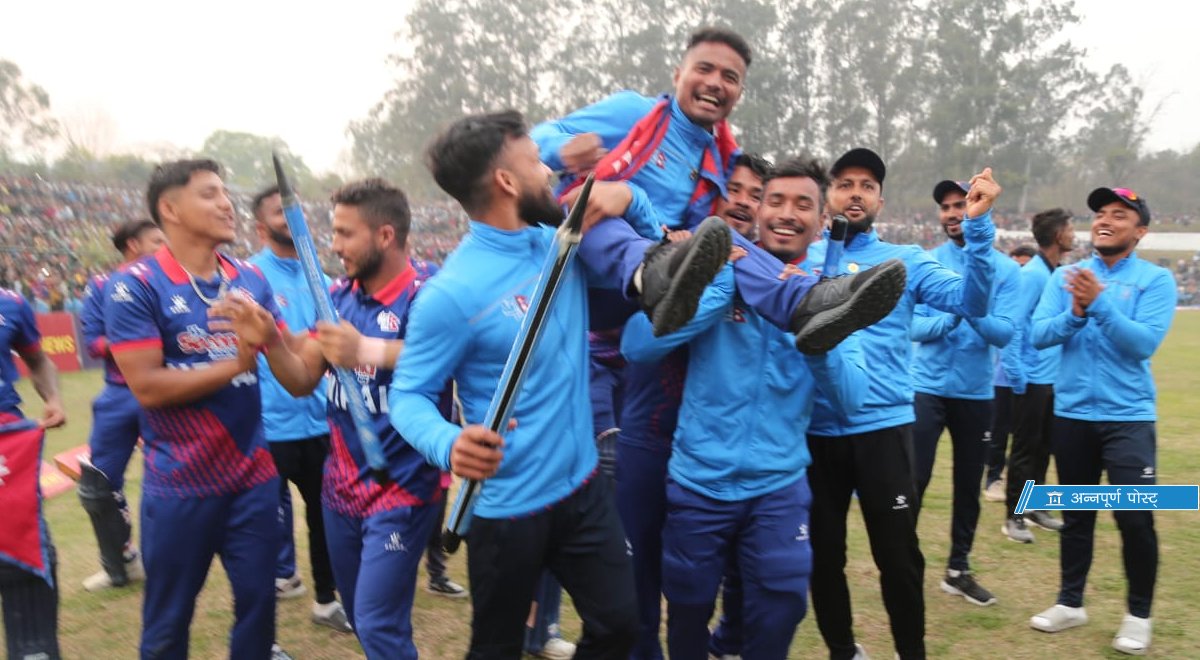
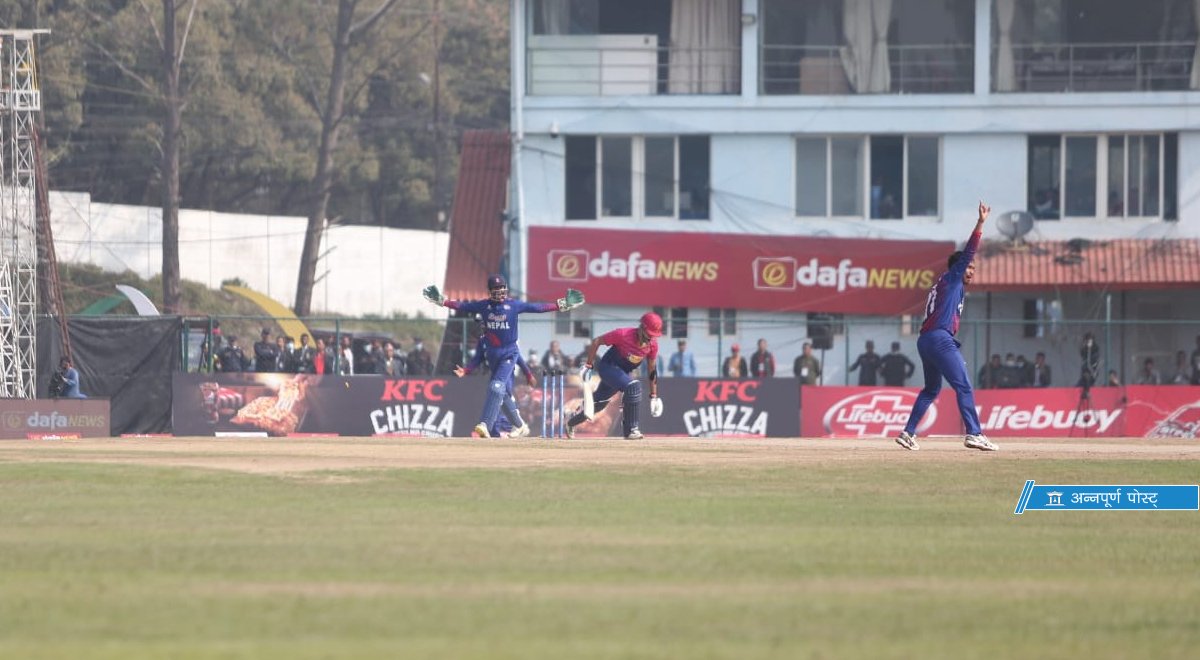
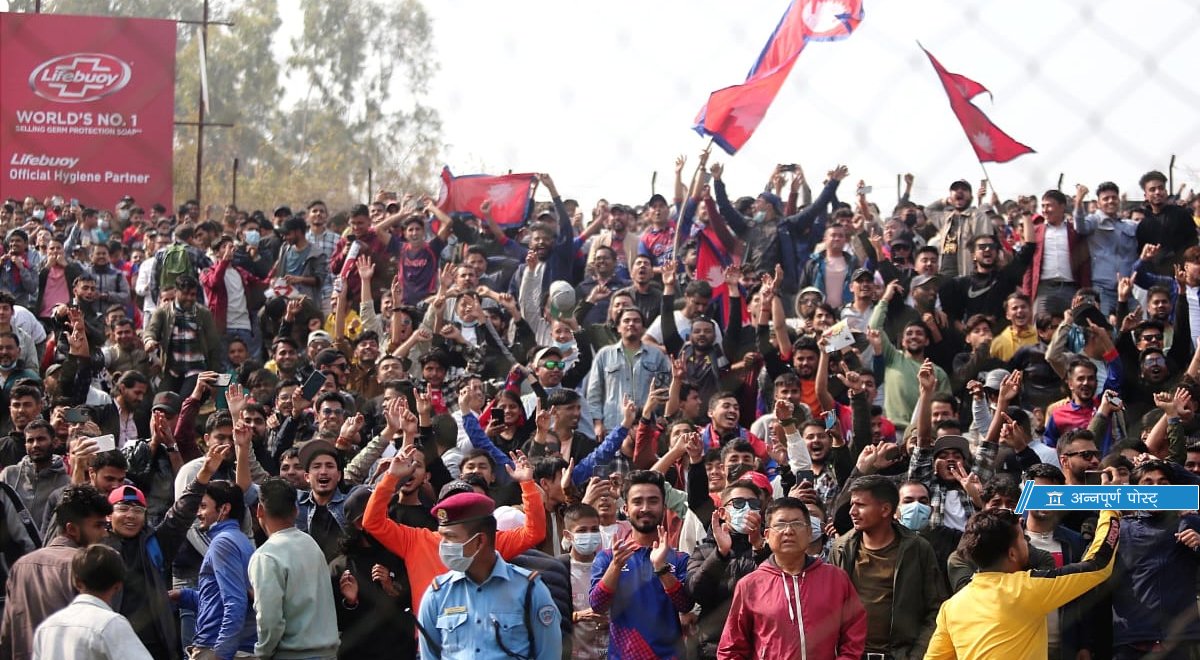
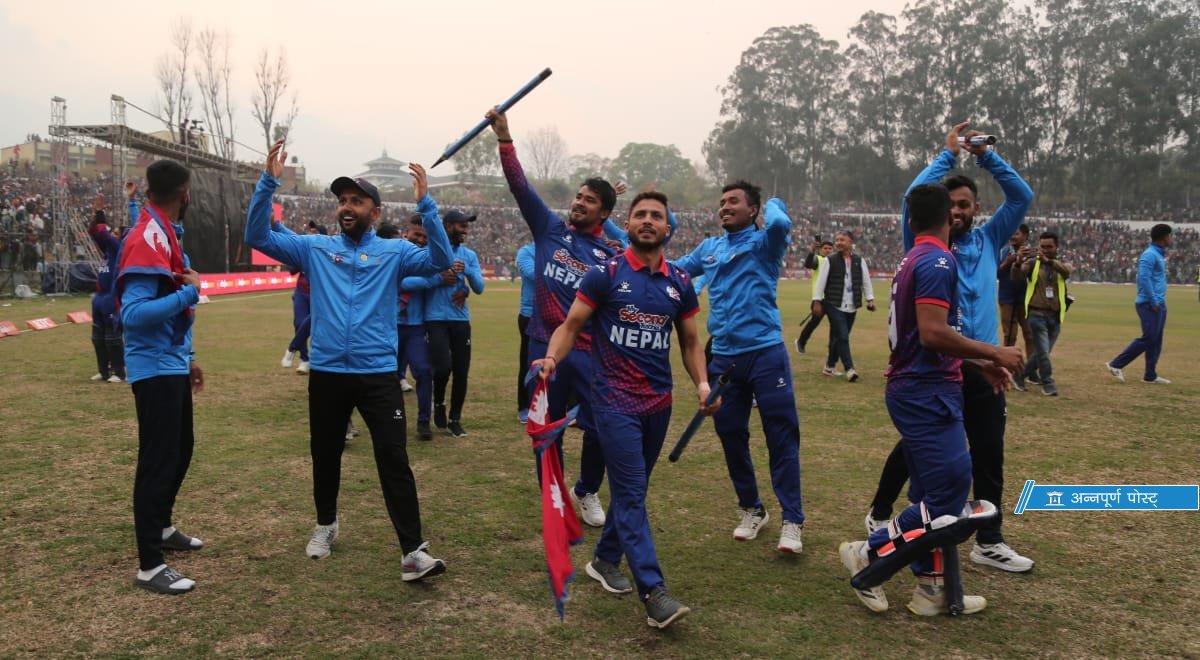
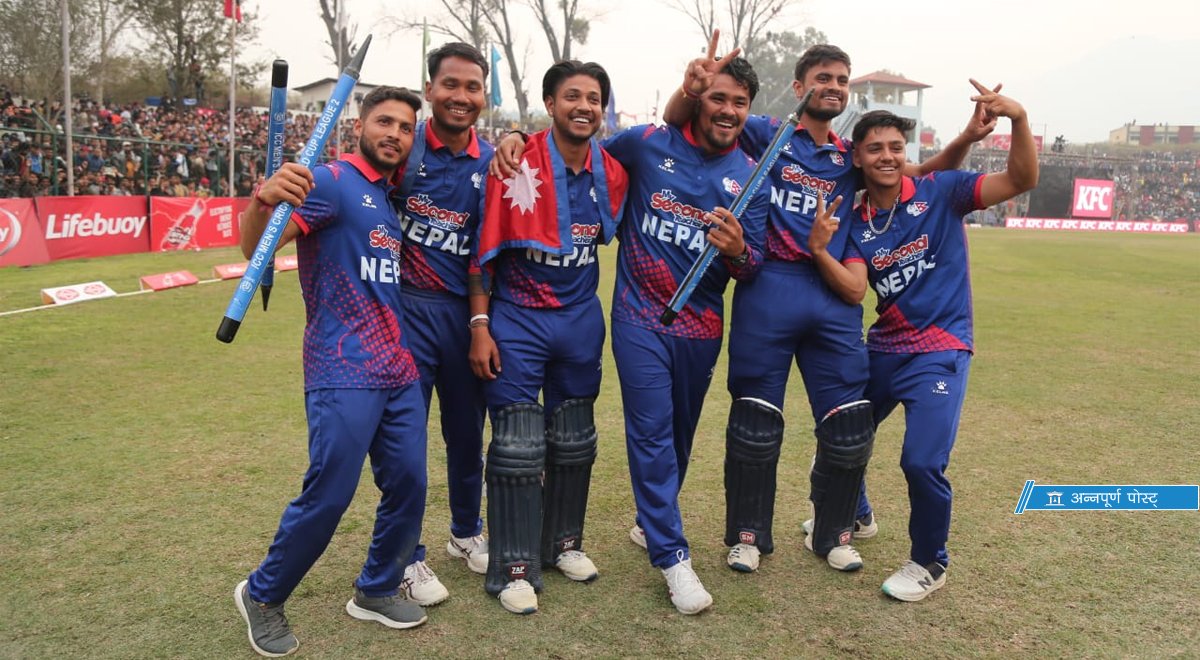
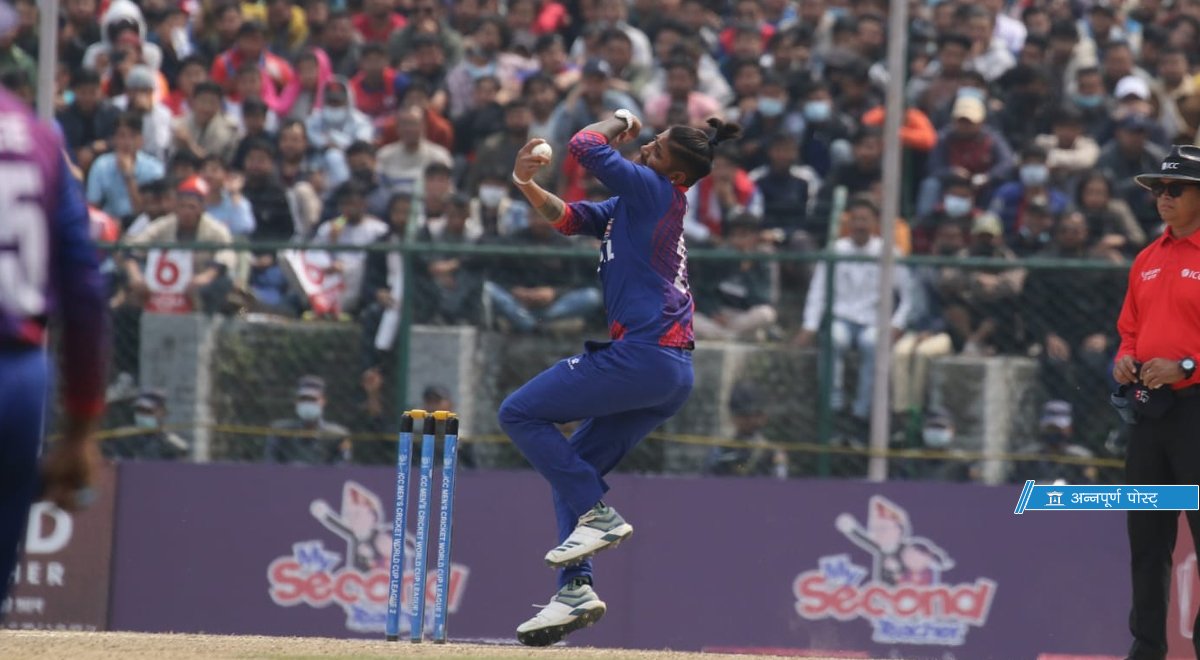
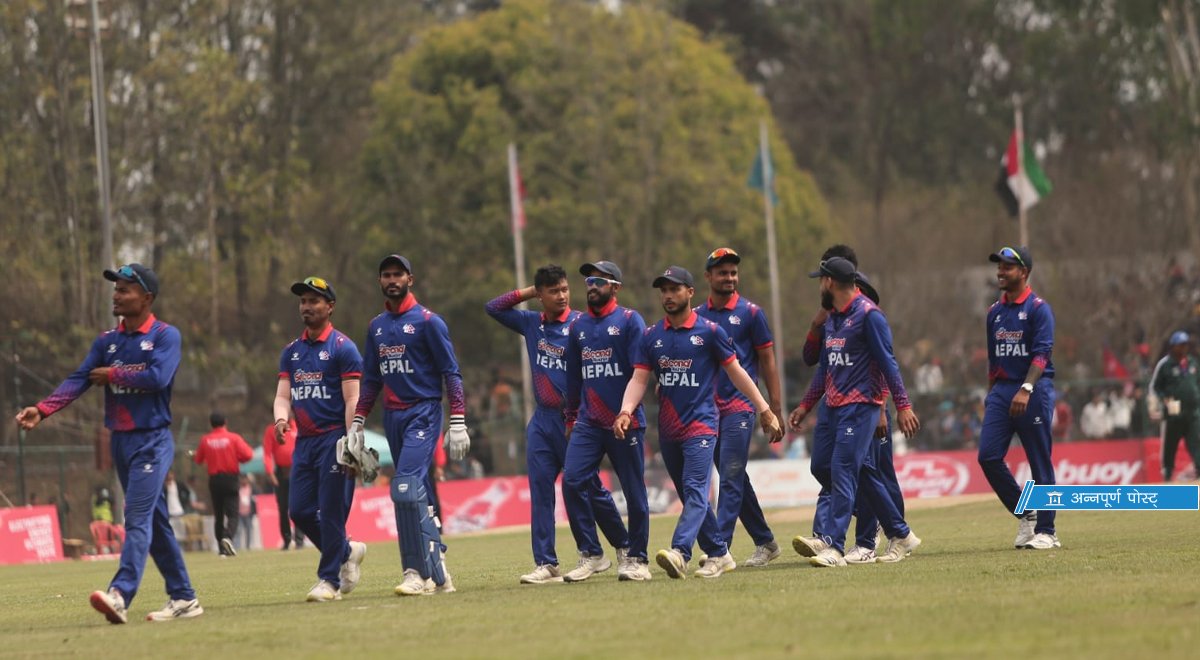
Nepal outplay the UAE, secure berth at World Cup Qualifiers (With photos)
Nepal have secured a berth at the ICC Men’s Cricket World Cup Qualifiers 2023 after defeating the UAE by Duckworth-Lewis (D/L) method in their final match of the triangular series of the World Cup League 2 on Thursday.
In the match stopped in the 44 overs due to bad light, Nepal scored two runs more than the target of 267 runs in the DL method.
Kushal Bhurtel scored 50 runs off 35 balls smashing three boundaries and four sixes to lead Nepal to a nine-run victory.
Similarly, Bhim Karki made 67 runs off 76 balls hitting nine boundaries and Arif Sheikh played an important innings of 52 runs off 62 balls.
Likewise, Gulsan Jha and Dipendra Singh Airee scored unbeaten 50 and 10 runs respectively.
Junaid Siddique took three wickets for the UAE while Aayan Afzal Khan and Jahur Khan claimed two and one wickets respectively.
In the match played at the TU cricket ground, the UAE scored 310 runs at the cost of six wickets.
Asif Khan, who came in number five, scored an unbeaten century off 41 balls smashing 11 sixes and four boundaries for the UAE.
Similarly, Vriitya Aravind contributed 94 runs off 38 balls hitting two sixed and eight fours.
Earlier, skipper Muhammed Waseem returned to the pavilion scoring 63 runs off 49 balls with six sixes and two boundaries.
For Nepal, Dipendra Singh Airee took two wickets.
Likewise, Lalit Rajbansi, Sompal Kami and Sandeep Lamichhane claimed one wicket each.
With the win, Nepal, who finished third in the league, secured a place at the ICC Men’s Cricket World Cup Qualifiers 2023 to be held in Zimbabwe.
Scotland have already become the League 2 Champion while Oman became the second.
Meanwhile, Prime Minister Pushpa Kamal Dahal congratulated the Nepali team for being able to secure a berth at the ICC Men’s Cricket World Cup Qualifiers.



FSU election to be held in Tri-Chandra Multiple Campus on March 23
The Free Student Union (FSU) election will be held in Tri-Chandra Multiple Campus on March 23. Making public the election calendar again, the Free Student Union Election Committee fixed the date of March 23 for the election in the Ghantaghar-based campus. The election calendar was affected in the Tri Chandra Campus due to a dispute over the admission of the students. In the notice issued by election officer Rajendra Gautam, voters list will be published on Friday. Candidates can file nominations on Sunday. The voting will be held from 8 am to 4 pm on Thursday. Students had staged a demonstration by placing the chair and name plate of Campus Chief Prof Dr Sunil Adhikari by taking the issue of election process in the Tri Chandra Campus. The FSU election is going to be held in all the campuses across the country on March 19.


