


Former Home Minister Thapa’s security advisor Indrajit Rai in police net
Police have arrested Indrajit Rai, security advisor of former Home Minister Ram Bahadur Thapa, for his alleged involvement in defrauding people of millions of rupees on the pretext of sending them to the United States as Bhutanese refugees. Police spokesperson Kuber Kadayat said that Rai was apprehended from Sunakothi of Lalitpur on Tuesday. Police had been searching for Rai after the Kathmandu District Court issued an arrest warrant against him a few days ago. He said that Rai was nabbed after he was found involved in duping people on the pretext of sending them to United States as Bhutanese refugees. Earlier, police had detained Keshav Dulal, Tanka Kumar Gurung, Sanu Bhattarai and Sagar Rai involved in the same incident. Police said that they are looking into the case.

Gold price drops by Rs 200 per tola on Tuesday
The price of gold has dropped by Rs 200 per tola in the domestic market on Tuesday. According to the Federation of Nepal Gold and Silver Dealers’ Association, the yellow bullion is being traded at Rs 108, 800 per tola today. The yellow metal was traded at Rs 109, 000 per tola on Monday. Meanwhile, tejabi gold is being traded at Rs 108, 300 per tola. It was traded at Rs 108, 500. Similarly, the silver is being traded at Rs 1,405 per tola today.

Annapurna Post celebrates 21st anniversary
Annapurna Post daily, the flagship publication of Annapurna Media Network (AMN), completed 21 years of its publication on Monday. The Nepali daily has been in publication continuously since May 03, 2002.
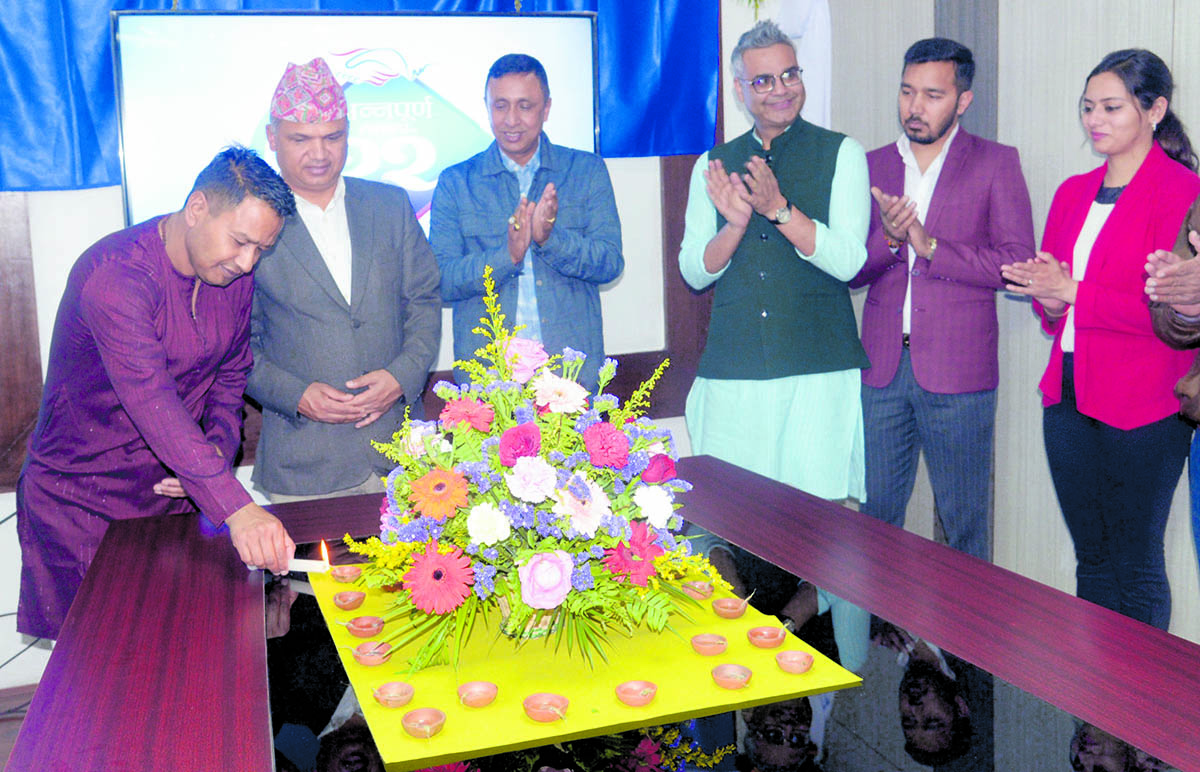
A program was organized at the Tinkune-based Corporate Tower to celebrate the day.
On the occasion, Captain Rameshwar Thapa, Chairman of the Annapurna Media Network, presented certificates of appreciation to the journalists and employees of Annapurna Post,
“Democracy and nationalism are our religions. The Annapurna has been raising political, economic and social issues in an objective manner,” he said.
 Referring to the fact the Covid-19 pandemic affected the country and media houses as well, Chairman Thapa said, “Your indomitable courage, commitment and professional integrity are incomparable.”
Speaking at the program, the Group CEO of Annapurna Media Network, Sanat Neupane, said that the far-sighted vision of the management leadership and creative editorial leadership have helped Annapurna Post take this height.
Editor-in-chief Akhanda Bhandari and Director of Annapurna Media Network Sachan Thapa among others were present in the program.
Referring to the fact the Covid-19 pandemic affected the country and media houses as well, Chairman Thapa said, “Your indomitable courage, commitment and professional integrity are incomparable.”
Speaking at the program, the Group CEO of Annapurna Media Network, Sanat Neupane, said that the far-sighted vision of the management leadership and creative editorial leadership have helped Annapurna Post take this height.
Editor-in-chief Akhanda Bhandari and Director of Annapurna Media Network Sachan Thapa among others were present in the program.

OAG report diagnoses many ills afflicting health institutions
The Office of the Auditor General (OAG) has stated that it was unable to find the records of entry and use of Covid-19 vaccines and related materials worth Rs 17.08bn that the Ministry of Health and Population had received in the fiscal year 2021/22. The medical consignment was received as assistance from COVAX, the Government of Japan, UNICEF, and Gavi, among other donors. In its report, the OAG has noted that the Health Ministry spent Rs 7.89m received from different donor agencies for training and consultation services, but has failed to include the expenses in its budgetary system. It is mandatory for public offices to make all their spendings through the budgetary system. The OAG report has also highlighted huge financial lapses and discrepancies in other areas of the country’s health sector. It has, for example, mentioned Bir Hospital’s failure to start the construction of an international standard health facility in Duwakot, Bhaktapur, despite the budget allocation of Rs 500m in the fiscal year 2021/22. The proposed hospital is said to be completed within three years, but the construction process has yet to commence. Similarly, the National Public Health Laboratory failed to spend Rs 12.64m allocated to it for the construction of a laboratory building, the OAG report states. Furthermore, the government's plan to build basic hospitals in all 753 local units has also stalled. Although 655 local units were permitted to construct basic hospitals, construction is underway in only 414 local units, while work has not begun in 241 units. The OAG report says that the government spent Rs 6.96bn on building basic hospitals in the fiscal year 2021/22. In the fiscal 2021/22, the Health Ministry allocated Rs 3.12bn to procure equipment such as ICU, PICU, HDU, ventilator, and oxygen plant for federal, provincial, and municipal hospitals, community hospitals, and medical colleges. But while the ministry spent Rs 3.10bn on these equipment, it is unclear whether it has been put to use. The OAG has instructed the ministry to prepare a report on the use of such equipment and maintain an integrated data system. It has also directed the ministry to keep up-to-date records of the equipment procured for Covid-19 isolation and quarantine centers. According to the OAG report, the Health Ministry procured syringes for immunization at Rs 6.74 per unit in the fiscal year 2021/22, compared to Rs 4.41 in the fiscal year 2020/21. Interestingly, the ministry had estimated the cost at Rs 8.17 per syringe in the fiscal year 2021/22, resulting in an additional financial burden of Rs 53.35m. The report also raises the issue of several government hospitals and medical bodies violating the established norms while preparing cost estimates for procuring various equipment It says BP Koirala Institute of Health Sciences, Bharatpur Hospital, and Health Insurance Board violated public procurement laws by eschewing the competitive bidding process to procure furniture and equipment worth Rs 14.37m, Rs 28.78m, and Rs 4.8m, respectively. In the fiscal year 2021/22, the OAG report further states, the Health Ministry provided grants worth Rs 449.5m to 38 community hospitals and organizations without completing the required procedures outlined in Section 4 of the Guidelines Related to Subsidy for Community Hospitals, 2016. The OAG report also states that 7.6 percent of the rotavirus vaccine and 79.3 percent of the BCG vaccines had expired due to the lack of proper management of vaccination programs. Similarly, nearly half of the VTM, RNA Extraction, Automated RNA Extraction, and Antigen kits, with a combined worth of Rs Rs 298.12m, are set to expire without being used. Four million doses of China-donated Sinovac Covid-19 vaccine are also set to expire in 10 months. The government has not used the Sinovac vaccine, citing a lack of technical tests. The OAG has also identified a number of issues with the Department of Health Services' procurement and payment practices. Specifically, the department has released full payments to suppliers before the equipment installation and staff training, which violates the procurement contract. The OAG has instructed the department to ensure that suppliers abide by the procurement act and take action against officials who release payments before the work is completed. The department has released payments of Rs 445m to four suppliers for various equipment, including automated biochemistry analyzers, hematology machines, an ERCP machine, portable X-ray machines, and hemodialysis machines. The OAG also noted that suppliers took more than eight months to supply and install 50 sets of ICU ventilators that were urgently needed at various government hospitals. In addition, the OAG report says, the department has been procuring medicines using money received from the Gavi Fund through UNICEF, which goes against the practice of making spending through the budgetary system. According to the report, the Department of Drug Administration (DDA) has not been able to perform its monitoring responsibility effectively. The DDA monitored only 3,663 out of 33,474 pharmacies, and only 72 out of 187 drug producers. The OAG has also raised the issue of DDA’s failure to properly manage the medical waste and expired medicines, which could pose a significant risk to public health. The OAG has also pointed out the failure of the National Public Health Laboratory to procure and install 35 pathological test equipment despite receiving the budget for the same. Furthermore, the OAG has directed the National Tuberculosis Center to make effective use of equipment and infrastructure after discovering that the center was not utilizing a culture machine costing Rs 7m, NK analyzer costing Rs 2.25m, autoclave costing Rs 800,000, and centrifuge costing Rs 300,000. Similarly, the OAG report states that the National Academy of Medical Sciences (NAMS) has been neglecting the upkeep and maintenance of medical equipment. The report states that seven ventilators, one USG equipment, one patient monitor, eight Hamilton ventilators, and two CareFusion ventilators are in need of repair. The lack of functioning equipment has adversely affected the hospital's service delivery, the report notes. The OAG has also directed NAMS to expand its pharmacy to reduce the waiting time for patients to get medicines. The report reveals that NAMS has been unable to install a CT simulator and Thermotherapy machine for cancer treatment, even four years after procurement. NAMS has also been called out for disbursing Rs 31.77m as medical expenses to its staff without verifying procurement bills. The OAG has instructed NAMS to recover the amount. The OAG report also states that the construction of a 400-bed neonatal building, a 300-bed cardiac center, and a 200-bed oncology center at the BP Koirala Institute of Health Sciences (BPKIHS) remains incomplete, even five years after the contracts were awarded. According to the report, the administration of BPKIHS released Rs 32.21m as cost variation of the neonatal building without approving the variation. The OAG has instructed BPKIHS to recover the amount from the contractor. The building, which was supposed to be completed in three years, still remains incomplete. Furthermore, the decision to terminate the bidding process for the procurement of dental materials has cost BPKIHS an additional Rs 5bn. The institute awarded the procurement contract to the only bidder at a cost of Rs 19.97m. However, in the previous bidding, one of the bidders had quoted around Rs 14.92m for the same tender. The OAG also found discrepancies in the preparation of cost estimation for procurement. In addition, the report revealed that Paropakar Maternity and Women's Hospital has been referring patients to private hospitals and diagnostic centers insteading of repairing its equipment. For instance, the hospital referred 4,200 patients to other hospitals for MRI services in the fiscal year 2020/21. It has affected service seekers as they are forced to pay as much as Rs 3,000 for MRI which would cost only Rs 1,000 at the maternity hospital.

Mind Matters | Living with insecurities
I’m a 21-year-old woman who was recently diagnosed with Polycystic Ovary Syndrome (PCOS), which is one of the reasons behind my weight gain. Being someone who has been living with body image issues, gaining all that weight from PCOS has affected my mental health. I’m insecure about my body, and I fear being judged. This has especially affected my romantic pursuits. Maybe it’s society’s beauty standards that makes me doubt my worth, but no matter what anyone says, I don’t feel comfortable when people get close to me. Sometimes, I tell myself that people are just trying to take advantage of me even when they’re genuinely interested in me. I have trust issues. What should I do?—J.K Answered by Dristy Moktan, psychosocial counselor, Happy Minds I understand that being diagnosed with PCOS isn’t easy. It causes hormonal imbalance, mood swings, and irritability, which can be quite overwhelming for your mental health. On top of that, being insecure about your body image might be making the situation even more difficult for you. Nevertheless, that doesn’t mean it’s not manageable. There are a lot of women living with PCOS, and they have sound mental health. So I want to assure you that if you put a certain level of effort, you will be fine too. First, I would like to talk about your body image issues. Our society has set a certain beauty standard that many think they should fit into perfectly. But I know even you know that not everyone looks the same and that people in their own way are beautiful. Ask yourself this: Would you ever judge someone based on their physique? You know you wouldn’t. So, why refrain from showing the same kindness and compassion to yourself? Yes, I know there are going to be people who will never understand how much they talk about your body image will bother you. But, that doesn’t mean you should believe everything they say. I know it’s easier said than done but if you don’t love yourself for who you are, who will? Sometimes, we tend to refrain from finding out the core reason behind having these issues. Either we are in denial, or we don’t want to dig deep and face the problem. Don’t do that. It’s easier to find a solution to your insecurities when you know what’s triggering them. From what you have written in your question, I believe you are still not aware of the trigger. Take some time and think about what the reasons are behind these insecurities. Then maybe you will find some answers on how to overcome them. Journaling helps. Our feelings can be fuzzy. You might not always understand your emotions. It can become perplexing. Expressing your emotions in writing can help you understand your feelings better. Managing those emotions will then become easier. Also, try talking to someone who has been facing similar issues. Learning how they cope with their problems can give you an idea on how you can manage yours too. Finding your own way of healing will require you to try a lot of things until one of those methods works. But you will never know unless you try. On top of that, sharing your feelings with someone who can empathize with you can be therapeutic. This will also help with your trust and attachment issues with people. You will slowly learn to get comfortable with people getting close to you, romantically too. You just need to know what your comfort zone is before you jump into any kind of relationship. The solution to body image and trust issues is gradual. You have to give yourself enough time to heal and move forward. But if it gets too difficult for you to handle your emotions, the best option would be to consult a mental health professional.

Mahabir Pun, government sign seven-point agreement
National Innovation Center Chairman Mahabir Pun and the government signed a seven-point agreement on Monday. Chairman Pun and Minister for Defense and Minister of Law, Justice and Parliamentary Affairs Purna Bahadur Khadka on behalf of the government signed the agreement this afternoon. Following the agreement, the sit-in among protest programs led by Pun has come to an end. According to the agreement, the government will establish a fund and invest in carrying out research and development and innovation and invention related activities. Similarly, the government will table a bill in the upcoming session of the Parliament and endorse it to manage and operate the fund and to prepare the draft of the bill within 60 days in consultation with stakeholders. Likewise, it has been mentioned in the agreement that one percent of the capital budget will be deposited in the fund from the next financial year and formulate necessary policies and laws to promote research and development and innovation and invention related activities.

CPN (Revolutionary Maoist), CPN (Bahumat) unite to form Revolutionary Communist Party Nepal
Mohan Baidhya-led CPN (Revolutionary Maoist) and Dharmendra Bastola-led CPN (Bahumat) have unified on Monday. The name of the new party announced amidst a formal program in the Capital this afternoon will be ‘Revolutionary Communist Party Nepal’. Newly formed Revolutionary Communist Party Nepal Chairman Baidhya, party spokesperson Bastola, officer members and party advisors among others were present in the program.

Rescue efforts continue for Nepalis in Sudan
The government continues efforts for safety and rescue of Nepalis in Sudan amidst a challenging security situation. According to the Ministry of Foreign Affairs, the government is in regular contact with the Nepali citizens in the country in northeast Africa and the Nepali Embassy in Cairo of Egypt continues to update about their situation and rescue as well. So far 30 Nepali citizens except those security personnel deputed for the UN peacekeeping missions there have come into contact with the Embassy. As per the request of the Embassy, the Saudi Arabia government cooperated to safely bring 19 Nepalis from the Port Sudan to Jeddah of Saudi Arabia, according to the Nepali Consulate in Jeddah. Prior to this, a Nepali safely reached Jeddah and preparations are on to send them back to home. Five, out of the remaining 11 Nepali citizens who are in contact with the Nepali Embassy in Cairo, have already left for Port Sudan. Efforts are on to transport one from Khartoum to Port Sudan and three have reached Port Sudan with the help of their employer company and are staying in a hotel on their own. Similarly, arrangements are in place to escort two from Khartoum to safety near the Egyptian border by their employer company. The government has thanked all for facilitating and cooperating it to undertake rescue for Nepali in Sudan that has been plunged into internal conflict for weeks. It is reported that the security situation is still not eased there and the government has urged the Nepali population there to stay safe and indoor except in emergency. The government has in emergency requested to call Deepak Ghimire (second secretary, Embassy) at Mobile/WhatsApp +201097772348, +201029606662 or email at [email protected].


