


Nepse surges by 8. 10 points on Monday
The Nepal Stock Exchange (NEPSE) gained 8.10 points to close at 1,891.31 points on Monday. Similarly, the sensitive index surged by 0.54 points to close at 358. 88 points. A total of 3,495,752-unit shares of 272 companies were traded for Rs 1. 27 billion. Meanwhile, Aatmanirbhar Laghubitta Bittiya Sanstha Limited was the top gainer today, with its price surging by 10. 00 percent. Similarly, GreenLife Hydropower Limited was the top loser as its price fell by 10.00 percent. At the end of the day, total market capitalization stood at Rs 7. 37 trillion.

NRB sets up separate division for exploring digital currency
Nepal Rastra Bank (NRB) has recently established a separate division within the Payment Systems Department with an aim to introduce digital currency in the country in the future. NRB has planned to introduce the Central Bank Digital Currency (CBDC) in pilot testing within the next one and a half years. The creation of the division is based on a concept paper on CBDC which the central bank published in Aug 2022. The central bank plans to move ahead based on the suggestions received on the concept paper by developing mechanisms and infrastructure to launch digital currency in the country. The NRB study suggested creating a separate structure and team to advance the CBDC project. Guru Prasad Paudel, Head of NRB’s Payment Systems Department, said the digital currency will be introduced in pilot testing in the next one-and-a-half years. “We will manage the necessary human resources required for digital currency. Once the necessary infrastructure is ready, we will start the tests,” he said. The central bank had initiated the study on digital currency as per the Monetary Policy of FY 2021/22 which states that a feasibility study for digital currency in Nepal will be conducted in the context of ongoing worldwide studies regarding the usage and feasibility of electronic currency. With the majority of central banks around the world exploring central bank digital currency (CBDC) options, the NRB also formed a steering committee headed by Deputy Governor Bam Bahadur Mishra to make necessary recommendations regarding digital currency. A CBDC is the digital form of a country's fiat currency. Like the fiat currency, CBDC is also issued by the nation's monetary authority. It is considered a form of legal tender that can be used for the exchange of goods and services. Of late, many countries are exploring how CBDCs may affect their economies, financial networks, and stability as CBDCs have the potential to reshape the payments industry. A 2021 Bank for International Settlements (BIS) survey of central banks found that 86 percent are actively researching the potential for CBDCs, 60 percent were experimenting with the technology and 14 percent were deploying pilot projects. According to international media reports, China launched e-CNY in 2020, Hong Kong Monetary Authority (HKMA) commenced e-HKD pilot program in 2023 and the Reserve Bank of Australia commenced a retail CBDC pilot in 2023, with a report due mid-2023. In China, the People’s Bank of China (PBOC), the Chinese central bank, started the pilot project on e-CNY in four major cities, namely Shenzhen, Suzhou, Xiongan, and Chengdu. Since the start of the pilot project, the value of transactions made using e-CNY has surpassed 100 billion yuan, and PBOC has expanded the pilot to include the entirety of four provinces - Guangdong, Jiangsu, Hebei, and Sichuan. By the end of 2022, PBOC reported that there were 13.61 billion yuan of e-CNY in circulation, representing 0.15 percent of the total volume of yuan in circulation. While China is yet to announce the date for the nationwide launch of e-CNY, however, companies including Alibaba and Tencent have integrated e-CNY into their systems as a payment option. In Hong Kong, the HKMA on 18 May 2023, announced the commencement of the e-HKD pilot program, with 16 firms selected to participate. While the United States Federal Reserve has made no decisions on whether to pursue a US CBDC, however, it has been exploring the potential benefits and risks of CBDCs. The Federal Reserve in January 2022, released a discussion paper examining the pros and cons of a potential retail CBDC. The Central Bank of the Bahamas was the first central bank to introduce a full-fledged CBDC in October 2020- the Sand Dollar. The Eastern Caribbean Currency Union, consisting of Anguilla, Antigua and Barbuda, Dominica, Grenada, Montserrat, St. Kitts and Nevis, Saint Lucia, and St. Vincent and the Grenadines, launched its digital currency in March 2021.

Fake Bhutanese refugee scam: Police submit report to District Attorney’s Office
Police have submitted a report on the fake Bhutanese refugee scam to the District Attorney’s Office on Monday. The District Police Range, Kathmandu submitted the report to the District Attorney’s Office this afternoon. The police, who started the investigation from March 26, submitted the report to the District Attorney’s Office nearly two months later. So far, police have arrested 16 individuals including former deputy prime minister Top Bahadur Rayamajhi and former home minister Bal Krishna Khand. Police have concluded that at least 32 people were involved in the incident. Police have recommended the District Attorney’s Office to file cases under treason, fraud and organized crime against those involved in the fake Bhutanese refugee scam.

Nepal seeks DFQF access to its RMG exports in US beyond 2026
When the United States announced duty-free access for 66 Nepali goods including readymade garment products such as headgear, shawls, scarves and travel goods, and certain types of carpets in 2016 to help Nepal in the recovery from the impacts of the 2015 earthquake, it was considered a new dawn for the ailing garment industry of the Himalayan country. However, eight years down the line, the country’s garment industry is yet to make any substantial progress in boosting exports to the US market. After then US President Barack Obama signed the US Trade Facilitation and Trade Enforcement Act that included Nepal Trade Preference Program (NTPP) in February 2016, Nepal’s 66 items officially got duty-free market access for 10 years. The number of products eligible for preferential treatment was later expanded to 77. NTPP was designed to help Nepal’s economic recovery from the earthquakes that struck the country in 2015. It also authorizes a trade capacity-building program, focused on helping Nepal implement the World Trade Organization’s Trade Facilitation Agreement. RMG producers say that Nepal’s garment industry has failed to take advantage of the preferential trade treatment by the US due to several reasons. According to the Garment Association of Nepal (GAN), the umbrella organization of Nepali readymade garment producers, Nepal’s garment exports to the US in the fiscal year 2016/17 were worth Rs 1.05bn which grew to Rs 1.83bn in FY 2021/22. According to them the sharp appreciation of the US dollar against the Nepali rupee and skyrocketing inflation also played a part in this growth. In terms of quantity, Nepal exported 2.69m units of readymade garments which came down to 1.31 million in FY 2021/22. GAN data show the country’s overall exports of garments grew to Rs 7.29 billion in FY 2021/22 from Rs 5.30bn in 2016/17. “Even though the US government granted duty-free market access to our products, we failed to receive demand from major US buyers,” said Pashupati Dev Pandey, president of GAN. “We have been able to sell limited types of products receiving the duty and quota-free facility in the US market. We have not been able to sell products like suitcases, animal hair, and travel equipment, among many other items.” Over the last eight years since Nepal was granted the duty and quota-free facility, Nepal’s garment industry also failed to enhance its competitiveness. “Almost all the items on which duty and quota-free facilities are available have an applied tariff rate of 4-9 percent by the US government,” said Pandey. “As our cost of production is higher, we have not been able to take advantage of tariff advantage.” During the sixth meeting of the US-Nepal Trade and Investment Framework Agreement (TIFA) Council last week in Kathmandu, Nepal sought its interest in expanding the list of products eligible to receive tariff-free treatment under the program. Nepal and the US also deliberated on the impact of NTPP’s upcoming expiration on December 31, 2025. “Both governments affirmed the importance of the NTPP to the bilateral relationship and acknowledged the potential of the program to enhance trade between the two countries,” reads a statement issued by the US embassy. During a meeting between Nepal’s private sector representatives and the US delegation, Nepali garment exporters sought duty-free and quota-free (DFQF) market access for products like shirts, pants, and ladies’ dresses which are also known as fast-moving garment items. “US tariff on such items stands between 14-34 percent and Nepali garment industry can take advantage of it,” said Pandey. “Because of the lack of demand, we also failed to invest in the modernization of our factories over the years.” During the sixth TIFA meeting, Nepal emphasized its need for additional support for productivity enhancement and capacity building to ensure sustainable and smooth graduation from the Least Developed Country status. The Nepal side also requested DFQF market access beyond 2026 to sustain the country's graduation from the least developed country to a middle-income nation. Minister for Industry, Commerce, and Supply Ramesh Rijal sought US assistance, especially in the continuation of LDC-specific trade preferences such as DFQF market access, flexible rules of origin, and LDC-specific technical assistance for a few more years after graduation. The 40th plenary of the 76th Session of the United Nations General Assembly (UNGA) in November 2021 unanimously adopted a resolution, endorsing Nepal’s graduation from the LDC category to a developing country with a preparatory period of five years. Following graduation, Nepal will lose the facilities that the country has been enjoying as an LDC. The US is Nepal’s sixth largest trading partner after India, China, Indonesia, the United Arab Emirates, and Argentina but the second largest export market for Nepal. Nepal exported goods worth Rs 17.99bn to the US in fiscal 2021/22 while imports from the US stood at Rs 50bn, according to the Trade and Export Promotion Centre. During the meeting, Nepali officials said that its IT-related services have significant export potential and expressed interest in expanding bilateral trade in these sectors. Both delegations expressed their interest in ensuring that workers in both countries are able to take advantage of the opportunities in the digital economy.

Gold being traded at Rs 110, 000 per tola on Monday
The gold is being traded at Rs 110, 000 per tola in the domestic market on Monday. According to the Federation of Nepal Gold and Silver Dealers’ Association, tejabi gold is being traded at Rs 109, 500 per tola. Similarly, the silver is being traded at Rs 1, 375 per tola today.
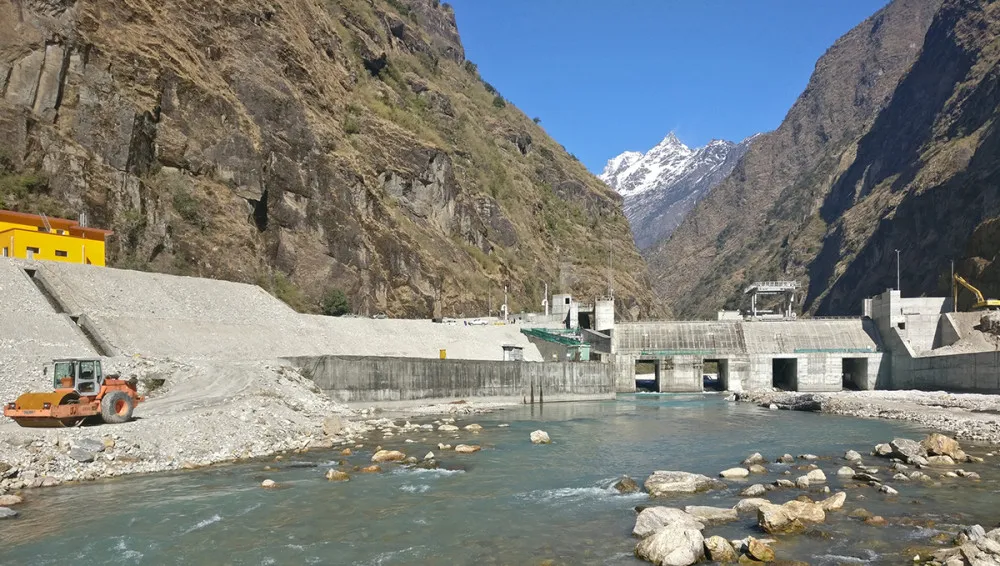
Financial close of Tamakoshi-V concluded with tripartite loan agreement
The financial close of the Upper Tamakoshi-V Hydroelectric Project has been completed. A tripartite agreement regarding loan investment was signed between the promoter company Tamakoshi Hydropower Company, Nepal Electricity Authority (NEA), and the Employees Provident Fund (EPF) on Sunday. According to the agreement, EPF will invest Rs 13.47bn in the 99.8 MW project, a cascade project of the 456 MW Upper Tamakosi Hydroelectric Project. NEA and Tamakoshi Hydropower Company had earlier signed a memorandum of understanding (MoU) with EPF in August 2021 for the loan investment in the project. NEA's subsidiary company Tamakoshi Hydropower Company Limited is developing the project with an estimated cost of Rs 20 billion. Of the total cost, 70 percent, or Rs 13.47bn, is being raised through loans and the rest through equity. As per the agreement, EPF will start disbursing loans at an interest rate of 14 percent per annum to the project after the promoter spends 50 percent of its equity. Binod Bhandari, CEO of Tamakoshi Hydropower Company, said that with the loan investment signing completed, the construction work of the project will proceed ahead. "The loan investment agreement for the project has been signed. We planned to proceed with the project construction within the current fiscal year," he said. The company had called for contracts for the construction of the civil component of the project in July 2022. Two Chinese contractors—Sino Hydro Corporation Limited and China Gezhouba Group Company Limited were shortlisted. However, it was found that the cost proposed by the companies was more than the estimation and the tender was canceled. According to CEO Bhandari, a new tender will be called soon. “Preliminary work is being done for the construction of the project now. As the previous tender has been canceled, we are preparing to invite a new tender,” he said. As the project is a cascade project of the 456 MW Upper Tamakosi Project, it does not need to build a dam as it takes its water directly from the tailrace tunnel of the Upper Tamakoshi Project. The power produced from the project will be connected to the 220kV transmission line of the Upper Tamakoshi Project. The underground powerhouse will be made at Suri Dobhan in Bigu Rural Municipality-3. The Department of Electricity Development (DoED) issued a power generation license to the project in 2017. An additional environmental study of the project was carried out with a grant from the Asian Infrastructure Investment Bank (AIIB). The construction of the project is targeted to be completed within 2027. According to the promoter company, the Tamakhoshi-V will be constructed under the engineer procurement construction (EPC) model. Under an EPC contract, a single contractor takes responsibility for all components like design, engineering, construction, and procurement.

Prominent youth leaders rally for change within NC
The ruling Nepali Congress is going through a challenging phase. Youth leaders in the party strongly believe that the NC needs a comprehensive overhaul. But the top leaders, who hold positions either in the government or at the helm of the party, think everything is fine, offering youth leaders little hope that the current leadership will take steps to reform the party. This loss of faith has led a group of youth leaders to launch what they call the “NC Reformation Campaign”. Interestingly, this campaign does not include popular youth leaders Gagan Kumar Thapa and Bishwa Prakash Sharma. Bhupendra Jung Shahi, a prominent figure of this campaign, expresses confidence that despite the emergence of new political forces such as the Rastriya Swatantra Party and the growing public disenchantment toward the NC, the campaign can restore the party's former glory. Shahi believes that parties like RSP wouldn’t have formed had the old parties addressed the concerns of the public. “It was out of frustration and disappointment that people decided to vote for new parties like the RSP,” says Shahi, who thinks that their campaign can turn the tide. If the NC leaders start working for the benefit of the people, he says the party can have a bright future. Shahi is of the view that unlike the RSP, the Nepali Congress has experience, vision, and strong party structure. Joining Shahi in the campaign are leaders such as Madhu Acharya, Gururaj Ghimire, Govinda Pokhrel, and Ranjit Karna. “We plan to reach every district and village, and address the problems faced by locals, while simultaneously revitalizing our party structures,” says Shahi. To restore the party’s former glory, Shahi suggests that politicians must refrain from portraying themselves as masters and the people as servants. He acknowledges that people’s anger toward major political parties is understandable, as politicians often prioritized their own self-interests over serving the public. “True democracy entails empowering the people and avoiding dictatorial tendencies,” says Shahi. The need for a reform in the NC stems from their inability to effectively function and comprehend the desires and needs of the public. Shahi says the existing gap between the party’s leaders and its members, as well as the disconnect between political parties and the general public, will inevitably lead to future problems. “To avoid that situation, we are initiating campaigns to implement the essential changes and reforms within the party.” Shahi says the primary focus of the campaign is to implement reforms and enhance the strength of the party while also winning public support. “We need to create a political party that stands by the public in all circumstances and remains attuned to the realities of their lives,” he says. “The goal is to build a party that uplifts the citizens and strives to alleviate their struggles.” Highlighting issues such as youth unemployment, the lack of safety for women, the unavailability of necessary resources for farmers, and the inadequate access to educational materials for students, Shahi notes that the current state of the country leaves no one truly content. “We need a party that understands the emotions and concerns of the public and is dedicated to promptly addressing these issues,” he says. “The party should prioritize the happiness and satisfaction of the public rather than being solely focused on the advancement of their own members within the party hierarchy.”

State of private sector: Competitive private sector key for Nepal to become middle-income country by 2030
The Nepali private sector is the largest contributor to Nepal’s gross domestic product (GDP) as well as the biggest employer in the country, a new study has said. The study, conducted jointly by the International Finance Corporation (IFC) and the Federation of Nepalese Chambers of Commerce and Industry (FNCCI), was published in the report titled 'State of Private Sector in Nepal: Contributions and Constraints' has highlighted the private sector as a major contributor to gross fixed capital formation (GFCF) and consumption in the economy. According to the report, Nepal’s private sector contributes 81.55 percent to the country’s GDP. The study report is the first of its kind that evaluates the private sector’s contribution to the economy and current context in Nepal. The private sector has been a catalyst in the overall economic growth and development of Nepal. After the government adopted a liberal economic regime in the 1990s, its contribution to the country’s GDP and employment increased significantly. The private sector is the largest employer in the country, providing employment to around 80 percent of the total labor force. In 2018, the private sector employed approximately 5.5m people, while the public sector employed less than half a million people. The contribution of the private sector to Nepal’s economic growth has increased steadily in recent years. According to the Finance Ministry’s Economic Survey, the private sector grew at an annual rate of 6.6 percent in 2018/19, while the public sector grew at 4.8 percent. “Some of the major sectors contributing to the growth of the private sector include tourism, agriculture, manufacturing, and services. The private sector also plays a critical role in infrastructure development, transportation, and energy,” states the IFC/FNCCI report. The report says the Nepali private sector is dominated by small enterprises, which make up 62.4 percent of the total, followed by medium-sized enterprises at 22.9 percent, and large enterprises at 14.7 percent. Private sector investment accounts for more than two-thirds of the total fixed investment in the country. The private sector plays a significant role in capital formation in the economy. According to the Economic Survey 2020/21, the private sector contributed 76.9 percent of the total investment in the country, while the public sector contributed the rest. The private sector’s contribution to capital formation has been increasing over the years, reflecting the growing role of the private sector in the country’s economy. “Private sector fixed investment has averaged 71.4 percent of the total fixed investment in the last ten fiscal years, indicating the continued dominance of the private sector in driving economic growth and development,” states the IFC/FNCCI report. In FY 2021/22, gross fixed investment is estimated to have increased by 7.3 percent to Rs 1250.98bn compared to the previous fiscal year, of which private sector gross fixed investment increased by 9.6 percent while public sector investment decreased by 2.8 percent. The cumulative private investment amounted to Rs 3,191.57bn, as of mid-July 2022. This is an increase of 10.7 percent over the previous year. Nepal Rastra Bank data shows that private investment has been increasing at an average annual rate of 11.7 percent over the past five years. The average share of public and private sectors in total consumption was 9.1 percent and 89.2 percent respectively. The private sector is also growing in terms of volume, investment, and contribution to GDP. The private sector has been a major contributor to gross fixed capital formation (GFCF) and consumption in the economy. In FY 2020/21, government consumption expenditure increased by 4.4 percent, while private consumption expenditure grew by 5.5 percent. Public sector GFCF increased by 0.6 percent, while the private sector’s GFCF grew by 6.1 percent. According to the report, the share of total consumption in GDP slightly decreased from 92.3 percent in FY 2020/21 to an estimated 90.7 percent in FY 2021/22. The private sector contributed around 87 percent of intermediate consumption in the economy between 2012/13 and 2021/22, and also 83 percent of national GDP at a constant price during the same period. “However, the declining trend in private sector consumption over this period indicates potential hindrances to its growth,” states the report. The private sector has captured approximately one-third of the entire sectoral output in the education sector with a growing trend between 2012/13 to 2017/18. However, since then, the private sector’s share in overall output has declined slightly, owing to restrictions due to the Covid-19 pandemic. The report states that in the financial and insurance sector, the share of the private sector in the total output of this sub-sector is approximately two-thirds of the entire sectoral output. However, private sector contribution to both sectoral output and gross value added (GVA) is declining. In 2012/13, the private companies sector contributed 74.31 percent to the overall output of this sector. However, in 2021/22, this share was estimated at 65.94 percent. Likewise, the share of privately contributed GVA is on a downward trend. In the information and communication sector, the private sector contributed 57.18 percent of the total sectoral GVA in 2012/13. Except for the minor decline in FY 2016/17, the private sector continued to increase its share in sectoral GVA to 68.62 percent in 2021/22. In the manufacturing sector, the private sector contributes to above 99 percent of the GVA of the entire industry. The agriculture, forestry, and fisheries industry are solely driven by the private sector with a median contribution of 97.62 percent to sectoral GVA between FY 2012/13 and 2021/22. Largest employer in Nepal According to the report, the Nepali private sector continues to be the largest provider of employment, creating a significant portion of both formal and informal jobs. In 2018, the private sector provided jobs to 4,938,566 persons. Of this, MSMEs accounted for 4,564,040 jobs, SMEs for 333,077 jobs, and large industries for 41,449 jobs. Till March 2022, 555,776 micro and small industries were registered and they created 3,008,369 jobs. The formal private sector comprises over 99 percent of small and medium-sized enterprises, with only 18 percent of these firms employing more than 20 individuals. Private sector contributes significantly to income tax The report states the private sector plays a significant role in contributing to the country’s tax revenue. Citing the statistics of the Inland Revenue Department (IRD), the report says the sector accounted for 80 percent of the total income tax revenue in the fiscal year 2019/20. Private enterprises’ share in revenue collection has been growing over the past decade. In 2021/22, private enterprises contributed Rs 749m in income tax revenues. MSMEs account for 95.3 percent According to the report, micro, small and medium enterprises (MSMEs) accounted for 95.3 percent, SMEs for 4.5 percent, and large industries for only 0.2 percent of the total business enterprises operating in Nepal. “There were a total of 923,356 private sector establishments operating in Nepal in 2018, up 47.6 percent from 610,364 recorded in the 2011 Economic Census,” says the report. IFC and FNCCI said Nepal needs to continue strengthening the competitive private sector to achieve its goal of becoming a middle-income country by 2030. “To do so, the government needs to improve policy design and implementation, enhance governance, simplify bureaucratic processes, and promote transparency and accountability. There is a need for better coherence and harmonization in policies to facilitate investment in the productive sector,” it reads. IFC and FNCCI have suggested reforms in intellectual property laws and uniform enforcement of ethical business practices without hindering entrepreneurship. “Nepal should also address supply-side constraints to export by improving the reliability and cost of electricity and transportation services and reducing tariffs on crucial imported inputs,” the report says. Private sector contribution to GDP
| FY | Contribution to GDP (in percent) |
| 2012/13 | 86.67 |
| 2013/14 | 85.05 |
| 2014/15 | 83.97 |
| 2015/16 | 84.59 |
| 2016/17 | 82.3 |
| 2017/18 | 82.86 |
| 2018/19 | 83.55 |
| 2019/20 | 81.49 |
| 2020/21 | 80.98 |
| 2021/22 | 81.55 |
| Agriculture, forestry, and fisheries | 98.08 |
| Mining and Quarrying | 99.63 |
| Manufacturing | 99.99 |
| Electricity, Gas, and Air Conditioning Supplies | 83.06 |
| Water Supply | 95.86 |
| Construction | 81.97 |
| Wholesale and Retail Trade | 93.28 |
| Transport | 98.19 |
| Accommodation | 100 |
| Information and Communication | 83.65 |
| Financial and Insurance Activities | 65.94 |
| Real Estate | 99.93 |
| Professional, Scientific, and Technical activities | 66.67 |
| Administrative and Support Service Activities | 100 |
| Public Administration and Defense | 0 |
| Education | 64.33 |
| Human Health, Social Work, and Other Service Activities | 25.59 |
| Arts, Entertainment and Recreation | 79.53 |
| FY | Public Sector (in percent) | Private Sector (in percent) |
| 2012/13 | 12.13 | 87.87 |
| 2013/14 | 12.91 | 87.09 |
| 2014/15 | 13.65 | 86.35 |
| 2015/16 | 13.42 | 86.58 |
| 2016/17 | 15.59 | 84.41 |
| 2017/18 | 15.16 | 84.84 |
| 2018/19 | 15.34 | 84.66 |
| 2019/20 | 16.58 | 83.42 |
| 2020/21 | 17.6 | 82.4 |
| 2021/22 | 16.92 | 83.08 |
| FY | Public Limited (in Rs, in m) | Private Limited (in Rs, in m) | Other Agencies (in Rs, in m) |
| 2012/13 | 149 | 213 | 28 |
| 2013/14 | 188 | 273 | 36 |
| 2014/15 | 205 | 303 | 46 |
| 2015/16 | 273 | 350 | 46 |
| 2016/17 | 335 | 451 | 56 |
| 2017/18 | 370 | 532 | 78 |
| 2018/19 | 479 | 588 | 103 |
| 2019/20 | 472 | 542 | 89 |
| 2020/21 | 536 | 633 | 88 |
| 2021/22 | 560 | 749 | 110 |


