


Vice-President Yadav to leave for China on August 14
Vice-President Ram Sahay Prasad Yadav is leaving for China on August 14.
He is leaving for Kunming of Yunnan Province next week to take part in the ‘China-South Asia Expo’.
This is Yadav's first foreign visit after being elected as the Vice-President.
Preparations are also being made for Prime Minister Pushpa Kamal Dahal’s visit to China.
Prime Minister Dahal will leave for the northern neighbor in the third or fourth week of September.
Foreign Minister NP Saud said that preparations are being made for PM Dahal’s China visit.
This is the seventh edition of ‘China-South Asia Expo’.
The expo will be held from August 16-20.
During this stay in Kunming, Vice-President Yadav will hold sideline meetings with the leaders of Chinese Community Party, according to a source.

BP, Madan Bhandari and Pushpa Lal Highways obstructed in Sindhuli
Three major highways have been obstructed due to landslides triggered by torrential rainfall.
Banespa-Sindhuli-Bardibas (BP) Highway, Hetauda-Sindhuli-Gaighat-Chatara (Madan Bhandari) Highway and Khurkot-Ghurmi road section of Madhyapahadi (Pushpa Lal) Lokmarga have been disrupted owing to floods and landslides.
Raj Kumar Silwal, Chief at the District Police Office, Sindhuli said that the landslides have occurred in more than four places from Bardibas to Nepalthok of BP Highway.
He said that the landslides have blocked the road in Dumja, Bhiman and Maisthan among other places.
Similarly, vehicular movement has been obstructed following landslides in Haibar, Akkare and Sokhukhola along the Khurkot-Ghurmi road section of Madhyapahadi Lokmarga.
Likewise, landslides have covered roads in more than a dozen places from Kusumtar, Kamalamai Municipality-2, Sindhuli to Bagmati river bank of Hariharpur Rural Municipality.
Police said that the concerned authorities are making their maximum efforts to resume the highways.

Bhimdutta Highway disrupted as road caves in near Khanidanda of Kailali
The Bhimdutta Highway connecting seven hilly districts of Sudurpaschim Province has been obstructed.
Vehicular movement has come to a grinding halt after a road caved in due to a landslip near Bhawar area at Khanidanda in Godawari Municipality-4, Kailali.
Around 300-meter road has collapsed, police said.
DSP Dipendra Kumar Pal of the Province Traffic Police Office, Attariya said that hundreds of vehicles heading towards Kailali and Kanchanpur from hilly districts and en route to hilly districts from Tarai have been stranded midway.
Police said that necessary initiatives are being taken to resume the highway.

One killed, six missing as landslide buries house in Makawanpur
A person died and six others including three children went missing when a landslide buried a house at Sigre in Bagmati Rural Municipality-5 of Makawanpur district.
The District Police Office, Makwanpur said that the landslide buried the house of Akkal Bahadur Syangtan of Sigre Dovan.
Police said that Syangtan's wife, Shanta Maya (55) died in the incident.
Akkal Bahadur, his daughter Shila, son-in-law Jivan Pahari, grand-daughter Dibya Pahari, and grand-son Milan Pahari and guest Pasang Pahari of Hariharpur of Sindhuli are missing in the landslide.
Tek Bahadur Karki, spokesperson at the District Police Office, said that a police team has reached the incident site and is carrying out rescue operations.

Landslide obstructs Narayangadh-Muglin road section
Vehicular movement along the Narayangadh-Muglin road section has been obstructed following a landslide at Kalikhola of Ichhakamana Rural Municipality-6.
Rameshwor Karki, Chief at the District Police Office, said that the two-way traffic has been obstructed after the landslide triggered by torrential rainfall buried the road.
Efforts are on to clear the landslide debris.
Hundreds of vehicles have been stranded halfway after the landslide blocked the road.
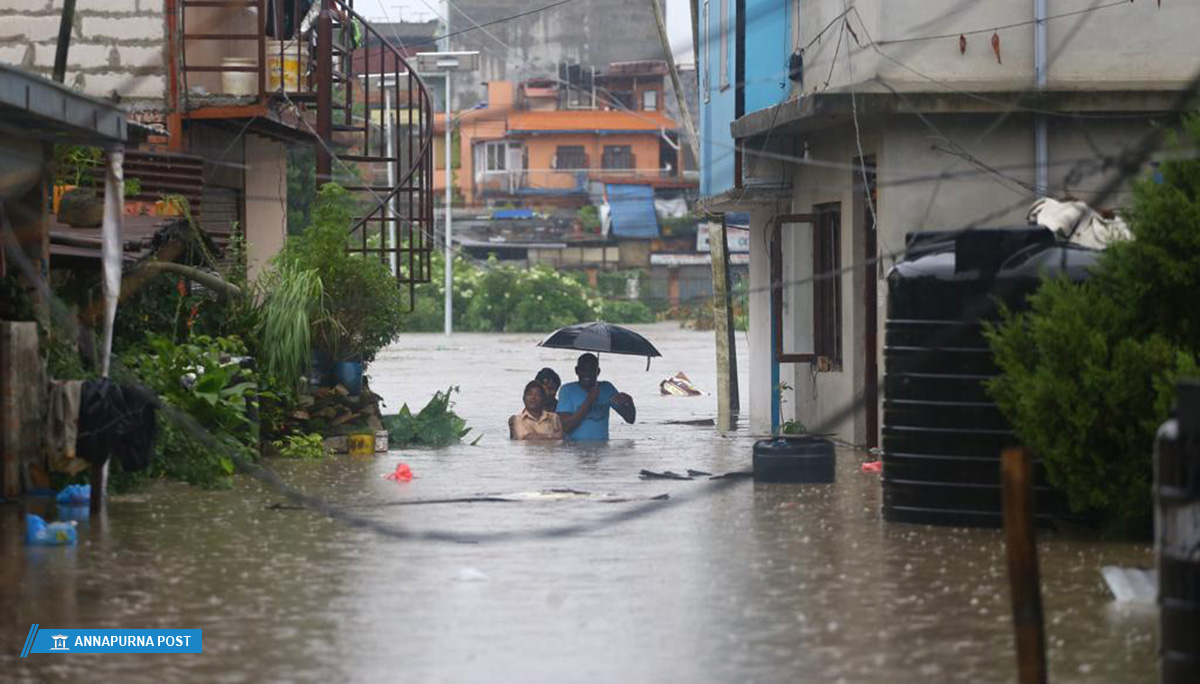
Floodwater gushes into squatters’ settlement in Teku (With photos)
The squatters' settlement in Teku has been inundated due to flooding triggered by heavy rainfall in Kathmandu Valley.
Along with the squatters’ settlement, private residences and schools have also been submerged.
The water level in the rivers has been increasing owing to rainfall.
As the water level in Bagmati, Bishnumati, Dhobikhola, Manohara and Hanumante among other rivers is high, people living near the rivers have been urged to stay alert.


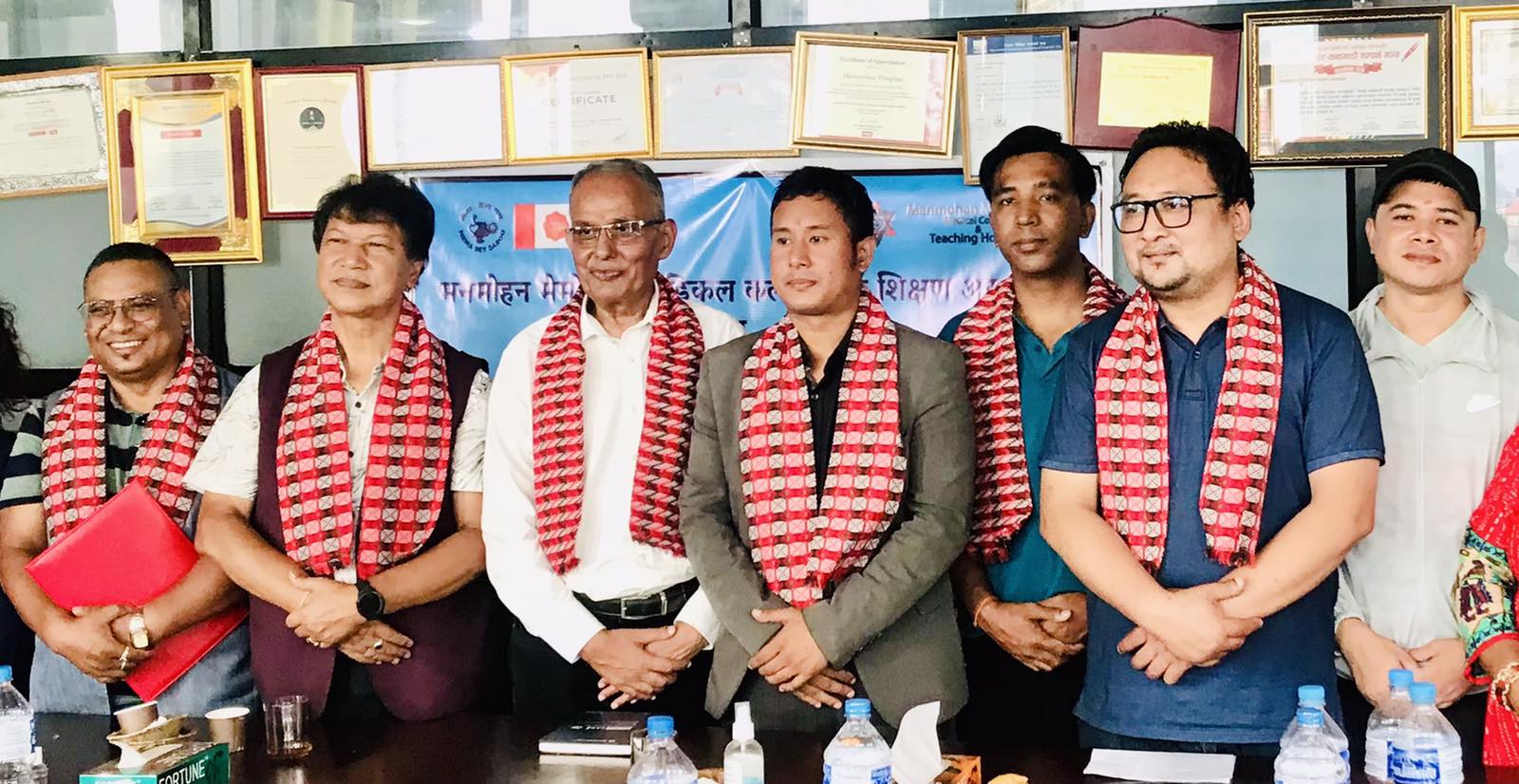
Newa: Deya Dabu, Manmohan Hospital sign health services agreement
An agreement letter has been signed between Newa: Deya Dabu and Manmohan Memorial Medical College and Teaching Hospital concerning various healthcare services offered by the hospital. The agreement was signed by President Pabitra Bajracharya, General Secretary Satyanarayan Dangol, and National Counselor Dr Anjana Dangol on behalf of Newa: Deya Dabu, and Executive Director Dr Nastu Prasad Sharma, Managing Director Dr Mujah Shrestha, and Medical Director Nirajan Subedi on behalf of the hospital.
According to the agreement, the hospital has granted permission to provide accessible and quality health services to the officials, members, families of members, employees, and families of employees of Newa: Deya Dabu, offering a discount of 10 to 25 percent on various services, such as general beds, medical examinations, X-rays, R.C., General Cabins, ICU ventilators, operations, echo, mammogram, endoscopy, and physiotherapy.

Top leaders’ second meeting also ends without making concrete decision
The second meeting of the senior leaders of three major political parties along with the Speaker held in Baneshwor also ended inconclusively.
The meeting was held at the initiative of Speaker Devraj Ghimire.
The talks ended without making a concrete decision after the leaders of ruling and opposition parties refused to budge from their stances.
A serious discussion was held to resume the House proceedings.
Speaking to journalists after the meeting, Speaker Ghimire said that though a serious discussion was held, ruling and opposition leaders failed to reach a conclusion.
He said that the next meeting has been called for 10 am on Tuesday.
“Hopefully, the parties will reach consensus prior to the meeting called for 3 pm tomorrow,” he said.
Speaker Ghimire said that there is no alternative to agreement.
The main opposition CPN-UML has been obstructing the Parliament proceedings demanding formation of a high-level probe committee to investigate the latest gold smuggling case.


