


National Politics | Can Dahal again revive the Maoist party?

“This is my last opportunity to serve the people and probably my ultimate challenge as well,” said CPN (Maoist Center)’s Pushpa Kamal Dahal soon after being re-elected party chair. In his political document endorsed by the Party's 8th General Convention, Dahal confessed that people these days struggle to differentiate the Maoists from other political parties.
This clearly indicates the mother Maoist party is facing an identity crisis. In the general convention that concluded in the first week of January, the party vowed to take reform measures. But that is a daunting task given the party’s ideological ambiguity, which is only compounded by its dysfunctional organization.
Dahal often claims republicanism, federalism, and secularism are original Maoist agendas that have now become national agendas, and he must get credit for that transition. But those agendas seem increasingly divorced from the Maoist party. “Obviously, the credit for establishing these agendas goes to the party,” says political analyst Sudarshan Khatiwada. But they are no longer exclusive Maoist agendas as other parties have also taken their ownership. When the Maoist party pushed those agendas ahead of the first Constituent Assembly (CA) elections in 2008, the public supported the breath of fresh air. No more.
In order to regain party strength, Dahal is trying to placate Janajati, Madhesi, and other marginalized communities by raising the possibility of constitution amendment. But he has already lost the trust of these constituencies after merging his party with the CPN-UML led by KP Sharma Oli, who fiercely opposed those very agendas. These constituencies no longer consider Dahal their leader. But Vijaya Kanta Karna of the Center for Social Inclusion and Federalism, a think-tank, says there is still a remote possibility of Dahal retaining his strength if he can somehow again win the trust of marginalized communities, his previous source of strength and power. It was when Dahal abandoned progressive agendas, says Karna, that he and his party became weak.

Dahal’s party has been in power in all governments formed after the promulgation of the new constitution in 2015. In 2015, he supported CPN-UML Chairman Oli. Then he broke the ruling alliance with Oli and formed a coalition government with Nepali Congress, becoming prime minister in 2016. In 2018, his party joined another Oli-led government, ultimately merging the Maoist and UML parties. Now, his party is a key coalition partner of Prime Minister Sher Bahadur Deuba. Analysts say this tendency to stick to power is an example of Dahal’s deviation from his ideological core.
The party’s revival demands a clear ideological positioning, says analyst Khatiwada, but Dahal is these days characterized by ideological confusion and ambiguity. “Dahal has talked about embracing socialism with Nepali characteristics but he is short on details,” adds Khatiwada. “And he cannot draw public support only by committing to socialism”.
Maoist party leaders, however, are hopeful as the party’s CC has been mandated to sketch a plan on how the party commits itself to socialism.
Says newly-elected CC member Hemraj Bhandari, the convention has provided a clear guidance on how to move ahead and details of the roadmap will be finalized through the CC meeting. “We will tell the people that in order to guard secularism, federalism, and inclusion, the Maoist party needs to come back to power,” he says.
Ideological deviation is not the only cause for the Maoist party’s decline. After joining peaceful politics, the party didn’t bother with adapting its war-oriented organization to peaceful politics. Additionally, its organization began to crack after the party faced a vertical split on the issue of peace and constitution. Over the decades the party has suffered multiple splits.
In 2012, a large chunk of party leaders and cadres led by Mohan Baidya left, which significantly eroded the party’s strength. The party was duly relegated to third position in second Constituent Assembly (CA) elections in 2013.
In 2015, Dahal’s ideological backbone Baburam Bhattarai left the party. With the realization that he could not revive the party, Dahal then decided to merge with UML in 2018, completely sidelining ideological issues and party’s core agendas.
Also read: 2021: A year of politicization of democracy
The electoral alliance with UML in 2017 helped the Maoist party maintain a strong presence in national politics. But with the Supreme Court order last year, the Maoist party was revived yet many of its senior leaders and cadres decided to stay with the UML, further weakening the party. Last year, some leaders also proposed the idea of renaming the party, removing the Maoist tag. Maoist leaders such as Devendra Poudel and Phampa Bhusal even proposed a name-change, to which Dahal reacted positively. But then nothing came of it.
In the document presented at the general convention, Dahal has confessed to mistakes which contributed to the party’s erosion. Dahal is perhaps not very hopeful, which is why he says this is his last chance.
Dahal’s document, too, is old wine in a new bottle. For instance, the party aims to engage its cadres on production, an old proposal that never saw light of the day. Similarly, the document talks about maintaining fiscal discipline and transparency and curbing corruption, and strengthening and purifying party organizations. This too is something that has been endlessly discussed.
Says a senior Maoist leader, Dahal has confessed to the mistakes which damaged the party but there is no guarantee that he won’t repeat the same mistakes. The leader is not hopeful of the document’s implementation as Dahal remains completely focused on winning elections, come what may.
Says analyst Khatiwada, the Maoists do not have any distinct agenda with which to woo the public. So, for the Maoist party, the upcoming elections will be a survival issue. Without an electoral alliance, the party fears a humiliating defeat
So despite numerous differences with PM Deuba, Dahal is in favor of retaining the current coalition. Dahal has himself confessed that the Maoists cannot become the first party in the upcoming elections. At best, his goal will be to lock in the Maoists’ third-strongest position after NC and CPN-UML.
The Maoists are likely to forge an electoral alliance with CPN (Unified Socialist) but even their joint strength may be insufficient to defeat stronger parties like Nepali Congress UML. So, again, Dahal is pinning a lot of hope on a possible alliance with Congress.
But there are strong sentiments inside the NC that the party should not ally with the Maoists, even though there could be a tacit understanding to ensure the victory of some Maoist leaders. So, if NC remains rigid, Dahal could explore other alternatives, including an alliance with UML.
“This is our last chance to win the public’s hearts and minds by implementing the pledges we have made in the general convention,” says Maoist Central Committee member Bhandari. But even he is unsure of the continuity of the current ruling coalition.

Nepal’s federal provinces: Missed opportunities
The first tenure of three tiers of governments in the federal system practiced for the first time in Nepal's history is approaching its completion. The five-year term of local governments will be complete in May 2022 while the tenures of seven provincial assemblies and federal House of Representatives will expire in December 2022.
The first batch of representatives elected under the new structure and the federal system are now subject to review.
While federal, provincial and local governments work as three layers of the federal system, the middle layer (province) has faced scathing criticism from various quarters. This is mainly for two reasons: one has to do with historical context and the second with poor performance of provinces.
Local units: Strong social connections
One thing going for the local level is its strong connection to Nepali society. Local bodies composed of administrative units and elected representatives have been functioning in Nepal since before the introduction of a formal democratic system in the country.
The first local election was conducted in May 1947, a full 12 years before the election of the first parliament. It was only for Kathmandu Municipality. Local representatives in Lalitpur and Bhaktapur municipalities were elected a few months later. Similar elections were held in September 1953 and January 1958. All these local polls pre-dated the first parliamentary election in 1959. So, in a way, local polls can be taken as a harbinger of the democratic practice in Nepal.
In 1960, King Mahendra dissolved the parliamentary system and imposed a party-less autocratic Panchayat system. He however gave continuity to local elections in the party-less Rastriya Panchayat system as well. Local polls were held regularly throughout the 30 years of the Panchayat era. After the restoration of multi-party democracy in 1990, Gau (village) Panchayats and Jilla (district) Panchayats were converted into Village Development Committees (VDCs) and District Development Committees (DDCs) respectively. And VDC and DDC elections were held based on multiparty competition. These units functioned effectively for a decade. After that, there was a gap of elected representatives at the local level owing to over a decade-long political upheaval in the country. It resumed only after the adoption of a new constitution and federal system.
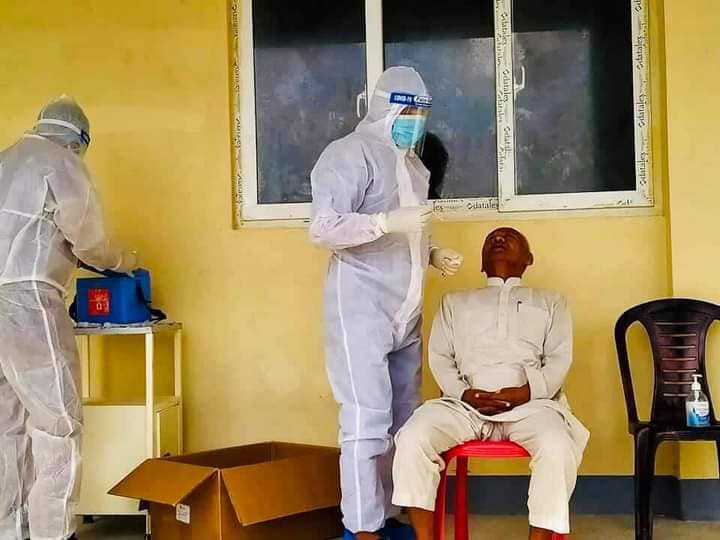 Free swab collection for Covid-19 testing at Bardibas Municipality
Elections in the Panchayat system were not fully democratic mainly due to party-less competition and programs like Gau Pharka Abhiyan (‘Return to the village campaign’) curtailed open competition as well as the role of the general public in electing representatives. However, in one way or the other, elected local representatives were active in villages and towns to carry out development activities, take care of social issues and various other facets that directly impacted general people’s livelihood.
Local servants were always among the public. Many of them were accused of corruption and abuse of authority. But locals had no option but to rely on them for social, public or official work. Corruption and abuse of authority made individual representatives unpopular. But be it in the Panchayat system, post-1990 multi-party democracy or the Federal Republic system, people always found local units relevant.
During Panchayat, the anchal panchayat (zonal body) and officials like anchaladhis (zonal head) became quite unpopular due to abuse of authority mainly in suppressing political and social activists. So the zonal level was the first casualty after the restoration of democracy in 1990. Pradhanpanchas and their lieutenants were infamous for their abuse of authority, but that didn't lead to the downfall of the local bodies themselves. Rather the Gau Panchayats and Jilla Panchayats were just renamed VDCs and DDCs and their heads were called VDC chair and DDC chair respectively. Thus while the zonal units were overthrown the local units were given continuity under an almost same structure.
The local units were deeply connected to the public, so much so that even the then banned political parties including Nepali Congress and CPN (Marxist-Leninist) fighting to overthrow the party-less panchayat system fielded their candidates in local elections with the objective of establishing better contact with the public. For example, Congress leader Haribol Bhattarai became Pradhanpanch of Kathmandu Municipality and 21-year-old Purushottam Paudel of CPN (ML) became Pradhanpanch of Nijgadh in local elections of 1987. At the time, Congress and ML had decided to utilize elections, fielding their representatives as janapakshiya (pro-people) candidates. Paudel would go on to be a minister in the government led by Sushil Koirala in 2015. The current Chief Minister of Bagamati Rajendra Pandey was District Panchayat President of Dhading.
In India it was only in the 1990s when local units were made vibrant with new constitutional rights.
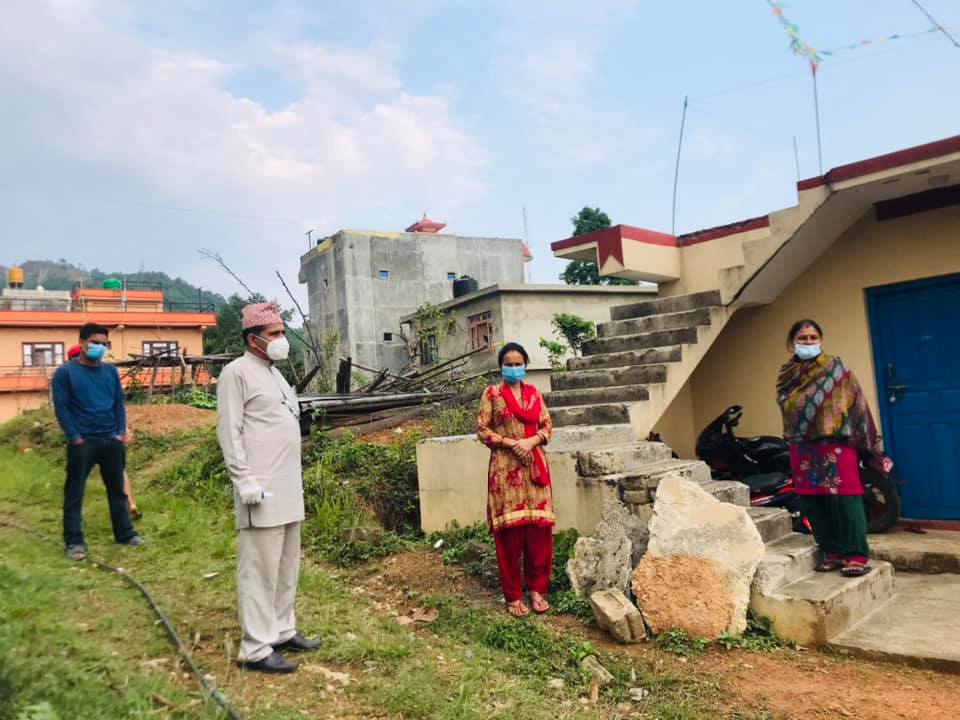 Khadga Bahadur Khatri, mayor of Kamalamai Municipality, inquiring about the health of home-isolating people
After the 1990 political change, as Gaupanchayats were converted into VDCs, a large number of former Pradhanpanchas and their deputies adopted democratic avatars and became VDC heads and deputies from various political parties. Some panchayat hardliners stayed in low profile for a few years. They groomed youngsters and helped them gain local power through a political party. So even in the federal system, one can find a second generation of former Pradhanpanchas in VDC leadership and another generation at the helm of rural municipalities.
Local power-brokers always wanted to make their units, which they had been milking for generations, more powerful. On the other hand, general folks wanted effective and resourceful service-delivery at their doorsteps as they had no access to higher authorities and no connection with high-level political leadership. Hence, the local units got local ownership. With such a strong connection to the public, the local level got a strong base.
Despite some harsh criticism against them, local representatives are always there on people’s doorsteps. People can't ignore representatives even if they don't like them. For instance, even to get a birth certificate, marriage registration or death certificate, one must seek support from the local authority. Family affairs like ownership or handover of property or acquiring a citizenship certificate can't be completed without the local body’s authorization. Even small acts of non-cooperation from ward or municipal offices may force a citizen to make the rounds of district headquarters or higher authorities.
As local bodies are directly related to the public's day-to-day life, people don't take the risk of alienating local authorities. Reports of abuse of authority, corruption and other irregularities by local representatives are exposed on a regular basis but that is no challenge to local governance. In such cases, locals don't blame the system for the failure of the representatives. They rather accuse individual representatives. Thus, historically, local units have enjoyed a sort of immunity from public criticism.
But the opposite is the case when it comes to provinces. The provincial system has no base at all. Provinces are not connected to the public. A large section of the society supports it but only half-heartedly.
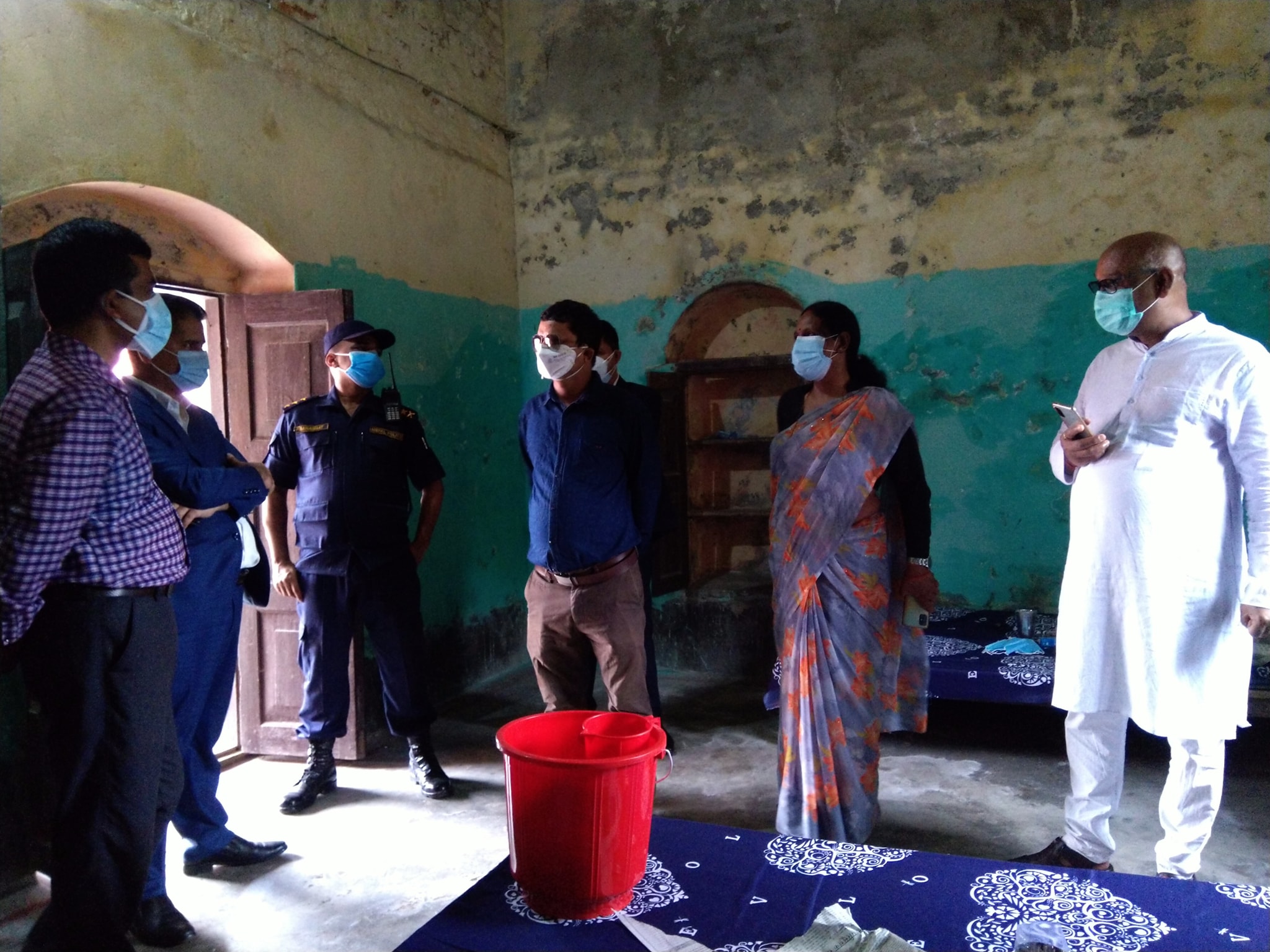 Officials of Janakpur Sub-Metropolitan City inspecting a local isolation center
Provinces: Weak bases, poor performance
Nepal adopted a federal system following a strong campaigning and lobbying from various sections of the society including political parties and ethnic communities. The Maoist party, Madhesi parties and some ethnic groups strongly asked for it. The traditional parties seemed to have accepted the proposal for a federal system, sensing time wasn’t right to go against the tide. But within a matter of years, influential groups within major parties such as Congress, UML and Maoists started voicing their opposition to it. Also, various sections of society that were not in favor of the federal system but were silent for some years have now become vocal.
Of the three federal units, people took central and local levels as natural organs of the state. But the provincial level was considered additional and a burden for the people and state coffers.
While pro-federalists aggressively campaigned for the system, they didn't seem prepared to implement it. They were without planning and vision to run the federal system and make people feel the new system can make their life easier.
Madhes-based leaders were the first to demand a federal system. But their parties showed weak commitment to make the system work. They seemed lackadaisical from the beginning.
When leaders from various political parties wrangled over key issues such as determining the major bases to restructure the country and fixing names and numbers of provinces, those from Madhesi parties floated weak proposals. For long, they insisted on delineating a single province along the entire Tarai-Madhes region. The proponents of the federal system in the country, they should have had convincing vision and planning to this effect.
When leaders from Congress, UML and Maoist party were intensely debating the number of provinces in Madhes and hills, Madhesi leaders were insistent that a single province would do for the country's entire southern belt, while they didn’t even bother to mention the number of provinces in rest of the country. For example, the proposed map officially registered by the then Madhesi People's Rights Forum Nepal led by Upendra Yadav at the State Restructuring Committee of the Constituent Assembly shows a single province in the entire Tarai belt while other parts of the country are not delineated, as if it is not their responsibility to think about the rest of the country (see map).
Also read: The faces of local government
They displayed a similar tendency while preparing the lists of powers for the three levels of government. Madhesi leaders wanted to devolve powers from the central to the provincial level while they strongly opposed the idea of giving more powers to the local level. Conversely, leaders from traditional political parties including Congress, UML, Rastriya Prajatantra Party and Rastriya Janamorcha were for empowering local units while giving less authority to the provinces.
Even after the promulgation of the new constitution and adoption of the federal system, leaders from pro-federalist parties couldn't work earnestly to make the federal system a vehicle to change people's livelihood and thus get them to ultimately own it.
No political party could do a good job of running the provinces. Provincial governments and assemblies should have worked harder than federal government and local units to prove the anti-federalists wrong. They could have undertaken noticeable work at least during the covid pandemic and other disasters, again if only to prove their relevance. But even during the pandemic they were nowhere to be seen. Amid the pandemic, the chief ministers and ministers resorted to horse-trading and every possible tactic to cling to power in various provinces.
Rival coalitions in Gandaki Province competed to please and get support of provincial members like gangster-turned-politician Deepak Manange and make him minister. They were hell-bent on prolonging their stay in power. Such activities in provinces further disenchanted the general public.
While most local governments are criticized for irregularities and abuse of authority, some municipalities have done exemplary work. But none of the seven provinces fared well. The first batch of provincial governments and assemblies should have come up with innovative programs and impressed the public to prove their relevance. Chief Ministers in most provinces have instead bifurcated ministries to accommodate more leaders as ministers, so as to get their support and prolong their stay in power. As of now, the number of ministries in seven provinces has reached 71. One-third of MPs in all seven provinces have become ministers. Instead of proving themselves relevant in the changed context, they are becoming a burden for taxpayers.
Also read: What if… the 2015 constitution had been delayed?
Was federalism adopted overnight?
Many politicians even within Congress, UML and Maoists argued federalism was not their demand and that it was included overnight at the behest of certain interest groups. Even Netra Bikram Chand of the former Maoist party said so publicly. Mohan Baidya has given a similar statement. Poor performance of provinces has emboldened anti-federalists in major parties and they have now become more vocal in demanding review on some constitutional arrangements including the federal system. Also among general masses, those who didn't buy the argument previously, have now started to agree on the narrative that provinces are 'white elephants'.
Some continue to believe federalism was not the demand of all of Nepal and that it was pushed at the behest of certain international interest groups. It is true that the demand for a federal system wasn't raised continuously and strongly, unlike the demands for multiparty democracy and republic, for which at least three generations of Nepali people have shed blood, sweat and tears. Federalism wasn't a major demand even during the people's movement of 1990. However, it would be unfair to say it was included in the constitution overnight by a group of leaders in the midst of the statute writing process.
In 1951, the then Nepal Tarai Congress had demanded formation of an autonomous Tarai province, in what was the first time the concept of federating Nepal was floated. However, this couldn't be a major political agenda as political parties had to struggle for restoration of democracy until 1990. After the reinstatement of the multiparty system, the Sadbhawana Party first raised the issue of federalism in parliament. But the Madhes-based regional party couldn't establish it as a national agenda.
Various ethnic groups and sections have, over the years, stressed on the need for greater autonomy and self-governance. The Maoists took up this issue in order to get the support of ethnic and marginalized communities promising that the system would put them in the driving seat of national politics. This strategy helped the Maoists expand their support in ethnic constituencies. While Sadbhabana Party had raised this issue in parliament after the restoration of parliamentary democracy in 1990, the then underground Maoists picked it up in 2000. However, the credit for the constitutional guarantee of federalism ultimately goes to the Madhesi People's Rights Forum led by Upendra Yadav. A day after promulgation of Interim Constitution in 15 January 2007, Yadav led a protest against the exclusion of federalism in the statute. The agitation spread across Tarai-Madhes, making the government concede federalism.
In both the first and second Constituent Assembly, the issue of federalism was the most disputed and debated agenda. It was as strongly debated outside the CA. Political parties made it a major agenda in both CA polls. Various independent groups, civil society organizations and experts were continuously engaged in intense debates on the matter. Federalism remained a buzzword in national media and public forums for at least a decade until 2015. It was only after rigorous debates across the country that the system was included in the new constitution.
Also read: The events that shaped Nepal in 2021
Despite years-long debates, the decision to adopt federalism was divisive. Some aggressively lobbied for it while others fiercely criticized it. So, the first batch of the system’s beneficiaries, such as chief ministers and ministers in provincial governments and members of provincial assemblies, should have worked hard to prove that the federal system can work to the country’s benefit. But most of their activities disappointed the public and made provinces unpopular within a few years.
The way forward
The country has lost an opportunity to popularize the system and strengthen its base. However, we have no option but to improve and sustain it. Nepal cannot now revert to the old system. The country can't afford yet another political experiment. A better option is to improve service delivery and good governance in the provinces. For this, most important is for provincial assembly members, ministers and other officials to connect with the people. They can do so by working based on the list of powers the constitution grants to the provinces. There are a number of things directly related to the general people's life.
The statute has allocated vital powers like law and order, health and education, individual tax, property tax and land ownership tax to the provinces. Similarly, tourism, agriculture, issuance of citizenship and passport, land reform, use and conservation of local language, culture, religion and scripts, industrialization, trade and entrepreneurship and Guthi management, fall within their jurisdiction. If the provinces come up with innovative programs and improve things on these fronts, they can help strengthen relations with the public.
If the provinces, just like the local levels, can cut short the general people's travel to the federal capital and provide services closer home, people will start defending it. The way provinces are working at present doesn't help. Drastic reform in the present working style and prioritization of provinces has become essential. Again, there is no other option.
The author is a veteran journalist

The events that shaped South Asia in 2021
January
The Supreme Court of Pakistan orders the Pakistani government to rebuild a Hindu temple—the Shri Paramhans Ji Maharaj Samadhi temple in Teri, Karak District. The temple was earlier destroyed by a mob of 1,500 local Muslims led by a local Islamic cleric and supporters of Jamiat Ulema-e-Islam party in December 2020. As a part of renovation, the temple plans to expand and the houses nearby will have to be razed, irking many locals and Islamists.
February
India and China agree to push for a mutually acceptable resolution of friction points at Gogra, Hot Springs and Depsang along the Line of Actual Control in Ladakh in a steady and orderly manner. However, in subsequent months, there is little progress on border talks between the two countries.
March
On March 26 and 27, Indian Prime Minister Narendra Modi visits Bangladesh at the invitation of his counterpart Prime Minister Sheikh Hasina, and takes part in two gala celebrations—the golden jubilee of the independence of Bangladesh and the birth centenary of Bangabandhu Sheikh Mujibur Rahman, the iconic leader of Bangladesh’s freedom struggle and the country’s first prime minister. Protests erupt across the country, with protestors accusing Modi of committing crimes against humanity during the 2002 Gujarat riots. They slam his anti-Muslim policies and India’s interference in Bangladeshi politics.
April
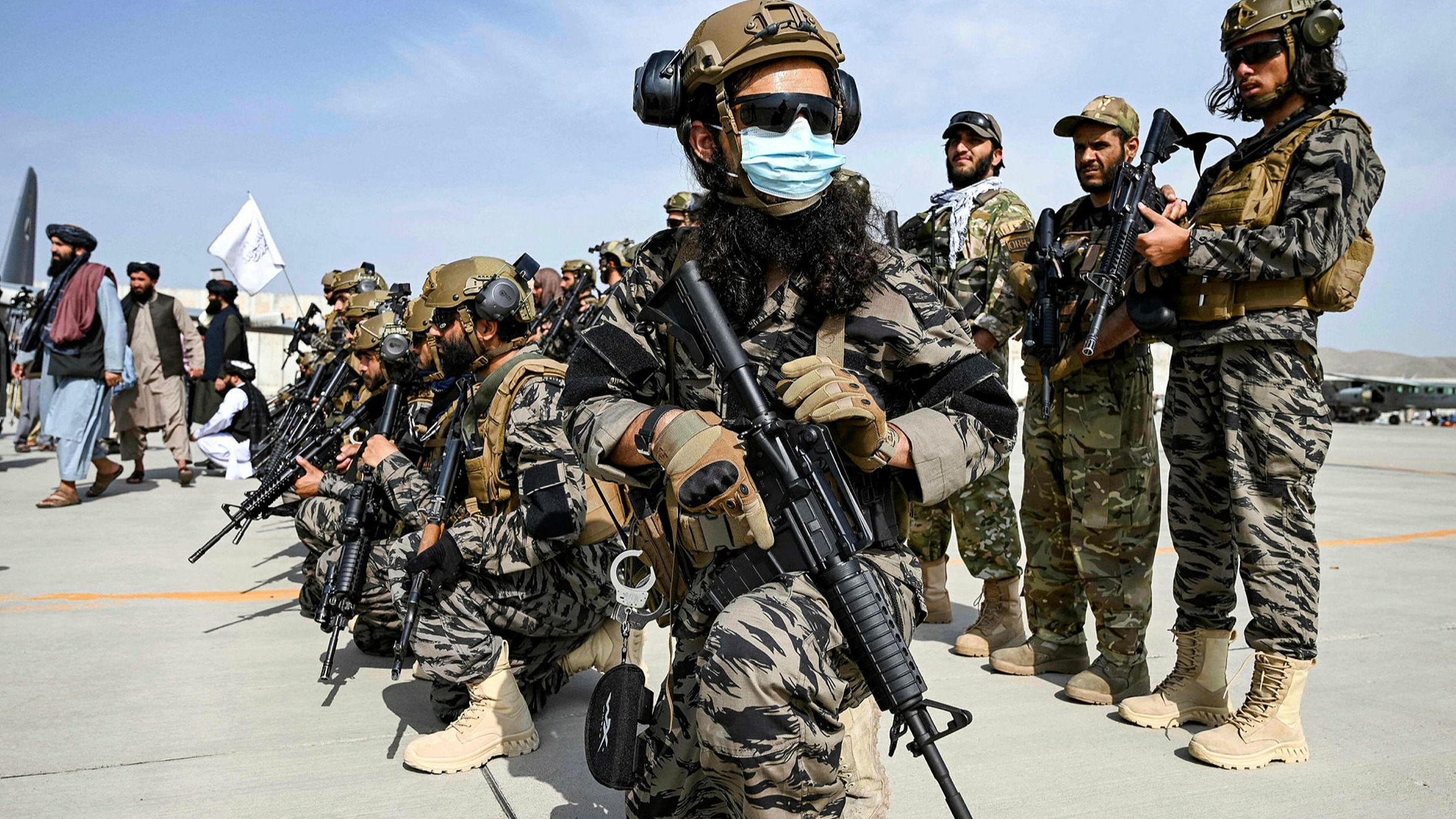
The United States decides to withdraw US and NATO troops from Afghanistan, stating that “there is no military solution to the challenges Afghanistan faces”. Then Afghan President Ashraf Ghani welcomes the decision.
May
X-Press Pearl, a Singaporean container ship, catches fire off the Sri Lankan coast of Colombo, and was engulfed in flames on May 27. The Criminal Investigations Department of Sri Lanka arrests the ship captain in June after the incident draws global attention due its harm to the local biodiversity.
June
Foreign Minister Abdulla Shahid of the Maldives is elected new president of the United Nations General Assembly. Shahid pledges to push for equal access for coronavirus vaccines, a stronger and greener economic recovery and stepped-up efforts to tackle climate change.
July
Acclaimed Indian photojournalist and Pulitzer Prize winner Danish Siddiqui is killed by the Taliban in Afghanistan on 13 July 2021. He was embedded with a convoy of Afghan security forces and covering a clash between the security forces and the Taliban near a border crossing with Pakistan.
August

Taliban returns to power in Afghanistan after two decades. Amid the chaos, incumbent Afghan President Ashraf Ghani escapes the country on August 15. America withdraws all its troops, to worldwide condemnation of its ‘hasty’ decision.
September
Indian Prime Minister Narendra Modi and US President Joe Biden hold their first in-person meeting during Modi’s US visit. Two leaders discuss trade, security and other regional issues. In 2021, India and the US come closer on many issues in the backdrop of souring India-China relations.
October
A mob damages 66 houses and sets on fire at least 20 homes of Hindus in Bangladesh over an alleged blasphemous social media post. This follows protests by the minority community against temple vandalism incidents during Durga Puja celebrations.
In a step towards resolving their boundary disputes, Bhutan and China sign a three-step roadmap to help speed up talks, at a video meeting of their foreign ministers. The roadmap is expected to kick-start progress on boundary talks that have been stalled for five years.
November
Indian Prime Minister Narendra Modi, not known for backing down from his political moves, announces the repeal of three new agricultural reform laws on November 19, on Guru Nanak Jayanti. The repeal forbids the entry of private players in farming which would have cut farmers’ income.
December
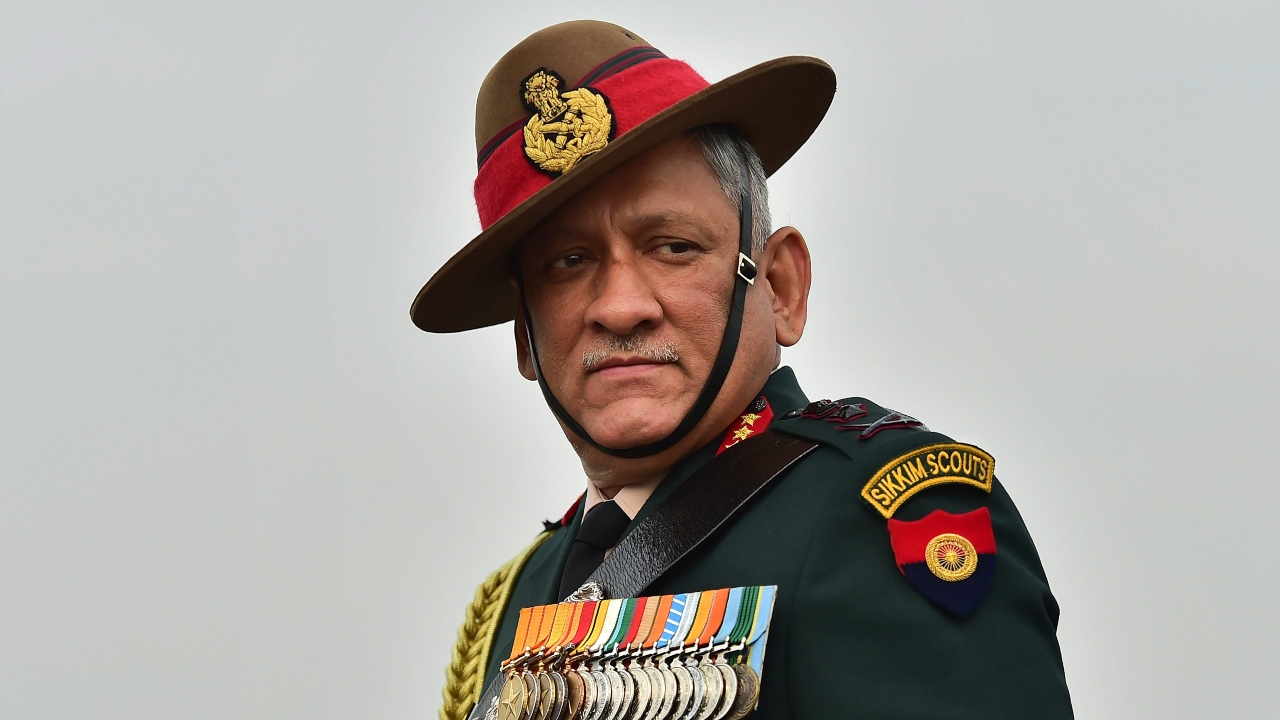
India’s Chief of Defense Staff Bipin Rawat, his wife Madhulika Rawat, and 11 others are killed in a Mi-17V5 chopper crash near Coonoor, Nilgiris district, in Tamil Nadu, on December 8. The four-star general is the single-point advisor to the Indian government on military matters.
Amid growing India-China and China-US rivalry, Russian President Vladimir Putin visits India to participate in India-Russia Summit. The two countries agree to enhance bilateral ties.

The events that shaped Nepal in 2021
January
Amid the political chaos that ensured following Prime Minister KP Oli’s decision to dissolve the federal lower house at the end of 2020, four former chief justices—Min Bahadur Rayamajhi, Anup Raj Sharma, Kalyan Shrestha, and Sushila Karki—release a statement on January 8 terming the dissolution unconstitutional. The unprecedented statement by ex-chief justices on a political issue draws mixed reaction.
February
On February 23, the Supreme Court overturns Prime Minister Oli’s Dec 20 house dissolution, calling it unconstitutional, and orders the government to summon the house within the next 13 days.
March
The Supreme Court on March 7, the day the meeting of the restored House is scheduled, revives the CPN-UML and the Communist Party of Nepal (Maoist Center), invalidating the Nepal Communist Party (NCP), the outcome of the two parties’ May 2018 merger.
April
Then main opposition Nepali Congress initiates moves to topple Prime Minister Oli and form an alternative government under its leadership with the support of the CPN-Maoist Center and other parties. The party Central Committee on April 3 decides to form a new government under its leadership.
May
President Bidya Devi Bhandari dissolves the House of Representatives as per Article 76 (7) yet again and declares two-phase elections—November 12 and November 19—on the recommendation of the Council of Ministers. This happens after Prime Minister Oli fails to get a vote of confidence in parliament on May 10.
June
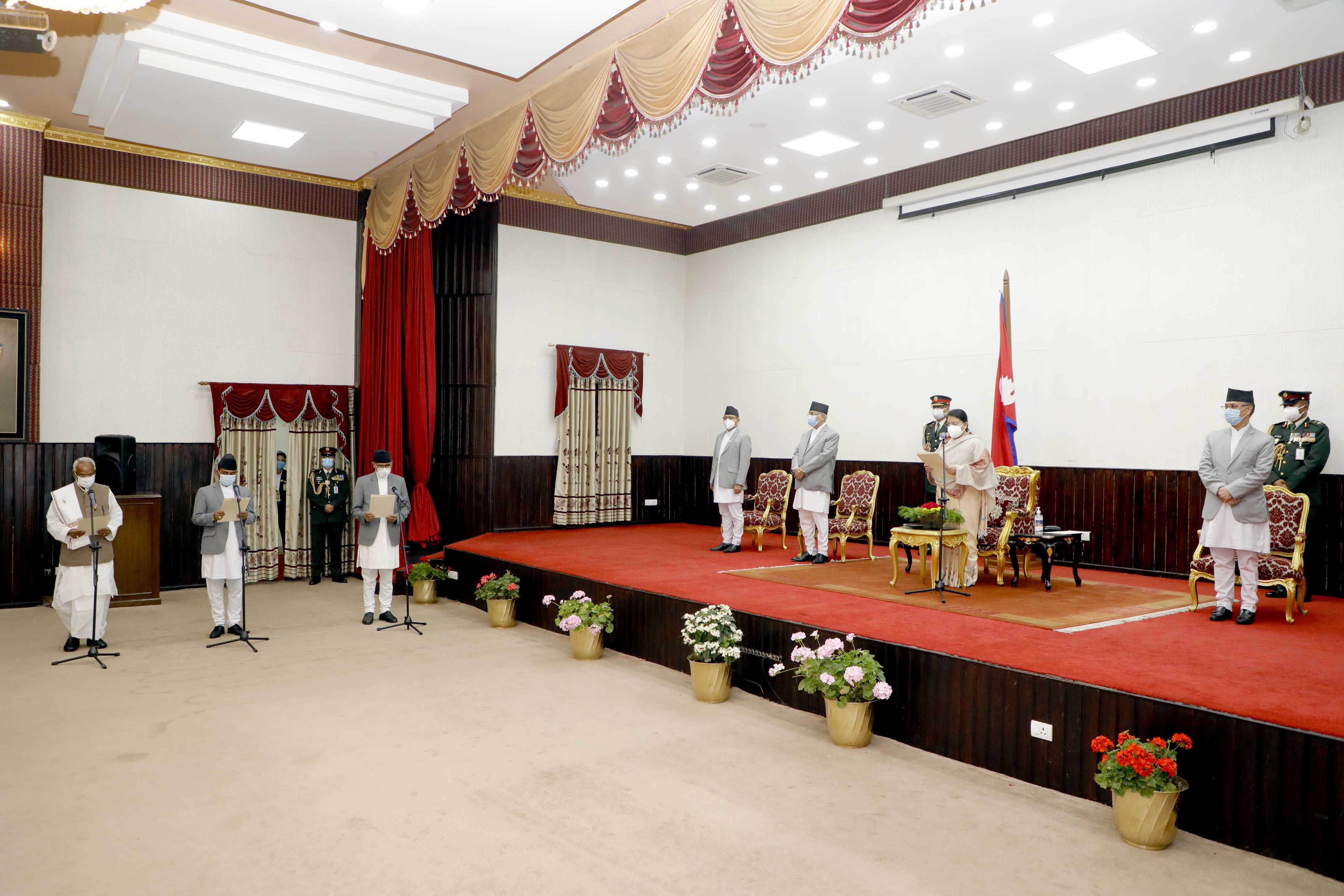
PM Oli expands and reshuffles the cabinet, which now has 14 members from CPN (UML) and 11 from Mahantha Thakur faction of JSPN. The Supreme Court issues an interim order, annulling the cabinet expansion. The order relieves 20 ministers of their positions, with the cabinet now composed of only four ministers.
July
The Supreme Court on July 12 overturns Prime Minister Oli’s May 21 house dissolution and orders the appointment of Sher Bahadur Deuba, Nepali Congress president, as prime minister. The five-member constitutional bench led by Chief Justice Cholendra Shumsher Rana says Oli’s claim to the post of prime minister as per Article 76 (5) is unconstitutional. The SC also orders the government to reconvene the house by July 18.
August
Kul Prasad KC is appointed the chief minister of Lumbini on August 12. On August 18, Ashta Laxmi Shakya is appointed the CM of Bagmati province; there is a fissure in CPN-UML, the largest party in parliament, with the formation of the breakaway CPN (Unified Socialist) under former Prime Minister Madhav Kumar Nepal; and the JSPN splits to form LSP led by Mahantha Thakur. The outcome is that there are now six national parties.
September
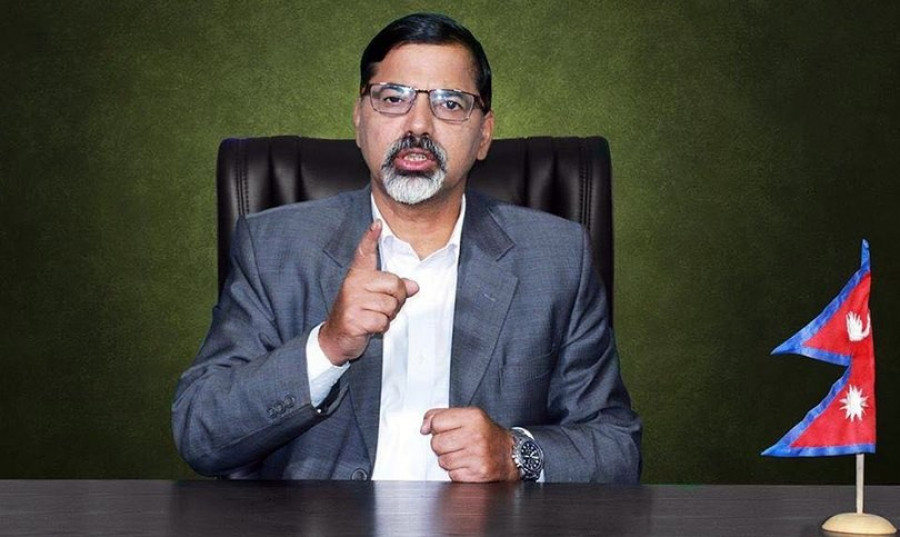
The Sher Bahadur Deuba government replaces the KP Oli government’s budget ordinance with a fresh bill on September 10. Finance Minister Janardan Sharma presents a budget of Rs 1.632 trillion, reducing the size by Rs 16.74 billion.
October
Prime Minister Sher Bahadur Deuba leaves for London, UK for the COP26 summit, on October 29. Nepal Bar Association and SC justices protest, seeking the resignation of CJ Cholendra Shamsher JBR following rumors of his involvement in cabinet expansion.
November
CPN-UML convenes its 10th general convention and re-elects KP Sharma Oli as party chairman, who handsomely defeats Bhim Rawal, his nearest rival for the post.
December
Nepali Congress holds its 14th general convention. Prime Minister and incumbent party president Sher Bahadur Deuba is re-elected party president. Rastriya Prajatantra Party holds its general convention where Rajendra Lingden beats Kamal Thapa for the party’s top post.


